Results by title
429 books match the query 'Development' and 28 start with c
Capital Controls and Capital Flows in Emerging Economies
Policies, Practices, and ConsequencesEdited by Sebastian Edwards
University of Chicago Press, 2007
Some scholars argue that the free movement of capital across borders enhances welfare; others claim it represents a clear peril, especially for emerging nations. In Capital Controls and Capital Flows in Emerging Economies, an esteemed group of contributors examines both the advantages and the pitfalls of restricting capital mobility in these emerging nations.
In the aftermath of the East Asian currency crises of 1997, the authors consider mechanisms that eight countries have used to control capital inflows and evaluate their effectiveness in altering the maturity of the resulting external debt and reducing macroeconomic vulnerability. This volume is essential reading for all those interested in emerging nations and the costs and benefits of restricting international capital flows.

Capitalism with a Comrade's Face
Kenneth Murphy
Central European University Press, 1998
Are nations that are journeying away from communism succeeding in becoming free-market democracies? In what ways do decades of totalitarian rule continue to distort the institutional shape of these societies? Which of communism's legacies may remain as permanent features of their landscape? In an effort to answer these questions, Roman Frydman, Kenneth Murphy, and Andrzej Rapaczynski analyze the turbulent transitions that have taken place in the post-Communist world since the revolutions of 1989-1991.
Each of the essays in this collection dissects the institutional upheaval in a particular institution in transition, such as central banking, the trade union movement, capital markets, or corporate govern-ance. In a lively and accessible style, the authors bring out the links between what was and what will be in the social fabric of Eastern Europe and the former Soviet Union. They expose the fragility of political and economic institutions that can easily threaten the region's rebirth, but they also believe that many post-Communist countries are successfully seizing the opportunity to become reunited with the West and the global economy.
With both sweeping perspective and critical depth, Frydman, Murphy, and Rapaczynski show the wide range of institutional improvisations under way. They weigh the advantages and disadvantages of different reform strategies and assess the role of politics in fostering or arresting the process of transformation. Each essay illuminates the pro-found difficulties of reconciling the needs of economic development with the special interests fighting for their survival.
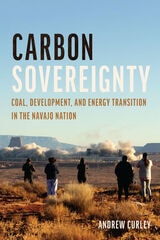
Carbon Sovereignty
Coal, Development, and Energy Transition in the Navajo NationAndrew Curley
University of Arizona Press, 2023
This comprehensive new work offers a deep dive into the complex inner workings of energy shift in the Navajo Nation. Geographer Andrew Curley, a member of the Navajo Nation, examines the history of coal development within the Navajo Nation, including why some Diné supported coal and the consequences of doing so. He explains the Navajo Nation’s strategic choices to use the coal industry to support its sovereignty as a path forward in the face of ongoing colonialism. Carbon Sovereignty demonstrates the mechanism of capitalism through colonialism and the construction of resource sovereignty, in both the Navajo Nation’s embrace and its rejection of a coal economy.
For the people of the Navajo Nation, energy sovereignty is dire and personal. Thanks to on-the-ground interviews with Diné coal workers, environmental activists, and politicians, Curley documents the real consequences of change as they happened. While some Navajo actors have doubled down for coal, others have moved toward transition. Curley argues that political struggles ultimately shape how we should understand coal, capitalism, and climate change. The rise and fall of coal magnify the nuance and complexity of change. Historical and contemporary issues intermingle in everyday life with lasting consequences.
Carrots, Sticks, and Ethnic Conflict
Rethinking Development AssistanceMilton J. Esman and Ronald J. Herring, Editors
University of Michigan Press, 2003
Central American Recovery and Development
William L. Ascher and Ann Hubbard, editors
Duke University Press, 1989
Changes in Exchange Rates in Rapidly Developing Countries
Theory, Practice, and Policy IssuesEdited by Takatoshi Ito and Anne O. Krueger
University of Chicago Press, 1999
Historically, most developing nations have employed strict exchange rate controls and heavy protection of domestic industry-policies now thought to be at odds with sustainable and desirable rates of economic growth. By contrast, many East Asian nations maintained exchange rate regimes designed to achieve an attractive climate for exports and an "outer-oriented" development strategy. The result has been rapid and consistent economic growth over the past few decades.
Changes in Exchange Rates in Rapidly Developing Countries explores the impact of such diverse exchange control regimes in both historical and regional contexts, focusing particular attention on East Asia. This comprehensive, carefully researched volume will surely become a standard reference for scholars and policymakers.

Changing Paths
International Development and the New Politics of InclusionPeter P. Houtzager and Mick Moore, Editors
University of Michigan Press, 2005
The contributors suggest there is little basis for the radical polycentrism that colors so much contemporary development thought. They focus on how the political capabilities of different societal and state actors develop over time and how their development is influenced by state action and a variety of institutional and other factors. The final chapter draws insightful conclusions about the political limitations and opportunities presented by current international discourse on poverty.
Peter P. Houtzager is a Fellow at the Institute of Development Studies, University of Sussex. He has been a visiting scholar at the Center for Latin American Studies, University of California, Berkeley, visiting lecturer at Stanford University, and lecturer at St. Mary's College. A political scientist with broad training in comparative politics and historical-institutional analysis, he has written extensively on the institutional roots of collective action.
Mick Moore is a Fellow at the Institute of Development Studies, University of Sussex, as well as Director of the Centre for the Future State. He has been a visiting professor at the Massachusetts Institute of Technology. His professional interests include political and institutional aspects of poverty reduction and of economic policy and performance, the politics and administration of development, and good government.

Chicago Essays in Economic Development
David Wall
University of Chicago Press, 1972
These Chicago economists share a common intellectual framework universally recognized in the profession and derived from three beliefs: first, that theory is of fundamental importance; second, that theory is irrelevant unless set in a definite empirical context; and third, that in the absence of evidence to the contrary, the market works. Critics of the Chicago school tend to ignore the first two of these and to overlook the qualifying proviso of the third. This volume sets out to rectify that misunderstanding and to circulate more widely some of the best work produced by the Chicago school.
The essays in the opening "general" section clearly illustrate the characteristics of the Chicago school while also reflecting some well-known idiosyncrasies of four of its more prominent spokesmen. The other two sections, "Domestic Policy" and "Trade and Aid," cover topics on which Chicago authors have made a marked impact. Together, these essays will provide a basic reference book for students of the subject, illustrating one of the leading methods of analyzing economic development problems.

Chicago Studies in Political Economy
Edited by George J. Stigler
University of Chicago Press, 1988
Chicago's North Michigan Avenue
Planning and Development, 1900-1930John W. Stamper
University of Chicago Press, 1991
John W. Stamper traces the complex development of North Michigan Avenue from the 1880s to the 1920s building boom that solidified its character and economic base, describing the initiation of the planning process by private interests to its execution aided by the city's powerful condemnation and taxation proceedings. He focuses on individual buildings constructed on the avenue, including the Renaissance- and Gothic-inspired Wrigley Building, Tribune Tower, and Drake Hotel, and places them within the context of factors governing their construction—property ownership, financing, zoning laws, design theory, and advertising.
Stamper compares this stylistically diverse mixture of low- and high-rise structures with earlier, rejected planning proposals, all of which had prescribed a uniformly designed, European-like avenue of continuous cornice heights, consistent facade widths, and complementary stylistic features. He analyzes the drastically different character the avenue took by 1930, with high-rise towers reaching thirty stories and beyond, in terms of the clash among economic, political, and architectural interests. His argument—that the discrepancies between the rejected plans and reality illustrate the developers' choice of economic return on their investment over aesthetic community—is extended through to the present avenue and the virtual disregard of the urban qualities proposed at its inception. Generously illustrated, with an epilogue condensing the avenue's history between the end of World War II and the present, this is an exhaustive account of an important topic in the history of modern architecture and city planning.
China's Transition to Industrialism
Producer Goods and Economic Development in the Twentieth CenturyThomas G. Rawski
University of Michigan Press, 1980
Cities in the Anthropocene
New Ecology and Urban PoliticsIhnji Jon
Pluto Press, 2021
Climate change is real, and extreme weather events are its physical manifestations. These extreme events affect how we live and work in cities, and subsequently the way we design, plan, and govern them. Taking action ‘for the environment’ is not only a moral imperative; instead, it is activated by our everyday experience in the city.
Based on the author’s site visits and interviews in Darwin (Australia), Tulsa (Oklahoma), Cleveland (Ohio), and Cape Town (South Africa), this book tells the story of how cities can lead a transformative pro-environment politics.
National governments often fail to make binding agreements that bring about radical actions for the environment. This book shows how cities, as local sites of mobilizing a collective, political agenda, can be frontiers for activating the kind of environmental politics that appreciates the role of ‘nature’ in the everyday functioning of our urban life.

Citrus, Strategy, And Class
Development In Southern BelizeMark Moberg
University of Iowa Press, 1992
Communication and Development
A Study of Two Indian VillagesY.V. Lakshmana Rao
University of Minnesota Press, 1966
Communication and Development was first published in 1966. Minnesota Archive Editions uses digital technology to make long-unavailable books once again accessible, and are published unaltered from the original University of Minnesota Press editions.
What role does communication play in the economic, social, and political development of a community? The results of the study reported here, based on comprehensive field work in two small villages in India, throw considerable light on that question, one which is of fundamental importance to those concerned with rates and patterns of growth in any developing country.
In this study, the term "communication" refers to a social process—the flow of information, the circulation of knowledge and ideas in society, the propagation and internalization of thoughts. It does not refer to the media or means of communication, such as electronics, roads and railways, or vehicles.
The two villages studied, both in South India, were at contrasting stages of development. One was becoming industrialized, while the other still clung to such traditional ways as the barter system. To carry out the field work for his study, Dr. Rao lived in these villages for several months, talking at length with the people, obtaining information about their attitudes, beliefs, and opinions, and observing them and their surroundings with a trained eye. He also checked official records for pertinent information. He analyzes his findings from a psychological and sociological standpoint and, in addition, provides an intimate description of the village life.
The book will be of particular interest to communications specialists, anthropologists, sociologists, political scientists, economists, and others concerned with studies of the developing countries in Asia, Africa, and Latin America.

Conservation Is Our Government Now
The Politics of Ecology in Papua New GuineaPaige West
Duke University Press, 2006
West reveals how every aspect of the Crater Mountain Wildlife Management Area—including ideas of space, place, environment, and society—was socially produced, created by changing configurations of ideas, actions, and material relations not only in Papua New Guinea but also in other locations around the world. Complicating many of the assumptions about nature, culture, and development underlying contemporary conservation efforts, Conservation Is Our Government Now demonstrates the unique capacity of ethnography to illuminate the relationship between the global and the local, between transnational processes and individual lives.

Constructing Antichrist
Paul, Biblical Commentary, and the Development of Doctrine in the Early Middle AgesKevin L. Hughes
Catholic University of America Press, 2005
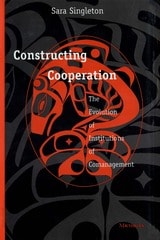
Constructing Cooperation
The Evolution of Institutions of ComanagementSara Singleton
University of Michigan Press, 1999
This book will appeal to policy makers concerned with the management of natural resources as well as to economists, political scientists, and sociologists concerned with collective action problems.
Sara Singleton is Assistant Professor of Political Science, Tulane University.
Contrasting Styles of Industrial Reform
China and India in the 1980sGeorge Rosen
University of Chicago Press, 1992
For economists, the two countries offer an interesting test case for examining similar reform programs launched from disparate political and economic systems. For policymakers concerned with the region's stability, a clear view of the economic futures of these two major powers is paramount.
Examining and comparing the reform experiences of China and India up to the present, George Rosen shows that although China enacted more sweeping reform measures and produced more impressive local growth, it also experienced more significant inflationary spurts. Two-thirds of each nation's population was involved in agriculture at the start of the reform period and nearly that many at the conclusion. Ultimately, the effects of the past industrial reforms in both countries in terms of significantly greater industrial employment or well-being of their populations were limited. An important lesson in these findings, argues Rosen, is that they actually reveal more about the political factors that limit and shape economic policy reforms in a dictatorship or democracy than they confirm the virtues of either capitalism or communism.
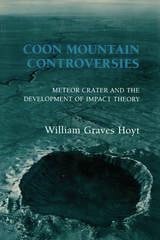
Coon Mountain Controversies
Meteor Crater and the Development of Impact TheoryWilliam Graves Hoyt
University of Arizona Press, 1987
"This meticulously prepared and lucidly written work will surely prove the definitive account of one of the most stimulating intellectual confrontations in the whole history of the earth and planetary sciences. I can recommend it without reservation."—William A. S. Sarjeant,Geoscience Canada
"An important book by an extraordinary author, of interest to anyone fascinated by the ways in which unorthodox science becomes part of conventional wisdom."—Earth Sciences History
Corporate Governance in Central Europe and Russia
Banks, Funds, and Foreign InvestorsRoman Frydman
Central European University Press, 1996
Corporate Governance in Central Europe and Russia
Insiders and the StateAndrzej Rapaczynski
Central European University Press, 1996

Cotton City
Urban Development in Antebellum MobileHarriet E. Amos Doss
University of Alabama Press, 2001
The exploration of the North-South relationship and the growth of of antebellum Mobile.
Cotton City offers a compelling exploration of Mobile, Alabama’s transformation into a thriving urban center during the antebellum period. Historian Harriet E. Amos examines how economic ambition, civic planning, and the cotton trade shaped the city’s development between 1819 and 1861. Through detailed archival research, Amos reveals how Mobile’s leaders sought to modernize infrastructure, expand commerce, and assert the city’s regional importance—all while navigating the tensions of slavery, class, and Southern identity.
This richly contextualized study highlights the interplay between urban growth and the broader forces of the Southern economy, making Cotton City a vital contribution to the histories of the American South, urbanization, and antebellum society.

Credit Where It's Due
Rethinking Financial CitizenshipFrederick F. Wherry
Russell Sage Foundation, 2019
Wherry, Seefeldt, and Alvarez tell the story of the Mission Asset Fund, a San Francisco-based organization that assists mostly low- and moderate-income people of color with building credit. The Mission Asset Fund facilitates zero-interest lending circles, which have been practiced by generations of immigrants, but have gone largely unrecognized by mainstream financial institutions. Participants decide how the circles are run and how they will use their loans, and the organization reports their clients’ lending activity to credit bureaus. As the authors show, this system not only helps clients build credit, but also allows them to manage debt with dignity, have some say in the creation of financial products, and reaffirm their sense of social membership. The authors delve into the history of racial wealth inequality in the U.S. to show that for many black and Latino households, credit invisibility is not simply a matter of individual choices or inadequate financial education. Rather, financial marginalization is the result of historical policies that enabled predatory lending, discriminatory banking and housing practices, and the rollback of regulatory protections for first-time homeowners.
To rectify these inequalities, the authors propose common sense regulations to protect consumers from abuse alongside new initiatives that provide seed capital for every child, create affordable short-term loans, and ensure that financial institutions treat low- and moderate-income clients with equal respect. By situating the successes of the Mission Asset Fund in the larger history of credit and debt, Credit Where It’s Due shows how to prioritize financial citizenship for all.
Critical Dialogues of Urban Governance, Development and Activism
London and TorontoEdited by Susannah Bunce, Nicola Livingstone, Loren March, Susan Moore, and Alan Walks
University College London, 2020
Critical Perspectives on Academic Writing
The politics and Practices of Writing Development in UK Higher EducationEdited by Ayanna Prevatt-Goldstein and David Mallows
University College London, 2026
This volume addresses the most pressing issues in higher education today, such as inclusion, academic integrity, and generative AI.
This timely collection explores the politics and practices of academic writing development in UK higher education. The volume addresses issues of access, equity, and generative AI in the context of student writing, to consider what makes writing academic, why it matters, and how we can change the field for the better.
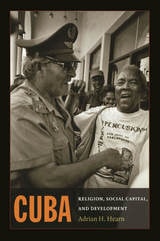
Cuba
Religion, Social Capital, and DevelopmentAdrian H. Hearn
Duke University Press, 2008
While conducting research, Hearn lived for one year each in two Santería temple-houses: one located in Old Havana and the other in Santiago de Cuba. During those stays he conducted numerous interviews: with the historian of Havana and the conservationist of Santiago de Cuba (officials roughly equivalent to mayors in the United States), acclaimed writers, influential leaders of Afro-Cuban religions, and many citizens involved in community development initiatives. Hearn draws on those interviews, his participant observation in the temple-houses, case studies, and archival research to convey the daily life experiences and motivations of religious practitioners, development workers, and politicians. Using the concept of social capital, he explains the state’s desire to incorporate tightly knit religious groups into its community development projects, and he illuminates a fundamental challenge facing Cuba’s religious communities: how to maintain their spiritual integrity and internal solidarity while participating in state-directed projects.

Culture and the Question of Rights
Forests, Coasts, and Seas in Southeast AsiaCharles Zerner, ed.
Duke University Press, 2003
Calling for radical redefinitions of development and ownership and for new understandings of the translation of culture and rights in politically dangerous contexts—natural resource frontiers—this volume links social injustice and the degradation of Southeast Asian environments. Charles Zerner and his colleagues show how geographical areas once viewed as wild and undeveloped are actually cultural artifacts shaped by complex interactions with human societies. Drawing on richly varied sources of evidence and interpretation—from trance dances, court proceedings, tree planting patterns, marine and forest rituals, erotic poems, and codifications of customary law, Culture and the Question of Rights reveals the ironies, complexities, and histories of contemporary communities’ struggles to retain their gardens, forests, fishing territories, and graveyards. The contributors examine how these cultural activities work to both construct and to lay claim to nature. These essays open up new avenues for negotiating indigenous rights against a background of violence, proliferating markets, and global ideas of biodiversity and threatened habitat.
Contributors. Jane Atkinson, Don Brenneis, Stephanie Fried, Nancy Peluso, Marina Roseman, Anna Tsing, Charles Zerner