Results by title
281 books match the query 'Disease & Health Issues' and 27 start with c
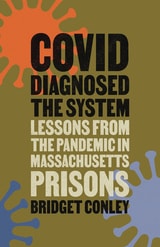
COVID Diagnosed the System
Lessons from the Pandemic in Massachusetts PrisonsBridget Conley
Rutgers University Press, 0
The American criminal justice system was in flux in 2020, a clash of possibilities for reform, retrenchment, and radical change—nowhere more so than in Massachusetts, which had just passed major criminal justice reform. The COVID-19 pandemic interrupted the moment with life-threatening force, ravaging people held in prisons and jails across the country. However, it did not so much create new deprivations and suffering as it exposed prisons as sites of physical, institutional, and psychological violence that do not make communities safer. At the same time, advocates for people in prisons—including many incarcerated and formerly incarcerated people—seized on the pandemic’s disruptions to demand change. Detailing the first year of the pandemic inside the Massachusetts state prison system, this book argues that the history of the pandemic inside prisons exposed both the cruelties of incarceration and the power of change when it is led by directly affected people.
COVID and...
How to Do Rhetoric in a PandemicEmily Winderman
Michigan State University Press, 2023
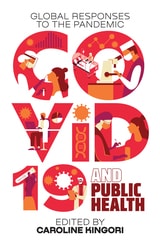
COVID-19 and Public Health
Global Responses to the PandemicCaroline Kingori
Ohio University Press, 2024
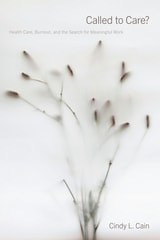
Called to Care?
Health Care, Burnout, and the Search for Meaningful WorkCindy L. Cain
Rutgers University Press, 2026
Health care workers are burned out. Health care leaders know that workers are burned out but do not yet have the right tools to fix the problem. Called to Care? argues that we can mitigate burnout by examining what is most meaningful about health care work. Using interviews and observation of a wide range of health care workers, Cain shows that workers who care for our most vulnerable adults find their work to be meaningful when they are able to connect to the work and make progress on something that matters. In most cases, these meaningful experiences are also consistent with better care for patients. And yet organizational practices, policy environments, and cultural meanings get in the way of meaningful work, creating burnout. But it doesn’t have to be this way. Called to Care? illustrates that workplaces can and should align meaningful work experiences with quality care for patients.
Cancer Entangled
Anticipation, Acceleration, and the Danish StateRikke Sand Andersen
Rutgers University Press, 2023
Capturing COVID
Media and the Pandemic in the Digital EraKatherine A. Foss
University of Massachusetts Press, 2025
When health authorities quarantined guests aboard the Diamond Princess on February 5, 2020, the cruise ship abruptly shifted from a dream vacation vessel to a public health nightmare. Over the next three weeks, 712 passengers tested positive for coronavirus, with fourteen deaths, and the ship outbreak quickly became the largest cluster of cases outside of China. Guests began to routinely share quarantine updates on social media, ranging from the quality of the ship’s food to their sense of imprisonment. These Facebook, Twitter, Instagram, YouTube, and TikTok accounts became a key source of information for news outlets like the Associated Press, and they helped to set the tone for how the media would cover and frame the pandemic for the next several years.
Unlike past outbreaks, epidemics, and pandemics, COVID-19 emerged in a 21st-century digital landscape of instant communication and abundant online platforms, with older models of news and entertainment media mingling with new types of citizen-produced content. In Capturing COVID, Katherine A. Foss makes sense of how this contemporary media landscape shaped the public’s knowledge and perceptions of the new pandemic. The book focuses on crucial media moments, including the initial reporting from Wuhan; news and social media content on the Diamond Princess quarantine; stories of inequality, stigma, and injustice; narratives of the vaccine rollout; and representations of pandemic life in popular culture. Drawing on press releases, interviews, websites, blogs, social media posts, and other publicly available materials, and guided by critical media analysis, Foss illuminates how this new digital era profoundly shaped the progression of the pandemic. This media landscape kept people informed and connected, but also led to the politicization of the virus, rampant mis/disinformation, and stigmatizing messaging that contributed to public distrust and division. Capturing COVID deftly helps make sense of the entire affair.
Caring for Immigrants in the Twenty-First Century
Local Hospitals, Global HealthSusan E. Bell
Rutgers University Press, 2027
In Permeable Hospitals, medical sociologist Susan E. Bell makes an original contribution to understanding a complex and urgent global health issue – caring for an increasingly diverse and mobile patient population. Bell identifies the twenty-first-century hospital as the center of a complex network of social and health care interactions among patients and medical communities that are distinguished by transnational movement. She examines how culture and language are negotiated during face-to-face interactions in outpatient visits at one Maine hospital and shows how caring is done for refugee and immigrant patients. To capture this process, Bell advances a new theoretical framework, that twenty-first-century hospitals are nodes in transnational social networks. During appointments, temporary combinations of people, objects, practices, and ideas assemble at the hospital and disperse at the appointment’s end. Because the interactions take place in a teaching hospital, the thinking that underlies diagnosis and treatment is made explicit and evaluated in backstage teaching areas where residents report about their patients to senior physicians. Bell's landmark book is based on a qualitative study that included nine months at the hospital observing interactions among adult New Mainer patients and clinicians, interpreters, and staff.

Carry Me Gently
On Maternal Life, Care, and HarmLalaie Ameeriar
Duke University Press, 2027
Carrying On
Another School of Thought on Pregnancy and HealthBrittany Clair
Rutgers University Press, 2022
Carrying On investigates the origin stories of prevailing prenatal health norms by exploring the evolution of issues at the center of pregnancy, ranging from morning sickness and weight gain to ultrasounds and induction. When did women start taking prenatal vitamins, and why? When did the notion that pregnant women should “eat for two” originate? Where did exercise guidelines come from? And when did women start formulating birth plans?
A learning project with one foot in the past and the other in the present, Carrying On considers what history and medicine together can teach us about how and why we treat pregnancy–and pregnant women–the way we do. In a world of information overload, Carrying On offers expecting parents the context and background they need to approach pregnancy and prenatal health from a new place of understanding.
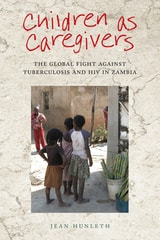
Children as Caregivers
The Global Fight against Tuberculosis and HIV in ZambiaHunleth, Jean
Rutgers University Press, 2017
In Zambia, due to the rise of tuberculosis and the closely connected HIV epidemic, a large number of children have experienced the illness or death of at least one parent. Children as Caregivers examines how well intentioned practitioners fail to realize that children take on active caregiving roles when their guardians become seriously ill and demonstrates why understanding children’s care is crucial for global health policy.
Using ethnographic methods, and listening to the voices of the young as well as adults, Jean Hunleth makes the caregiving work of children visible. She shows how children actively seek to “get closer” to ill guardians by providing good care. Both children and ill adults define good care as attentiveness of the young to adults’ physical needs, the ability to carry out treatment and medication programs in the home, and above all, the need to maintain physical closeness and proximity. Children understand that losing their guardians will not only be emotionally devastating, but that such loss is likely to set them adrift in Zambian society, where education and advancement depend on maintaining familial, reciprocal relationships.
View a gallery of images from the book (https://www.flickr.com/photos/childrenascaregivers)
Download the open access ebook.
Chronic Failures
Kidneys, Regimes of Care, and the Mexican StateCiara Kierans
Rutgers University Press, 2020
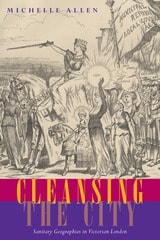
Cleansing the City
Sanitary Geographies in Victorian LondonMichelle Allen
Ohio University Press, 2008
From the novels of Charles Dickens and George Gissing to anonymous magazine articles and pamphlets, resistance to reform found expression in the nostalgic appreciation of a threatened urban landscape and anxiety about domestic autonomy in an era of networked sanitary services. Cleansing the City emphasizes the disruptions and disorientation occasioned by purification—a process we are generally inclined to see as positive. By recovering these sometimes oppositional, sometimes ambivalent responses, Michelle Allen elevates a significant undercurrent of Victorian thought into the mainstream and thus provides insight into the contested nature of sanitary modernization.
Communities of Health Care Justice
Galarneau, Charlene
Rutgers University Press, 2016
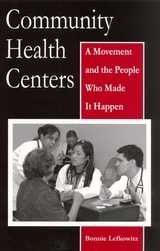
Community Health Centers
A Movement and the People Who Made It HappenLefkowitz, Bonnie
Rutgers University Press, 2007
This book tells the story of one groundbreaking approach to medicine that attacks the problem by focusing on the wellness of whole neighborhoods. Since their creation during the 1960s, community health centers have served the needs of the poor in the tenements of New York, the colonias of Texas, the working class neighborhoods of Boston, and the dirt farms of the South. As products of the civil rights movement, the early centers provided not only primary and preventive care, but also social and environmental services, economic development, and empowerment.
Bonnie Lefkowitz-herself a veteran of community health administration-explores the program's unlikely transformation from a small and beleaguered demonstration effort to a network of close to a thousand modern health care organizations serving nearly 15 million people. In a series of personal accounts and interviews with national leaders and dozens of health care workers, patients, and activists in five communities across the United States, she shows how health centers have endured despite cynicism and inertia, the vagaries of politics, and ongoing discrimination.
Community Organizing and Community Building for Health and Social Equity, 4th edition
Meredith Minkler and Patricia Wakimoto
Rutgers University Press, 2022
Many of the book’s contributors are leaders in their academic fields, from public health and social work, to community psychology and urban and regional planning, and to social and political science. One author was the 44th president of the United States, himself a former community organizer in Chicago, who reflects on his earlier vocation and its importance. Other contributors are inspiring community leaders whose work on-the-ground and in partnership with us “outsiders” highlights both the power of collaboration, and the cultural humility and other skills required to do it well.
Throughout this book, and particularly in the case studies and examples shared, the role of context is critical, and never far from view. Included here most recently are the horrific and continuing toll of the COVID-19 pandemic, and a long overdue, yet still greatly circumscribed, “national reckoning with systemic racism,” in the aftermath of the brutal police killing of yet another unarmed Black person, and then another and another, seemingly without end. In many chapters, the authors highlight different facets of the Black Lives Matter movement that took on new life across the country and the world in response to these atrocities. In other chapters, the existential threat of climate change and grave threats to democracy also are underscored.
View the Table of Contents and introductory text for the supplementary instructor resources. (https://d3tto5i5w9ogdd.cloudfront.net/wp-content/uploads/2022/02/04143046/9781978832176_optimized_sampler.pdf)
Supplementary instructor resources are available on request: https://www.rutgersuniversitypress.org/communityorganizing
Community Organizing and Community Building for Health and Welfare
Edited by Meredith Minkler
Rutgers University Press, 2012
The third edition of Community Organizing and Community Building for Health and Welfare provides new and more established ways to approach community building and organizing, from collaborating with communities on assessment and issue selection to using the power of coalition building, media advocacy, and social media to enhance the effectiveness of such work.
With a strong emphasis on cultural relevance and humility, this collection offers a wealth of case studies in areas ranging from childhood obesity to immigrant worker rights to health care reform. A "tool kit" of appendixes includes guidelines for assessing coalition effectiveness, exercises for critical reflection on our own power and privilege, and training tools such as "policy bingo." From former organizer and now President Barack Obama to academics and professionals in the fields of public health, social work, urban planning, and community psychology, the book offers a comprehensive vision and on-the-ground examples of the many ways community building and organizing can help us address some of the most intractable health and social problems of our times.
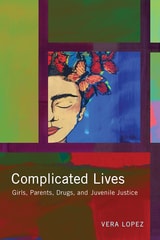
Complicated Lives
Girls, Parents, Drugs, and Juvenile JusticeLopez, Vera
Rutgers University Press, 2017
Complicated Lives focuses on the lives of sixty-five drug-using girls in the juvenile justice system (living in group homes, a residential treatment center, and a youth correctional facility) who grew up in families characterized by parental drug use, violence, and child maltreatment. Vera Lopez situates girls’ relationships with parents who fail to live up to idealized parenting norms and examines how these relationships change over time, and ultimately contribute to the girls’ future drug use and involvement in the justice system.
While Lopez’s subjects express concerns and doubt in their chances for success, Lopez provides an optimistic prescription for reform and improvement of the lives of these young women and presents a number of suggestions ranging from enhanced cultural competency training for all juvenile justice professionals to developing stronger collaborations between youth and adult serving systems and agencies.
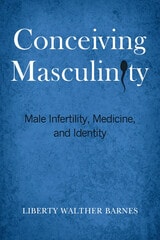
Conceiving Masculinity
Male Infertility, Medicine, and IdentityLiberty Walther Barnes
Temple University Press, 2014
In Conceiving Masculinity, Liberty Walther Barnes puts the world of male infertility under the microscope to examine how culturally pervasive notions of gender shape our understanding of disease, and how disease impacts our personal ideas about gender.
Taking readers inside male infertility clinics, and interviewing doctors and couples dealing with male infertility, Barnes provides a rich account of the social aspects of the confusing and frustrating diagnosis of infertility. She explains why men resist a stigmatizing label like "infertile," and how men with poor fertility redefine for themselves what it means to be manly and masculine in a society that prizes male virility. Conceiving Masculinity also details how and why men embrace medical technologies and treatment for infertility.
Broaching a socially taboo topic, Barnes emphasizes that infertility is not just a women's issue. She shows how gender and disease are socially constructed within social institutions and by individuals.
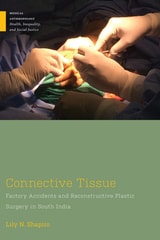
Connective Tissue
Factory Accidents and Reconstructive Plastic Surgery in South IndiaLily N. Shapiro
Rutgers University Press, 2025
Connective Tissue revisits scholarship on factory labor by analyzing the accident as constitutive of the experience of work itself, and it refines existing conversations about the body, trauma, and care by introducing an analysis informed by theories of labor and production. Author Lily N. Shapiro argues that care does not happen in spite of or on the margins of capitalism, but rather that capitalism happens in and through care and caring relations. These experiences are intersected by identities of caste, class, and gender, and entangled in state discourse about labor rights, welfare, and industrial law.
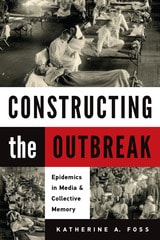
Constructing the Outbreak
Epidemics in Media and Collective MemoryKatherine A. Foss
University of Massachusetts Press, 2020
Constructing the Outbreak demonstrates how news reporting on epidemics communicates more than just information about pathogens; rather, prejudices, political agendas, religious beliefs, and theories of disease also shape the message. Analyzing seven epidemics spanning more than two hundred years—from Boston's smallpox epidemic and Philadelphia's yellow fever epidemic in the eighteenth century to outbreaks of diphtheria, influenza, and typhoid in the early twentieth century—Katherine A. Foss discusses how shifts in journalism and medicine influenced the coverage, preservation, and fictionalization of different disease outbreaks. Each case study highlights facets of this interplay, delving into topics such as colonization, tourism, war, and politics. Through this investigation into what has been preserved and forgotten in the collective memory of disease, Foss sheds light on current health care debates, like vaccine hesitancy.
Contagions
Nationalism, Populism, and the Pandemic at Europe’s EdgeJosip Glaurdic
Central European University Press, 2026
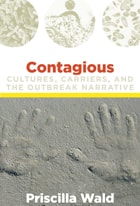
Contagious
Cultures, Carriers, and the Outbreak NarrativePriscilla Wald
Duke University Press, 2008
Wald traces how changing ideas about disease emergence and social interaction coalesced in the outbreak narrative. She returns to the early years of microbiology—to the identification of microbes and “Typhoid Mary,” the first known healthy human carrier of typhoid in the United States—to highlight the intertwined production of sociological theories of group formation (“social contagion”) and medical theories of bacteriological infection at the turn of the twentieth century. Following the evolution of these ideas, Wald shows how they were affected by—or reflected in—the advent of virology, Cold War ideas about “alien” infiltration, science-fiction stories of brainwashing and body snatchers, and the HIV/AIDS pandemic. Contagious is a cautionary tale about how the stories we tell circumscribe our thinking about global health and human interactions as the world imagines—or refuses to imagine—the next Great Plague.

Crime, Corrections, and the COVID-19 Pandemic
Responses and Adaptations in the U.S. Criminal Justice SystemEdited by Breanne Pleggenkuhle and Joseph A. Schafer
Southern Illinois University Press, 2025
Analyses of crime and justice in an unprecedented time
While COVID-19 lockdowns affected nearly everyone worldwide, feelings of anxiety and fear were exacerbated for those already entangled in the criminal justice system. Scholars recognized the unique opportunity to study crime and the justice system’s response during this period, though they soon realized that determining the pandemic’s effects would be a complicated, nuanced process.
Crime, Corrections, and the COVID-19 Pandemic features analyses and findings from more than thirty contributors in eleven essays. The collection examines the multifaceted social, economic, cultural, legislative, and policy responses to COVID-19 and their impacts on crime and justice. It also explores how professionals across the criminal justice system—police officers, campus police officers, attorneys, judges, correctional staff, and community supervision agents—adapted to unprecedented challenges.
The book provides real-world evidence of how unconventional solutions and groundbreaking practices were implemented in response to a global crisis. Contributors analyze how incarcerated individuals, their families, and their supervisors dealt with the fear of transmission, medical care, and death. Their findings, which are necessarily dependent on timing, place, measurement, and operationalization, include both change and stasis, both negative and positive outcomes. For instance, while minor and property-related offenses initially declined, violent crimes like homicide and intimate partner violence increased. Drug usage patterns changed, leading to a rise in opioid overdoses, and despite the rise in digital interactions, there was no significant difference in self-reported cybervictimization. Furthermore, rates of gang-related crimes did not decrease. Policy and public health responses reshaped criminal activities, influencing the methods and motivations behind theft, child and elder abuse, and other offenses. This volume includes in-depth examinations of certain often-overlooked crimes, such as labor trafficking, and provides direct insights into the job challenges faced by criminal justice professionals, from probation personnel to labor rights advocates.
Emerging innovations in health risk management within correctional facilities led to increased awareness and focus on specific types of crime. Responses to the pandemic revealed significant challenges, such as burnout among justice system personnel, difficulties in adapting and innovating, and challenges in providing services to vulnerable populations.
Through diverse perspectives and empirical approaches ranging from advanced statistical analysis to qualitative interviews, Crime, Corrections, and the COVID-19 Pandemic offers a comprehensive exploration of the complexities that affect research results. It showcases the resilience and innovation within the criminal justice field and details the challenges professionals in this area tackled during a universally trying time, presenting valuable lessons for future crises.
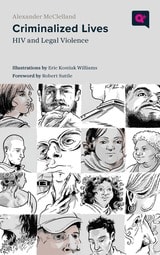
Criminalized Lives
HIV and Legal ViolenceAlexander McClelland
Rutgers University Press, 2024
Canada has been known as a hot spot for HIV criminalization where the act of not disclosing one’s HIV-positive status to sex partners has historically been regarded as a serious criminal offence. Criminalized Lives describes how this approach has disproportionately harmed the poor, Black and Indigenous people, gay men, and women in Canada. In this book, people who have been criminally accused of not disclosing their HIV-positive status, detail the many complexities of disclosure, and the violence that results from being criminalized.
Accompanied by portraits from artist Eric Kostiuk Williams, the profiles examine whether the criminal legal system is really prepared to handle the nuances and ethical dilemmas faced everyday by people living with HIV. By offering personal stories of people who have faced criminalization first-hand, Alexander McClelland questions common assumptions about HIV, the role of punishment, and the violence that results from the criminal legal system’s legacy of categorizing people as either victims or perpetrators.
Note: A regrettable error appears on page 22. The number 240 should be 206 when referring to the number of people prosecuted in relation to allegations of HIV nondisclosure. This will be fixed in future reprints.
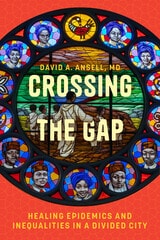
Crossing the Gap
Healing Epidemics and Inequalities in a Divided CityDavid A. Ansell, MD
University of Chicago Press, 2026
A doctor, a disinvested neighborhood, and a radical experiment to close America’s death gap.
Two girls are born in the same Chicago hospital. Their neighborhoods—just seven train stops apart—will shape their futures and help determine how long they live. One will celebrate her eighty-fifth birthday. The other will die before sixty-five.
This is the death gap: lives lost too soon. Crossing the Gap asks how a city with world-class hospitals can tolerate an epidemic of premature death—and tells the story of the people fighting to end it.
In his landmark book The Death Gap, physician and health equity leader David A. Ansell exposed how structural racism and poverty shorten lives. He moves beyond diagnosis in Crossing the Gap to explore what happens when a major medical center joins forces with pastors, community organizers, residents, and young leaders on Chicago’s West Side to redefine what a hospital owes its neighbors. Part medical memoir and part urban chronicle, Crossing the Gap follows groundbreaking initiatives such as West Side United and the Sankofa Wellness Village as they confront decades of disinvestment and work to build healthier communities.
Through stories of collaboration, courage, conflict, and community leadership, Ansell shows how neighborhood voices, rigorous data, and moral imagination can transform health systems from bystanders into partners for change—not just in one city but throughout the nation.
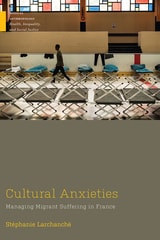
Cultural Anxieties
Managing Migrant Suffering in FranceStéphanie Larchanche
Rutgers University Press, 2020

Curating Conception
Race and Reproduction in South AfricaTessa Moll
Rutgers University Press, 2026
South Africa’s private fertility clinics promise hope: expert care, measurable success rates, and the possibility of long-desired children. While seemingly insulated from the legacies of apartheid and the stark inequalities of the present, these clinics operate within a society still shaped by racial stratification and uneven access to care. But what happens once patients step through the clinic doors? Based on fieldwork conducted over a decade, Curating Conception offers the first book-length study of IVF in sub-Saharan Africa. Tessa Moll turns to the polished, private clinics of Cape Town and Johannesburg to show how racial hierarchies are quietly sustained through everyday decisions—about donor selection, embryo grading, success statistics, and patient eligibility—that shape ideas of legitimate parenthood and belonging in the post-apartheid era. Introducing the concept of curating, Moll shows how medical authority, patient desire, and enduring social orders work together to shape which reproductive futures are seen as natural and desirable. In doing so, Curating Conception demonstrates how racial imaginaries—and the normalization of whiteness as the default family form—are woven into the intimate and technological processes of IVF. Blending vivid storytelling with careful analysis, it invites readers to rethink fertility care not simply as a technology of hope, but as a powerful site where history, inequality, and aspiration converge.