Results by title
56 books match the query 'Diversity' and 5 start with c
Catastrophic Thinking
Extinction and the Value of Diversity from Darwin to the AnthropoceneDavid Sepkoski
University of Chicago Press, 2020
We live in an age in which we are repeatedly reminded—by scientists, by the media, by popular culture—of the looming threat of mass extinction. We’re told that human activity is currently producing a sixth mass extinction, perhaps of even greater magnitude than the five previous geological catastrophes that drastically altered life on Earth. Indeed, there is a very real concern that the human species may itself be poised to go the way of the dinosaurs, victims of the most recent mass extinction some 65 million years ago.
How we interpret the causes and consequences of extinction and their ensuing moral imperatives is deeply embedded in the cultural values of any given historical moment. And, as David Sepkoski reveals, the history of scientific ideas about extinction over the past two hundred years—as both a past and a current process—is implicated in major changes in the way Western society has approached biological and cultural diversity. It seems self-evident to most of us that diverse ecosystems and societies are intrinsically valuable, but the current fascination with diversity is a relatively recent phenomenon. In fact, the way we value diversity depends crucially on our sense that it is precarious—that it is something actively threatened, and that its loss could have profound consequences. In Catastrophic Thinking, Sepkoski uncovers how and why we learned to value diversity as a precious resource at the same time as we learned to think catastrophically about extinction.
Challenges of Diversity
Essays on AmericaSollors, Werner
Rutgers University Press, 2017
What unites and what divides Americans as a nation? Who are we, and can we strike a balance between an emphasis on our divergent ethnic origins and what we have in common? Opening with a survey of American literature through the vantage point of ethnicity, Werner Sollors examines our evolving understanding of ourselves as an Anglo-American nation to a multicultural one and the key role writing has played in that process.
Challenges of Diversity contains stories of American myths of arrival (pilgrims at Plymouth Rock, slave ships at Jamestown, steerage passengers at Ellis Island), the powerful rhetoric of egalitarian promise in the Declaration of Independence and the heterogeneous ends to which it has been put, and the recurring tropes of multiculturalism over time (e pluribus unum, melting pot, cultural pluralism). Sollors suggests that although the transformation of this settler country into a polyethnic and self-consciously multicultural nation may appear as a story of great progress toward the fulfillment of egalitarian ideals, deepening economic inequality actually exacerbates the divisions among Americans today.
Class Action
Desegregation and Diversity in San Francisco SchoolsRand Quinn
University of Minnesota Press, 2020
A compelling history of school desegregation and activism in San Francisco
The picture of school desegregation in the United States is often painted with broad strokes of generalization and insulated anecdotes. Its true history, however, is remarkably wide ranging. Class Action tells the story of San Francisco’s long struggle over school desegregation in the wake of the 1954 U.S. Supreme Court decision Brown v. Board of Education.
San Francisco’s story provides a critical chapter in the history of American school discrimination and the complicated racial politics that emerged. It was among the first large cities outside the South to face court-ordered desegregation following the Brown rulings, and it experienced the same demographic shifts that transformed other cities throughout the urban West. Rand Quinn argues that the district’s student assignment policies—including busing and other desegregative mechanisms—began as a remedy for state discrimination but transformed into a tool intended to create diversity. Drawing on extensive archival research—from court docket files to school district records—Quinn describes how this transformation was facilitated by the rise of school choice, persistent demand for neighborhood schools, evolving social and legal landscapes, and local community advocacy and activism.
Class Action is the first book to present a comprehensive political history of post-Brown school desegregation in San Francisco. Quinn illuminates the evolving relationship between jurisprudence and community-based activism and brings a deeper understanding to the multiracial politics of urban education reform. He responds to recent calls by scholars to address the connections between ideas and policy change and ultimately provides a fascinating look at race and educational opportunity, school choice, and neighborhood schools in the aftermath of Brown v. Board of Education.
Coethnicity
Diversity and the Dilemmas of Collective ActionJames Habyarimana
Russell Sage Foundation, 2009
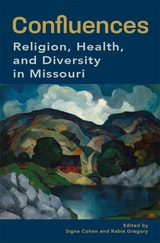
Confluences
Religion, Health, and Diversity in MissouriSigne Cohen
University of Missouri Press, 2025
The contributors to this volume explore connections between religious affiliation, race, gender, ethnicity, epidemiology, and attitudes towards health and medicine in Missouri from the nineteenth century to the present day. They ask what role religious belief systems play in healthcare outcomes and offer important arguments for building a dialogue between faith communities and medical caregivers. Centering on Missouri as a site for religious transformation and diversity, this volume documents how religious perspectives shape contemporary America.
Initial chapters outline the religious history of Missouri, relaying the history of medicine in the region before and after Missouri statehood. Subsequent essays document Missouri’s religious diversity by contemplating Native American, Asian American, and African American religious experiences in Missouri, intentionally recovering and respectfully contextualizing understudied events and forgotten individuals. The volume’s remaining essays consider religious responses to the Cholera, Influenza, and Covid-19 epidemics and show how Native American, Euro-American, and African American Missourians have transformed U.S. history and healthcare. Collectively, the essays in this book demonstrate that religious freedom, medical knowledge, and transnational encounters are woven into the historical fabric of the region.
Featuring essays by experts in Religious Studies and Health Sciences, this volume will be of interest to scholars of religion, sociology, public health, and medicine, as well as readers more generally interested in the history and culture of Missouri.