Results by title
61 books match the query 'East Asia' and 6 start with c
Changes in Exchange Rates in Rapidly Developing Countries
Theory, Practice, and Policy IssuesEdited by Takatoshi Ito and Anne O. Krueger
University of Chicago Press, 1999
Historically, most developing nations have employed strict exchange rate controls and heavy protection of domestic industry-policies now thought to be at odds with sustainable and desirable rates of economic growth. By contrast, many East Asian nations maintained exchange rate regimes designed to achieve an attractive climate for exports and an "outer-oriented" development strategy. The result has been rapid and consistent economic growth over the past few decades.
Changes in Exchange Rates in Rapidly Developing Countries explores the impact of such diverse exchange control regimes in both historical and regional contexts, focusing particular attention on East Asia. This comprehensive, carefully researched volume will surely become a standard reference for scholars and policymakers.
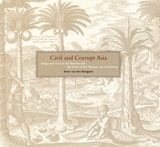
Civil and Corrupt Asia
Image and Text in the Itinerario and the Icones of Jan Huygen Van LinschotenErnst van den Boogaart
University of Chicago Press, 2003
Divine and Spoiled Asia reproduces these engravings and their captions (in English), together with an extensive analysis of them by historian Ernst van den Boogaart. In addition to providing unparalleled insights into early modern European views of the East, the engravings also contain valuable depictions of the peoples, customs, and flora and fauna of late sixteenth-century India and neighboring countries.
Commodity Prices and Markets
Edited by Takatoshi Ito and Andrew K. Rose
University of Chicago Press, 2011
Fluctuations of commodity prices, most notably of oil, capture considerable attention and have been tied to important economic effects, such as inflation and low rates of economic growth. Commodity Prices and Markets advances our understanding of the consequences of these fluctuations, providing both general analysis and a particular focus on the countries of the Pacific Rim. The volume addresses three distinct subjects: the difficulties in forecasting commodity prices, the effects of exogenous commodity price shocks on the domestic economy, and the relationship between price shocks and monetary policy. The ability to forecast commodity prices is difficult but of great importance to businesses and governments, and this volume will be invaluable to professionals and policy makers interested in the field.
Constructing Nationhood in Modern East Asia
Kai-wing Chow, Kevin M. Doak, and Poshek Fu, Editors
University of Michigan Press, 2001
This is an interdisciplinary study of the cultural politics of nationalism and national identities in modern East Asia. Combining theoretical insights with empirical research, it explores the cultural dimensions of nationhood and identity-making in China, Japan, Korea, Hong Kong, and Taiwan. The essays address issues ranging from the complex relations between popular culture and national consciousness to the representation of ethnic/racial identity and gendered discourse on nationalism. The cutting-edge research on the diverse forms of cultural preacceptance and the various ways in which this participates in the construction and projection of national and ethnic identities in East Asia illuminates several understudied issues in Asian studies, including the ambiguity of Hong Kong identity during World War II and the intricate politics of the post-war Taiwanese trial of collaboration.
Addressing a wide range of theoretical and historical issues regarding cultural dimensions of nationalism and national identities all over East Asia, these essays draw insights from such recent theories as cultural studies, postcolonial theories, and archival-researched cultural anthropology. The book will be important reading for students of Asian studies as well as for serious readers interested in issues of nationalism and culture.
Kai-wing Chow is Associate Professor of East Asian Languages and Cultures. Kevin Doak is Associate Professor of History. Poshek Fu is Associate Professor of History and Cinema Studies. All three teach at University of Illinois, Urbana-Champaign.
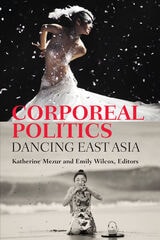
Corporeal Politics
Dancing East AsiaKatherine Mezur and Emily Wilcox, Editors
University of Michigan Press, 2020
Through the lens of “corporeal politics”—the close attention to bodily acts in specific cultural contexts—each study in this book challenges existing dance and theater histories to re-investigate the performer's role in devising the politics and aesthetics of their performance, as well as the multidimensional impact of their lives and artistic works. Corporeal Politics addresses a wide range of performance styles and genres, including dances produced for the concert stage, as well as those presented in popular entertainments, private performance spaces, and street protests.
Culture and Economy
The Shaping of Capitalism in Eastern AsiaTimothy Brook and Hy Van Luong, Editors
University of Michigan Press, 1999