Results by title
74 books match the query 'East North Central (IL, IN, MI, OH, WI)' and 9 start with c
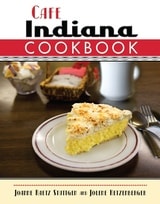
Cafe Indiana Cookbook
Joanne Raetz Stuttgen
University of Wisconsin Press, 2010
Joanne Raetz Stuttgen’s cafe guides showcase popular regional diner traditions. In her companion book Cafe Indiana she introduces travelers to the state’s top mom-and-pop restaurants. Now, Cafe Indiana Cookbook allows you to whip up local cafe classics yourself. Breakfast dishes range from Swiss Mennonite eier datch (egg pancakes) to biscuits and gravy; entree highlights include chicken with noodles (or with dumplings) and the iconic Hoosier breaded pork tenderloin sandwich. For dessert, try such Indiana favorites as apple dapple cake or rhubarb, coconut cream, or sugar cream pie . All 130 recipes have been kitchen-tested by Jolene Ketzenberger, food writer for the Indianapolis Star.
Cafe Indiana Cookbook reveals the favorite recipes of Indiana’s Main Street eateries, including some rescued for publication before a diner’s sad closure, and documents old-fashioned delicacies now fading from the culinary landscape—like southern Indiana’s fried brain sandwiches.
Finalist, Cookbook, Midwest Book Awards
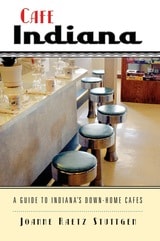
Cafe Indiana
A Guide to Indiana’s Down-Home CafesJoanne Raetz Stuttgen
University of Wisconsin Press, 2007
Over plates of chicken and noodles, fried bologna sandwiches, and sugar cream pie, folks are crafting community at the Main Street eatery. In Cafe Indiana, Hoosiers and out-of-staters alike are invited to pull out a chair and sit a spell.
Cafe Wisconsin Cookbook
Joanne Raetz Stuttgen and Terese Allen
University of Wisconsin Press, 2007
Stuttgen tracked down Wisconsin's best small town cafes, from Boscobel to Sturgeon Bay, chatted with owners and customers, took notes, and recorded the history, anecdotes, and recipes behind the food. Tested and fine-tuned by Wisconsin food writer and former chef Terese Allen, these favorite recipes will bring an authentic slice of Wisconsin into your home kitchen.
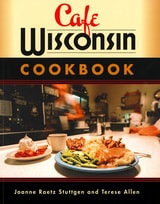
Cafe Wisconsin
A Guide To Wisconsin's Down-Home CafesJoanne Raetz Stuttgen
University of Wisconsin Press, 2004
Featuring 133 cafes, with another 101 Next Best Bets alternatives, Cafe Wisconsin is every hungry traveler’s guide to real mashed potatoes, melt-in-your-mouth hot beef, from-scratch baked goods, and colorful coffee klatches. At the counter of aptly named cafes like the Coffee Cup, Main Street, and Chatterbox, you’ll laugh with owners, shake dice with customers, and find the authentic taste and flavor of Wisconsin.
Come on. Let’s go out to eat!
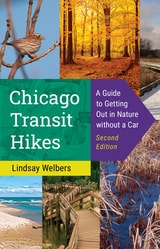
Chicago Transit Hikes
A Guide to Getting Out in Nature without a CarLindsay Welbers
University of Illinois Press, 2025
Taking the train to nature in Chicagoland
Beyond the steel and asphalt await natural spaces that are easy to access and balm for the soul. Lindsay Welbers’s guide tells readers how to use Chicagoland’s extensive public rail system to reach forests, prairies, wetlands, dunes, and Lake Michigan. Designed to take up minimal space in a backpack, Chicago Transit Hikes provides train-to-trailhead information for thirty nature treks with features that include:
- Chapters with hikes organized by each rail line on the Metra, the South Shore train, and the CTA;
- Information on everything from accessibility to dog-friendliness to flora and fauna;
- Detailed descriptions of every destination;
- Practical tips on packing lists and itineraries.
Up-to-date and user-friendly, Chicago Transit Hikes connects Chicagoans and visitors alike with excursions for every season and level of difficulty.
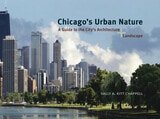
Chicago's Urban Nature
A Guide to the City's Architecture + LandscapeSally A. Kitt Chappell
University of Chicago Press, 2007
At the heart of this new urban concept is the idea of connection, bringing buildings and landscapes, culture and nature, commerce and leisure into an energetic harmony. With Chicago’s Urban Nature in hand, you’ll see those connections woven through the fabric of the city. Chappell provides new insights into such historic Chicago sites as Jens Jensen’s Garfield Park Conservatory, Frederick Law Olmsted’s Jackson Park, and Alfred Caldwell’s Lily Pond, then takes us to the innovative contemporary green spaces they influenced, from City Hall’s rooftop garden to the North Lawndale Green Youth Farm to Chicago’s heralded new Millennium Park. These beautiful green spaces, with their unprecedented melding of art, architecture, and ecology, have become far more than places of escape for Chicagoans—they’re now fully integrated into the urban scene, an essential part of the cultural life of the modern city.
Packed with maps and recommended tours, and bursting with splendid photos, this is an essential guidebook for day-trippers, lifelong Chicago residents, and professionals in landscape architecture, urbanism, and design.
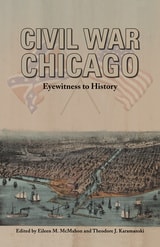
Civil War Chicago
Eyewitness to HistoryTheodore J. Karamanski
Ohio University Press, 2014
The American Civil War was a crucial event in the development of Chicago as the metropolis of the heartland. Not only did Chicagoans play an important role in the politics of the conflict, encouraging emancipation and promoting a “hard war” policy against Southern civilians, but they supported the troops materially through production of military supplies and foodstuffs as well as morally and spiritually through patriotic publications and songs. The Civil War transformed Chicago from a mere commercial center to an industrial power as well as the nation’s railroad hub and busiest port. The war also divided Chicago, however, between Lincoln supporters and Copperheads, whites and blacks, workers and owners, natives and newcomers.
The city played a key role in elevating Abraham Lincoln to the Republican presidential nomination in 1860, yet only four years later a Chicago politician’ s influence was key in declaring the war a failure and promoting a platform of peace with the Confederacy. Using seldom seen or newly uncovered sources, this book tells the story of the Civil War through the eyes of those who lived that history. Photographs throughout the book effectively convey the geography of events in this pivotal period of Chicago’s history, and the editors have provided a useful driving guide to Civil War sites in and around the city.
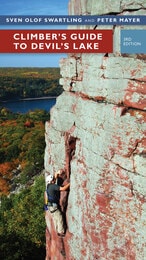
Climber’s Guide to Devil’s Lake
Sven Olof Swartling
University of Wisconsin Press, 2008
•a summary of the geologic and natural history of the Baraboo hills by Patricia K. Armstrong
•locations and updated descriptions of nearly 1,800 climbs
•landmark photographs from most major climbing areas
•GPS waypoints, map coordinates, altimeter readings, and approach information
•detailed diagrams locating climbing routes at most major climbing areas
•6 new diagrams, 5 new climbing areas, and 120 new routes
Crossing the Driftless
A Canoe Trip through a Midwestern LandscapeLynne Diebel
University of Wisconsin Press, 2015
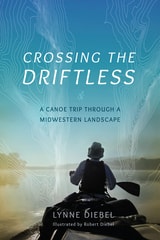
Crossing the Driftless is both a traveler’s tale and an exploration of this dramatic environment, following the streams of geologic and human history. Lynne Diebel and her husband, Bob, crossed the Driftless Area by canoe, journeying 359 river miles (and six Mississippi River locks and five portages) from Faribault, Minnesota, where her family has a summer home on Cedar Lake, to their Wisconsin home in Stoughton, one block from the Yahara River. Traveling by river and portage, they paddled downstream on the Cannon and Mississippi rivers and upstream on the Wisconsin River, in the tradition of voyageurs. Lynne tells the story of their trip, but also the stories of the rivers they canoed and the many tributaries whose confluences they passed.
Finalist, Travel, Foreword Reviews IndieFab Book of the Year Awards
Honorable mention, Nonfiction book, Council for Wisconsin Writers
Winner, Recreation/Sports/Travel, Midwest Book Awards
Best books for public & secondary school libraries from university presses, American Library Association