Results by title
300 books match the query 'Economic Development' and 20 start with c
Capital Controls and Capital Flows in Emerging Economies
Policies, Practices, and ConsequencesEdited by Sebastian Edwards
University of Chicago Press, 2007
Some scholars argue that the free movement of capital across borders enhances welfare; others claim it represents a clear peril, especially for emerging nations. In Capital Controls and Capital Flows in Emerging Economies, an esteemed group of contributors examines both the advantages and the pitfalls of restricting capital mobility in these emerging nations.
In the aftermath of the East Asian currency crises of 1997, the authors consider mechanisms that eight countries have used to control capital inflows and evaluate their effectiveness in altering the maturity of the resulting external debt and reducing macroeconomic vulnerability. This volume is essential reading for all those interested in emerging nations and the costs and benefits of restricting international capital flows.

Capitalism in Context
Essays on Economic Development and Cultural Change in Honor of R.M. HartwellEdited by John A. James and Mark Thomas
University of Chicago Press, 1994
Thirteen chapters cover: social progress during economic development; the influence of cultural values on social and economic change; economic foundations of development—labor, capital, and technology; and organizational arrangements—property rights, government, and markets. These studies will appeal to economists, historians, and social scientists alike for their wide-ranging treatments of economic development and cultural change.
The contributors are N. F. R. Crafts, Lance E. Davis, Stanley L. Engerman, David W. Galenson, Robert E. Gallman, Stephen Innes, John A. James, Eric L. Jones, Thomas W. Laqueur, Gary D. Libecap, Joel Mokyr, Douglass C. North, Mark Thomas, John J. Wallis, Jeffrey G. Williamson.
Capitalism with a Comrade's Face
Kenneth Murphy
Central European University Press, 1998
Are nations that are journeying away from communism succeeding in becoming free-market democracies? In what ways do decades of totalitarian rule continue to distort the institutional shape of these societies? Which of communism's legacies may remain as permanent features of their landscape? In an effort to answer these questions, Roman Frydman, Kenneth Murphy, and Andrzej Rapaczynski analyze the turbulent transitions that have taken place in the post-Communist world since the revolutions of 1989-1991.
Each of the essays in this collection dissects the institutional upheaval in a particular institution in transition, such as central banking, the trade union movement, capital markets, or corporate govern-ance. In a lively and accessible style, the authors bring out the links between what was and what will be in the social fabric of Eastern Europe and the former Soviet Union. They expose the fragility of political and economic institutions that can easily threaten the region's rebirth, but they also believe that many post-Communist countries are successfully seizing the opportunity to become reunited with the West and the global economy.
With both sweeping perspective and critical depth, Frydman, Murphy, and Rapaczynski show the wide range of institutional improvisations under way. They weigh the advantages and disadvantages of different reform strategies and assess the role of politics in fostering or arresting the process of transformation. Each essay illuminates the pro-found difficulties of reconciling the needs of economic development with the special interests fighting for their survival.
Capitalist Development and Democracy
Dietrich Rueschemeyer, Evelyne Huber Stephens, and John D. Stephens
University of Chicago Press, 1992
The authors offer a fresh and persuasive resolution to the controversy arising out of these contrasting traditions. Focusing on advanced industrial countries, Latin America, and the Caribbean, they find that the rise and persistence of democracy cannot be explained either by an overall structural correspondence between capitalism and democracy or by the role of the bourgeoisie as the agent of democratic reform. Rather, capitalist development is associated with democracy because it transforms the class structure, enlarging the working and middle classes, facilitating their self-organization, and thus making it more difficult for elites to exclude them. Simultaneously, development weakens the landed upper class, democracy's most consistent opponent.
The relationship of capitalist development to democracy, however, is not mechanical. As the authors show, it depends on a complex interplay of three clusters of power: the balance of power among social classes, power relations between the state and society, and transnational structures of economic and political power. Looking to the future, the book concludes with some reflections on current prospects for the development of stable democracy in Latin America and Eastern Europe.
Casa Pueblo
A Puerto Rican Model of Self-GovernanceAlexis Massol González, Translated by Ashwin Ravikumar and Paul Schroeder Rodríguez
Lever Press, 2022
Changes in Exchange Rates in Rapidly Developing Countries
Theory, Practice, and Policy IssuesEdited by Takatoshi Ito and Anne O. Krueger
University of Chicago Press, 1999
Historically, most developing nations have employed strict exchange rate controls and heavy protection of domestic industry-policies now thought to be at odds with sustainable and desirable rates of economic growth. By contrast, many East Asian nations maintained exchange rate regimes designed to achieve an attractive climate for exports and an "outer-oriented" development strategy. The result has been rapid and consistent economic growth over the past few decades.
Changes in Exchange Rates in Rapidly Developing Countries explores the impact of such diverse exchange control regimes in both historical and regional contexts, focusing particular attention on East Asia. This comprehensive, carefully researched volume will surely become a standard reference for scholars and policymakers.
Changing Paths
International Development and the New Politics of InclusionPeter P. Houtzager and Mick Moore, Editors
University of Michigan Press, 2005
The contributors suggest there is little basis for the radical polycentrism that colors so much contemporary development thought. They focus on how the political capabilities of different societal and state actors develop over time and how their development is influenced by state action and a variety of institutional and other factors. The final chapter draws insightful conclusions about the political limitations and opportunities presented by current international discourse on poverty.
Peter P. Houtzager is a Fellow at the Institute of Development Studies, University of Sussex. He has been a visiting scholar at the Center for Latin American Studies, University of California, Berkeley, visiting lecturer at Stanford University, and lecturer at St. Mary's College. A political scientist with broad training in comparative politics and historical-institutional analysis, he has written extensively on the institutional roots of collective action.
Mick Moore is a Fellow at the Institute of Development Studies, University of Sussex, as well as Director of the Centre for the Future State. He has been a visiting professor at the Massachusetts Institute of Technology. His professional interests include political and institutional aspects of poverty reduction and of economic policy and performance, the politics and administration of development, and good government.
Chicago Essays in Economic Development
David Wall
University of Chicago Press, 1972
These Chicago economists share a common intellectual framework universally recognized in the profession and derived from three beliefs: first, that theory is of fundamental importance; second, that theory is irrelevant unless set in a definite empirical context; and third, that in the absence of evidence to the contrary, the market works. Critics of the Chicago school tend to ignore the first two of these and to overlook the qualifying proviso of the third. This volume sets out to rectify that misunderstanding and to circulate more widely some of the best work produced by the Chicago school.
The essays in the opening "general" section clearly illustrate the characteristics of the Chicago school while also reflecting some well-known idiosyncrasies of four of its more prominent spokesmen. The other two sections, "Domestic Policy" and "Trade and Aid," cover topics on which Chicago authors have made a marked impact. Together, these essays will provide a basic reference book for students of the subject, illustrating one of the leading methods of analyzing economic development problems.
Chicago Studies in Political Economy
Edited by George J. Stigler
University of Chicago Press, 1988
China's Transition to Industrialism
Producer Goods and Economic Development in the Twentieth CenturyThomas G. Rawski
University of Michigan Press, 1980
Cities and Economic Development
From the Dawn of History to the PresentPaul Bairoch
University of Chicago Press, 1988
In this revised translation of De Jéricho à Mexico, Paul Bairoch seeks the answers to these questions and provides a comprehensive study of the evolution of the city and its relation to economic life. Bairoch examines the development of cities from the dawn of urbanization (Jericho) to the explosive growth of the contemporary Third World city. In particular, he defines the roles of agriculture and industrialization in the rise of cities.
"A hefty history, from the Neolithic onward. It's ambitious in scope and rich in subject, detailing urbanization and, of course, the links between cities and economies. Scholarly, accessible, and significant."—Newsday
"This book offers a path-breaking synthesis of the vast literature on the history of urbanization."—John C. Brown, Journal of Economic Literature
"One leaves this volume with the feeling of positions intelligently argued and related to the existing state of theory and knowledge. One also has the pleasure of reading a book unusually well-written. It will long both be a standard and stimulate new thought on the central issue of urban and economic growth."—Thomas A. Reiner, Annals of the American Academy of Political and Social Science
Climate, Capitalism and Communities
An Anthropology of Environmental OverheatingAstrid B. Stensrud
Pluto Press, 2019
Contrasting Styles of Industrial Reform
China and India in the 1980sGeorge Rosen
University of Chicago Press, 1992
For economists, the two countries offer an interesting test case for examining similar reform programs launched from disparate political and economic systems. For policymakers concerned with the region's stability, a clear view of the economic futures of these two major powers is paramount.
Examining and comparing the reform experiences of China and India up to the present, George Rosen shows that although China enacted more sweeping reform measures and produced more impressive local growth, it also experienced more significant inflationary spurts. Two-thirds of each nation's population was involved in agriculture at the start of the reform period and nearly that many at the conclusion. Ultimately, the effects of the past industrial reforms in both countries in terms of significantly greater industrial employment or well-being of their populations were limited. An important lesson in these findings, argues Rosen, is that they actually reveal more about the political factors that limit and shape economic policy reforms in a dictatorship or democracy than they confirm the virtues of either capitalism or communism.
Corporate Governance in Central Europe and Russia
Banks, Funds, and Foreign InvestorsRoman Frydman
Central European University Press, 1996
Corporate Governance in Central Europe and Russia
Insiders and the StateAndrzej Rapaczynski
Central European University Press, 1996

Cotton City
Urban Development in Antebellum MobileHarriet E. Amos Doss
University of Alabama Press, 2001
The exploration of the North-South relationship and the growth of of antebellum Mobile.
Cotton City offers a compelling exploration of Mobile, Alabama’s transformation into a thriving urban center during the antebellum period. Historian Harriet E. Amos examines how economic ambition, civic planning, and the cotton trade shaped the city’s development between 1819 and 1861. Through detailed archival research, Amos reveals how Mobile’s leaders sought to modernize infrastructure, expand commerce, and assert the city’s regional importance—all while navigating the tensions of slavery, class, and Southern identity.
This richly contextualized study highlights the interplay between urban growth and the broader forces of the Southern economy, making Cotton City a vital contribution to the histories of the American South, urbanization, and antebellum society.
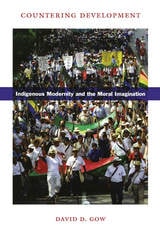
Countering Development
Indigenous Modernity and the Moral ImaginationDavid D. Gow
Duke University Press, 2008
Through ethnographic fieldwork conducted annually in Cauca from 1995 through 2002, Gow compares the development plans of the three communities, looking at both the planning processes and the plans themselves. In so doing, he demonstrates that there is no single indigenous approach to development and modernity. He describes differences in how each community defined and employed the concept of culture, how they connected a concern with culture to economic and political reconstruction, and how they sought to assert their own priorities while engaging with the existing development resources at their disposal. Ultimately, Gow argues that the moral vision advanced by the indigenous movement, combined with the growing importance attached to human rights, offers a fruitful way to think about development: less as a process of integration into a rigidly defined modernity than as a critical modernity based on a radical politics of inclusive citizenship.

Credit Where It's Due
Rethinking Financial CitizenshipFrederick F. Wherry
Russell Sage Foundation, 2019
Wherry, Seefeldt, and Alvarez tell the story of the Mission Asset Fund, a San Francisco-based organization that assists mostly low- and moderate-income people of color with building credit. The Mission Asset Fund facilitates zero-interest lending circles, which have been practiced by generations of immigrants, but have gone largely unrecognized by mainstream financial institutions. Participants decide how the circles are run and how they will use their loans, and the organization reports their clients’ lending activity to credit bureaus. As the authors show, this system not only helps clients build credit, but also allows them to manage debt with dignity, have some say in the creation of financial products, and reaffirm their sense of social membership. The authors delve into the history of racial wealth inequality in the U.S. to show that for many black and Latino households, credit invisibility is not simply a matter of individual choices or inadequate financial education. Rather, financial marginalization is the result of historical policies that enabled predatory lending, discriminatory banking and housing practices, and the rollback of regulatory protections for first-time homeowners.
To rectify these inequalities, the authors propose common sense regulations to protect consumers from abuse alongside new initiatives that provide seed capital for every child, create affordable short-term loans, and ensure that financial institutions treat low- and moderate-income clients with equal respect. By situating the successes of the Mission Asset Fund in the larger history of credit and debt, Credit Where It’s Due shows how to prioritize financial citizenship for all.

Crooked Stalks
Cultivating Virtue in South IndiaAnand Pandian
Duke University Press, 2009
In vivid, inventive, and engaging prose, Pandian weaves together ethnographic encounters, archival investigations, and elements drawn from Tamil poetry, prose, and popular cinema. Tacking deftly between ploughed soils and plundered orchards, schoolroom lessons and stationhouse registers, household hearths and riverine dams, he reveals moral life in the postcolonial present as a palimpsest of traces inherited from multiple pasts. Pursuing these legacies through the fragmentary play of desire, dream, slander, and counsel, Pandian calls attention not only to the moral potential of ordinary existence, but also to the inescapable force of accident, chance, and failure in the making of ethical lives. Rarely are the moral coordinates of modern power sketched with such intimacy and delicacy.

Cultivating Development
An Ethnography of Aid Policy and PracticeDavid Mosse
Pluto Press, 2005
Development agencies and researchers are preoccupied with policy; with exerting influence over policy, linking research to policy and with implementing policy around the world.
But what if development practice is not driven by policy? Suppose that the things that make for 'good policy' - policy that legitimises and mobilises political support - in reality make it impossible to implement?
By focusing in detail on the unfolding activities of a development project in western India over more than ten years, as it falls under different policy regimes, this book takes a close look at the relationship between policy and practice in development.
David Mosse shows how the actions of development workers are shaped by the exigencies of organisations and the need to maintain relationships rather than by policy; but also that development actors work hardest of all to maintain coherent representations of their actions as instances of authorised policy. Raising unfamiliar questions, Mosse provides a rare self-critical reflection on practice, while refusing to endorse current post-modern dismissal of development.