Results by title
7 books match the query 'Attack'

A World You Do Not Know
Settler Societies, Indigenous Peoples and the Attack on Cultural DiversityColin Samson
University of London Press, 2014
Attack and Counterattack
The Texas-Mexican Frontier, 1842By Joseph Milton Nance
University of Texas Press, 1964
It is 1842—a dramatic year in the history of Texas-Mexican relations. After five years of uneasy peace, of futile negotiations, of border raids and temporary, unofficial truces, a series of military actions upsets the precarious balance between the two countries. Once more the Mexican Army marches on Texas soil; once more the frontier settlers strengthen their strongholds for defense or gather their belongings for flight. Twice San Antonio falls to Mexican generals; twice the Texans assemble armies for the invasion of Mexico. It is 1842—a year of attack and counterattack.
This is the story that Joseph Milton Nance relates, with a definitiveness and immediacy which come from many years of meticulous research. The exciting story of 1842 is a story of emotions which had simmered through the long, insecure years and which now boil out in blustery threats and demands for vengeance. The Texans threaten to march beyond the Sierra Madres and raise their flag at Monterrey; the Mexicans promise to subdue this upstart Texas and to teach its treacherous inhabitants their place. With communications poor and imaginations fertile, rumors magnify chance banditry into military raids, military raids into full-scale invasions. Newspapers incite their readers with superdramatic, intoxicating accounts of the events. Texans and Mexicans alike respond with a kind of madness that has little or no method. Texas solicits volunteers, calls out troops, plans invasions, and assembles her armies, completely disregarding the fact that her treasury is practically empty—there is little money to buy guns. Meanwhile, in Mexico, where gold and silver are needed for other purposes, “invasions” of Texas are launched—but they are only brief forays more suitable for impressive publicity than for permanent gains.
Still, the conflicts of threat and retaliation, so often futile, are frequently dignified by idealism, friendship, courage, and determination. Both Mexicans and Texans are fighting and dying for liberty, defending their homes against foreign invaders, establishing and maintaining friendships that cross racial and national boundaries, struggling with conflicting loyalties, and—all the while—striving to wrest a living for themselves and their families from the grudging frontier.
Attack and Counterattack, continuing the account which was begun in After San Jacinto, tells from original sources the full story of Texas-Mexican relations from the time of the Santa Fe Expedition through the return of the Somervell Expedition from the Rio Grande. These books examine in great detail and with careful accuracy a period of Texas history that had not heretofore been thoroughly studied and that had seldom been given unbiased treatment. The source materials compiled in the notes and bibliography—particularly the military reports, letters, diaries, contemporary newspapers, and broadsides—will be a valuable tool for any scholar who wishes to study this or related periods.
Attack and Die
Civil War Military Tactics and the Southern HeritageGrady McWhiney
University of Alabama Press, 1984
Why did the Confederacy lose so many men? The authors contend that the Confederates bled themselves nearly to death in the first three years of the war by making costly attacks more often than the Federals. Offensive tactics, which had been used successfully by Americans in the Mexican War, were much less effective in the 1860s because an improved weapon—the rifle—had given increased strength to defenders. This book describes tactical theory in the 1850s and suggests how each related to Civil War tactics. It also considers the development of tactics in all three arms of the service during the Civil War.
In examining the Civil War the book separates Southern from Northern tactical practice and discusses Confederate military history in the context of Southern social history. Although the Southerners could have offset their numerical disadvantage by remaining on the defensive and forcing the Federals to attack, they failed to do so. The authors argue that the Southerners’ consistent favoring of offensive warfare was attributable, in large measure, to their Celtic heritage: they fought with the same courageous dash and reckless abandon that had characterized their Celtic forebears since ancient times. The Southerners of the Civil War generation were prisoners of their social and cultural history: they attacked courageously and were killed—on battlefields so totally defended by the Federals that “not even a chicken could get through.”
Attack of the Difficult Poems
Essays and InventionsCharles Bernstein
University of Chicago Press, 2011
Charles Bernstein is our postmodern jester of American poesy, equal part surveyor of democratic vistas and scholar of avant-garde sensibilities. In a career spanning thirty-five years and forty books, he has challenged and provoked us with writing that is decidedly unafraid of the tensions between ordinary and poetic language, and between everyday life and its adversaries. Attack of the Difficult Poems, his latest collection of essays, gathers some of his most memorably irreverent work while addressing seriously and comprehensively the state of contemporary humanities, the teaching of unconventional forms, fresh approaches to translation, the history of language media, and the connections between poetry and visual art.
Applying an array of essayistic styles, Attack of the Difficult Poems ardently engages with the promise of its title. Bernstein introduces his key theme of the difficulty of poems and defends, often in comedic ways, not just difficult poetry but poetry itself. Bernstein never loses his ingenious ability to argue or his consummate attention to detail. Along the way, he offers a wide-ranging critique of literature’s place in the academy, taking on the vexed role of innovation and approaching it from the perspective of both teacher and practitioner.
From blues artists to Tin Pan Alley song lyricists to Second Wave modernist poets, The Attack of the Difficult Poems sounds both a battle cry and a lament for the task of the language maker and the fate of invention.

Tell Me Lies
Propaganda and Media Distortion in the Attack on IraqEdited by David Miller
Pluto Press, 2003
Did the US and UK governments lie about weapons of mass destruction to promote an attack on Iraq?
Did the media hold them to account or act as cheerleaders for war?
Tell me Lies reveals the systematic propaganda used by both the US and UK governments to convince us of the 'threat' from Iraq. It shows how we were deliberately misled into a war that has resulted in a humanitarian disaster in Iraq and threatens to create further instability and resentment of the US and UK throughout the Middle East.
Written by some of the world's leading journalists and commentators, it's a scathing indictment of the role of the mainstream media in legitimising government actions and undermining dissent. Critics, activists and journalists from both sides of the Atlantic explore alternatives such as the internet and Al Jazeera and provide analysis and guidance on resisting the media war.
Contributors include John Pilger, Noam Chomsky, Robert Fisk, Edward Herman, Mark Thomas, Mark Steel, Phillip Knightley, Tim Llewelyn (BBC Middle East Correspondent), Abdul Hadi Jiad (Iraqi journalist sacked by the BBC before the war), David Cromwell and David Edwards (Media Lens), Mark Curtis, John Stauber and Sheldon Rampton (PR Watch, and co-authors of Weapons of Mass Deception and Toxic Sludge is Good For You), Pat Holland, Norman Solomon (columnist and director of the Institute for Public Accuracy), Nancy Snow (California State University, Fullerton, author of Propaganda Inc. and Information War), Doug Kellner (UCLA), Julian Petley, Yvonne Ridley (Aljazeera.net and author of In the Hands of the Taliban), Tim Gopsill (Campaign for Press and Broadcasting Freedom), Faisal Bodi (UK Guardian, Aljazeera.net), Alistair Alexander (Stop the War Coalition), Greg Philo (Glasgow University Media Group), Steve Dorrill, Andy Rowell, Granville Williams and cartoonists Steve Bell, Steve Caplin and Polyp.

The Attack of the Blob
Hannah Arendt's Concept of the SocialHanna Fenichel Pitkin
University of Chicago Press, 1998
"[O]ne leaves this book feeling enriched and challenged. Pitkin prompts us to rethink our understanding of Arendt and to demythologize the pervasive sense of political helplessness Arendt herself sought so hard to articulate. . . . [A] cause for celebration."—Peter Baehr, Times Literary Supplement
"[Arendt] is certainly among the most original and outstanding political theorists of the twentieth century. . . . It is difficult to imagine a hostile critic examining more effectively than Pitkin . . . Arendt's concept of the social, for hostility would inhibit the acquisition of the mastery of Arendt's texts that Pitkin displays at every turn."—Peter Berkowitz, New Republic
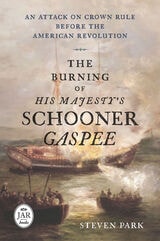
The Burning of His Majesty's Schooner Gaspee
An Attack on Crown Rule Before the American RevolutionSteven Park
Westholme Publishing, 2016
Between the Boston Massacre in 1770 and the Boston Tea Party in 1773—a period historians refer to as “the lull”—a group of prominent Rhode Islanders rowed out to His Majesty’s schooner Gaspee,which had run aground six miles south of Providence while on an anti-smuggling patrol. After threatening and shooting its commanding officer, the raiders looted the vessel and burned it to the waterline. Despite colony-wide sympathy for the June 1772 raid, neither the government in Providence nor authorities in London could let this pass without a response. As a result, a Royal Commission of Inquiry headed by Rhode Island governor Joseph Wanton zealously investigated the incident. In The Burning of His Majesty’s Schooner Gaspee: An Attack on Crown Rule Before the American Revolution, historian Steven Park reveals that what started out as a customs battle over the seizure of a prominent citizen’s rum was soon transformed into the spark that re-ignited Patriot fervor. The significance of the raid was underscored by a fiery Thanksgiving Day sermon given by a little-known Baptist minister in Boston. His inflammatory message was reprinted in several colonies and was one of the most successful pamphlets of the pre-Independence period. The commission turned out to be essentially a sham and made the administration in London look weak and ineffective. In the wake of the Gaspee affair, Committees of Correspondence soon formed in all but one of the original thirteen colonies, and later East India Company tea would be defiantly dumped into Boston Harbor.