453 books match the query 'Economic policy' and 44 start with c
cover of Capital Untamed: The Politics of Finance in Nineteenth-Century France

Capital Untamed

The Politics of Finance in Nineteenth-Century France

Charlotte Robertson

University of Chicago Press, 2026

The story of a bold political experiment in nineteenth-century France to establish power through finance. 

Amid the rise of industrial capitalism and revolutionary upheaval, French reformers asserted that finance should be reimagined as an instrument of economic and social transformation rather than left to the logic of private profit and speculation. In the 1850s, under Napoleon III’s authoritarian regime, this vision took institutional form as the Bonapartist state strategically deployed finance, broadened market participation, and sponsored new banks with the promise of directing investment toward infrastructure and industry. Yet this effort to harness and mobilize capital ran into a problem: The financial markets refused to be tamed. 
 
Drawing on rich archival sources—from police surveillance and courtroom transcripts to investment manuals and petitions for incorporation—Capital Untamed reveals how the financial markets became an instrument of political power, frustrated state ambitions, and ultimately escaped attempts at mastery. In this striking debut, historian Charlotte Robertson shows how the French state and its citizens navigated a turbulent era of European capitalism animated by debates over the social purpose of financial capital. Ultimately, politicians’ efforts to establish legitimacy by reorganizing finance—and their confrontations with the limits of that project—set the stage for a form of modern discontent with the financial system that survives to this day.
[more]
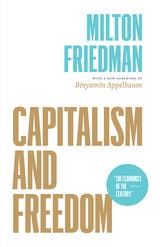
cover of Capitalism and Freedom

Capitalism and Freedom

Milton Friedman

University of Chicago Press, 1963

In the classic bestseller, Capitalism and Freedom, Milton Friedman presents his view of the proper role of competitive capitalism—the organization of economic activity through private enterprise operating in a free market—as both a device for achieving economic freedom and a necessary condition for political freedom. Beginning with a discussion of principles of a liberal society, Friedman applies them to such constantly pressing problems as monetary policy, discrimination, education, income distribution, welfare, and poverty.

"Milton Friedman is one of the nation's outstanding economists, distinguished for remarkable analytical powers and technical virtuosity. He is unfailingly enlightening, independent, courageous, penetrating, and above all, stimulating."-Henry Hazlitt, Newsweek

"It is a rare professor who greatly alters the thinking of his professional colleagues. It's an even rarer one who helps transform the world. Friedman has done both."-Stephen Chapman, Chicago Tribune
[more]
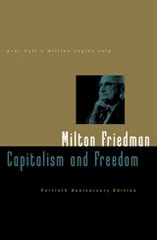
cover of Capitalism and Freedom

Capitalism and Freedom

Milton Friedman

University of Chicago Press, 2020

One of TIME magazine’s All-TIME 100 Best Nonfiction Books
One of Times Literary Supplement’s 100 Most Influential Books Since the War
One of National Review’s 100 Best Nonfiction Books of the Century
​One of the Intercollegiate Studies Institute’s 50 Best Books of the 20th Century


How can we benefit from the promise of government while avoiding the threat it poses to individual freedom? In this classic book, Milton Friedman provides the definitive statement of an immensely influential economic philosophy—one in which competitive capitalism serves as both a device for achieving economic freedom and a necessary condition for political freedom.
​
First published in 1962, Friedman’s Capitalism and Freedom is one of the most significant works of economic theory ever written. Enduring in its eminence and esteem, it has sold nearly a million copies in English, has been translated into eighteen languages, and continues to inform economic thinking and policymaking around the world. This new edition includes prefaces written by Friedman for both the 1982 and 2002 reissues of the book, as well as a new foreword by Binyamin Appelbaum, lead economics writer for the New York Times editorial board.
[more]
cover of Capitalism and Freedom: Fortieth Anniversary Edition

Capitalism and Freedom

Fortieth Anniversary Edition

Milton Friedman

University of Chicago Press, 2002

Selected by the Times Literary Supplement as one of the "hundred most influential books since the war"

How can we benefit from the promise of government while avoiding the threat it poses to individual freedom? In this classic book, Milton Friedman provides the definitive statement of his immensely influential economic philosophy—one in which competitive capitalism serves as both a device for achieving economic freedom and a necessary condition for political freedom. The result is an accessible text that has sold well over half a million copies in English, has been translated into eighteen languages, and shows every sign of becoming more and more influential as time goes on.
[more]
cover of Capitalism and Its Economics: A Critical History

Capitalism and Its Economics

A Critical History

Douglas Dowd

Pluto Press, 2004

[more]
cover of Capitalism, Not Globalism: Capital Mobility, Central Bank Independence, and the Political Control of the Economy

Capitalism, Not Globalism

Capital Mobility, Central Bank Independence, and the Political Control of the Economy

William Roberts Clark

University of Michigan Press, 2009
Capitalism, Not Globalism shows that, while much has been made of recent changes in the international economy, the mechanisms by which politicians control the economy have not changed throughout the postwar period. Challenging both traditional and revisionist globalization theorists, William Roberts Clark argues that increased financial integration has led to neither a widening nor a narrowing of partisan differences in macroeconomic polices or outcomes. Rather, he shows that the absence of partisan differences in macroeconomic policy is a long-standing feature of democratic capitalist societies that can be traced to politicians' attempts to use the economy to help them survive in office.
Changes in the structural landscape such as increased capital mobility and central bank independence do not necessarily diminish the ability of politicians to control the economy, but they do shape the strategies they use to do so. In a world of highly mobile capital, politicians manipulate monetary policy to create macroeconomic expansions prior to elections only if the exchange rate is flexible and the central bank is subservient. But they use fiscal policy to induce political business cycles when the exchange rate is fixed or the central bank is independent.
William Roberts Clark is Assistant Professor, Department of Politics, New York University.
[more]
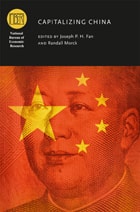
cover of Capitalizing China

Capitalizing China

Edited by Joseph P. H. Fan and Randall Morck

University of Chicago Press, 2012
China’s economic boom over the last two decades has taken many analysts by surprise, given the ongoing role of central government planning. Its current growth trajectory suggests that the size of its economy could soon surpass that of the United States. Some argue that continued growth and the expanding middle class will ultimately exert pressure on the government to bring about greater openness of the financial market.
 
To better understand China’s recent economic performance, this volume examines the distinctive system it has developed: “market socialism with Chinese characteristics.” While its formal institutional makeup resembles that of a free-market economy, many of its practices remain socialist, including strategically placed state-owned enterprises that wield influence both directly and through controlled business groups, and Communist Party cells whose purpose is to maintain control of many segments of the economy. China’s economic system, the contributors find, also retains many historical characteristics that play a central role in managing the economy. These and other issues are examined in chapters on China’s financial regulations, corporate governance codes, bankruptcy laws, taxation, and disclosure rules.
[more]
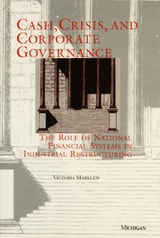
cover of Cash, Crisis, and Corporate Governance: The Role of National Financial Systems in Industrial Restructuring

Cash, Crisis, and Corporate Governance

The Role of National Financial Systems in Industrial Restructuring

Victoria Marklew

University of Michigan Press, 1995
This study chronicles four large manufacturers during a period of crisis and restructuring when they needed vast sums of money just to survive -- let alone adapt to remain competitive. By focusing on how these firms found financing, Victoria Marklew shows that the way national financial systems channel money to industry is the key issue in industrial competitiveness. The author challenges the traditional approach in comparative political economy by starting her analysis of government-industry relations at the level of the firm. By so doing, the author is able to chart in a unique way the role governments play in setting the boundaries of financial systems and to show how these boundaries fundamentally determine the kinds of financing to which a firm has access. The case studies (comparing the British Steel Corporation's passage from state to private ownership, the French steel industry's evolution into the nationalized Usinor Sacilor, British Leyland's transition from a nationalized company to two privately-owned firms, and Peugeot SA's rise to a dominant firm in the French private sector) dramatically prove that whether ownership is public or private has little to do with a firm's ability to survive a crisis. By extending her arguments to the United States, Germany, and Japan, the author shows how apparently very different governments in fact behave remarkably similarly, highlighting more accurately where the key differences among them lie and what the consequences of these differences are.
[more]
cover of Century of Difference: How America Changed in the Last One Hundred Years

Century of Difference

How America Changed in the Last One Hundred Years

Claude S. Fischer

Russell Sage Foundation, 1976
In every generation, Americans have worried about the solidarity of the nation. Since the days of the Mayflower, those already settled here have wondered how newcomers with different cultures, values, and (frequently) skin color would influence America. Would the new groups create polarization and disharmony? Thus far, the United States has a remarkable track record of incorporating new people into American society, but acceptance and assimilation have never meant equality. In Century of Difference, Claude Fischer and Michael Hout provide a compelling—and often surprising—new take on the divisions and commonalities among the American public over the tumultuous course of the twentieth century. Using a hundred years worth of census and opinion poll data, Century of Difference shows how the social, cultural, and economic fault lines in American life shifted in the last century. It demonstrates how distinctions that once loomed large later dissipated, only to be replaced by new ones. Fischer and Hout find that differences among groups by education, age, and income expanded, while those by gender, region, national origin, and, even in some ways, race narrowed. As the twentieth century opened, a person's national origin was of paramount importance, with hostilities running high against Africans, Chinese, and southern and eastern Europeans. Today, diverse ancestries are celebrated with parades. More important than ancestry for today's Americans is their level of schooling. Americans with advanced degrees are increasingly putting distance between themselves and the rest of society—in both a literal and a figurative sense. Differences in educational attainment are tied to expanding inequalities in earnings, job quality, and neighborhoods. Still, there is much that ties all Americans together. Century of Difference knocks down myths about a growing culture war. Using seventy years of survey data, Fischer and Hout show that Americans did not become more fragmented over values in the late-twentieth century, but rather were united over shared ideals of self-reliance, family, and even religion. As public debate has flared up over such matters as immigration restrictions, the role of government in redistributing resources to the poor, and the role of religion in public life, it is important to take stock of the divisions and linkages that have typified the U.S. population over time. Century of Difference lucidly profiles the evolution of American social and cultural differences over the last century, examining the shifting importance of education, marital status, race, ancestry, gender, and other factors on the lives of Americans past and present. A Volume in the Russell Sage Foundation Census Series
[more]
cover of Challenging Inequality: Variation across Postindustrial Societies

Challenging Inequality

Variation across Postindustrial Societies

Evelyne Huber and John D. Stephens

University of Chicago Press, 2024

A wide-ranging examination of how policies, parties, and labor strength affect inequality in post-industrial societies.

Not all countries are unequal in the same ways or to the same degree. In Challenging Inequality, Evelyne Huber and John D. Stephens analyze different patterns of increasing income inequality in post-industrial societies since the 1980s, assessing the policies and social structures best able to mitigate against the worst effects of market inequality. Combining statistical data analysis from twenty-two countries with a comparative historical analysis of Germany, Spain, Sweden, and the United States, Huber and Stephens identify the factors that drive increases in inequality and shape persistent, marked differences between countries. Their statistical analysis confirms generalizable patterns and in-depth country studies help to further elucidate the processes at work.

Challenging Inequality shows how the combination of globalization and skill-biased technological change has led to both labor market dualization and rising unemployment levels, which in turn have had important effects on inequality and poverty. Labor strength—at both the society level and the enterprise level—has helped to counter rising market income inequality, as has a history of strong human capital spending. The generosity of the welfare state remains the most important factor shaping redistribution, while the consistent power of left parties is the common denominator behind both welfare state generosity and human capital investment.

[more]
cover of Change in Putin's Russia: Power, Money and People

Change in Putin's Russia

Power, Money and People

Simon Pirani

Pluto Press, 2010

Simon Pirani investigates the interaction of power, money and people in Russia during the presidencies of Vladimir Putin and his successor Dmitry Medvedev.

Profiling the Putin team, including contingents from the security services and pro-market economic "reformers", Pirani argues that the economic growth it presided over during the oil boom was one-sided. The gap between rich and poor widened. Now the boom is over, inequalities will multiply further. As well as explaining Russia's economic trajectory, the book provides a unique account of the social movements that are working against an increasingly authoritarian government to change Russia for the better.

This is the perfect introduction for undergraduates approaching Russia for the first time and those who wish to know how Russia will change during the economic crisis.

[more]
cover of Changing Paths: International Development and the New Politics of Inclusion

Changing Paths

International Development and the New Politics of Inclusion

Peter P. Houtzager and Mick Moore, Editors

University of Michigan Press, 2005

After two decades of marketizing, an array of national and international actors have become concerned with growing global inequality, the failure to reduce the numbers of very poor people in the world, and a perceived global backlash against international economic institutions. This new concern with poverty reduction and the political participation of excluded groups has set the stage for a new politics of inclusion within nations and in the international arena. The essays in this volume explore what forms the new politics of inclusion can take in low- and middle-income countries. The contributors favor a polity-centered approach that focuses on the political capacities of social and state actors to negotiate large-scale collective solutions and that highlights various possible strategies to lift large numbers of people out of poverty and political subordination.

The contributors suggest there is little basis for the radical polycentrism that colors so much contemporary development thought. They focus on how the political capabilities of different societal and state actors develop over time and how their development is influenced by state action and a variety of institutional and other factors. The final chapter draws insightful conclusions about the political limitations and opportunities presented by current international discourse on poverty.

Peter P. Houtzager is a Fellow at the Institute of Development Studies, University of Sussex. He has been a visiting scholar at the Center for Latin American Studies, University of California, Berkeley, visiting lecturer at Stanford University, and lecturer at St. Mary's College. A political scientist with broad training in comparative politics and historical-institutional analysis, he has written extensively on the institutional roots of collective action.

Mick Moore is a Fellow at the Institute of Development Studies, University of Sussex, as well as Director of the Centre for the Future State. He has been a visiting professor at the Massachusetts Institute of Technology. His professional interests include political and institutional aspects of poverty reduction and of economic policy and performance, the politics and administration of development, and good government.

[more]
cover of Chicago Essays in Economic Development

Chicago Essays in Economic Development

David Wall

University of Chicago Press, 1972

What happens when the methods of the Chicago school of economics are applied to development problems? By collecting fifteen prime examples for this volume, David Wall has shown that these methods go a long way toward the clarification and solution of the economic problems faced by the world's underdeveloped countries. The contributors, all members of the Department of Economics at the University of Chicago, are Theodore Schultz, Harry G. Johnson, Arnold C. Harberger, Bert F. Hoselitz, and Larry A. Sjaastad, and D. Gale Johnson.

These Chicago economists share a common intellectual framework universally recognized in the profession and derived from three beliefs: first, that theory is of fundamental importance; second, that theory is irrelevant unless set in a definite empirical context; and third, that in the absence of evidence to the contrary, the market works. Critics of the Chicago school tend to ignore the first two of these and to overlook the qualifying proviso of the third. This volume sets out to rectify that misunderstanding and to circulate more widely some of the best work produced by the Chicago school.

The essays in the opening "general" section clearly illustrate the characteristics of the Chicago school while also reflecting some well-known idiosyncrasies of four of its more prominent spokesmen. The other two sections, "Domestic Policy" and "Trade and Aid," cover topics on which Chicago authors have made a marked impact. Together, these essays will provide a basic reference book for students of the subject, illustrating one of the leading methods of analyzing economic development problems.
[more]
cover of China and the Twenty-first-Century Crisis

China and the Twenty-first-Century Crisis

Minqi Li

Pluto Press, 2015

The USA is widely seen as the country at the centre of the recent economic crash. But will this be the case the next time the system goes into shock? This book analyses how the political and economic imbalances in China will exacerbate system collapse, and how this could happen much sooner than we imagine, possibly within a decade.

By looking at the big questions of class struggle, global economic imbalances, peak oil, climate change and political power play, Minqi Li argues that by the time of the next crisis, China will be at the epicentre of these contradictions.

China is the last large region, and source of cheap labour, into which capital could expand: the system is at its limits. By combining this argument with issues surrounding the planet’s ecological limits and the internal politics of the Chinese Communist Party, Li commands a narrative of China at a pivotal, and possibly apocalyptic stage.
[more]
cover of China's Economic Development: The Interplay of Scarcity and Ideology

China's Economic Development

The Interplay of Scarcity and Ideology

Alexander Eckstein

University of Michigan Press, 1975
China's Economic Development: The Interplay of Scarcity and Ideology by Alexander Eckstein provides a comprehensive analysis of China's economic growth and transformation from a socialist economy. Eckstein examines the unique challenges China faced in addressing its economic backwardness, such as scarcity of resources and ideological constraints, and compares its industrialization to other countries. The book explores how Maoist ideology and policy initiatives impacted the country's economic strategies, leading to a fluctuating development pattern characterized by rapid expansion in the 1950s and stagnation in the 1960s. Key themes include the dichotomy between scarcity and ideology, the influence of historical factors on economic structures, and the adaptation to Soviet models. Eckstein sheds light on how China navigated its unique size, population pressures, and low per capita income, arguing that understanding these dynamics is crucial for both development theory and policy design. This volume, part of the Michigan Studies on China series, compiles essays and research that contribute to a nuanced understanding of China's economic systems, with particular focus on the tensions between ideological aspirations and economic realities.
[more]
cover of China’s Allocation of Fixed Capital Investment, 1952–1957

China’s Allocation of Fixed Capital Investment, 1952–1957

Cheng Chu-yuan

University of Michigan Press, 1974

China’s efforts to stimulate industrial development and economic growth through the allocation of investments are analyzed. Cheng concludes with an overall assessment of the distinctive features of the allocation pattern. Includes 41 statistical tables.
[more]
cover of Chinese State Enterprises: A Regional Property Rights Analysis

Chinese State Enterprises

A Regional Property Rights Analysis

David Granick

University of Chicago Press, 1990

"We are indebted to David Granick for his thoughtful, careful, empirically documented study of the Chinese state industrial enterprise that not only provides a rarely attained comparative analysis but also possesses an explanatory power in suggesting how this system might evolve in the future."—Jeanne L. Wilson, Business Horizons
[more]
cover of Civilizing Money: Hume, his Monetary Project, and the Scottish Enlightenment

Civilizing Money

Hume, his Monetary Project, and the Scottish Enlightenment

George Caffentzis

Pluto Press, 2021

Taking the Scottish Enlightenment philosopher David Hume as its subject, this book breaks new ground in focusing its lens on a little-studied aspect of Hume’s thinking: his understanding of money.

George Caffentzis makes both an intervention in the field of monetary philosophy and into Marxian conceptions of the relation between philosophy and capitalist development. He vividly charts the ways in which Hume’s philosophy directly informed the project of ‘civilizing’ the people of the Scottish Highlands and pacifying the English proletariat in response to the revolts of both groups at the heart of the empire.

Built on careful historical and philosophical detective work, Civilizing Money offers a stimulating and radical political reading of the ways in which Hume’s fundamental philosophical claims performed concrete political functions.
[more]
cover of Clashing over Commerce: A History of US Trade Policy

Clashing over Commerce

A History of US Trade Policy

Douglas A. Irwin

University of Chicago Press, 2017

Should the United States be open to commerce with other countries, or should it protect domestic industries from foreign competition? This question has been the source of bitter political conflict throughout American history. Such conflict was inevitable, James Madison argued in The Federalist Papers, because trade policy involves clashing economic interests. The struggle between the winners and losers from trade has always been fierce because dollars and jobs are at stake: depending on what policy is chosen, some industries, farmers, and workers will prosper, while others will suffer.
           
Douglas A. Irwin’s Clashing over Commerce is the most authoritative and comprehensive history of US trade policy to date, offering a clear picture of the various economic and political forces that have shaped it. From the start, trade policy divided the nation—first when Thomas Jefferson declared an embargo on all foreign trade and then when South Carolina threatened to secede from the Union over excessive taxes on imports. The Civil War saw a shift toward protectionism, which then came under constant political attack. Then, controversy over the Smoot-Hawley tariff during the Great Depression led to a policy shift toward freer trade, involving trade agreements that eventually produced the World Trade Organization. Irwin makes sense of this turbulent history by showing how different economic interests tend to be grouped geographically, meaning that every proposed policy change found ready champions and opponents in Congress.

As the Trump administration considers making major changes to US trade policy, Irwin’s sweeping historical perspective helps illuminate the current debate. Deeply researched and rich with insight and detail, Clashing over Commerce provides valuable and enduring insights into US trade policy past and present.
 
[more]
cover of Climate Change in the Great Lakes Region: Navigating an Uncertain Future

Climate Change in the Great Lakes Region

Navigating an Uncertain Future

Thomas Dietz

Michigan State University Press, 2012

People living in the Great Lakes region are already feeling the effects of a changing climate. Shifts in seasonal temperatures and precipitation patterns could have dramatic impacts on the economy, ecology, and quality of life. In this illuminating and thorough volume, leading scholars address the challenge of preparing for climate change in the region, where decision makers from various sectors—government, agriculture, recreation, and tourism—must increasingly be aware of the need to incorporate climate change into their short- and long-term planning. The chapters in this revealing book, written by some of the foremost climate change scholars in North America, outline the major trends in the climate of the Great Lakes region, how humans might cope with the uncertainty of climate change impacts, and examples of on-the-ground projects that have addressed these issues.
[more]
cover of Clipped Coins, Abused Words, and Civil Government: John Locke’s Philosophy of Money

Clipped Coins, Abused Words, and Civil Government

John Locke’s Philosophy of Money

George Caffentzis

Pluto Press, 2021

This book situates John Locke’s philosophy of knowledge and his political theory within his engagement in British monetary debates of the 17th and 18th century.

Anchored in extensive archival research, George Caffentzis offers the most expansive reading of Locke’s economic thought to date, contextualizing it within the expansion of capitalist accumulation on a world scale and the universality of money as a medium of exchange.

Updated with a new introduction by Paul Rekret, a new foreword by Harry Cleaver and new material by the author, Clipped Coins, Abused Words, and Civil Government continues to make a significant intervention in contemporary debates around the history of capitalism, colonialism and philosophy.
[more]
cover of Collision Course: Economic Change, Criminal Justice Reform, and Work in America

Collision Course

Economic Change, Criminal Justice Reform, and Work in America

Kathleen Auerhahn

Rutgers University Press, 2022

This book is about the convergence of trends in two American institutions – the economy and the criminal justice system. The American economy has radically transformed in the past half-century, led by advances in automation technology that have permanently altered labor market dynamics. Over the same period, the U.S. criminal justice system experienced an unprecedented expansion at great cost.  These costs include not only the $80 billion annually in direct expenditures on criminal justice, but also the devastating impacts experienced by justice-involved individuals, families, and communities. 
 
Recently, a widespread consensus has emerged that the era of “mass incarceration” is at an end, reflected in a declining prison population. Criminal justice reforms such as diversion and problem-solving courts, a renewed focus on reentry, and drug policy reform have as their goal keeping more individuals with justice system involvement out of prisons, in the community and subsequently in the labor force, which lacks the capacity to accommodate these additional would-be workers. This poses significant problems for criminal justice practice, which relies heavily on employment as a signal of offenders’ intentions to live a law-abiding lifestyle. The diminished capacity of the economy to utilize the labor of all who have historically been expected to work presents significant challenges for American society. Work, in the American ethos is the marker of success, masculinity and how one “contributes to society.” What are the consequences of ignoring these converging structural trends? This book examines these potential consequences, the meaning of work in American society, and suggests alternative redistributive and policy solutions to avert the collision course of these economic and criminal justice policy trends.
 
[more]
cover of Colonial Debts: The Case of Puerto Rico

Colonial Debts

The Case of Puerto Rico

Rocío Zambrana

Duke University Press, 2021

With the largest municipal debt in US history and a major hurricane that destroyed much of the archipelago's infrastructure, Puerto Rico has emerged as a key site for the exploration of neoliberalism and disaster capitalism. In Colonial Debts Rocío Zambrana develops the concept of neoliberal coloniality in light of Puerto Rico's debt crisis. Drawing on decolonial thought and praxis, Zambrana shows how debt functions as an apparatus of predation that transforms how neoliberalism operates. Debt functions as a form of coloniality, intensifying race, gender, and class hierarchies in ways that strengthen the colonial relationship between Puerto Rico and the United States. Zambrana also examines the transformation of protest in Puerto Rico. From La Colectiva Feminista en Construcción's actions, long-standing land rescue/occupation in the territory, to the July 2019 protests that ousted former governor Ricardo “Ricky” Rosselló, protests pursue variations of decolonial praxis that subvert the positions of power that debt installs. As Zambrana demonstrates, debt reinstalls the colonial condition and adapts the racial/gender order essential to it, thereby emerging as a key site for political-economic subversion and social rearticulation.
[more]
cover of Company Towns: Industry Power and the Historical Foundations of Public Mistrust

Company Towns

Industry Power and the Historical Foundations of Public Mistrust

Elizabeth Mitchell Elder

University of Chicago Press, 2026

Reveals the deep, historical roots of public distrust in former mining areas in the US, shedding new light on the corrosive feedback loops that persist today.

In Company Towns, Elizabeth Mitchell Elder examines the long-lasting political legacies of mining-company dominance in the Midwest and Appalachia. While the economic consequences of deindustrialization are well-known, Elder shifts the focus to a more insidious problem: the political dysfunction that took root long before the mines shut down.

Drawing on historical and administrative data, Elder shows that the coal industry hindered the growth of local government capacity in the places where it was dominant. Mining companies also engaged in outright corruption to shape local governments, practices which local elites then carried forward. When mining companies withdrew, they left behind not just economic decline, but local governments ill-equipped to govern.

These patterns have had enduring consequences for public life. Elder shows how these historical experiences have fueled a broader cynicism toward government, in which citizens expect little from public institutions and doubt the usefulness of elections. Company Towns underscores the consequences of corporate dominance for state capacity, public opinion, and democratic accountability today.
[more]
cover of Competitiveness Matters: Industry and Economic Performance in the U.S.

Competitiveness Matters

Industry and Economic Performance in the U.S.

Candace Howes and Ajit Singh, Editors

University of Michigan Press, 2000
This book argues, against the current view, that competitiveness--that is, the competitiveness of the manufacturing sector--matters to the long-term health of the U.S. economy and particularly to its long-term capacity to raise the standard of living of its citizens. The book challenges the arguments popularized most recently by Paul Krugman that
competitiveness is a dangerous obsession that distracts us from the question most central to solving the problem of stagnant real income growth, namely, what causes productivity growth, especially in the service sector.
The central argument is that, if the U.S. economy is to achieve full employment with rising real wages, it is necessary to enhance the competitiveness of its tradable goods sector. The book shows that current account deficits cannot be explained by macroeconomic mismanagement but are rather the consequence of an uncompetitive manufacturing sector. It finds that the long-term health of the manufacturing sector requires not only across-the-board policies to remedy problems of low or inefficient investment, but also sectoral policies to address problems that are strategic to resolving the balance of payments problems. Lessons are drawn from the experience of some European and Asian countries.
This book will be of interest to economists, political scientists, and business researchers concerned with the place of the manufacturing sector in overall health of the U.S. economy, with issues of industrial policy and industrial restructuring, and with the conditions for rising standards of living.
Candace Howes is Associate Professor, Barbara Hogate Ferrin Chair, Connecticut College. Ajit Singh is Professor of Economics, Queens College, Cambridge.
[more]
cover of Confidence Regained: Economics, Mrs. Thatcher, and the British Voter

Confidence Regained

Economics, Mrs. Thatcher, and the British Voter

Helmut Norpoth

University of Michigan Press, 1992
Elected to office at the end of a decade of economic decline, Prime Minister Margaret Thatcher set out to cure Britain's ills with daring new free-market policies. Putting financial stability first on the agenda of macroeconomic priorities, the Thatcher government pursued this goal with rare tenacity. In Confidence Regained, Helmut Norpoth examines the electoral risks and rewards of this economic strategy.Professor Norpoth paints a vivid picture of the fierce battle over the economic policies and record of the Thatcher government. Using electoral surveys, Norpoth reveals how British voters sorted out the competing claims of economists and politicians in their various partisan choices. Turning from election outcomes to government popularity between elections, Professor Norpoth charts the rise and decline of Margaret Thatcher's approval ratings and Conservative party support, showing how responsive these ratings were to economic performance. The statistical evidence presented shows that economic views significantly affected voter choices in the Thatcher elections. But the author reveals that the Conservatives under Mrs. Thatcher owed their ability to regain the confidence of the British electorate not only to the nation’s economic success, but also, in large measure, to the British victory in the Falkland Islands.Confidence Regained is an invaluable source to scholars of electoral politics, especially of British elections, but it will also interest historians of Thatcherism and scholars studying the role of macroeconomics in elections.
[more]
cover of Conflicting Counsels to Confuse the Age: A Documentary Study of Political Economy in Qing China, 1644–1840

Conflicting Counsels to Confuse the Age

A Documentary Study of Political Economy in Qing China, 1644–1840

Helen Dunstan

University of Michigan Press, 1996
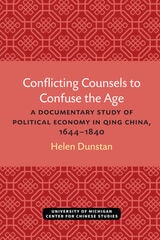
Conflicting Counsels to Confuse the Age translates and analyzes thirty-eight memorials to the throne and other Qing documents dealing with important issues of Chinese political economy, providing thoughtful and provocative commentary. Subjects covered by the texts include water control, mining, grain trade, pawnshops, brewing, and commercial shipping. The documents also contain detailed discussions of how the state should control wealth, self-interest, profit, hoarding, and the market.
In translating these primary sources, Helen Dunstan invites fellow specialists in Chinese studies, including Qing historians, to watch Qing officials and others thinking through problems of political economy and developing arguments to persuade colleagues or superiors. By emphasizing their rhetorical nature and genre conventions, Dunstan offers a reminder that it is improper to use the “information” in such texts without attention to the author’s purpose, and without grasping the rhetorical structure of the text as a whole. As a model for close reading, Conflicting Counsels aims to induce greater sensitivity to the nature of Qing records.
The second purpose of Conflicting Counsels is to help dispel the notion that economic liberalism is necessarily a Western, “modern” phenomenon. Many of the texts translated record areas of tension and controversy in eighteenth-century approaches to a central project of Confucian paternalist administration, “nourishing the people” (yangmin). Although Dunstan attempts to present both sides fairly, some materials included present the opinion that, in certain vital matters, it was better for the state to stand aside, and leave society’s own economic institutions, trade in particular, to handle things. While not a majority, the texts that build some kind of market mechanism argument should be of greatest interest to Qing historians.
[more]
cover of Conjuring Crisis: Racism and Civil Rights in a Southern Military City

Conjuring Crisis

Racism and Civil Rights in a Southern Military City

Baca, George

Rutgers University Press, 2010

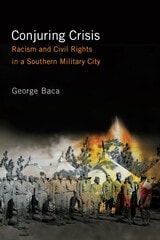
How have civil rights transformed racial politics in America? Connecting economic and social reforms to racial and class inequality, Conjuring Crisis counters the myth of steady race progress by analyzing how the federal government and local politicians have sometimes "reformed" politics in ways that have amplified racism in the post civil-rights era.

In the 1990s at Fort Bragg and Fayetteville, North Carolina, the city's dominant political coalition of white civic and business leaders had lost control of the city council. Amid accusations of racism in the police department, two white council members joined black colleagues in support of the NAACP's demand for an investigation. George Baca's ethnographic research reveals how residents and politicians transformed an ordinary conflict into a "crisis" that raised the specter of chaos and disaster. He explores new territory by focusing on the broader intersection of militarization, urban politics, and civil rights.

[more]
cover of Conservation Is Our Government Now: The Politics of Ecology in Papua New Guinea

Conservation Is Our Government Now

The Politics of Ecology in Papua New Guinea

Paige West

Duke University Press, 2006

A significant contribution to political ecology, Conservation Is Our Government Now is an ethnographic examination of the history and social effects of conservation and development efforts in Papua New Guinea. Drawing on extensive fieldwork conducted over a period of seven years, Paige West focuses on the Crater Mountain Wildlife Management Area, the site of a biodiversity conservation project implemented between 1994 and 1999. She describes the interactions between those who ran the program—mostly NGO workers—and the Gimi people who live in the forests surrounding Crater Mountain. West shows that throughout the project there was a profound disconnect between the goals of the two groups. The NGOgo workers thought that they would encourage conservation and cultivate development by teaching Gimi to value biodiversity as an economic resource. The villagers expected that in exchange for the land, labor, food, and friendship they offered the conservation workers, they would receive benefits, such as medicine and technology. In the end, the divergent nature of each group’s expectations led to disappointment for both.

West reveals how every aspect of the Crater Mountain Wildlife Management Area—including ideas of space, place, environment, and society—was socially produced, created by changing configurations of ideas, actions, and material relations not only in Papua New Guinea but also in other locations around the world. Complicating many of the assumptions about nature, culture, and development underlying contemporary conservation efforts, Conservation Is Our Government Now demonstrates the unique capacity of ethnography to illuminate the relationship between the global and the local, between transnational processes and individual lives.
[more]
cover of Conspicuous Corporation: Business, Public Policy, and Representative Democracy

Conspicuous Corporation

Business, Public Policy, and Representative Democracy

Neil J. Mitchell

University of Michigan Press, 1997
Why, despite the political advantages of business in the policy process, do business interests still sometimes lose policy fights in the political system? Money, mobility, connections, and incentives load the political system in favor of business interests. Against the odds, when the conspicuous corporation meets the virtuous politician, business often loses in the policy struggle. In answering this question, Neil J. Mitchell reassesses the dimensions of business power in the political system and provides a fresh consideration of how economic power translates into political power. Charles Lindbloom's analysis of business power provides a point of departure for an examination of the evidence on business influence over public preferences, on the importance of business confidence to politicians, and on the financial and lobbying activities of business interests. Mitchell then considers the position of labor unions--the traditional opposition to business--in contemporary policy making. Finally, he discusses the conditions under which business power breaks down. This is accompanied by an analysis of a variety of cases in which business has attempted to influence the policy making process to test his findings. Extensively researched, this book sheds new light on the activities of business in politics, on the strength of interests opposing business, and on business policy failures in the United States and the United Kingdom. The empirical analysis builds on survey data, extensive interviews, and archival research. The relationship between business and government is a core topic for economists, sociologists and political scientists, taking us from heroic struggles over policy to sordid episodes of political corruption. The book will be of interest to scholars in the social sciences and in business schools as well as to the general reader interested in power and influence in representative democracies. Neil Mitchell is Professor of Political Science, University of New Mexico.
[more]
cover of Constructing Citizenship: Transnational Workers and Revolution on the Mexico-Guatemala Border, 1880--1950

Constructing Citizenship

Transnational Workers and Revolution on the Mexico-Guatemala Border, 1880--1950

Catherine A. Nolan-Ferrell

University of Arizona Press, 2012
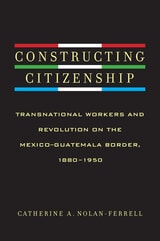
During the late nineteenth and early twentieth centuries, people living in the coffee-producing region of the Sierra Madre mountains along the Pacific Coast of Mexico and Guatemala paid little attention to national borders. The Mexican Revolution,—particularly during the 1930s reconstruction phase—ruptured economic and social continuity because access to revolutionary reforms depended on claiming Mexican national identity. Impoverished, often indigenous rural workers on both sides of the border used shifting ideas of citizenship and cultural belonging to gain power and protect their economic and social interests.
 
With this book Catherine Nolan-Ferrell builds on recent theoretical approaches to state formation and transnationalism to explore the ways that governments, elites, and marginalized laborers claimed and contested national borders. By investigating how various groups along the Mexico-Guatemala border negotiated nationality, Constructing Citizenship offers insights into the complex development of transnational communities, the links between identity and citizenship, and the challenges of integrating disparate groups into a cohesive nation. Entwined with a labor history of rural workers, Nolan-Ferrell also shows how labor struggles were a way for poor Mexicans and migrant Guatemalans to assert claims to national political power and social inclusion.
 
Combining oral histories with documentary research from local, regional, and national archives to provide a complete picture of how rural laborers along Mexico's southern border experienced the years before, during, and after the Mexican Revolution, this book will appeal not only to Mexicanists but also to scholars interested in transnational identity, border studies, social justice, and labor history.
[more]
cover of Constructing Cooperation: The Evolution of Institutions of Comanagement

Constructing Cooperation

The Evolution of Institutions of Comanagement

Sara Singleton

University of Michigan Press, 1999

In a pathbreaking analysis, Sara Singleton explores the development of schemes for the management of fisheries in the northwestern United States in which native American tribes, and state, federal, and local governments cooperate to manage limited fishing resources. In the policy dispute over the apportionment of scarce resources, some argue that only government control or private ownership will prevent the destruction of limited common resources. The author shows how cooperation among interested parties can produce a workable system for self-management of common resources. Through the detailed study of the management of fisheries in the Northwest the author tests theories explaining the basis of collective action and social cooperation, an area of rich theoretical speculation in political science, law, economics and sociology. At the same time, her findings have important implications for policy makers who are interested in efficient and effective schemes of resource control that avoid the problems caused by regulation by remote government officials or private control.
This book will appeal to policy makers concerned with the management of natural resources as well as to economists, political scientists, and sociologists concerned with collective action problems.
Sara Singleton is Assistant Professor of Political Science, Tulane University.
[more]
cover of Contrasting Styles of Industrial Reform: China and India in the 1980s

Contrasting Styles of Industrial Reform

China and India in the 1980s

George Rosen

University of Chicago Press, 1992

Since World War II, China has had a command economy administered under a dictatorship, while India's democracy has introduced a highly regulated economy. Despite obvious differences in their political systems, each country endured remarkably similar economic problems with respect to industry during the 1960s and 1970s. Both embarked in the 1980s on a series of industrial reforms designed to improve technology and efficiency in the use of resources, as well as to stimulate industrial growth in the face of declining productivity.

For economists, the two countries offer an interesting test case for examining similar reform programs launched from disparate political and economic systems. For policymakers concerned with the region's stability, a clear view of the economic futures of these two major powers is paramount.

Examining and comparing the reform experiences of China and India up to the present, George Rosen shows that although China enacted more sweeping reform measures and produced more impressive local growth, it also experienced more significant inflationary spurts. Two-thirds of each nation's population was involved in agriculture at the start of the reform period and nearly that many at the conclusion. Ultimately, the effects of the past industrial reforms in both countries in terms of significantly greater industrial employment or well-being of their populations were limited. An important lesson in these findings, argues Rosen, is that they actually reveal more about the political factors that limit and shape economic policy reforms in a dictatorship or democracy than they confirm the virtues of either capitalism or communism.
[more]
cover of Coping with Crisis: Government Reactions to the Great Recession

Coping with Crisis

Government Reactions to the Great Recession

Nancy Bermeo

Russell Sage Foundation, 2013

The financial crisis that erupted on Wall Street in 2008 quickly cascaded throughout much of the advanced industrial world. Facing the specter of another Great Depression, policymakers across the globe responded in sharply different ways to avert an economic collapse. Why did the response to the crisis—and its impact on individual countries—vary so greatly among interdependent economies? How did political factors like public opinion and domestic interest groups shape policymaking in this moment of economic distress? Coping with Crisis offers a rigorous analysis of the choices societies made as a devastating global economic crisis unfolded. With an ambitiously broad range of inquiry, Coping with Crisis examines the interaction between international and domestic politics to shed new light on the inner workings of democratic politics. The volume opens with an engaging overview of the global crisis and the role played by international bodies like the G-20 and the WTO. In his survey of international initiatives in response to the recession, Eric Helleiner emphasizes the limits of multilateral crisis management, finding that domestic pressures were more important in reorienting fiscal policy. He also argues that unilateral decisions by national governments to hold large dollar reserves played the key role in preventing a dollar crisis, which would have considerably worsened the downturn. David R. Cameron discusses the fiscal responses of the European Union and its member states. He suggests that a profound coordination problem involving fiscal and economic policy impeded the E.U.'s ability to respond in a timely and effective manner. The volume also features several case studies and country comparisons. Nolan McCarty assesses the performance of the American political system during the crisis. He argues that the downturn did little to dampen elite polarization in the U.S.; divisions within the Democratic Party—as well as the influence of the financial sector—narrowed the range of policy options available to fight the crisis. Ben W. Ansell examines how fluctuations in housing prices in 30 developed countries affected the policy preferences of both citizens and political parties. His evidence shows that as housing prices increased, homeowners expressed preferences for both lower taxes and a smaller safety net. As more citizens supplement their day-to-day income with assets like stocks and housing, Ansell's research reveals a potentially significant trend in the formation of public opinion. Five years on, the prospects for a prolonged slump in economic activity remain high, and the policy choices going forward are contentious. But the policy changes made between 2007 and 2010 will likely constrain any new initiatives in the future. Coping with Crisis offers unmatched analysis of the decisions made in the developed world during this critical period. It is an essential read for scholars of comparative politics and anyone interested in a comprehensive account of the new international politics of austerity.
[more]
cover of Cores, Peripheries, and Globalization

Cores, Peripheries, and Globalization

Peter Hanns Reill

Central European University Press, 2011

Deals with the intersection of issues associated with globalization and the dynamics of core-periphery relations. It places these debates in a large and vital context asking what the relations between cores and peripheries have in forming our vision of what constitutes globalization and what were and are its possible effects. In this sense the debate on globalization is framed as part of a larger and more crucial discourse that tries to account for the essential dynamics—economic, social, political and cultural—between metropolitan areas and their peripheries.
[more]
cover of Corrupt Illinois: Patronage, Cronyism, and Criminality

Corrupt Illinois

Patronage, Cronyism, and Criminality

Thomas J. Gradel and Dick Simpson

University of Illinois Press, 2015

Public funds spent on jets and horses. Shoeboxes stuffed with embezzled cash. Ghost payrolls and incarcerated ex-governors. Illinois' culture of "Where's mine?" and the public apathy it engenders has made our state and local politics a disgrace.
 
In Corrupt Illinois, veteran political observers Thomas J. Gradel and Dick Simpson take aim at business-as-usual. Naming names, the authors lead readers through a gallery of rogues and rotten apples to illustrate how generations of chicanery have undermined faith in, and hope for, honest government. From there, they lay out how to implement institutional reforms that provide accountability and eradicate the favoritism, sweetheart deals, and conflicts of interest corroding our civic life.
 
Corrupt Illinois lays out a blueprint to transform our politics from a pay-to-play–driven marketplace into what it should be: an instrument of public good.
[more]
cover of Costing the Earth?: Perspectives on Sustainable Development

Costing the Earth?

Perspectives on Sustainable Development

Bernd Meyer

Haus Publishing, 2009

Our economies must react. "Sustainable behavior must pay off" - this is one of the central tenets of The Sustainability Project. Costing the Earth: Restructuring the Economy for Sustainable Development outlines the economic conditions for achieving the goal of sustainable development, in Europe and around the world. It also explains the incentives for sustainable economic management using economic tools.
[more]
cover of Created Unequal: The Crisis in American Pay

Created Unequal

The Crisis in American Pay

James K. Galbraith

University of Chicago Press, 2000

The boom of the U.S. economy in the late 1990s suggests that Americans are better off than they were a decade ago, but this is not true across the board and the reason, as James Galbraith explains, is wage inequality. He contends that inequality is not the result of impersonal market forces but of specific government decisions and the poor economic performance they created. Featuring a new afterword on wage shifts since 1994, Created Unequal is a rousing book that reminds us we can reclaim our country through economic understanding, commonsense policy, and political action.

"Created Unequal is not light reading, but Galbraith's elegant arguments, passionate exposition, and profound conclusions make it worth the trouble. . . . [Galbraith] remind[s] us that the economy is and ought to be run by humans, not humans by the economy."—Joanna Ciulla, Los Angeles Times Book Review

"Created Unequal is a lucid and wise explanation of why America seems to be prospering while most Americans aren't. James Galbraith takes steady aim at a variety of widely accepted economic myths and hits most of them dead center. This book will tell you a lot about the way your economic world really works."—Jeff Faux, President of the Economic Policy Institute

"[A] brilliant and iconoclastic examination of the major social trend of our time."—Michael Lind, Washington Monthly
[more]
cover of Creating Market Socialism: How Ordinary People Are Shaping Class and Status in China

Creating Market Socialism

How Ordinary People Are Shaping Class and Status in China

Carolyn L. Hsu

Duke University Press, 2007

In the midst of China’s post-Mao market reforms, the old status hierarchy is collapsing. Who will determine what will take its place? In Creating Market Socialism, the sociologist Carolyn L. Hsu demonstrates the central role of ordinary people—rather than state or market elites—in creating new institutions for determining status in China. Hsu explores the emerging hierarchy, which is based on the concept of suzhi, or quality. In suzhi ideology, human capital and educational credentials are the most important measures of status and class position. Hsu reveals how, through their words and actions, ordinary citizens decide what jobs or roles within society mark individuals with suzhi, designating them “quality people.”

Hsu’s ethnographic research, conducted in the city of Harbin in northwestern China, included participant observation at twenty workplaces and interviews with working adults from a range of professions. By analyzing the shared stories about status and class, jobs and careers, and aspirations and hopes that circulate among Harbiners from all walks of life, Hsu reveals the logic underlying the emerging stratification system. In the post-socialist era, Harbiners must confront a fast-changing and bewildering institutional landscape. Their collective narratives serve to create meaning and order in the midst of this confusion. Harbiners collectively agree that “intellectuals” (scientists, educators, and professionals) are the most respected within the new social order, because they contribute the most to Chinese society, whether that contribution is understood in terms of traditional morality, socialist service, or technological and economic progress. Harbiners understand human capital as an accurate measure of a person’s status. Their collective narratives about suzhi shape their career choices, judgments, and child-rearing practices, and therefore the new practices and institutions developing in post-socialist China.
[more]
cover of Creative Politics: Taxes and Public Goods in a Federal System

Creative Politics

Taxes and Public Goods in a Federal System

Glenn Beamer

University of Michigan Press, 2000

State legislators are constantly making tradeoffs between changing taxes and providing public services. Not only must they reconcile their own policy preferences with the preferences of their constituents, but they must consider the impact of actions taken by both the federal government and competing states. Glenn Beamer uses a series of in-depth case studies in eleven states to show how legislators made decisions dealing with taxation, economic development, education financing, and Medicaid.
Beamer identifies six factors that influence legislators' decisions: accountability, dependability, equity, obscurability, and horizontal and vertical transferability. Within the context created by citizen demands, intergovernmental politics, policy histories, court interventions, and state constitutions, this study analyzes how legislators employ these principles to develop and enact policies.
In addition to modeling state politics within the context of federalism, Creative Politics, reflecting the author's extensive interviews with legislators, is novel in its focus on politicians' views about public services, the strategies to finance them, and efforts to develop and maintain political support for them.
This book will be of interest to students and scholars of political science, economics, and public administration, and, more specifically, of federalism, state politics and policy, and legislative decision-making.
Glenn Beamer is Robert Wood Johnson Scholar in Health Policy Research, University of California, Berkeley, and Assistant Professor of Government, University of Virginia.
[more]
cover of Cries of Crisis: Rethinking the Health Care Debate

Cries of Crisis

Rethinking the Health Care Debate

Robert B. Hackey

University of Nevada Press, 2015

Since the late 1960s, health care in the United States has been described as a system in crisis. No matter their position, those seeking to improve the system have relied on the rhetoric of crisis to build support for their preferred remedies, to the point where the language and imagery of a health care crisis are now deeply embedded in contemporary politics and popular culture.

In Cries of Crisis, Robert B. Hackey analyzes media coverage, political speeches, films, and television shows to demonstrate the role that language and symbolism have played in framing the health care debate, shaping policy making, and influencing public perceptions of problems in the health care system. He demonstrates that the idea of crisis now means so many different things to so many different groups that it has ceased to have any shared meaning at all. He argues that the ceaseless talk of “crisis,” without a commonly accepted definition of that term, has actually impeded efforts to diagnose and treat the chronic problems plaguing the American health care system. Instead, he contends, reformers must embrace a new rhetorical strategy that links proposals to improve the system with deeply held American values like equality and fairness.

[more]
cover of Crude Chronicles: Indigenous Politics, Multinational Oil, and Neoliberalism in Ecuador

Crude Chronicles

Indigenous Politics, Multinational Oil, and Neoliberalism in Ecuador

Suzana Sawyer

Duke University Press, 2004

Ecuador is the third-largest foreign supplier of crude oil to the western United States. As the source of this oil, the Ecuadorian Amazon has borne the far-reaching social and environmental consequences of a growing U.S. demand for petroleum and the dynamics of economic globalization it necessitates. Crude Chronicles traces the emergence during the 1990s of a highly organized indigenous movement and its struggles against a U.S. oil company and Ecuadorian neoliberal policies. Against the backdrop of mounting government attempts to privatize and liberalize the national economy, Suzana Sawyer shows how neoliberal reforms in Ecuador led to a crisis of governance, accountability, and representation that spurred one of twentieth-century Latin America’s strongest indigenous movements.

Through her rich ethnography of indigenous marches, demonstrations, occupations, and negotiations, Sawyer tracks the growing sophistication of indigenous politics as Indians subverted, re-deployed, and, at times, capitulated to the dictates and desires of a transnational neoliberal logic. At the same time, she follows the multiple maneuvers and discourses that the multinational corporation and the Ecuadorian state used to circumscribe and contain indigenous opposition. Ultimately, Sawyer reveals that indigenous struggles over land and oil operations in Ecuador were as much about reconfiguring national and transnational inequality—that is, rupturing the silence around racial injustice, exacting spaces of accountability, and rewriting narratives of national belonging—as they were about the material use and extraction of rain-forest resources.
[more]
cover of Cultivating Crisis: The Human Cost of Pesticides in Latin America

Cultivating Crisis

The Human Cost of Pesticides in Latin America

By Douglas L. Murray

University of Texas Press, 1994

Since World War II, the Green Revolution has boosted agricultural production in Latin America and other parts of the Third World, with money, technical assistance, and other forms of aid from United States development agencies. But the Green Revolution came at a high price—massive pesticide dependence that has caused serious socioeconomic and public health problems and widespread environmental damage.

In this study, Douglas Murray draws on ten years of field research to tell the stories of international development strategies, pesticide problems, and agrarian change in Latin America. Interwoven with his considerations of economic and geopolitical dimensions are the human consequences for individual farmers and rural communities.

This highly interdisciplinary study, integrating the perspectives of sociology, ecology, economics, political science, and public health, adds an important voice to the debate on opportunities for and obstacles to more lasting and sustainable development in the Third World. It will be of interest to a wide audience in the social and environmental sciences.
[more]
cover of Curbing Bailouts: Bank Crises and Democratic Accountability in Comparative Perspective

Curbing Bailouts

Bank Crises and Democratic Accountability in Comparative Perspective

Guillermo Rosas

University of Michigan Press, 2009

"Rosas's compelling theory and wide-ranging empirical evidence yield a persuasive but surprising conclusion in light of the financial meltdown of 2008–9. In the event of banking crises, not only do elected governments treat taxpayers better and force bankers and their creditors to pay more for their mistakes, but bankers in democracies are more prudent as a consequence . . . essential reading for all interested in the political economy of crisis and in the future of banking regulation."
---Philip Keefer, Lead Economist, Development Research Group, The World Bank

"Rosas convincingly demonstrates how democratic accountability affects the incidence and resolution of banking crises. Combining formal models, case studies, and cutting-edge quantitative methods, Rosas's book represents a model for political economy research."
---William Bernhard, Professor, Department of Political Science, University of Illinois

"When the financial crises of the 1990s hit Asia, Russia, and Latin America, the U.S. scolded them about the moral hazard problems of bailing out the banks. Now, the shoe is on the other foot, with the U.S. struggling to manage an imploding financial sector. Rosas's study of bank bailouts could not be more timely, providing us with both a framework for thinking about the issue and some sobering history of how things go both right and badly wrong. Democratic accountability proves the crucial factor in making sure bailouts are fair, a point that is as relevant for U.S. policy as for an understanding of the emerging markets."
---Stephan Haggard, Krause Professor, Graduate School of International Relations and Pacific Studies, University of California, San Diego

Banking crises threaten the stability and growth of economies around the world. In response, politicians restore banks to solvency by redistributing losses from bank shareholders and depositors to taxpayers, and the burden the citizenry must bear varies from case to case. Whereas some governments stay close to the prescriptions espoused by Sir Walter Bagehot in the nineteenth century that limit the costs shouldered by taxpayers, others engage in generous bank bailouts at great cost to society. What factors determine a government's response?

In this comparative analysis of late-twentieth-century banking crises, Guillermo Rosas identifies political regime type as the determining factor. During a crisis, powerful financial players demand protection of their assets. Rosas maintains that in authoritarian regimes, government officials have little to shield them from such demands and little incentive for rebuffing them, while in democratic regimes, elected officials must weigh these demands against the interests of the voters---that is, the taxpayers. As a result, compared with authoritarian regimes, democratic regimes show a lower propensity toward dramatic, costly bailouts.

Guillermo Rosas is Assistant Professor in the Department of Political Science and Fellow at the Center in Political Economy at Washington University in St. Louis.

[more]