162 books match the query 'Economics & Trade' and 18 start with c
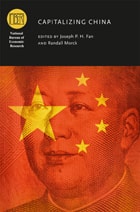
cover of Capitalizing China

Capitalizing China

Edited by Joseph P. H. Fan and Randall Morck

University of Chicago Press, 2012
China’s economic boom over the last two decades has taken many analysts by surprise, given the ongoing role of central government planning. Its current growth trajectory suggests that the size of its economy could soon surpass that of the United States. Some argue that continued growth and the expanding middle class will ultimately exert pressure on the government to bring about greater openness of the financial market.
 
To better understand China’s recent economic performance, this volume examines the distinctive system it has developed: “market socialism with Chinese characteristics.” While its formal institutional makeup resembles that of a free-market economy, many of its practices remain socialist, including strategically placed state-owned enterprises that wield influence both directly and through controlled business groups, and Communist Party cells whose purpose is to maintain control of many segments of the economy. China’s economic system, the contributors find, also retains many historical characteristics that play a central role in managing the economy. These and other issues are examined in chapters on China’s financial regulations, corporate governance codes, bankruptcy laws, taxation, and disclosure rules.
[more]
cover of Carrots, Sticks, and Ethnic Conflict: Rethinking Development Assistance

Carrots, Sticks, and Ethnic Conflict

Rethinking Development Assistance

Milton J. Esman and Ronald J. Herring, Editors

University of Michigan Press, 2003

Development assistance employs carrots and sticks to influence regimes and obtain particular outcomes: altered economic policies, democratization, relief of suffering from catastrophes. Wealthy nations and international agencies such as the World Bank justify development assistance on grounds of improving the global human condition. Over the last forty years, however, ethnic conflict has increased dramatically. Where does ethnic conflict fit within this set of objectives? How do the resources, policy advice, and conditions attached to aid affect ethnic conflict in countries in which donors intervene? How can assistance be deployed in ways that might moderate rather than aggravate ethnic tensions?
These issues are addressed comparatively by area specialists and participant-observers from development assistance organizations. This book is the first systematic effort to evaluate this dimension of international affairs--and to propose remedies. Case studies include Russia, Ecuador, Sri Lanka, and Kenya, with references to many other national experiences.
Cross-cutting chapters consider evolution of USAID and the World Bank's policies on displacement of people by development projects, as well as how carrots and sticks may affect ethnic dynamics, but through different mechanisms and to varying degrees depending on political dynamics and regime behaviors. They show that projects may also exacerbate ethnic conflict by reinforcing territoriality and exposing seemingly unfair allocative principles that exclude or harm some while benefiting others.
For students of international political economy, development studies, comparative politics, and ethnic conflict, this book illuminates a problem area that has long been overlooked in international affairs literature. It is essential reading for staff members and policymakers in development assistance agencies and international financial institutions.
Milton J. Esman is the John S. Knight Professor of International Studies, Emeritus, and Professor of Government, Emeritus, at Cornell University.
Ronald J. Herring is Director of the Mario Einaudi Center for International Studies at Cornell, the John S. Knight Professor of International Relations, and Professor of Government at Cornell University.
[more]
cover of Cash, Clothes, and Construction: Rethinking Value in Bolivia's Pluri-economy

Cash, Clothes, and Construction

Rethinking Value in Bolivia's Pluri-economy

Kate Maclean

University of Minnesota Press, 2023

A groundbreaking feminist perspective on Movimiento al Socialismo (MAS) rule in Bolivia and the country’s radical transformation under Evo Morales
 

The presidency of Evo Morales in Bolivia (2006–2019) has produced considerable academic scholarship, much of it focused on indigenous social movements or extractivism, and often triumphalist about the successes of Morales’s Movimiento al Socialismo (MAS). Turning a new lens on the movement, Cash, Clothes, and Construction presents the first gender-based analysis of “pluri-economy,” a central pillar of Bolivia’s program under Morales, evaluating the potential of this vision of “an economy where all economies fit” to embrace feminist critiques of capitalism and economic diversity. 


Based on more than twelve years of empirical research exploring the remarkable transformations in Bolivia since 2006, this book focuses on three sectors—finance, clothing, and construction—in which indigenous women have defied gendered expectations. Kate Maclean presents detailed case studies of women selling secondhand high street clothes from the United States in the vast, peri-urban markets of Bolivian cities; Aymaran designers of new pollera (traditional Andean dress) fashions, one of whom exhibited her collection in New York City; and the powerful and rich chola paceña, whose real estate investments have transformed the cultural maps of La Paz and El Alto. 


Cash, Clothes, and Construction offers a gendered analysis of the mission of MAS to dismantle neoliberalism and decolonize politics and economy from the perspective of the Indigenous women who have radically transformed Bolivia’s economy from the ground up.
[more]
cover of Catching Up with the Competition: Trade Opportunities and Challenges for Arab Countries

Catching Up with the Competition

Trade Opportunities and Challenges for Arab Countries

Bernard Hoekman and Jamel Zarrouk, Editors

University of Michigan Press, 2000
At a time when countries in the Middle East and North Africa (MENA) are joining the World Trade Organization, the lack of an economically sound analysis of trade policies in the region is especially notable. This volume remedies the situation by bringing together a distinguished group of applied trade economists to provide a broad view of the state of trade in and among the region's nations. The contributors provide original empirical analyses on key reform issues, and their work reflects deep knowledge of government concerns and policies.
Part 1 sets the scene by comparing the performance of the MENA region with the rest of the world on a large number variables and indicators. Part 2 contains a number of CGE model-based analyses of trade policy reform options. Part 3 focuses on specific policy areas: standards as nontariff barriers and red tape, trade facilitation, an assessment of the impact of protecting intellectual property using partial equilibrium techniques, and a review of the existing Euro-Med agreements. Part 4 discusses how the region could benefit from WTO membership and from changing the existing regional integration schemes into arrangements that help promote a growth enhancing reform agenda.
The volume will be essential reading for economists and policymakers working in and with the MENA nations, as well as officials at the multilateral and regional institutions.
Contributors are A. Halis Akder, Benita Cox, Dean De Rosa, Hana'a Kheir El Din, Sherine El Ghoneim, Oleh Havrylyshyn, Bernard Hoekman, Denise Konan, Peter Kunzel, Will Martin, Keith Maskus, Mustapha Nabli, Thomas Rutherford, Elisabet Rutstrom, David Tarr, Subidey Togan, L. Alan Winters, Alexander Yeats, and Jamel Zarrouk.
Bernard Hoekman is an Economist with the Development Research Group's Trade team of the World Bank. Jamel Zarrouk is an Economist with the Arab Monetary Fund.
[more]
cover of Challenges to Globalization: Analyzing the Economics

Challenges to Globalization

Analyzing the Economics

Edited by Robert E. Baldwin and L. Alan Winters

University of Chicago Press, 2004

People passionately disagree about the nature of the globalization process. The failure of both the 1999 and 2003 World Trade Organization's (WTO) ministerial conferences in Seattle and Cancun, respectively, have highlighted the tensions among official, international organizations like the WTO, the International Monetary Fund (IMF), the World Bank, nongovernmental and private sector organizations, and some developing country governments. These tensions are commonly attributed to longstanding disagreements over such issues as labor rights, environmental standards, and tariff-cutting rules. In addition, developing countries are increasingly resentful of the burdens of adjustment placed on them that they argue are not matched by commensurate commitments from developed countries.

Challenges to Globalization evaluates the arguments of pro-globalists and anti-globalists regarding issues such as globalization's relationship to democracy, its impact on the environment and on labor markets including the brain drain, sweat shop labor, wage levels, and changes in production processes, and the associated expansion of trade and its effects on prices. Baldwin, Winters, and the contributors to this volume look at multinational firms, foreign investment, and mergers and acquisitions and present surprising findings that often run counter to the claim that multinational firms primarily seek countries with low wage labor. The book closes with papers on financial opening and on the relationship between international economic policies and national economic growth rates.
[more]
cover of China's Economic Development: The Interplay of Scarcity and Ideology

China's Economic Development

The Interplay of Scarcity and Ideology

Alexander Eckstein

University of Michigan Press, 1975
China's Economic Development: The Interplay of Scarcity and Ideology by Alexander Eckstein provides a comprehensive analysis of China's economic growth and transformation from a socialist economy. Eckstein examines the unique challenges China faced in addressing its economic backwardness, such as scarcity of resources and ideological constraints, and compares its industrialization to other countries. The book explores how Maoist ideology and policy initiatives impacted the country's economic strategies, leading to a fluctuating development pattern characterized by rapid expansion in the 1950s and stagnation in the 1960s. Key themes include the dichotomy between scarcity and ideology, the influence of historical factors on economic structures, and the adaptation to Soviet models. Eckstein sheds light on how China navigated its unique size, population pressures, and low per capita income, arguing that understanding these dynamics is crucial for both development theory and policy design. This volume, part of the Michigan Studies on China series, compiles essays and research that contribute to a nuanced understanding of China's economic systems, with particular focus on the tensions between ideological aspirations and economic realities.
[more]
cover of China's Growing Role in World Trade

China's Growing Role in World Trade

Edited by Robert C. Feenstra and Shang-Jin Wei

University of Chicago Press, 2010

In less than three decades, China has grown from playing a negligible role in international trade to being one of the world's largest exporters, a substantial importer of raw materials, intermediate outputs, and other goods, and both a recipient and source of foreign investment. Not surprisingly, China's economic dynamism has generated considerable attention and concern in the United States and beyond. While some analysts have warned of the potential pitfalls of China's rise—the loss of jobs, for example—others have highlighted the benefits of new market and investment opportunities for US firms.

Bringing together an expert group of contributors, China's Growing Role in World Trade undertakes an empirical investigation of the effects of China's new status. The essays collected here provide detailed analyses of the microstructure of trade, the macroeconomic implications, sector-level issues, and foreign direct investment. This volume's careful examination of micro data in light of established economic theories clarifies a number of misconceptions, disproves some conventional wisdom, and documents data patterns that enhance our understanding of China's trade and what it may mean to the rest of the world.
[more]
cover of China’s Allocation of Fixed Capital Investment, 1952–1957

China’s Allocation of Fixed Capital Investment, 1952–1957

Cheng Chu-yuan

University of Michigan Press, 1974

China’s efforts to stimulate industrial development and economic growth through the allocation of investments are analyzed. Cheng concludes with an overall assessment of the distinctive features of the allocation pattern. Includes 41 statistical tables.
[more]
cover of Cigarettes, Inc.: An Intimate History of Corporate Imperialism

Cigarettes, Inc.

An Intimate History of Corporate Imperialism

Nan Enstad

University of Chicago Press, 2018

Traditional narratives of capitalist change often rely on the myth of the willful entrepreneur from the global North who transforms the economy and delivers modernity—for good or ill—to the rest of the world. With Cigarettes, Inc., Nan Enstad upends this story, revealing the myriad cross-cultural encounters that produced corporate life before World War II.

In this startling account of innovation and expansion, Enstad uncovers a corporate network rooted in Jim Crow segregation that stretched between the United States and China and beyond. Cigarettes, Inc. teems with a global cast—from Egyptian, American, and Chinese entrepreneurs to a multiracial set of farmers, merchants, factory workers, marketers, and even baseball players, jazz musicians, and sex workers. Through their stories, Cigarettes, Inc. accounts for the cigarette’s spectacular rise in popularity and in the process offers nothing less than a sweeping reinterpretation of corporate power itself.
[more]
cover of Commodity Prices and Markets

Commodity Prices and Markets

Edited by Takatoshi Ito and Andrew K. Rose

University of Chicago Press, 2011

Fluctuations of commodity prices, most notably of oil, capture considerable attention and have been tied to important economic effects, such as inflation and low rates of economic growth. Commodity Prices and Markets advances our understanding of the consequences of these fluctuations, providing both general analysis and a particular focus on the countries of the Pacific Rim. The volume addresses three distinct subjects: the difficulties in forecasting commodity prices, the effects of exogenous commodity price shocks on the domestic economy, and the relationship between price shocks and monetary policy. The ability to forecast commodity prices is difficult but of great importance to businesses and governments, and this volume will be invaluable to professionals and policy makers interested in the field.
[more]
cover of Computational Analysis of Global Trading Arrangements

Computational Analysis of Global Trading Arrangements

Alan V. Deardorff and Robert M. Stern

University of Michigan Press, 1990
The Michigan Model of World Production and Trade, developed in the 1970s by Alan V. Deardorff and Robert M. Stern, has become a valuable tool widely used in research on the economic effects of national and multilateral trade policies. Computational Analysis of Global Trading Arrangements presents the recent developments and enhancements of the Michigan Model together with the major results that it has provided in the last seven years. The book provides a detailed exposition of the model, and chapters describe its applications to a variety of important issues of trade policy in the United States, Japan, and other major industrialized and developing countries. It includes an analysis of negotiating options in the GATT (Uruguay) Round of Multilateral Trade Negotiations. The Michigan Model discussed here provides an empirical framework within which to analyze the twenty-nine producing sectors that make up each of the world's major industrialized and developing countries. Hence, it allows the authors to demonstrate the impact upon a given country—on top of the effects of its own trade policies—of the tariffs and nontariff barriers of foreign countries. The authors of Computational Analysis of Global Trading Arrangements have compiled a volume that underscores the importance of economic interdependence in the global trading system.
[more]
cover of Conflicting Counsels to Confuse the Age: A Documentary Study of Political Economy in Qing China, 1644–1840

Conflicting Counsels to Confuse the Age

A Documentary Study of Political Economy in Qing China, 1644–1840

Helen Dunstan

University of Michigan Press, 1996
Conflicting Counsels to Confuse the Age translates and analyzes thirty-eight memorials to the throne and other Qing documents dealing with important issues of Chinese political economy, providing thoughtful and provocative commentary. Subjects covered by the texts include water control, mining, grain trade, pawnshops, brewing, and commercial shipping. The documents also contain detailed discussions of how the state should control wealth, self-interest, profit, hoarding, and the market.
In translating these primary sources, Helen Dunstan invites fellow specialists in Chinese studies, including Qing historians, to watch Qing officials and others thinking through problems of political economy and developing arguments to persuade colleagues or superiors. By emphasizing their rhetorical nature and genre conventions, Dunstan offers a reminder that it is improper to use the “information” in such texts without attention to the author’s purpose, and without grasping the rhetorical structure of the text as a whole. As a model for close reading, Conflicting Counsels aims to induce greater sensitivity to the nature of Qing records.
The second purpose of Conflicting Counsels is to help dispel the notion that economic liberalism is necessarily a Western, “modern” phenomenon. Many of the texts translated record areas of tension and controversy in eighteenth-century approaches to a central project of Confucian paternalist administration, “nourishing the people” (yangmin). Although Dunstan attempts to present both sides fairly, some materials included present the opinion that, in certain vital matters, it was better for the state to stand aside, and leave society’s own economic institutions, trade in particular, to handle things. While not a majority, the texts that build some kind of market mechanism argument should be of greatest interest to Qing historians.
[more]
cover of Constituent Interests and U.S. Trade Policies

Constituent Interests and U.S. Trade Policies

Alan V. Deardorff and Robert M. Stern

University of Michigan Press, 1998

The contributors to this volume, economists and political scientists from academic institutions, the private sector, and the Ways and Means Committee of the U.S. House of Representatives, came together to discuss an important topic in the formation of U.S. international trade policy: the representation of constituent interests. In the resulting volume they address the objectives of groups who participate in the policy process and examine how each group's interests are identified and promoted. They look at what means are used for these purposes, and the extent to which the groups' objectives and behavior conform to how the political economy of trade policy is treated in the economic and political science literature. Further, they discuss how effective each group has been.
Each of the book's five parts offers a coherent view of important components of the topic. Part I provides an overview of the normative and political economy approaches to the modeling of trade policies. Part 2 discusses the context of U.S. trade policies. Part 3 deals with the role of sectoral producing interests, including the relationship of trade policy to auto, steel, textile, semiconductor, aircraft, and financial services. Part 4 examines other constituent interests, including the environment, human rights, and the media. Part 5 provides commentary on such issues as the challenges that trade policy poses for the new administration and the 105th Congress.
The volume ultimately offers important and more finely articulated questions on how trade policy is formed and implemented.
Contributors are Robert E. Baldwin, Jagdish Bhagwati, Douglas A. Brook, Richard O. Cunningham, Jay Culbert, Alan V. Deardorff, I. M. Destler, Daniel Esty, Geza Feketekuty, Harry Freeman, John D. Greenwald, Gene Grossman, Richard L. Hall, Jutta Hennig, John H. Jackson, James A. Levinsohn, Mustafa Mohatarem, Robert Pahre, Richard C. Porter, Gary R. Saxonhouse, Robert E. Scott, T. N. Srinivasan, Robert M. Stern, Joe Stroud, John Sweetland, Raymond Waldmann, Marina v.N. Whitman, and Bruce Wilson.
Alan V. Deardorff and Robert M. Stern are Professors of Economics and Public Policy, University of Michigan.
[more]
cover of Cores, Peripheries, and Globalization

Cores, Peripheries, and Globalization

Peter Hanns Reill

Central European University Press, 2011
Deals with the intersection of issues associated with globalization and the dynamics of core-periphery relations. It places these debates in a large and vital context asking what the relations between cores and peripheries have in forming our vision of what constitutes globalization and what were and are its possible effects. In this sense the debate on globalization is framed as part of a larger and more crucial discourse that tries to account for the essential dynamics—economic, social, political and cultural—between metropolitan areas and their peripheries.
[more]
cover of Corporate Governance in Central Europe and Russia: Banks, Funds, and Foreign Investors

Corporate Governance in Central Europe and Russia

Banks, Funds, and Foreign Investors

Roman Frydman

Central European University Press, 1996
The studies in this two-volume work shed new light on the range and viability of the emerging corporate governance institutions in the transitional economies of Central Europe. Regional specialists and experts on corporate governance in advanced economies examine the emerging forms of ownership and complementary monitoring institutions in leading transition companies.
[more]
cover of Corporate Governance in Central Europe and Russia: Insiders and the State

Corporate Governance in Central Europe and Russia

Insiders and the State

Andrzej Rapaczynski

Central European University Press, 1996
The studies in this two-volume work shed new light on the range and viability of the emerging corporate governance institutions in the transitional economies of Central Europe. Regional specialists and experts on corporate governance in advanced economies examine the emerging forms of ownership and complementary monitoring institutions in leading transition companies.
[more]
cover of Curbing Bailouts: Bank Crises and Democratic Accountability in Comparative Perspective

Curbing Bailouts

Bank Crises and Democratic Accountability in Comparative Perspective

Guillermo Rosas

University of Michigan Press, 2009

"Rosas's compelling theory and wide-ranging empirical evidence yield a persuasive but surprising conclusion in light of the financial meltdown of 2008–9. In the event of banking crises, not only do elected governments treat taxpayers better and force bankers and their creditors to pay more for their mistakes, but bankers in democracies are more prudent as a consequence . . . essential reading for all interested in the political economy of crisis and in the future of banking regulation."
---Philip Keefer, Lead Economist, Development Research Group, The World Bank

"Rosas convincingly demonstrates how democratic accountability affects the incidence and resolution of banking crises. Combining formal models, case studies, and cutting-edge quantitative methods, Rosas's book represents a model for political economy research."
---William Bernhard, Professor, Department of Political Science, University of Illinois

"When the financial crises of the 1990s hit Asia, Russia, and Latin America, the U.S. scolded them about the moral hazard problems of bailing out the banks. Now, the shoe is on the other foot, with the U.S. struggling to manage an imploding financial sector. Rosas's study of bank bailouts could not be more timely, providing us with both a framework for thinking about the issue and some sobering history of how things go both right and badly wrong. Democratic accountability proves the crucial factor in making sure bailouts are fair, a point that is as relevant for U.S. policy as for an understanding of the emerging markets."
---Stephan Haggard, Krause Professor, Graduate School of International Relations and Pacific Studies, University of California, San Diego

Banking crises threaten the stability and growth of economies around the world. In response, politicians restore banks to solvency by redistributing losses from bank shareholders and depositors to taxpayers, and the burden the citizenry must bear varies from case to case. Whereas some governments stay close to the prescriptions espoused by Sir Walter Bagehot in the nineteenth century that limit the costs shouldered by taxpayers, others engage in generous bank bailouts at great cost to society. What factors determine a government's response?

In this comparative analysis of late-twentieth-century banking crises, Guillermo Rosas identifies political regime type as the determining factor. During a crisis, powerful financial players demand protection of their assets. Rosas maintains that in authoritarian regimes, government officials have little to shield them from such demands and little incentive for rebuffing them, while in democratic regimes, elected officials must weigh these demands against the interests of the voters---that is, the taxpayers. As a result, compared with authoritarian regimes, democratic regimes show a lower propensity toward dramatic, costly bailouts.

Guillermo Rosas is Assistant Professor in the Department of Political Science and Fellow at the Center in Political Economy at Washington University in St. Louis.
[more]
cover of Currency Statecraft: Monetary Rivalry and Geopolitical Ambition

Currency Statecraft

Monetary Rivalry and Geopolitical Ambition

Benjamin J. Cohen

University of Chicago Press, 2018

At any given time, a limited number of national currencies are used as instruments of international commerce, to settle foreign trade transactions or store value for investors and central banks. How countries whose currencies gain international appeal choose to use this status forms their strategy of currency statecraft. In different circumstances, issuing governments may welcome and promote the internationalization of their currency, tolerate it, or actively oppose it. Benjamin J. Cohen offers a provocative explanation of the strategic policy choices at play.
           
In a comprehensive review that ranges from World War II to the present, Cohen convincingly argues that one goal stands out as the primary motivation for currency statecraft: the extent of a country’s geopolitical ambition, or how driven it is to build or sustain a prominent place in the international community. When a currency becomes internationalized, it generally increases the power of the nation that produces it. In the persistent contestation that characterizes global politics, that extra edge can matter greatly, making monetary rivalry an integral component of geopolitics. Today, the major example of monetary rivalry is the emerging confrontation between the US dollar and the Chinese renminbi. Cohen describes how China has vigorously promoted the international standing of its currency in recent years, even at the risk of exacerbating relations with the United States, and explains how the outcome could play a major role in shaping the broader geopolitical engagement between the two superpowers. 
 
[more]