81 books match the query 'Educational equalization' and 5 start with c
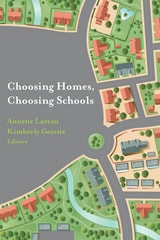
cover of Choosing Homes, Choosing Schools

Choosing Homes, Choosing Schools

Annette Lareau

Russell Sage Foundation, 2014
A series of policy shifts over the past decade promises to change how Americans decide where to send their children to school. In theory, the boom in standardized test scores and charter schools will allow parents to evaluate their assigned neighborhood school, or move in search of a better option. But what kind of data do parents actually use while choosing schools? Are there differences among suburban and urban families? How do parents’ choices influence school and residential segregation in America? Choosing Homes, Choosing Schools presents a breakthrough analysis of the new era of school choice, and what it portends for American neighborhoods. The distinguished contributors to Choosing Homes, Choosing Schools investigate the complex relationship between education, neighborhood social networks, and larger patterns of inequality. Paul Jargowsky reviews recent trends in segregation by race and class. His analysis shows that segregation between blacks and whites has declined since 1970, but remains extremely high. Moreover, white families with children are less likely than childless whites to live in neighborhoods with more minority residents. In her chapter, Annette Lareau draws on interviews with parents in three suburban neighborhoods to analyze school-choice decisions. Surprisingly, she finds that middle- and upper-class parents do not rely on active research, such as school tours or test scores. Instead, most simply trust advice from friends and other people in their network. Their decision-making process was largely informal and passive. Eliot Weinginer complements this research when he draws from his data on urban parents. He finds that these families worry endlessly about the selection of a school, and that parents of all backgrounds actively consider alternatives, including charter schools. Middle- and upper-class parents relied more on federally mandated report cards, district websites, and online forums, while working-class parents use network contacts to gain information on school quality. Little previous research has explored what role school concerns play in the preferences of white and minority parents for particular neighborhoods. Featuring innovative work from more than a dozen scholars, Choosing Homes, Choosing Schools adroitly addresses this gap and provides a firmer understanding of how Americans choose where to live and send their children to school.
[more]
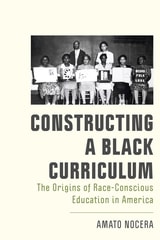
cover of Constructing a Black Curriculum: The Origins of Race-Conscious Education in America

Constructing a Black Curriculum

The Origins of Race-Conscious Education in America

Amato Nocera

Rutgers University Press, 2027

Constructing a Black Curriculum reframes how we understand Black Americans’ intellectual and political engagement with education during the first half of the twentieth century. It traces the powerful, diffuse movement created by Black Americans to build what Nocera calls a “Black Curriculum:" a communal effort to represent Black identity, guide racial consciousness, and rebut claims of inferiority. This curriculum first developed as a public educational project in Black learned societies and during the Harlem Renaissance before making its way into schools. The struggle for a Black curriculum was not only a fight against white supremacy, but also an internal debate among Black advocates over the very nature of how race should be represented and taught. This book illuminates this struggle through the work of Black intellectuals (Alexander Crummell, Carter G. Woodson, Hubert Harrison, and Alain Locke) and the intellectual contributions of African American educators (Nannie Burroughs, Jane Dabney Shackelford, and Julia Davis). This essential history provides vital context for contemporary debates over curriculum reform, racial knowledge, and the enduring quest for educational equity.
[more]
cover of Contested Policy: The Rise and Fall of Federal Bilingual Education in the United States, 1960-2001

Contested Policy

The Rise and Fall of Federal Bilingual Education in the United States, 1960-2001

Guadalupe San Miguel, Jr.

University of North Texas Press, 2004
[more]
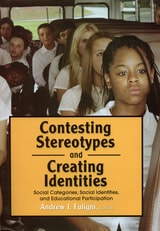
cover of Contesting Stereotypes and Creating Identities: Social Categories, Social Identities, and Educational Participation

Contesting Stereotypes and Creating Identities

Social Categories, Social Identities, and Educational Participation

Andrew J. Fuligni

Russell Sage Foundation, 2007
Since the end of legal segregation in schools, most research on educational inequality has focused on economic and other structural obstacles to the academic achievement of disadvantaged groups. But in Contesting Stereotypes and Creating Identities, a distinguished group of psychologists and social scientists argue that stereotypes about the academic potential of some minority groups remain a significant barrier to their achievement. This groundbreaking volume examines how low institutional and cultural expectations of minorities hinder their academic success, how these stereotypes are perpetuated, and the ways that minority students attempt to empower themselves by redefining their identities. The contributors to Contesting Stereotypes and Creating Identities explore issues of ethnic identity and educational inequality from a broad range of disciplinary perspectives, drawing on historical analyses, social-psychological experiments, interviews, and observation. Meagan Patterson and Rebecca Bigler show that when teachers label or segregate students according to social categories (even in subtle ways), students are more likely to rank and stereotype one another, so educators must pay attention to the implicit or unintentional ways that they emphasize group differences. Many of the contributors contest John Ogbu's theory that African Americans have developed an "oppositional culture" that devalues academic effort as a form of "acting white." Daphna Oyserman and Daniel Brickman, in their study of black and Latino youth, find evidence that strong identification with their ethnic group is actually associated with higher academic motivation among minority youth. Yet, as Julie Garcia and Jennifer Crocker find in a study of African-American female college students, the desire to disprove negative stereotypes about race and gender can lead to anxiety, low self-esteem, and excessive, self-defeating levels of effort, which impede learning and academic success. The authors call for educational institutions to diffuse these threats to minority students' identities by emphasizing that intelligence is a malleable rather than a fixed trait. Contesting Stereotypes and Creating Identities reveals the many hidden ways that educational opportunities are denied to some social groups. At the same time, this probing and wide-ranging anthology provides a fresh perspective on the creative ways that these groups challenge stereotypes and attempt to participate fully in the educational system.
[more]
cover of Courts and Kids: Pursuing Educational Equity through the State Courts

Courts and Kids

Pursuing Educational Equity through the State Courts

Michael A. Rebell

University of Chicago Press, 2009

Over the past thirty-five years, federal courts have dramatically retreated from actively promoting school desegregation. In the meantime, state courts have taken up the mantle of promoting the vision of educational equity originally articulated in Brown v. Board of Education. Courts and Kids is the first detailed analysis of why the state courts have taken on this active role and how successful their efforts have been.

Since 1973, litigants have challenged the constitutionality of education finance systems in forty-five states on the grounds that they deprive many poor and minority students of adequate access to a sound education. While the plaintiffs have won in the majority of these cases, the decisions are often branded “judicial activism”—a stigma that has reduced their impact. To counter the charge, Michael A. Rebell persuasively defends the courts’ authority and responsibility to pursue the goal of educational equity. He envisions their ideal role as supervisory, and in Courts and Kids he offers innovative recommendations on how the courts can collaborate with the executive and legislative branches to create a truly democratic educational system.

[more]