Results by title
733 books match the query 'Environmental Conservation & Protection' and 56 start with c
California
A Fire SurveyStephen J. Pyne
University of Arizona Press, 2016
In this collection of essays on the region, Stephen J. Pyne colorfully explores the ways the region has approached fire management and what sets it apart from other parts of the country. Pyne writes that what makes California’s fire scene unique is how its dramatically distinctive biomes have been yoked to a common system, ultimately committed to suppression, and how its fires burn with a character and on a scale commensurate with the state’s size and political power. California has not only a ferocity of flame but a cultural intensity that few places can match. California’s fires are instantly and hugely broadcast. They shape national institutions, and they have repeatedly defined the discourse of fire’s history. No other place has so sculpted the American way of fire.
California is part of the multivolume series describing the nation’s fire scene region by region. The volumes in To the Last Smoke also cover Florida, the Northern Rockies, the Great Plains, the Southwest, and several other critical fire regions. The series serves as an important punctuation point to Pyne’s fifty-year career with wildland fire—both as a firefighter and a fire scholar. These unique surveys of regional pyrogeography are Pyne’s way of “keeping with it to the end,” encompassing the directive from his rookie season to stay with every fire “to the last smoke.”

Capitalism, Colonisation and the Ecocide-Genocide Nexus
Martin Crook
University of London Press, 2024
This timely publication examines the drivers of ecologically induced genocide, in particular, how environmental destruction can lead to conditions that fundamentally threaten a social group’s cultural or physical existence. Focusing on the former British colonies of Kenya and Australia, both united by a discourse of developmentalism, this book draws attention to the critical role that ecological destruction has in the genocide of Indigenous and place-based peoples. The book synthesizes radical political ecology with a political-economic approach, illuminating the chain connection between the inherent genocidal and ecocidal properties of global capitalism, and how this connection intersects with settler and post-colonial structures. In exploring the genocidal effects of climate governance, the economic market for environmental rights, and energy extraction on Indigenous peoples in Kenya and Australia, the book also draws on original interviews to prioritize the lived experiences of the groups that have suffered structural violence and social harm. Fundamentally, Crook calls forward the political economy of genocide. As such, this important book deepens and enriches our knowledge of genocide, the eco-genocidal nature of colonization, and the capitalist mode of production that underpins developmentalism.
Caring for Life
A Postdevelopment Politics of Infant HygieneKelly Dombroski
University of Minnesota Press, 2024
The transformational possibilities of everyday hygiene and care practices
In order to mitigate the worst forecasts of climate change, many of us need to make drastic adjustments to how we live and what we consume. For Kelly Dombroski, these changes must also happen in the home: in rethinking routines of care and hygiene that still rely on disposable and plastic products. Caring for Life examines the remarkable evolution in Asia-Pacific hygiene practices and amplifies the creative work of ordinary people guarding human and more-than-human life in their everyday practices of care.
Dombroski develops the concept of “guarding life,” a viewpoint that counters homogenous cultural practices and imposed sanitation standards and instead embraces diverse hygiene practices that are networked across varying wisdoms and bodies. She traces how the Chinese diaper-free infant toilet training practice of baniao has traveled to Australia and New Zealand, and she explores the practice of elimination communication, in which babies learn to communicate to their caregivers when they need to eliminate, thus removing the need for diapers. A mother herself, Dombroski conducted ethnographic research while mothering to examine how collectives of mothers draw on Chinese knowledge and their own embodied practices of childcare to create new hybrid forms of infant care.
Caring for Life is a call to action, a theory of change, and a fascinating account of the transformational possibilities of care practices. It shows how experiments in personal care can lead to collective, widespread change, ultimately providing a practical and hopeful vision for environmental action.
Retail e-book files for this title are screen-reader friendly with images accompanied by short alt text and/or extended descriptions.
Catastrophic Thinking
Extinction and the Value of Diversity from Darwin to the AnthropoceneDavid Sepkoski
University of Chicago Press, 2020
We live in an age in which we are repeatedly reminded—by scientists, by the media, by popular culture—of the looming threat of mass extinction. We’re told that human activity is currently producing a sixth mass extinction, perhaps of even greater magnitude than the five previous geological catastrophes that drastically altered life on Earth. Indeed, there is a very real concern that the human species may itself be poised to go the way of the dinosaurs, victims of the most recent mass extinction some 65 million years ago.
How we interpret the causes and consequences of extinction and their ensuing moral imperatives is deeply embedded in the cultural values of any given historical moment. And, as David Sepkoski reveals, the history of scientific ideas about extinction over the past two hundred years—as both a past and a current process—is implicated in major changes in the way Western society has approached biological and cultural diversity. It seems self-evident to most of us that diverse ecosystems and societies are intrinsically valuable, but the current fascination with diversity is a relatively recent phenomenon. In fact, the way we value diversity depends crucially on our sense that it is precarious—that it is something actively threatened, and that its loss could have profound consequences. In Catastrophic Thinking, Sepkoski uncovers how and why we learned to value diversity as a precious resource at the same time as we learned to think catastrophically about extinction.
Cattle In The Cold Desert, Expanded Edition
James A. Young
University of Nevada Press, 2002
A sophisticated ecological analysis of ranching in northern Nevada featuring a new chapter and new epilogue by the authors.First published in 1985, Cattle in the Cold Desert has become a classic in the environmental history of the Great Basin, brilliantly combining a lively account of the development of the Great Basin grazing industry with a detailed scientific discussion of the ecology of its sagebrush/grassland plant communities. The volume traces the history of white settlement in the Great Basin from about 1860, along with the arrival of herds of cattle and sheep to exploit the forage resources of a pristine environment and, through the history of John Sparks, a pioneer cattleman, illustrates how the herdsmen interacted with the sagebrush/grasslands of the cold desert West. As the story unfolds on two levels—that of the herdsmen adapting their livelihood to the challenging conditions of the Great Basin's scanty forage, aridity, and fierce winters, and that of the fragile ecology of the desert plant communities responding to the presence of huge herds of livestock—we see the results of a grand experiment initiated by men willing to venture beyond the limits of accepted environmental potential to settle the Great Basin, as well as the often ruinous consequences of the introduction of domestic livestock into the plant communities of the region. The result is a remarkably balanced and insightful discussion of the grazing industry in the Intermountain West. This new paperback edition includes an additional chapter that addresses the impact of wild mustangs on the Great Basin rangelands, and an epilogue that discusses changes in rangeland management and in rangeland conditions, especially the impact of recent wildfires. As concern over the future of the Great Basin's unique rangeland environment and its principal agricultural industry grows, Cattle in the Cold Desert remains essential reading for everyone who cares about this underappreciated region of the American West.
Challenging the Chip
Labor Rights and Environmental Justice in the Global Electronics Industryedited by Ted Smith, David A. Sonnenfeld and David Naguib Pellow, foreword by Jim Hightower
Temple University Press, 2006
Chasing Giants
In Search of the World's Largest Freshwater FishZeb Hogan
University of Nevada Press, 2023
On May 1, 2005, a Thai fisherman caught a truly monstrous Mekong giant catfish. At 646 pounds, it captured the world’s attention, and with awe and wonder, it was deemed the largest freshwater fish on record. There was no denying its size, but when biologist and research associate professor Hogan saw a photo of the fish, he wondered if it really was the biggest in the world. To his surprise, no one had systematically sought to answer the question: Which of the giant freshwater species really was the largest?
Seeking to answer that question has brought Hogan face to face with massive arapaima and piranha in the Amazon, alligator gar in Texas, pigeon-eating wels catfish in France, stingrays in Cambodia, and the gnarled-toothed sawfish in Australia. Part of his scientific adventure has been captured on Monster Fish, and Hogan now tells the full story of his 25-year quest to understand the mysteries of some of the oldest, largest, most bizarre creatures on Earth.
The fate of these giant fish motivates Hogan to understand the various species he studies. The megafish’s numbers are dwindling, and the majority of them face extinction. In this book, he teams up with award-winning journalist Stefan Lovgren to tell, for the first time, the remarkable and troubling story of the world’s largest freshwater fish. It is a story that stretches across the globe, chronicling a race against the clock to find and protect these ancient leviathans before they disappear forever.
Chasing Giants: In Search of the World’s Largest Freshwater Fish combines science, adventure, and wonder to provide insights into the key role the massive fish of our lakes and rivers play in our past, present, and future.
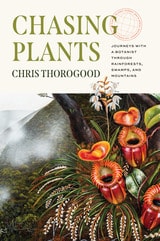
Chasing Plants
Journeys with a Botanist through Rainforests, Swamps, and MountainsChris Thorogood
University of Chicago Press, 2022
From an acclaimed botanist and artist, a thrilling and beautifully illustrated expedition around the globe in search of the world’s most extraordinary plants.
After making a strange discovery on a childhood trip to Ikea—a stand of sap-sucking, leafless broomrapes, stealing nutrients from their neighbors’ roots—Chris Thorogood dreamed of becoming a botanist and would stop at nothing to feed his growing addiction to plants. In his hair-raising adventures across Europe, Africa, the Middle East, and Asia, Thorogood treads a death-defying path over cliffs, up erupting volcanoes, through typhoons, and out into the very heart of the world’s vast, green wilderness. Along the way, he encounters pitcher plants, irises, and orchids more heart-piercingly beautiful than could ever be imagined.
But with Thorogood as our guide in Chasing Plants, we not only imagine: we see. An internationally acclaimed botanical illustrator, Thorogood conjures his adventures spent seed-collecting and conserving plants around the world back to life in his electric paintings, which feature throughout the book. They bring plants out of the shadows, challenging us to see their intrigue and their character, and helping us to understand why plant species must be protected. To join Thorogood in his wild adventures is to be cast under his green spell: readers will never think of plants the same way again.

Cheatgrass
Fire and Forage on the RangeJames A. Young
University of Nevada Press, 2009
Cheatgrass (Bromus tectorum) is an exotic species that appeared in North America in the late nineteenth century and has since become a dominant plant in the arid and semiarid rangelands between the Sierra Nevadas, Cascades, and Rocky Mountains. It is the first grass to appear after the region's long, cold winters and thus has become an important forage plant for livestock and wildlife. Cheatgrass is also a major environmental hazard in the sagebrush plant communities where it has established itself, providing highly combustible fuel for the wildfires that have ravaged so much of the Great Basin since the mid-twentieth century. Cheatgrass is the first comprehensive study of this highly invasive plant that has changed the ecology of millions of acres of western rangeland. Authors Young and Clements have researched the biology and impact of cheatgrass for four decades. Their book addresses the subject from several perspectives: the history of the invasion; the origins and biology of cheatgrass; its genetic variations, breeding systems, and patterns of distribution; its impact on grazing management; and the role it plays, both positive and negative, in the lives of high desert wildlife.
Chemical Alert!
A Community Action HandbookEdited by Marvin S. Legator and Sabrina F. Strawn
University of Texas Press, 1993
In the 1978 Love Canal toxic waste crisis, concerned citizens "did a far better job of evaluating the health of the community than did the professionals of the New York Health Department," asserts Marvin Legator. In Chemical Alert! A Community Action Handbook, he and coeditor Sabrina Strawn offer a step-by-step guide that can be used by any lay person or citizens' group to determine whether a health risk exists in their area.
Writing for the general reader with no scientific expertise, environmental, medical, and legal professionals instruct communities on the organizational and investigative techniques that will produce a valid, scientific case study. With these tools, citizens living near petrochemical plants or waste disposal areas—or who may have simply noticed a high incidence of certain health problems in their community—can determine for themselves whether a problem really exists and seek remediation. Given the reality that government agencies often lack the resources—or the will—to detect health hazards before they affect a community, an informed citizenry should be its own best environmental watchdog.
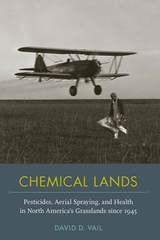
Chemical Lands
Pesticides, Aerial Spraying, and Health in North America’s Grasslands since 1945David D. Vail
University of Alabama Press, 2018
An exploration of the elaborate relationship between farmers, aerial sprayers, agriculturalists, crop pests, chemicals, and the environment.
The controversies in the 1960s and 1970s that swirled around indiscriminate use of agricultural chemicals—their long-term ecological harm versus food production benefits—were sparked and clarified by biologist Rachel Carson’s Silent Spring (1962). This seminal publication challenged long-held assumptions concerning the industrial might of American agriculture while sounding an alarm for the damaging persistence of pesticides, especially chlorinated hydrocarbons such as DDT, in the larger environment.
In Chemical Lands: Pesticides, Aerial Spraying, and Health in North America’s Grasslands since 1945 David D. Vail shows, however, that a distinctly regional view of agricultural health evolved. His analysis reveals a particularly strong ethic in the North American grasslands where practitioners sought to understand and deploy insecticides and herbicides by designing local scientific experiments, engineering more precise aircraft sprayers, developing more narrowly specific chemicals, and planting targeted test crops. Their efforts to link the science of toxicology with environmental health reveal how the practitioners of pesticides evaluated potential hazards in the agricultural landscape while recognizing the production benefits of controlled spraying.
Chemical Lands adds to a growing list of books on toxins in the American landscape. This study provides a unique Grasslands perspective of the Ag pilots, weed scientists, and farmers who struggled to navigate novel technologies for spray planes and in the development of new herbicides/insecticides while striving to manage and mitigate threats to human health and the environment.

Chimpanzees in Context
A Comparative Perspective on Chimpanzee Behavior, Cognition, Conservation, and WelfareEdited by Lydia M. Hopper and Stephen R. Ross
University of Chicago Press, 2020
After a foreword by Jane Goodall, the book features sections that examine chimpanzee life histories and developmental milestones, behavior, methods of study, animal communication, cooperation, communication, and tool use. The book ends with chapters that consider how we can apply contemporary knowledge of chimpanzees to enhance their care and conservation. Collectively, these chapters remind us of the importance of considering the social, ecological, and cognitive context of chimpanzee behavior, and how these contexts shape our comprehension of chimpanzees. Only by leveraging these powerful perspectives do we stand a chance at improving how we understand, care for, and protect this species.
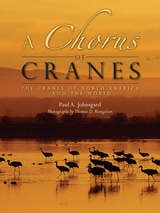
Chorus of Cranes
The Cranes of North America and the WorldPaul A. Johnsgard, Photographs by Thomas D. Mangelsen
University Press of Colorado, 2015
“Since long before medieval times cranes have been considered messengers of the gods, calling annually from on high to remind humans below of the passing years and of their own mortality. Now it is up to humans to take responsibility for controlling our own fate—and also to cry out to protect not only cranes but all the other wonderful creatures that share our increasingly fragile and threatened planetary ecosystem with us."
—Paul A. Johnsgard, from the acknowledgments
Accompanied by the stunning photography of Thomas D. Mangelsen, A Chorus of Cranes details the natural history, biology, and conservation issues surrounding the abundant sandhill crane and the endangered whooping crane in North America. Author Paul A. Johnsgard, one of the leading authorities on cranes and crane biology, describes the fascinating social behaviors, beautiful natural habitats, and grueling seasonal migrations that have stirred the hearts of people as far back as medieval times and garnered the crane a place in folklore and mythology across continents.
Johnsgard has substantially updated and significantly expanded his 1991 work Crane Music, incorporating new information on the biology and status of these two North American cranes and providing abbreviated summaries on the other thirteen crane species of the world. The stories of these birds and their contrasting fates provide an instructive and moving history of bird conservation in North America. A Chorus of Cranes is a gorgeous and invaluable resource for crane enthusiasts, birders, natural historians, and conservationists alike.
The University Press of Colorado gratefully acknowledges the generous support of the Iain Nicholson Audubon Center at Rowe Sanctuary, Audubon Nebraska, Ron and Judy Parks, Wagon Tongue Creek Farm, and the Trull Foundation toward the publication of this book.
Cities and Nature in the American West
Char Miller
University of Nevada Press, 2010
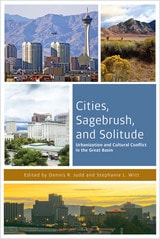
Cities, Sagebrush, and Solitude
Urbanization and Cultural Conflict in the Great BasinDennis R. Judd
University of Nevada Press, 2015
The blooming of cities in a fragile desert region poses a host of environmental challenges. The policies required to manage their impact, however, often collide with an entrenched political culture that has long resisted cooperative or governmental effort. The alchemical mixture of three ingredients--cities, aridity, and a libertarian political outlook--makes the Great Basin a compelling place to study. This book addresses a pressing question: are large cities ultimately sustainable in such a fragile environment?
Citizen's Primer for Conservation Activism
How to Fight Development in Your CommunityBy Judith Perlman
University of Texas Press, 2004
Is there anything you can do when development threatens your local forest, beach, prairie, or wetland? Yes, there is. Across America, citizen activists are fighting and winning battles against unwanted development in their own communities. To help you resist the urban sprawl and absentee landowners that can wreck small towns and cities alike, this book is a practical, hands-on guide for building a grassroots campaign to defeat undesirable development.
Written by a successful activist, Citizen's Primer for Conservation Activism takes you through all the steps necessary to stop unplanned development in your community:
- Identifying the issues at stake
- Getting involved and developing leadership
- Devising a strategy
- Hiring and working with legal counsel
- Building coalitions and partnerships
- Influencing local government
- Conducting a media campaign
- Raising money
- Countering developer tactics
- Managing the whole process
With the proven strategies in this easy-to-access book, you can quickly gear up to challenge unwanted development and preserve the character of your local community.
City Dreams, Country Schemes
Community and Identity in the American WestKathleen A. Brosnan
University of Nevada Press, 2011
The American West, from the beginning of Euro-American settlement, has been shaped by diverse ideas about how to utilize physical space and natural environments to create cohesive, sometimes exclusive community identities. When westerners developed their towns, they constructed spaces and cultural identities that reflected alternative understandings of modern urbanity. The essays in City Dreams, Country Schemes utilize an interdisciplinary approach to explore the ways that westerners conceptualized, built, and inhabited urban, suburban, and exurban spaces in the twentieth century.
The contributors examine such topics as the attractions of open space and rural gentrification in shaping urban development; the role of tourism in developing national parks, historical sites, and California's Napa Valley; and the roles of public art, gender, and ethnicity in shaping urban centers. City Dreams, Country Schemes reveals the values and expectations that have shaped the West and the lives of the people who inhabit it.
City in a Park
A History of Philadelphia's Fairmount Park SystemLynn Miller
Temple University Press, 2015
Fairmount Park is the municipal park system of Philadelphia, Pennsylvania. It consists of more than one hundred parks, squares, and green spaces totaling about 11,000 acres, and is one of the largest landscaped urban park systems in the world. In City in a Park, James McClelland and Lynn Miller provide an affectionate and comprehensive history of this 200-year-old network of parks.
Originated in the nineteenth century as a civic effort to provide a clean water supply to Philadelphia, Fairmount Park also furnished public pleasure grounds for boat races and hiking, among other activities. Millions travel to the city to view its eighteenth-century villas, attend boat races on the Schuylkill River, hike the Wissahickon Creek, visit the Philadelphia Zoo, hear concerts in summer, stroll the city’s historic squares and the Benjamin Franklin Parkway, and enjoy its enormous collection of public art. Green initiatives flower today; Philadelphia lives amidst its parks.
Filled with nearly 150 gorgeous full-color photographs, City in a Park chronicles the continuing efforts to create what founder William Penn desired: a “greene countrie town.”
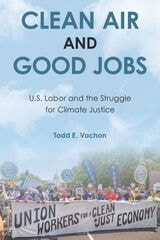
Clean Air and Good Jobs
U.S. Labor and the Struggle for Climate JusticeTodd E. Vachon
Temple University Press, 2023
The labor–climate movement in the U.S. laid the groundwork for the Green New Deal by building a base within labor for supporting climate protection as a vehicle for good jobs. But as we confront the climate crisis and seek environmental justice, a “jobs vs. environment” discourse often pits workers against climate activists. How can we make a “just transition” moving away from fossil fuels, while also compensating for the human cost when jobs are lost or displaced?
In his timely book, Clean Air and Good Jobs, Todd Vachon examines the labor–climate movement and demonstrates what can be envisioned and accomplished when climate justice is on labor’s agenda and unions work together with other social movements to formulate bold solutions to the climate crisis. Vachon profiles the workers and union leaders who have been waging a slow, but steadily growing revolution within their unions to make labor as a whole an active and progressive champion for both workers and the environment.
Clean Air and Good Jobs examines the “movement within the movement” offering useful solutions to the dual crises of climate and inequality.
Clear-Cutting Eden
Ecology and the Pastoral in Southern LiteratureChristopher Rieger
University of Alabama Press, 2009
Examines how Southern literary depictions of the natural world were influenced by the historical, social, and ecological changes of the 1930s and 1940s
Rieger studies the ways that nature is conceived of and portrayed by four prominent Southern writers of the era: Erskine Caldwell, Marjorie Kinnan Rawlings, Zora Neale Hurston, and William Faulkner. Specifically, he argues that these writers created new versions of an old literary mode—the pastoral—in response to the destabilizing effects of the Great Depression, the rise of Southern modernism, and the mechanization of agricultural jobs.
Mass deforestation, soil erosion, urban development, and depleted soil fertility are issues that come to the fore in the works of these writers. In response, each author depicts a network model of nature, where humans are part of the natural world, rather than separate, over, or above it, as in the garden pastorals of the Old South, thus significantly revising the pastoral mode proffered by antebellum and Reconstruction-era writers.
Each writer, Rieger finds, infuses the pastoral mode with continuing relevance, creating new versions that fit his or her ideological positions on issues of race, class, and gender. Despite the ways these authors represent nature and humankind’s place in it, they all illustrate the idea that the natural environment is more than just a passive background against which the substance of life, or fiction, is played out.
Clearing the Coastline
The Nineteenth-Century Ecological & Cultural Transformations of Cape CodMatthew McKenzie
University Press of New England, 2011

Climate Change and the Production of Knowledge
Ian Baucom and Matthew Omelsky, special issue editors
Duke University Press, 2017
Contributors. Ian Baucom, Rosi Braidotti, David Buckland, Matthew Burtner, Noel Castree, Dipesh Chakrabarty, Tom Cohen, Claire Colebrook, Olivia Gray, Willis Jenkins, Catherine Malabou, Matthew Omelsky, Michael Segal, Bently Spang, Gary Tomlinson, Astrid Ulloa, Lucy Wood
Climate Change
The Point of No ReturnMojib Latif
Haus Publishing, 2009
Climate Freedoms
Julie Sze
University of Minnesota Press, 2027
A bold reimagining of climate justice as a collective struggle for freedom, grounded in hope, resistance, and transformative change
In Climate Freedoms, Julie Sze reframes climate justice as a freedom movement, offering a new lens on one of the defining crises of our time. Rather than treating despair as inevitable, Sze argues that denial is a prison and despair sustains the status quo, reinforcing systems built on domination and extraction. Alternatively, climate justice movements can advance a positive vision of collective freedom—one rooted in care, reciprocity, and the possibility of livable worlds.
Centering the perspectives of those most impacted and least responsible for climate disasters, Sze engages climate reparations and traces the connections between climate justice and abolitionist, decolonial, Indigenous, feminist, and Black radical traditions. By analyzing movement stories sparked by climate change–induced disasters specifically affecting frontline communities in the Caribbean, Small Island States in the Pacific, Southeast Asia, and Indigenous communities across the United States, Sze explores how environmental harm is inseparable from colonialism and racial capitalism. These community-based movements challenge narrow, individualist notions of freedom, emphasizing shared responsibility and interconnected futures across local and global scales.
Sze develops three interrelated freedoms: the epistemic freedom to recognize injustice, the imaginative freedom to envision alternatives, and the transformative freedom to create change. These freedoms illuminate how climate justice movements cultivate resistance, survivance, and collective continuance in the face of crisis. The result is a form of grounded hope: clear-eyed about ongoing harm, yet committed to building life-affirming futures.
Retail e-book files for this title are screen-reader friendly.
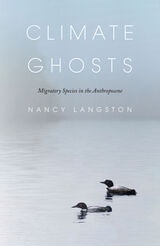
Climate Ghosts
Migratory Species in the AnthropoceneNancy Langston
Brandeis University Press, 2021
Environmental historian Nancy Langston explores three “ghost species” in the Great Lakes watershed—woodland caribou, common loons, and lake sturgeon. Ghost species are those that have not gone completely extinct, although they may be extirpated from a particular area. Their traces are still present, whether in DNA, in small fragmented populations, in lone individuals roaming a desolate landscape in search of a mate. We can still restore them if we make the hard choices necessary for them to survive. In this meticulously researched book, Langston delves into how climate change and human impact affected these now ghost species. Climate Ghosts covers one of the key issues of our time.
Climate Lyricism
Min Hyoung Song
Duke University Press, 2022
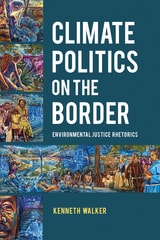
Climate Politics on the Border
Environmental Justice RhetoricsKenneth Walker
University of Alabama Press, 2022
Explores the ways climate change and extreme weather are negotiated politically in a border community
As a borderland city with generations of slow violence and extreme weather events like flash flooding and intense heat waves, San Antonio, Texas, speaks directly to global issues in climate politics. In Climate Politics on the Border: Environmental Justice Rhetorics, Kenneth Walker takes a place-based approach to his study of San Antonio to explore how extreme weather events and responses to them shape local places, publics, and politics, with an eye toward a future characterized by severe climate breakdown.
Attending to the local histories and micropolitics of San Antonio, Walker examines the effects of extreme weather events as they are experienced across radically inequitable social categories. These local histories serve as a guide, not just for future climates, which stand to be unprecedented, but for the necessary public and political responses to them. He shows how extreme weather events in the past have reinforced colonial social orders that weaken democratic goals of pluralism and equity. Conversely, he also shows how diverse coalitions have resisted and responded to these forces.
Walker examines the ethics of Latinx and Anglo relations within state-sponsored productions of racial inequity and environmental degradation, the coalitional capacities of environmental activists and second-wave Chicana/o organizations to protect clean water and transform local political representation, the obligations of place-keeping in Latinx urban design and ecological restoration, and the need to foster pluriversal worlds in city-level climate action and adaptation plans. Collectively these chapters rethink tropes of adaptation, resilience, and coalition as rhetorical and ecological capacities for public and political responses to extractivism.
Based on years of archival work and fieldwork, Climate Politics on the Border demonstrates vividly why ecological and anticolonial approaches to rhetoric are essential for grappling with climate politics. Overall, this is a timely study of how environmental degradation, pollution, and climate change are disputed and negotiated at the local political level in a borderland community.
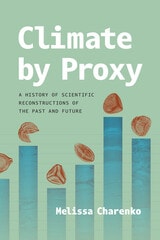
Climate by Proxy
A History of Scientific Reconstructions of the Past and FutureMelissa Charenko
University of Chicago Press, 2025
Unlike our daily reckoning with the weather, our experience of climate must be mediated through methods that measure the ebb and flow of climate, such as computer models, instruments like thermometers, and organic and inorganic remains known as “proxies.” Climate by Proxy by Melissa Charenko explores how scientists read the record of past climates and how their readings have engendered particular understandings of climate. Charenko focuses on the twentieth century, a period when scientists in Europe and North America began to believe that climate had a dynamic history worth studying. Scientists in this period developed several techniques to infer past climate from fossil pollen, tree rings, pieces of vegetation, and other organic remains imprinted upon by former climates. Climate by Proxy examines how these techniques helped shape notions of climate itself.
Charenko also shows how these varied interpretations of climate played an outsized role in explanations of human history and destiny. Geologists, botanists, ecologists, and other scientists interested in climate over long timescales routinely discussed how climate influenced plants, animals, and, notably, people. By following the scientists who reconstructed climate using natural archives, Climate by Proxy demonstrates how material objects worked with scientists’ perceptions of human groups to compel, constrain, and reinforce their understandings of climate, history, and the future.
Climatic Media
Transpacific Experiments in Atmospheric ControlYuriko Furuhata
Duke University Press, 2022
Colorado Trail in Crisis
A Naturalist’s Field Report on Climate Change in Mountain EcosystemsKarl Ford
University Press of Colorado, 2024
Using his hike along the popular five-hundred-mile Colorado Trail to present his personal observations about more than a hundred miles of dead and dying forest, Karl Ford presents a brief environmental history of these areas of the state, weaving in scientific studies about forest mortality caused by insect infestations, wildfire, drought, and loss of snowpack, and describes the poor current prospects for reforestation as the climate continues to warm. His own Lakota ancestry, as well as historical references to local Tabeguache Ute Chief Ouray and displaced Ute populations, meaningfully frames important conversations about caretaking and connection to place. Ford also proposes potential solutions to drought and forest mortality problems, as well as varying approaches and limitations to mitigation efforts.
The Colorado Trail in Crisis appeals to hikers and nature lovers seeking to learn about the natural history, beauty, and serenity of the Colorado Trail, as well as students, conservationists, and scientists researching climate change effects on Colorado mountain ecosystems.
Combating Mountaintop Removal
New Directions in the Fight against Big CoalBryan T. McNeil
University of Illinois Press, 2012
Common Ground
Encounters with Nature at the Edges of LifeRob Cowen
University of Chicago Press, 2016
That’s what Rob Cowen discovered after moving to a new home in northern England. After ten years in London he was suddenly adrift, searching for a sense of connection. He found himself drawn to a square-mile patch of waste ground at the edge of town. Scrappy, weed-filled, this heart-shaped tangle of land was the very definition of overlooked—a thoroughly in-between place that capitalism no longer had any use for, leaving nature to take its course. Wandering its meadows, woods, hedges, and fields, Cowen found it was also a magical, mysterious place, haunted and haunting, abandoned but wildly alive—and he fell in fascinated love.
Common Ground is a true account of that place and Cowen’s transformative journey through its layers and lives, but it’s much more too. As the land’s stories intertwine with events in his own life—and he learns he is to become a father for the first time—the divisions between human and nature begin to blur and shift. The place turns out to be a mirror, revealing what we are, what we’re not and how those two things are ultimately inseparable.
This is a book about discovering a new world, a forgotten world on the fringes of our daily lives, and the richness that comes from uncovering the stories and lives—animal and human—contained within. It is an unforgettable piece of nature writing, part of a brilliant tradition that stretches from Gilbert White to Robert Macfarlane and Helen Macdonald.
“I am dreaming of the edge-land again,” Cowen writes. Read Common Ground, and you, too, will be dreaming of the spaces in between, and what—including us—thrives there.
Companion to A Sand County Almanac
Interpretive and Critical EssaysJ. Baird Callicott
University of Wisconsin Press, 1987
Connection On The Ice
Patti Clayton
Temple University Press, 1998
Conservancy
The Land Trust Movement in AmericaRichard Brewer
Dartmouth College Press, 2004
Conservation Biology and Applied Zooarchaeology
Edited by Steve Wolverton and R. Lee Lyman
University of Arizona Press, 2012
The case studies, which utilize palaeozoological data, cover a variety of animals and environments, including the marine ecology of shellfish and fish, potential restoration sites for Sandhill Cranes, freshwater mussel biogeography and stream ecology, conservation of terrestrial mammals such as American black bears, and even a consideration of the validity of the Pleistocene “rewilding” movement. The volume closes with an important new essay on the history, value, and application of applied zooarchaeology by R. Lee Lyman, which updates his classic 1996 paper that encouraged zooarchaeologists to apply their findings to present-day environmental challenges.
Each case study provides detailed analysis using the approaches of zooarchaeology and concludes with precise implications for conservation biology. Essays also address issues of political and social ecology, which have frequently been missing from the discussions of conservation scientists. As the editors note, all conservation actions occur in economic, social, and political contexts. Until now, however, the management implications of zooarchaeological research have rarely been spelled out so clearly.
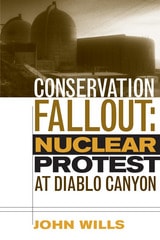
Conservation Fallout
Nuclear Protest At Diablo CanyonJohn Wills
University of Nevada Press, 2012
An unprecedented look at nuclear politics in California Vehement, widespread opposition accompanied the rise of the U.S. nuclear industry during the 1960s and 1970s. In Conservation Fallout, John Wills examines one of the most controversial atomic projects of the period: Pacific Gas and Electric Company’s decision to build its premier nuclear power plant at Diablo Canyon, a relatively unsettled, biologically rich, and especially scenic part of the central California coastline. Two competing visions of California emerged while the plant underwent construction. Environmentalists used Diablo as a symbol of impending ecological doomsday, while PG&E envisioned it as the model that would usher in a new age of energy production. The Sierra Club almost disbanded over whether to condone or protest the reactor project. Divisions also emerged in the local community as residents and politicians, enticed by the promise of cheap electricity and lucrative tax revenues, found themselves pitted against others who feared the dangers of radiation in their own backyards. The controversy intensified when a fault line was discovered within three miles of the plant. Grassroots groups The Mothers for Peace, a local women’s group, and The Abalone Alliance, a statewide nonviolent direct-action organization, did their utmost to stop the plant from going on-line. In 1979, an Alliance rally in San Francisco attracted 25,000 people, while 40,000 others gathered in San Luis Obispo. During a two-week-long blockade of the Diablo plant in 1981, over 1,900 activists were jailed, the largest arrest in the history of American antinuclear protest. Despite its significance in the history of twentieth-century environmental issues and the continuing debate over the safety of nuclear power, the full story of Diablo Canyon has not been told until now. Wills bases his account on extensive interviews with the individuals involved, as well as on the archives of the Sierra Club, several protest organizations, public agencies, PG&E, and others. The result is an engaging, balanced examination of nuclear politics in California. By focusing on one of the last wild places in the state and its transformation into a major technological center, and on the evolution and strategies of the little-studied grassroots protest groups determined to protect California and resist the spread of nuclear technology, Wills has made a major contribution to our understanding of America’s nuclear age.
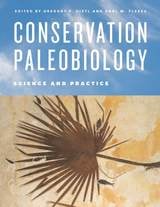
Conservation Paleobiology
Science and PracticeEdited by Gregory P. Dietl and Karl W. Flessa
University of Chicago Press, 2017
Studying endangered species is difficult. They are by definition rare, some exist only in captivity, and for those still in their native habitats any experimentation can potentially have a negative effect on survival. Moreover, a lack of long-term data makes it challenging to anticipate biotic responses to environmental conditions that are outside of our immediate experience. But in the fossil and prefossil records—from natural accumulations such as reefs, shell beds, and caves to human-made deposits like kitchen middens and archaeological sites—enlightening parallels to the Anthropocene can be found that might serve as a primer for present-day predicaments. Offering both deep-time and near-time perspectives and exploring a range of ecological and evolutionary dynamics and taxa from terrestrial as well as aquatic habitats, Conservation Paleobiology is a sterling demonstration of how the past can be used to manage for the future, giving new hope for the creation and implementation of successful conservation programs.
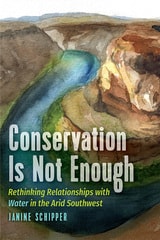
Conservation is not Enough
Rethinking Relationships with Water in the Arid SouthwestJanine Schipper
University of Wyoming Press, 2025
Using an exploratory and qualitative approach, the book draws on more than ninety-five interviews conducted over three years, revealing the complex relationships people have with water in the Southwest, and prominently features the voices of participants, effectively illustrating multiple perspectives and diverse ways of thinking about and relating to water. Schipper highlights various perspectives—including a water manager making conservation decisions, a Hopi elder emphasizing our connection to the water cycle, and a ski instructor reflecting on human-made snow—and interweaves personal experiences and reflections on her own relationship with water and conservation efforts.
Conservation Is Not Enough encourages readers to reflect on their personal connections to water and consider new possibilities, and it also urges readers to think beyond conventional conservation approaches. This book helps to transform the collective approach to water and cultivate fresh ways of engaging with and relating to water and is of great interest to scholars, students, and residents concerned with water issues in the Colorado River Basin.
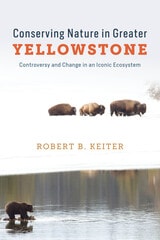
Conserving Nature in Greater Yellowstone
Controversy and Change in an Iconic EcosystemRobert B. Keiter
University of Chicago Press, 2025
For more than 150 years, the Yellowstone region—now widely known as the twenty-three million acre Greater Yellowstone Ecosystem—has played a prominent role in the United States’ nature conservation agenda. In this book, Robert B. Keiter, an award-winning public land law and policy expert, traces the evolution and application of fundamental ecological conservation concepts tied to Yellowstone.
Keiter’s book highlights both the conservation successes and controversies connected with this storied region, which has been enmeshed in change. During the 1980s, leaders in Yellowstone embraced ecosystem management concepts to recover a dwindling grizzly bear population and to support wolf reintroduction. Since then, management policies in the region’s two national parks and adjacent national forests have largely followed suit, prioritizing ecosystem-level conservation over industrial activity. Groundbreaking efforts are currently afoot to protect elk, deer, and pronghorn migration corridors and to maintain the park’s bison population, effectively expanding the scope of regional conservation initiatives. But in the face of explosive human population growth and related development pressures, new efforts must also account for the region’s privately owned lands along with accelerating recreational activities that present quite different problems.
Indeed, the Greater Yellowstone Ecosystem—extending across three states and twenty counties and embracing more than sixteen million acres of federal land as well as private and tribal lands —can only be characterized as a complex, jurisdictionally fragmented landscape. As Keiter makes clear, the quest for common ground among federal land managers, state officials, local communities, conservationists, ranchers, Indigenous tribes, and others is a vital, enduring task.
Exploring both notable conservation accomplishments and the ongoing challenges confronting this special place, Keiter’s book explains the many forces—scientific, political, economic, legal, cultural, climatic, and more—at work driving controversy and change across the region. But more than this, Conserving Nature in Greater Yellowstone shows us that the lessons gleaned from Yellowstone’s expansive nature conservation efforts are profoundly important for both the country and the world.
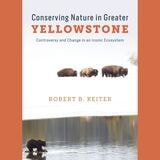
Conserving Nature in Greater Yellowstone
Controversy and Change in an Iconic EcosystemRobert B. Keiter
University of Chicago Press, 2025
The story of how Yellowstone, established in 1872 as the world’s first national park, has become synonymous with nature conservation—and an examination of today’s challenges to preserve the region’s wilderness heritage.
For more than 150 years, the Yellowstone region—now widely known as the twenty-three million acre Greater Yellowstone Ecosystem—has played a prominent role in the United States’ nature conservation agenda. In this book, Robert B. Keiter, an award-winning public land law and policy expert, traces the evolution and application of fundamental ecological conservation concepts tied to Yellowstone.
Keiter’s book highlights both the conservation successes and controversies connected with this storied region, which has been enmeshed in change. During the 1980s, leaders in Yellowstone embraced ecosystem management concepts to recover a dwindling grizzly bear population and to support wolf reintroduction. Since then, management policies in the region’s two national parks and adjacent national forests have largely followed suit, prioritizing ecosystem-level conservation over industrial activity. Groundbreaking efforts are currently afoot to protect elk, deer, and pronghorn migration corridors and to maintain the park’s bison population, effectively expanding the scope of regional conservation initiatives. But in the face of explosive human population growth and related development pressures, new efforts must also account for the region’s privately owned lands along with accelerating recreational activities that present quite different problems.
Indeed, the Greater Yellowstone Ecosystem—extending across three states and twenty counties and embracing more than sixteen million acres of federal land as well as private and tribal lands —can only be characterized as a complex, jurisdictionally fragmented landscape. As Keiter makes clear, the quest for common ground among federal land managers, state officials, local communities, conservationists, ranchers, Indigenous tribes, and others is a vital, enduring task.
Exploring both notable conservation accomplishments and the ongoing challenges confronting this special place, Keiter’s book explains the many forces—scientific, political, economic, legal, cultural, climatic, and more—at work driving controversy and change across the region. But more than this, Conserving Nature in Greater Yellowstone shows us that the lessons gleaned from Yellowstone’s expansive nature conservation efforts are profoundly important for both the country and the world.
Contact
Mountain Climbing And Environmental ThinkingJeffrey Mccarthy
University of Nevada Press, 2008
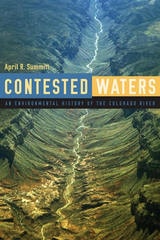
Contested Waters
An Environmental History of the Colorado RiverApril R. Summitt
University Press of Colorado, 2013
-From the conclusion
The Colorado River is a vital resource to urban and agricultural communities across the Southwest, providing water to 30 million people. Contested Waters tells the river's story-a story of conquest, control, division, and depletion.
Beginning in prehistory and continuing into the present day, Contested Waters focuses on three important and often overlooked aspects of the river's use: the role of western water law in its over-allocation, the complexity of power relationships surrounding the river, and the concept of sustainable use and how it has been either ignored or applied in recent times. It is organized in two parts, the first addresses the chronological history of the river and long-term issues, while the second examines in more detail four specific topics: metropolitan perceptions, American Indian water rights, US-Mexico relations over the river, and water marketing issues. Creating a complete picture of the evolution of this crucial yet over-utilized resource, this comprehensive summary will fascinate anyone interested in the Colorado River or the environmental history of the Southwest.
Contesting Leviathan
Activists, Hunters, and State Power in the Makah Whaling ConflictLes Beldo
University of Chicago Press, 2019
In Contesting Leviathan, anthropologist Les Beldo describes the complex judicial and political climate for whale conservation in the United States, and the limits of the current framework in which whales are treated as “large fish” managed by the National Marine Fisheries Service. Emphasizing the moral dimension of the conflict between the Makah, the US government, and antiwhaling activists, Beldo brings to light the lived ethics of human-animal interaction, as well as how different groups claim to speak for the whale—the only silent party in this conflict. A timely and sensitive study of a complicated issue, this book calls into question anthropological expectations regarding who benefits from the exercise of state power in environmental conflicts, especially where indigenous groups are involved. Vividly told and rigorously argued, Contesting Leviathan will appeal to anthropologists, scholars of indigenous culture, animal activists, and any reader interested in the place of animals in contemporary life.
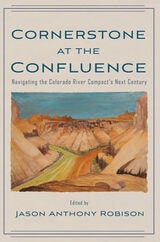
Cornerstone at the Confluence
Navigating the Colorado River Compact's Next CenturyEdited by Jason Anthony Robison
University of Arizona Press, 2022
No fewer than forty million people have come to rely on the Colorado River system in modern times—a river system immersed in an unprecedented, unrelenting megadrought for more than two decades. Attempting to navigate this “new normal,” policymakers are in the midst of negotiating new management rules for the river system, a process coinciding with the compact’s centennial that must be completed by 2026.
Animated by this remarkable confluence of events, Cornerstone at the Confluence leverages the centennial year to reflect on the compact and broader “Law of the River” to envision the future. It is a volume inviting dialogue about how the Colorado River system’s flows should be apportioned given climate change, what should be done about environmental issues such as ecosystem restoration and biodiversity protection, and how long-standing issues of water justice facing Native American communities should be addressed.
In one form or another, all these topics touch on the concept of “equity” embedded within the compact—a concept that tees up what is perhaps the foundational question confronted by Cornerstone at the Confluence: Who should have a seat at the table of Colorado River governance?
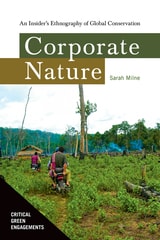
Corporate Nature
An Insider's Ethnography of Global ConservationSarah Milne
University of Arizona Press, 2022
Sarah Milne spent more than a decade working for and observing global conservation projects in Cambodia. During this time, she saw how big environmental NGOs can operate rather like corporations. Their core practice involves rolling out appealing and deceptively simple policy ideas, like Payments for Ecosystem Services (PES). Yet, as policy ideas prove hard to implement, NGOs must also carefully curate evidence from the field to give the impression of success and effectiveness.
In Corporate Nature, Milne delves inside the black box of mainstream global conservation. She reveals how big international NGOs struggle in the face of complexity—especially in settings where corruption and political violence prevail. She uses the case of Conservation International’s work in Cambodia to illustrate how apparently powerful NGOs can stumble in practice: policy ideas are transformed on the ground, while perverse side effects arise, like augmented authoritarian power, illegal logging, and Indigenous dispossession.
The real power of global conservation NGOs is therefore not in their capacity to control what happens in the field but in their capacity to ignore or conceal failings. Milne argues that this produces an undesirable form of socionature, called corporate nature, that values organizational success over diverse knowledges and ethical conduct.
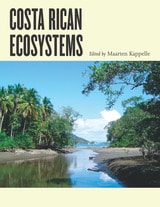
Costa Rican Ecosystems
Edited by Maarten Kappelle
University of Chicago Press, 2016
In Costa Rican Ecosystems, Maarten Kappelle brings together a collection of the world’s foremost experts on Costa Rican ecology—outstanding scientists such as Daniel H. Janzen, Jorge Cortés, Jorge A. Jiménez, Sally P. Horn, Robert O. Lawton, Quírico Jiménez M., Carlos Manuel Rodríguez, Catherine M. Pringle, and Eduardo Carrillo J., among others—to offer the first comprehensive account of the diversity, structure, function, uses, and conservation of Costa Rica’s ecosystems. Featuring a foreword and introductory remarks by two renowned leaders in biodiversity science and ecological conservation, Thomas E. Lovejoy and Rodrigo Gámez Lobo, in addition to chapters highlighting the geology, soils, and climate of Costa Rica, as well as the ecosystems of its terrestrial, freshwater, and marine habitats, and including previously unpublished information on Isla del Coco, this beautiful color-illustrated book will be an essential reference for academic scientists, students, natural history guides, conservationists, educators, park guards, and visitors alike.
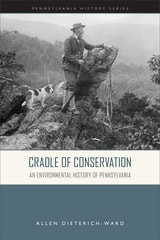
Cradle of Conservation
An Environmental History of PennsylvaniaAllen Dieterich-Ward
Temple University Press, 2024
Cradle of Conservation moves across time and place, from the Haudenosaunee people of the Susquehanna Valley, to the iron furnaces of nineteenth-century Pittsburgh, to the diesel trucks on the twentieth-century Pennsylvania Turnpike. In addition, Dieterich-Ward explores the histories of Philadelphia’s Schuylkill River and the state’s anthracite region and traces the environmental movements and crises that have led to public policy changes in the face of climate change.
Cradle of Conservation deepens our understanding of how Pennsylvanians have conserved and consumed.
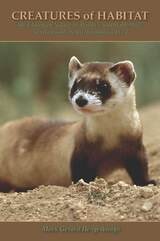
Creatures Of Habitat
The Changing Nature of Wildlife and Wild Places in Utah and the Intermountain WestMark Gerard Hengesbaugh
Utah State University Press, 2001
From flying squirrels on high wooded plateaus to hanging gardens in redrock canyons, the Intermountain West is home to some of the world's rarest and most fascinating animals and plants. Creatures of Habitat details many unique but little-known talents of this region's strange and wonderful wild inhabitants and descibes their connections with native environments. For example, readers will learn about the pronghorn antelope's supercharged cardiovascular system, a brine shrimp-powered shorebird that each year flies nonstop from the Great Salt Lake to Central Argentina, and a rare mustard plant recently discovered on Mount Ogden. Emphasizing how increasing loss and degradation of habitat hinders native species' survival, Mark Gerard Hengesbaugh discusses what is happening to wildlife and wild places and what is being done about it.
Well illustrated, this book has habitat maps, pen-and-ink illustrations, and fifty photos of wildlife and wild places selected by photo editor Dan Miller. Also included are guides to wildlife viewing and lists of Utah species, including those considered sensitive, threatened, or endangered.
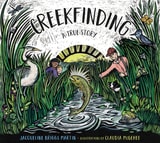
Creekfinding
A True StoryJacqueline Briggs Martin
University of Minnesota Press, 2017
Once upon a time a creek burbled up and tumbled across a prairie valley. It was filled with insects and brook trout that ate them, frogs that chirruped and birds watching for bugs and fish. This is a true story about a man named Mike who went looking for that creek long after it was buried under fields of corn. It is the story of how a creek can be brought back to life, and with it a whole world of nature.
In the words of award-winning author Jacqueline Briggs Martin and the enchanting illustrations by Claudia McGehee, this heartening tale of an ecosystem restored in the Driftless Area of northeast Iowa unfolds in a way that will charm and inform young readers who are drawn to a good mystery, the wonders of nature—and, of course, big earth-moving machines.