Results by title
151 books match the query 'Exhibitions' and 11 start with c
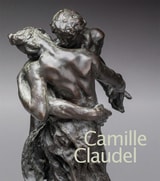
Camille Claudel
Emerson Bowyer
J. Paul Getty Trust, The, 2023
Camille Claudel (1864–1943) was among the most daring and visionary sculptors of the late nineteenth century. Although much attention has been paid to her tumultuous life—her affair with her mentor, Auguste Rodin; the premature end to her career; her thirty-year institutionalization in an asylum—her art remains little known outside of France. Memorably praised by critic Octave Mirbeau in 1895 as “a revolt of nature: a woman of genius,” Claudel was celebrated for her brilliance during a time when women sculptors were rare.
Featuring more than two hundred photographs along with contributions from leading experts, this publication accompanies the first comprehensive survey of Claudel’s oeuvre in nearly forty years. With essays exploring the many facets of her life, work, and reception; a biography; commentary by American sculptor Kiki Smith; and a fascinating appendix of documents written by Claudel and her contemporaries, this volume reevaluates the artist’s work on its own merits and repositions her legacy within a more complex genealogy of modernism.
This volume, copublished with The Art Institute of Chicago, accompanies an exhibition on view at The Art Institute of Chicago from October 7, 2023, to February 19, 2024 and at the J. Paul Getty Museum at the Getty Center from April 2 to July 21, 2024.
Casting a Shadow
Creating the Alfred Hitchcock FilmEdited by Will Schmenner and Corinne Granof
Northwestern University Press, 2007
Scott Curtis considers the four functions of Hitchcock’s sketches and storyboards and how they undermine the impression of Hitchcock as a lone artist. Tom Gunning examines the visual vocabulary and cultural weight of Hitchcock’s movies. Bill Krohn focuses sharply on the film I Confess, tracking its making over a very cooperative path.
Finally, Jan Olsson draws on the television series, Alfred Hitchcock Presents, to show the ways that collaboration contributes to the formation of his well known public persona. Anchored by editor Will Schmenner’s introduction, this book represents an important contribution to Hitchcock scholarship and a provocative glimpse at his unsung strength as a collaborative artist.

Catholic Collecting
Catholic Reflection 1538-1850: Objects as a Measure of Reflection on a Catholic Past and the Construction of Recusant Identity in England and AmericaVirginia C. Raguin
Catholic University of America Press, 2006
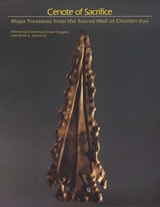
Cenote of Sacrifice
Maya Treasures from the Sacred Well at Chichen ItzaClemency Chase Coggins
University of Texas Press, 1984
Chichén Itzá ("mouth of the well of the Itza") was one of the great centers of civilization in prehistoric America, serving between the eighth and twelfth centuries A.D. as a religious, economic, social, and political capital on the Yucatán Peninsula. Within the ancient city there were many natural wells or cenotes. One, within the ceremonial heart of the city, is an impressive natural feature with vertical limestone walls enclosing a deep pool of jade green water some eighty feet below ground level. This cenote, which gave the city its name, became a sacred shrine of Maya pilgrimage, described by one post-Conquest observer as similar to Jerusalem and Rome. Here, during the city's ascendancy and for centuries after its decline, the peoples of Yucatán consulted their gods and made ritual offerings of precious objects and living victims who were thought to receive prophecies.
Although the well was described by Bishop Diego de Landa in the late sixteenth century, its contents were not known until the early 1900s when revealed by the work of Edward H. Thompson. Conducting excavations for the Peabody Museum of Harvard University, Thompson recovered almost thirty thousand artifacts, most ceremonially broken and many beautifully preserved by burial in the deep silt at the bottom of the well. The materials were sent to the Peabody Museum, where they remained, unexhibited, for over seventy years.
In 1984, for the first time, nearly three hundred objects of gold, jade, copper, pottery, wood, copal, textile, and other materials from the collection were gathered into a traveling interpretive exhibition. No other archaeological exhibition had previously given this glimpse into Maya ritual life because no other collection had objects such as those found in the Sacred Cenote. Moreover, the objects from the Cenote come from throughout Mesoamerica and lower Central America, representing many artistic traditions. The exhibit and this, its accompanying catalog, marked the first time all of the different kinds of offerings have ever been displayed together, and the first time many have been published.
Essays by Gordon R. Willey and Linnea H. Wren place the Cenote of Sacrifice and the great Maya city of Chichén Itzá within the larger context of Maya archaeology and history. The catalog entries, written by Clemency Chase Coggins, describe the objects displayed in the traveling exhibition. Some entries are brief descriptive statements; others develop short scholarly themes bearing on the function and interpretation of specific objects. Coggins' introductory essay describes how the objects were collected by Thompson and how the exhibition collection has been studied to reveal the periods of Cenote ritual and the changing practices of offering to the Sacred Cenote.
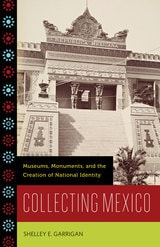
Collecting Mexico
Museums, Monuments, and the Creation of National IdentityShelley E. Garrigan
University of Minnesota Press, 2012
Collecting Mexico centers on the ways in which aesthetics and commercialism intersected in officially sanctioned public collections and displays in late nineteenth-century Mexico. Shelley E. Garrigan approaches questions of origin, citizenry, membership, and difference by reconstructing the lineage of institutionally collected objects around which a modern Mexican identity was negotiated. In doing so, she arrives at a deeper understanding of the ways in which displayed objects become linked with nationalistic meaning and why they exert such persuasive force.
Spanning the Porfiriato period from 1867 to 1910, Collecting Mexico illuminates the creation and institutionalization of a Mexican cultural inheritance. Employing a wide range of examples—including the erection of public monuments, the culture of fine arts, and the representation of Mexico at the Paris World’s Fair of 1889—Garrigan pursues two strands of thought that weave together in surprising ways: national heritage as a transcendental value and patrimony as potential commercial interest.
Collecting Mexico shows that the patterns of institutional collecting reveal how Mexican public collections engendered social meaning. Using extensive archival materials, Garrigan’s close readings of the processes of collection building offer a new vantage point for viewing larger issues of identity, social position, and cultural/capital exchange.
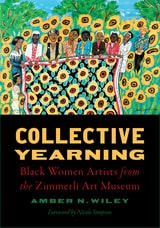
Collective Yearning
Black Women Artists from the Zimmerli Art MuseumAmber N. Wiley
Rutgers University Press, 2026
When Rutgers professor Amber N. Wiley began teaching her African American Art class in 2018, she and her students made a shocking discovery. While the university’s Zimmerli Art Museum had over seventy thousand artworks in its collection, only one of the pieces on display was by a Black American woman. The students, who came from a variety of majors and reflected the ethnic diversity of New Jersey itself, agreed something needed to be done to correct this imbalance. And so begins the story of the groundbreaking exhibition: Collective Yearning.
In this book, Wiley tells the story of how she and her student curators took a deep dive into the Zimmerli’s holdings to recover, catalog, and display its art by Black women. Along the way, contributors discuss the ethics of curation, the history of African American expressive traditions, and the institutional biases that erase or marginalize Black female perspectives. Richly illustrated with pieces from the exhibition, including little-seen work by such visionaries as Faith Ringgold, Renée Stout, and Kara Walker, Collective Yearning makes a powerful statement on the importance of showcasing Black women artists.
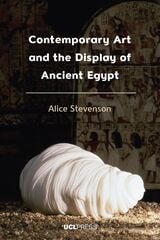
Contemporary Art and the Display of Ancient Egypt
Alice Stevenson
University College London, 2025
Contemporary art installations in Egyptian galleries are often framed as dialogues between past and present—but what if they are, instead, shaped by the museum itself? Contemporary Art and the Display of Ancient Egypt argues that both contemporary and ancient works are mediated through the structures and ideologies of the museum space. In this seminal work, Alice Stevenson examines how artists’ work influences museum discourse and public engagement with ancient artifacts.
Drawing on case studies from the British Museum, the Egyptian Museum in Turin, and the State Museum of Egyptian Art in Munich, this book assesses the motivations behind these interventions and their lasting impact. Through an evidence-based approach, Stevenson offers new insights into how curators, scholars, and artists can collaborate to create more meaningful and politically engaged museum experiences. Of particular interest to Egyptologists, museum professionals, and contemporary art scholars, this work redefines the role of artistic intervention in shaping our understanding of ancient cultures.

Conversion to Modernism
The Early Work of Man RayFrancis M. Naumann
Rutgers University Press, 2003
Man Ray (1890–1976) has long been considered one of the most versatile and innovative artists of the twentieth century. As a painter, writer, sculptor, photographer, and filmmaker, he is best known for his intimate association with the French Surrealist group in Paris during the 1920s and 1930s, particularly for his highly inventive and unconventional photographic images. These remarkable accomplishments, however, have tended to overshadow the importance of his earlier work—significant not only for comprehending Man Ray’s future artistic development, but also for fleshing out our understanding of the visual arts in America during one of the most important and crucial phases of the evolution of modernism.
The book, and the exhibition for which this work will serve as the catalog, concentrate on Man Ray’s production from 1907 to 1917. Conversion to Modernism will be the first comprehensive, fully illustrated work to examine this artist’s seminal years. The show and the catalog begin with Man Ray’s high school years in Brooklyn, his studies at the Art Students League and the American Academy in New York, and the time he spent in life drawing classes at the more progressive Ferrer Center
From 1913 to 1915, Man Ray lived in a small artists’ colony in Grantwood, New Jersey. It was here, studying with Samuel Halpert (a former student of Matisse), that Man Ray began to become the artist we know today. The last section of the show and of the book include recently discovered photographs and other works that are influenced by a knowledge of the emergent Dada movement. Here is Man Ray in recognizable form just before he leaves the country for France in 1921.
This exhibit will first be on display at the Montclair Art Museum from January 26 through March 2003. It will then travel to museums in Athens, Georgia, Philadelphia, and Chicago.
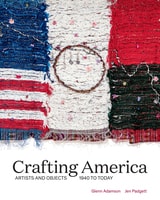
Crafting America
Artists and Objects, 1940 to TodayJen Padgett
University of Arkansas Press, 2020
Craft is a diverse, democratic art form practiced by Americans of every gender, age, ethnicity, and class. Crafting America traces this expansive range of skilled making in a variety of forms, from ceramics and wood to performance costume and community-based practice. In exploring the intertwining of craft and American experience, this volume reveals how artists leverage their craft to realize the values of life, liberty, and the pursuit of happiness.
Accompanying an exhibition of the same title organized by Crystal Bridges Museum of American Art, Crafting America features contributions from scholars that illuminate craft’s relationship to ritual and memory, personal independence, abstraction, and Native American histories. The richly illustrated catalog section—with more than a hundred color images accompanied by lively commentary—presents a vivid picture of American craft over the past eight decades, offering fresh insights on the relationships between objects.
Building upon recent advances in craft scholarship and encouraging more inclusive narratives, Crafting America presents a bold statement on the vital role of craft within the broader context of American art and identity.
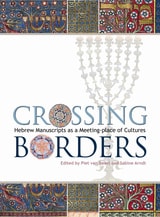
Crossing Borders
Hebrew Manuscripts as a Meeting-place of CulturesEdited by Piet van Boxel and Sabine Arndt
Bodleian Library Publishing, 2010
Crossing Borders tells the intriguing but largely unfamiliar story of the exchange of culture and knowledge between Jews and non-Jews in the Muslim and Christian worlds during the late Middle Ages as part of the preparation of Hebrew manuscripts. The book is composed of ten narratives, each of which brings to light a different aspect of Jewish life in a non-Jewish medieval society—highlighting the practical cooperation, social interaction, and religious toleration that was surprisingly common between the groups involved in the early enterprise of book production.
Alongside the narratives, Crossing Borders is beautifully illustrated with images from the Hebrew holdings at the Bodleian Library—one of the largest and most important collections of Hebrew manuscripts worldwide. The art includes Christian codex fragments from the third century, a copy of Moses Maimonides’ Mishneh Torah signed by Maimonides himself, a thirteenth century German Jewish prayer book, and lavishly illuminated Spanish Bible manuscripts from the fifteenth century. This exquisitely illustrated book takes a fascinating look at the often-ignored role of Jews in the written transmission of culture and science throughout medieval Europe.

Czechoslovakia at the World’s Fairs
Behind the FaçadeMarta Filipová
Central European University Press, 2024
Established in 1918, as a new state the First Czechoslovak Republic was keen to project a distinct image. Participation in World Fairs offered the perfect opportunity-. In this comprehensive account of Czechoslovak participation in international exhibitions of the interwar period Marta Filipová looks beyond the sleek façade of the modernist pavilions to examine the intersections of architecture, art and design with commercial interests, state agendas, individual action and the public, offering a complex insight into the production and reception of national displays.
The rich collection of images – mainly photographs – provides a close look at the Czechoslovak pavilions. The design, content and context of the displays convey an idealized narrative that was created for the fairs and the myths on which the Czechoslovak nation and state were built. Heavy machinery, modern art, tourist destinations, and food and drink were presented as Czechoslovak, while many aspects of social life – particularly women or ethnic minorities – were strikingly underrepresented or absent. The book argues that the objects and ideas that the pavilion organizers put on display legitimized and validated the existence of the new state through the inclusion and exclusion of exhibits, people, and ideas.
While Marta Filipová primarily focuses on Czechoslovakia, she also offers insights into how other emerging nations projected and sustained their image during this historical period and how interwar world’s fairs accommodated them.