Results by title
128 books match the query 'Feminism and literature' and 9 start with c

CONTESTED CASTLE
GOTHIC NOVELS AND THE SUBVERSION OF DOMEKate Ferguson Ellis
University of Illinois Press, 1989
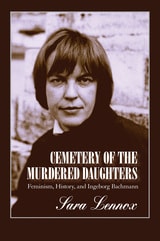
Cemetery of the Murdered Daughters
Feminism, History, and Ingeborg BachmannSara Lennox
University of Massachusetts Press, 2006
Although Austrian writer Ingeborg Bachmann (1926–1973) is widely regarded as one of the most important twentieth-century authors writing in German, her novels and stories have sometimes been viewed narrowly as portraits of women as victims. In this innovative study, Sara Lennox provides a much broader perspective on Bachmann's work, at the same time undertaking an experiment in feminist methodology. Lennox examines Bachmann's poetry and prose in historical context, arguing that the varied feminist interpretations of her writings are the result of shifts in theoretical emphases over a period of more than three decades. Lennox then places her own essays on Bachmann in similar perspective, showing how each piece reflects the historical moment in which it was written. Making use of recent interdisciplinary approaches—Foucauldian theories of sexuality, post-colonial theory, materialist feminism—she explores the extent to which each of her earlier readings was shaped by the methods employed, the questions asked, and the political issues that seemed most germane at the time. Out of this analysis comes a new understanding of the significance of Bachmann's work and new insight into the theory and practice of feminist criticism.
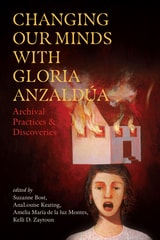
Changing Our Minds with Gloria Anzaldúa
Archival Practices and Discoveriesedited by Suzanne Bost, AnaLouise Keating, Amelia María de la luz Montes, Kelli D. Zaytoun
University of Texas Press, 2026
A collection of essays using Gloria Anzaldúa’s archival works to further explore and reassess the meaning of her legacy.
In the 1980s, Gloria Anzaldúa’s pioneering Borderlands/La Frontera and This Bridge Called My Back created new and durable trajectories for feminist, queer, Latinx, and postcolonial thought. Still, much of her writing was never published. Drawing on Anzaldúa’s impressive archive—manuscript drafts, personal memorabilia, correspondence, and drawings held at the Benson Collection at the University of Texas, Austin—this volume explores what we are still learning from a pathbreaking scholar more than twenty years after her death.
Changing Our Minds with Gloria Anzaldúa gathers essays from eleven writers working in diverse fields, including philosophy, literature, geography, performance studies, and visual arts. All have been powerfully influenced by Anzaldúa, and after examining her archives, all came to know her work anew. Each chapter relates discoveries among the unpublished materials, illuminating Anzaldúa’s celebrated texts and raising novel questions. A meditation, as well, on archivalism itself, Changing Our Minds reckons with the power of dusty papers to motivate new generations of readers outside the geographies and academic departments in which Anzaldúa has long been a fixture.
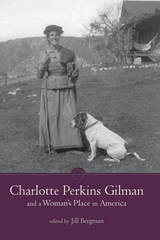
Charlotte Perkins Gilman and a Woman's Place in America
Edited by Jill Bergman
University of Alabama Press, 2017
Charlotte Perkins Gilman and a Woman’s Place in America is a pioneering collection that probes how depictions of space, confinement, and liberation establish both the difficulty and necessity of female empowerment. Turning Victorian notions of propriety and a woman’s place on its ear, this finely crafted essay collection studies Gilman’s writings and the manner in which they push back against societal norms and reject male-dominated confines of space.
The contributors present fascinating and innovative readings of some of Gilman’s most significant works. By examining the settings in “The Yellow Wallpaper” and Herland, for example, the volume analyzes Gilman’s construction of place, her representations of male dominance and female subjugation, and her analysis of the rules and obligations that women feel in conforming to their assigned place: the home.
Additionally, this volume delineates female resistance to this conformity. Contributors highlight how Gilman’s narrators often choose resistance over obedient captivity, breaking free of the spaces imposed upon them in order to seek or create their own habitats. Through biographical interpretations of Gilman’s work that focus on the author’s own renouncement of her “natural” role of wife and mother, contributors trace her relocation to the American West in an attempt to appropriate the masculinized spaces of work and social organization.
Engaging, well-researched, and deftly written, the essays in this collection will appeal to scholars of Gilman, literature, and gender issues alike.
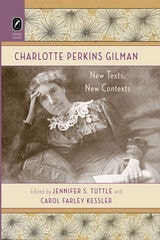
Charlotte Perkins Gilman
New Texts, New ContextsJennifer S. Tuttle and Carol Farley Kessler
The Ohio State University Press, 2011
Charlotte Perkins Gilman
Optimist ReformerJill Rudd
University of Iowa Press, 1999

Christina Rossetti
The Poetry of EnduranceDolores Rosenblum
Southern Illinois University Press, 1987
Christina Rossetti was considered the ideal female poet of her time. Her poetry was devotional, moral, and spoke of frustrated affection.
Dolores Rosenblum presents a fresh reading of Rossetti’s works and places them in the context of her life. Rosenblum shows that what was ostensibly devotional, moral, and loveless, was actually what Luce Irigaray calls “mimetism,” a subtle parody and subversion of the male tradition of literature.
Only with the coming of feminist criticism can Rossetti be meaningfully re-evaluated. Rosenblum calls Rossetti’s works the “poetry of endurance,” stating that it is similar, and at times identical, to the female “sentimental” tradition in literature. Rossetti endured the constraints of the Victorian female artistic spirit by becoming a “watcher.” Within this self-accepted role, Rossetti was able to carefully and deliberately choose artistic self-protection. In her religious poetry, Rossetti transcended, by aesthetic renunciation, the alienation and immobilization forced upon her.
Rossetti’s poetry is full of paradox; it sings about silence, exposes the poet’s oblivion. From the repining Victorian poet, there emerged a “stone woman.” Rosenblum discusses this passively enduring female figure’s alienation from knowledge and power, and how the myth of self strengthened the lyric voice within her. Because she was a woman, she was denied the male use of the lyric “I.”
Rossetti’s work is unified, Rosenblum argues, because she was a deliberate poet, and by accepting the “burden of womanhood,” she played out what men only symbolized as female in their art. By her mimicry and revision of the male tradition of literature, Christina Rossetti engaged the patriarchal tradition in ways that make it usable for the female experience, and that provide a critique of male objectification of women in art.
Closely and Consciously
Reading and the US Women's Liberation MovementYung-Hsing Wu
University of Massachusetts Press, 2024
The significant archive of writing that came out of the women’s liberation movement in the United States, from 1965 to 1980, speaks to the value activists placed on reading as an act that is at once personal and yet also about the collective good. Yung-Hsing Wu examines the importance of reading—personal, professional, vocational, aesthetic, and always political—and how the act itself brought a host of women, each with their own history with the movement, into relation, and into a belief in that relation. The value given to reading can be seen in the ways feminists pursued media representation; in consciousness-raising (CR) groups including shared reading in their meetings; in women opening bookstores, developing newsletters, establishing journals, and starting presses; and in corporate publishers pursuing feminist fiction.
Closely and Consciously crisscrosses distinct print spheres, including newsletters and periodicals produced by feminist cells and consciousness-raising groups, feminist presses seeking to articulate their visions for women’s writing, the emergence of feminist literary criticism in first-time monographs and newly established journals, personal and editorial correspondence, press records, and the publishing histories of bestsellers that testified to the increasingly broad popularity of women’s writing. Uniting all these disparate activists and media outlets, and providing crucial relationality, was reading. With a mix of close readings and archival research, Wu unpacks and interprets this central act of reading and why it matters during a crucial moment of feminist history.
Constructing the Little House
Gender, Culture, and Laura Ingalls WilderAnn Romines
University of Massachusetts Press, 1997
Ann Romines interweaves personal observation with scholarly analysis to address these questions. Writing from a feminist perspective and drawing on resources of gender studies, cultural studies, and new historicist reading, she examines both the content of the novels and the process of their creation. She explores the relationship between mother and daughter working as collaborative authors and calls into question our assumptions about plot, juvenile fiction, and constructions of gender on the nineteenth-century frontier and in the Depression years when the Little House books were written.
This is a book that will appeal both to scholars and to general readers who might welcome an engaging and accessible companion volume to the Little House novels.