Results by title
147 books match the query 'Freedom' and 9 start with c
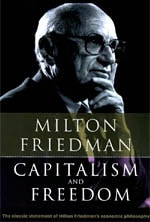
Capitalism and Freedom
Milton Friedman
University of Chicago Press, 1963
"Milton Friedman is one of the nation's outstanding economists, distinguished for remarkable analytical powers and technical virtuosity. He is unfailingly enlightening, independent, courageous, penetrating, and above all, stimulating."-Henry Hazlitt, Newsweek
"It is a rare professor who greatly alters the thinking of his professional colleagues. It's an even rarer one who helps transform the world. Friedman has done both."-Stephen Chapman, Chicago Tribune
Capitalism and Freedom
Milton Friedman
University of Chicago Press, 2020
One of Times Literary Supplement’s 100 Most Influential Books Since the War
One of National Review’s 100 Best Nonfiction Books of the Century
One of the Intercollegiate Studies Institute’s 50 Best Books of the 20th Century
How can we benefit from the promise of government while avoiding the threat it poses to individual freedom? In this classic book, Milton Friedman provides the definitive statement of an immensely influential economic philosophy—one in which competitive capitalism serves as both a device for achieving economic freedom and a necessary condition for political freedom.
First published in 1962, Friedman’s Capitalism and Freedom is one of the most significant works of economic theory ever written. Enduring in its eminence and esteem, it has sold nearly a million copies in English, has been translated into eighteen languages, and continues to inform economic thinking and policymaking around the world. This new edition includes prefaces written by Friedman for both the 1982 and 2002 reissues of the book, as well as a new foreword by Binyamin Appelbaum, lead economics writer for the New York Times editorial board.
Capitalism and Freedom
Fortieth Anniversary EditionMilton Friedman
University of Chicago Press, 2002
How can we benefit from the promise of government while avoiding the threat it poses to individual freedom? In this classic book, Milton Friedman provides the definitive statement of his immensely influential economic philosophy—one in which competitive capitalism serves as both a device for achieving economic freedom and a necessary condition for political freedom. The result is an accessible text that has sold well over half a million copies in English, has been translated into eighteen languages, and shows every sign of becoming more and more influential as time goes on.
China's Quest for Liberty
A Personal History of FreedomPromise Hsu
St. Augustine's Press, 2014
It is about a world whose dimensions have been basically obscured not only in China but also in the global public square, and walk with this young journalist, step by step, to find, paradoxically, the hope in the depth of hopelessness, the strength in acknowledging weakness, the change in substance by, among other things, keeping the form unchanged for at least a while, the youth in growing up despite growing old, the invisible in the visible, the imperishable in the perishable, the reality in the shadow of numerous fake realities, and the freedom gained not mainly through human efforts but as mercy and grace from the one who created humans and other beings.
As well as digging out the overlooked Christian background in the rise of the sanctity of human life, creative culture, constitutionalism, work as a vocation, modern management, servant leadership, and catchphrases like “the global village” and “The medium is the message”, the author tells of insider observations about the rise of Christianity in China generally and about Shouwang Church in particular. Through sharing these findings, this book aims to show how the one who made the universe rules the world and how this creator sets his creatures free by himself.
China’s Quest for Liberty is a fascinating work of nuance and surprise.
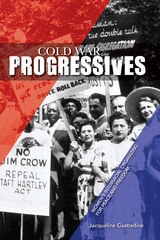
Cold War Progressives
Women's Interracial Organizing for Peace and FreedomJacqueline Castledine
University of Illinois Press, 2012
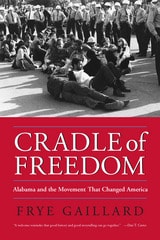
Cradle of Freedom
Alabama and the Movement That Changed AmericaFrye Gaillard
University of Alabama Press, 2006
Cradle of Freedom puts a human face on the story of the black American struggle for equality in Alabama during the 1960s.
While exceptional leaders such as Martin Luther King Jr., Rosa Parks, Fred Shuttlesworth, Ralph Abernathy, John Lewis, and others rose up from the ranks and carved their places in history, the burden of the movement was not carried by them alone. It was fueled by the commitment and hard work of thousands of everyday people who decided that the time had come to take a stand.
Cradle of Freedom is tied to the chronology of pivotal events occurring in Alabama the Montgomery bus boycott, the Freedom Rides, the Letter from the Birmingham Jail, the bombing of the 16th Street Baptist Church, Bloody Sunday, and the Black Power movement in the Black Belt. Gaillard artfully interweaves fresh stories of ordinary people with the familiar ones of the civil rights icons. We learn about the ministers and lawyers, both black and white, who aided the movement in distinct ways at key points. We meet Vernon Johns, King's predecessor at the Dexter Avenue Baptist Church in Montgomery, who first suggested boycotting the buses and who wrote later, "It is a heart strangely un-Christian that cannot thrill with joy when the least of men begin to pull in the direction of the stars." We hear from John Hulett who tells how terror of lynching forced him down into ditches whenever headlights appeared on a night road. We see the Edmund Pettus Bridge beatings from the perspective of marcher JoAnne Bland, who was only a child at the time. We learn of E. D. Nixon, a Pullman porter who helped organize the bus boycott and who later choked with emotion when, for the first time in his life, a white man extended his hand in greeting to him on a public street.
How these ordinary people rose to the challenges of an unfair system with a will and determination that changed their times forever is a fascinating and extraordinary story that Gaillard tells with his hallmark talent. Cradle of Freedom unfolds with the dramatic flow of a novel, yet it is based on meticulous research. With authority and grace, Gaillard explains how the southern state deemed the cradle of the Confederacy became with great struggle, some loss, and much hope the cradle of freedom.
Critique of Freedom
The Central Problem of ModernityOtfried Höffe
University of Chicago Press, 2020
Neither rejecting nor defending freedom and modernity, he instead explores both from a Kantian point of view, looking closely at the facets of freedom’s role and the fundamental position it has taken at the heart of modern life. Expanding beyond traditional philosophy, Critique of Freedom develops the building blocks of a critical theory of technology, environmental protection, economics, politics, medicine, and education. With a sophisticated yet straightforward style, Höffe draws on a range of disciplines in order to clearly distinguish and appreciate the many meanings of freedom and the indispensable role they play in liberal society.
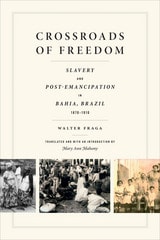
Crossroads of Freedom
Slaves and Freed People in Bahia, Brazil, 1870-1910Walter Fraga
Duke University Press, 2016
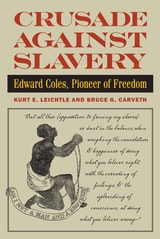
Crusade Against Slavery
Edward Coles, Pioneer of FreedomKurt E. Leichtle and Bruce G. Carveth
Southern Illinois University Press, 2011
Rejecting slavery from a young age, Coles's early wishes to free his family's slaves initially were stymied by legal, practical, and family barriers. Instead he went to Washington, D.C., where his work in the White House was a life-changing blend of social glitter, secretarial drudge, and distasteful political patronage. Returning home, he researched places where he could live out his ideals. After considerable planning and preparation, he left his family's Virginia tobacco plantation in 1819 and started the long trip west to Edwardsville, Illinois, pausing along the Ohio River on an emotional April morning to free his slaves and offer each family 160 acres of Illinois land of their own. Some continued to work for Coles, while others were left to find work for themselves. This book revisits the lives of the slaves Coles freed, including a noted preacher and contributor to the founding of what is now the second-oldest black Baptist organization in America.
Crusade Against Slavery details Coles's struggles with frontier life and his surprise run and election to the office of Illinois governor as well as his continuing antislavery activities. At great personal cost, he led the effort to block a constitutional convention that would have legalized slavery in the state, which resulted in an acrimonious civil suit brought on by his political enemies, who claimed he violated the law by not issuing a bond of emancipation for his slaves. Although initially convicted by a partisan jury, Coles was vindicated when the Illinois Supreme Court overturned the decisions of the lower courts. Through the story of Coles's moral and legal battles against slavery, Leichtle and Carveth unearth new perspectives on an institution that was on unsure footing yet strongly ingrained in the business interests at the economic base of the fledgling state.
In 1831, after less than a decade in Illinois-and after losing a bid for Congress-Coles left for Philadelphia, where he remained in correspondence with Madison about the issue of slavery. Drawing on previous incomplete treatments of Coles's life, including his own short memoir, Crusade Against Slavery includes the first published analysis of Madison's failure to free his slaves despite his plans to do so through his will and a fascinating exploration of Coles's struggle to understand Madison's inability to live up to the ideals both men shared.