Results by title
267 books match the query 'Frontier and pioneer life' and 15 start with c
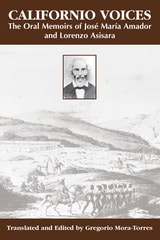
Californio Voices
The Oral Memoirs of Jose Maria Amador and Lorenzo AsisaraGregorio Mora-Torres
University of North Texas Press, 2005
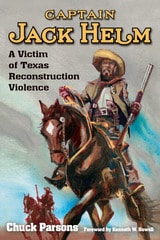
Captain Jack Helm
A Victim of Texas Reconstruction ViolenceChuck Parsons
University of North Texas Press, 2018
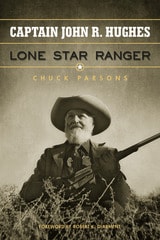
Captain John R. Hughes
Lone Star RangerChuck Parsons
University of North Texas Press, 2011
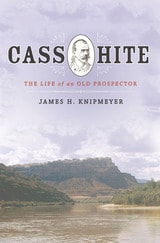
Cass Hite
The Life of an Old ProspectorJames H. Knipmeyer
University of Utah Press, 2016
Despite this notoriety, no one has written a full-length, scholarly account of Hite’s life. This biography fills that void, detailing Hite’s story from his birth in central Illinois in 1845 to his death in Glen Canyon in 1914. It corrects some of the long-accepted stories about Hite and puts others in their proper perspective, while revealing new information. Scores of photographs and excerpts from Hite’s own writing further illuminate this colorful prospector’s life.
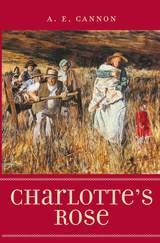
Charlotte's Rose
A. E. Cannon
University of Utah Press, 2011
Charlotte’s Rose—justifiably back in print—tells the story of a young Welsh girl, Charlotte Edwards, who, soon after her mother dies, sails with her father from England to the United States to become part of a company of Mormon handcart pioneers—emigrants with no horses or oxen who themselves pulled the heavy carts filled with their belongings. These were arduous journeys. While on the Mormon Trail, Charlotte befriends a young mother who later dies in childbirth. Though only 12 years old, Charlotte assumes responsibility for the infant and carries her to Utah. Over the course of their journey together, Charlotte becomes deeply attached to the baby she calls Rose, which makes Charlotte’s choice at the novel’s end particularly poignant.
The author, A. E. Cannon, is adept at creating vivid, multifaceted, believable characters and has crafted a story of pioneers that will seem relevant to today’s young people. The reader will quickly be drawn into the story as Charlotte struggles to navigate the trials of an adolescent moving into adulthood. Although this is a book about Mormon pioneers, it is in fact about the larger American experience of immigration—a drama still unfolding today—and Charlotte’s coming-of-age journey will resonate with readers young and old.
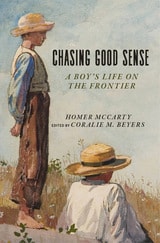
Chasing Good Sense
A Boy's Life on the FrontierHomer McCarty and Coralie McCarty Beyers
University of Utah Press, 2018
In the spirit of Huck Finn, Buck embarks on adventures and mischief with his loyal friend, Earl. Naïve, eager, and inquisitive, he seeks to make sense of his world. McCarty’s portrayal of the period is often humorous, capturing the intimacy of place and family through a young boy’s eyes.
McCarty completed this work in 1948. Had it not been for a series of fortuitous events and the dedication of his granddaughters, including Coralie Beyers, these pages would have been lost. Thanks to her efforts, her grandfather’s lively, entertaining book is now available for readers to relish and enjoy.

Chicago and the Old Northwest, 1673-1835
Milo Milton Quaife
University of Illinois Press, 1913
Strategically located at the head of the Great Lakes on the Chicago portage, one of the main highways connecting the Great Lakes-St. Lawrence waterway with the Mississippi River, Chicago was equally valued by explorers, traders, settlers, and governments.
Quaife narrates the opening of trade and the course of European exploration, facilitated by the Chicago portage and subsequent construction of the Illinois and Michigan Canal. He profiles the personalities who shaped the early Chicago area, from the French explorers La Salle, Marquette, and Joliet to the ambitious Champlain, who set the course for decades to come by securing for New France the enmity of the Iroquois.
Quaife provides a full description of the Indian trade, which constituted the basis of commerce in the region for the entire period covered by the book, as well as a blow-by-blow account of how old rivalries and alliances between Indian tribes complicated the English and French plans for divvying up the New World. He also describes the conflicts between natives and whites with sympathy and detail on both sides, depicting Indian attacks on white settlements as rationally motivated acts aiming toward specific goals of strategy or revenge.
First published in 1913, Chicago and the Old Northwest, 1673-1835 is one of the earliest works of a man who became one of the premier scholars of his generation. In a new introduction, Chicago historian Perry R. Duis sketches Quaife's long and varied career, his influence on the history profession, and his crusade to prove that a black trader was the first permanent resident of Chicago.
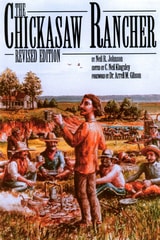
Chickasaw Rancher, Revised Edition
Neil R. Johnson
University Press of Colorado, 2001
The Chickasaw Rancher follows Montford T. Johnson's family and friends for the next thirty-two years. Neil R. Johnson describes the work, the ranch parties, cattle rustling, gun fights, tornadoes, the run of 1889, the hard deaths of many along the way, and the rise, fall, and revival of the Chickasaw Nation.
This revised edition of The Chickasaw Rancher, edited by C. Neil Kingsley, Neil R. Johnson's grandson, is the perfect addition to any reader's collection of the history of the American West.
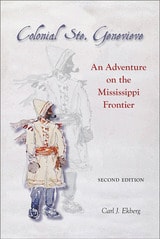
Colonial Ste. Genevieve
An Adventure on the Mississippi FrontierCarl J. Ekberg
Southern Illinois University Press, 1996
Coming Out of Nowhere
Alaska Homestead PoemsLinda Schandelmeier
University of Alaska Press, 2018
Homestead life is often romanticized as a valiant, resilient family persisting in the clean isolation of pristine wilderness, living off the land and depending only on each other. But there can be a darker side to this existence.
Linda Schandelmeier was raised on a family homestead six miles south of the fledgling town of Anchorage, Alaska in the 1950s and ’60s. But hers is not a typical homestead story. In this book, part poetic memoir and part historical document, a young girl comes of age in a family fractured by divorce and abuse. Schandelmeier does not shy away from these details of her family history, but she also recognizes her childhood as one that was unique and nurturing, and many of her poems celebrate homestead life. Her words hint at her way of surviving and even transcending the remoteness by suggesting a deeper level of human experience beyond the daily grind of homestead life; a place in which the trees and mountains are almost members of the family. These are poems grounded in the wilds that shimmer with a mythic quality. Schandelmeier’s vivid descriptions of homesteading will draw in readers from all types of lives.
Community and Frontier
A Ukrainian Settlement in the Canadian ParklandJohn C. Lehr
University of Manitoba Press, 2011

Confederate Arkansas
The People and Policies of a Frontier State in WartimeMichael B. Dougan
University of Alabama Press, 1990
Conquering the American Wilderness
The Triumph of European Warfare in the Colonial NortheastGuy Chet
University of Massachusetts Press, 2003
A study of military tactics and strategy before the War of Independence, this book reexamines the conquest of the North American wilderness and its native peoples by colonial settlers. Historians have long believed that the peculiar conditions of the New World, coupled with the success of Indians tactics, forced the colonists to abandon traditional European methods of warfare and to develop a new “American” style of combat. By combining firearms with guerrilla-like native tactics, colonial commanders were able not only to subdue their Indian adversaries but eventually to prevail against more conventionally trained British forces during the American Revolution. Yet upon closer scrutiny, this common understanding of early American warfare turns out to be more myth than reality.
As Guy Chet reveals, clashes between colonial and Indian forces during the seventeenth and eighteenth centuries did not lead to a reevaluation and transformation of conventional military doctrine. On the contrary, the poor performance of the settlers during King Philip's War (1675–76) and King William's War (1689–1697) prompted colonial magistrates to address the shortcomings of their military forces through a greater reliance on British troops and imperial administrators. Thus, as the eighteenth century wore on, growing military success in the New England colonies reflected an increasing degree of British planning, administration, participation, and command. The colonies' military and political leadership, Chet argues, never rejected the time-tested principles of European warfare, and even during the American War of Independence, the republic's military leadership looked to Europe for guidance in the art of combat.
Contested Ground
Comparative Frontiers on the Northern and Southern Edges of the Spanish EmpireEdited by Donna J. Guy and Thomas E. Sheridan
University of Arizona Press, 1998

Cowboying
a tough job in a hard landJames H Beckstead
University of Utah Press, 1991