Results by title
96 books match the query 'Games & Activities' and 7 start with c
Cahuilla Nation Activism and the Tribal Casino Movement
Theodor P. Gordon
University of Nevada Press, 2018
Cahuilla Nation Activism and the Tribal Casino Movement tells the bigger story of how the Cahuilla nations—including the Cabazon—have used self-reliance and determination to maintain their culture and independence against threats past and present. From California’s first governor’s “war of extermination” against native peoples through today’s legal and political challenges, Gordon shows that successful responses have depended on the Cahuilla’s ability to challenge non-natives’ assumptions and misconceptions.
Casanova's Lottery
The History of a Revolutionary Game of ChanceStephen M. Stigler
University of Chicago Press, 2022
In the 1750s, at the urging of famed adventurer Giacomo Casanova, the French state began to embrace risk in adopting a new Loterie. The prize amounts paid varied, depending on the number of tickets bought and the amount of the bet, as determined by each individual bettor. The state could lose money on any individual Loterie drawing while being statistically guaranteed to come out on top in the long run. In adopting this framework, the French state took on risk in a way no other has, before or after. At each drawing the state was at risk of losing a large amount; what is more, that risk was precisely calculable, generally well understood, and yet taken on by the state with little more than a mathematical theory to protect it.
Stephen M. Stigler follows the Loterie from its curious inception through its hiatus during the French Revolution, its renewal and expansion in 1797, and finally to its suppression in 1836, examining throughout the wider question of how members of the public came to trust in new financial technologies and believe in their value. Drawing from an extensive collection of rare ephemera, Stigler pieces together the Loterie’s remarkable inner workings, as well as its implications for the nature of risk and the role of lotteries in social life over the period 1700–1950.
Both a fun read and fodder for many fields, Casanova's Lottery shines new light on the conscious introduction of risk into the management of a nation-state and the rationality of playing unfair games.
Casino Accounting and Financial Management
Second EditionE. Malcolm Greenlees
University of Nevada Press, 2008

Cheating the Spread
Gamblers, Point Shavers, and Game Fixers in College Football and BasketballAlbert J. Figone
University of Illinois Press, 2012
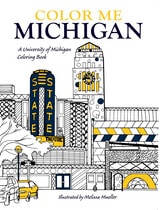
Color Me Michigan
A University of Michigan Coloring BookMelissa Mueller
Michigan Publishing Services, 2017
Whether you are an alum, current student, “Michigan parent,” or simply an admirer of this unique institution, we invite you to relax and reinvigorate your mind, while transforming the variety of black and white images into a colorful keepsake.
This coloring book has been published by Michigan Publishing Services, part of the University of Michigan Library. We exist to help faculty members, staff, and students to effectively disseminate their research, record the history of the institution, and develop affordable resources for teaching and learning.
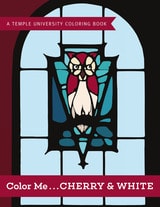
Color me...Cherry & White
A Temple University Coloring BookTemple University Press, 2018
The first ever Temple University adult coloring book, Color Me...Cherry & White contains more than twenty iconic Temple University landmarks. From the magnificent Baptist Temple with its ornate stained glass windows, to Hooter the Owl, the campus food trucks, and the SEPTA rail station, students, parents, and alumni—even future Owls—now have a personal campus canvas to color with markers, pencils or crayons.
The images in Color Me...Cherry & White were created from photographs from the University Photography Department and crafted into pages for amateur artists to beautify. The designs will stoke memories as well as provide stress relief as artists create their own impressions of the campus. Moreover, this keepsake will make the perfect gift and provide memories for the worldwide Temple community.
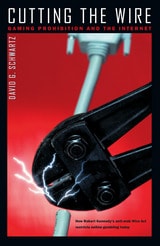
Cutting The Wire
Gaming Prohibition And The InternetDavid G. Schwartz
University of Nevada Press, 2005
The story of the Wire Act and how Robert Kennedy’s crusade against the Mob is creating a new generation of Internet gaming outlaws.
Gambling has been part of American life since long before the existence of the nation, but Americans have always been ambivalent about it. What David Schwartz calls the “pell-mell history of legal gaming in the United States” is a testament to our paradoxical desire both to gamble and to control gambling. It is in this context that Schwartz examines the history of the Wire Act, passed in 1961 as part of Attorney General Robert F. Kennedy’s crusade against organized crime and given new life in recent efforts to control Internet gambling. Cutting the Wire presents the story of how this law first developed, how it helped fight a war against organized crime, and how it is being used today. The Wire Act achieved new significance with the development of the Internet in the early 1990s and the growing popularity of online wagering through offshore facilities. The United States government has invoked the Wire Act in a vain effort to control gambling within its borders, at a time when online sports betting is soaring in popularity. By placing the Wire Act into the larger context of Americans’ continuing ambivalence about gambling, Schwartz has produced a provocative analysis of a national habit and the vexing predicaments that derive from it. In America today, 48 of 50 states currently permit some kind of legal gambling. Schwartz’s historical unraveling of the Wire Act exposes the illogic of an outdated law intended to stifle organized crime being used to set national policy on Internet gaming. Cutting the Wire carefully dissects two centuries of American attempts to balance public interest with the technology of gambling. Available in hardcover and paperback.