Results by title
167 books match the query 'Gardening' and 7 start with c
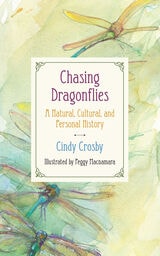
Chasing Dragonflies
A Natural, Cultural, and Personal HistoryCindy Crosby; Illustrations by Peggy Macnamara
Northwestern University Press, 2020
Chasing Dragonflies: A Natural, Cultural, and Personal History is an engaging, beautifully illustrated introduction to these remarkable insects. Drawing on her experiences as a natural history instructor, dragonfly monitor, cancer survivor, grandmother, and steward, Crosby tells the stories of dragonflies: their roles in poetry and art, their fascinating sex life—unique within the animal kingdom—and their evolution from dark-water dwellers to denizens of the air. We follow Crosby and other citizen-scientists into the prairies, wetlands, and woodlands of the Midwest, where they observe the environment and chronicle dragonfly populations and migration to decipher critical clues about our changing waterways and climate.
Woven throughout are personal stories: reflections on the author’s cancer diagnosis and recovery, change, loss, aging, family, joy, and discovering what it means to be at home in the natural world. Crosby draws an intimate portrait of a landscape teeming with variety and mystery, one that deserves our attention and conservation. As warm as it is informative, this book will interest gardeners, readers of literary nonfiction, and anyone intrigued by transformation, whether in nature or our personal lives.
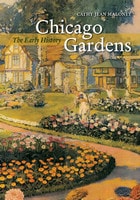
Chicago Gardens
The Early HistoryCathy Jean Maloney
University of Chicago Press, 2008
Cathy Jean Maloney has spent decades researching the city’s horticultural heritage, and here she reveals the unusual history of Chicago’s first gardens. Challenged by the region’s clay soil, harsh winters, and fierce winds, Chicago’s pioneering horticulturalists, Maloney demonstrates, found imaginative uses for hardy prairie plants. This same creative spirit thrived in the city’s local fruit and vegetable markets, encouraging the growth of what would become the nation’s produce hub. The vast plains that surrounded Chicago, meanwhile, inspired early landscape architects, such as Frederick Law Olmsted, Jens Jensen, and O.C. Simonds, to new heights of grandeur.
Maloney does not forget the backyard gardeners: immigrants who cultivated treasured seeds and pioneers who planted native wildflowers. Maloney’s vibrant depictions of Chicagoans like “Bouquet Mary,” a flower peddler who built a greenhouse empire, add charming anecdotal evidence to her argument–that Chicago’s garden history rivals that of New York or London and ensures its status as a world-class capital of horticultural innovation.
With exquisite archival photographs, prints, and postcards, as well as field guide descriptions of living legacy gardens for today’s visitors, Chicago Gardens will delight green-thumbs from all parts of the world.
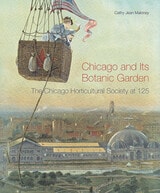
Chicago and Its Botanic Garden
The Chicago Horticultural Society at 125Cathy Jean Maloney
Northwestern University Press, 2015
Formed in 1890, during the heady days before the 1893 World’s Columbian Exposition, the Chicago Horticultural Society boasted members with names deeply rooted in Chicago history: Buckingham, McCormick, and Palmer, among others. Today, as it leads the Garden in a model public-private partnership with the Forest Preserves of Cook County, the Society’s horticultural practices have exceeded the vision of its founders.
Chicago and Its Botanic Garden: The Chicago Horticultural Society at 125 is a lushly illustrated and thoughtful history of the Society and its evolution from a producer of monumental flower and botanical shows, through a fallow period, to the opening in 1972 of the Chicago Botanic Garden, a living museum and world leader in horticulture, plant science and conservation, education, and urban agriculture. Author Cathy Jean Maloney combines meticulous scholarship with a flair for storytelling in a narrative that will delight everyone from casual strollers of the grounds to the volunteers, professionals, and scientists who compose the influential society.
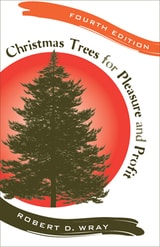
Christmas Trees for Pleasure and Profit
Wray, Robert D
Rutgers University Press, 2008
A perennial bestseller, this illustrated guide covers selecting land, choosing species, planting, harvesting, and managing a plantation. Wray provides guidance for choosing species suitable for the grower's situation, where and how to get planting stock, and how to care for it. The planting process is described in detail, including both hand and machine methods. The book presents useful techniques for protecting the growing trees from weeds, animals, fire, insects, and disease, and offers a full description of shearing or shaping trees to improve their form and densityùkeys to a successful crop.
As the grower's job is not done until the trees are sold, issues of grading, harvesting, advertising, and marketing are examined. A chapter on finances deals with costs, profits, and taxes. From novice to experienced grower, there is something in this book for everyone.
Collards
A Southern Tradition from Seed to TableEdward H. Davis and John T. Morgan
University of Alabama Press, 2015
The definitive survey of collards, an iconic southern food.
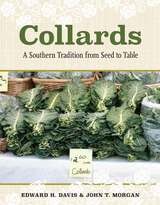
Food is essential to southern culture, and collard greens play a central role in the South’s culinary traditions. A feast to the famished, a reward to the strong, and a comfort to the weary, collards have long been held dear in the food-loving southern heart. In Collards: A Southern Tradition from Seed to Table, Edward H. Davis and John T. Morgan provide this emblematic and beloved vegetable the full-length survey its fascinating and complex history merits.
The book begins with collards’ obscure origins. Like a good detective story, the search for collards’ home country leads the authors both to Europe and West Africa, where they unravel a tale as surprising and complex as that of southern people themselves. Crossing back over the Atlantic, the authors traverse miles of American back roads, from Arkansas to Florida and from Virginia to Louisiana. They vividly recount visits to homes, gardens, grocers, farms, and restaurants where the many varieties of collards are honored, from the familiar green collards to the yellow cabbage collard and rare purple cultivars.
In uncovering the secrets of growing collards, the authors locate prize-winning patches of the plant, interview “seed savers,” and provide useful tips for kitchen gardeners. They also describe how collards made the leap from kitchen garden staple to highly valued commercial crop.
Collards captures the tastes, smells, and prize-winning recipes from the South’s premier collards festivals. They find collards at the homes of farmers, jazz musicians, governors, and steel workers. Kin to cabbage and broccoli but superior to both in nutritional value, collard greens transcend human divisions of black and white, rich and poor, sophisticated and rustic, and urban and rural.
Food trends may come and go, but collards are a tradition that southerners return to again and again. Richly illustrated in color, Collards demonstrates the abiding centrality of this green leafy vegetable to the foodways of the American South. In it, readers will rediscover an old friend.
Creating Outdoor Classrooms
Schoolyard Habitats and Gardens for the SouthwestBy Lauri Macmillan Johnson, with Kim Duffek
University of Texas Press, 2008
Schoolyards have come a long way from the barren playgrounds that many people remember. Today's school campuses often feature gardens in which students can learn about native plants and wildlife, grow vegetables and fruit, explore cultural traditions, practice reading and math skills, and use their imaginations to create fun play spaces. And for a growing number of urban students, these schoolyard gardens offer the best, if not the only, opportunity to experience the natural world firsthand and enjoy its many benefits.
This book is a practical, hands-on guide for creating a variety of learning environments in the arid Southwest. Filled with clear, easy-to-use information and illustrated with photographs, drawings, and plans, the book covers everything necessary to create schoolyard gardens:
- An introduction to schoolyards as outdoor classrooms and several types of habitats, including art gardens, cultural history gardens, ecological gardens, literacy gardens, and vegetable gardens
- Design theory, including a history of garden styles, and design principles and design elements
- Beginning the design process, including identifying participants and writing a design program that sets out goals and requirements
- Conducting site research and synthesizing design elements to arrive at a final design
- Design essentials, including project funding and design features, maintenance, accessibility, safety, and project evaluation and revision
- Wildlife ecology, including elements needed for survival such as food and shelter
- Creating gardens for pollinators and other wildlife, including hummingbirds, butterflies, bees, moths, bats, and flies, as well as pest control
- Lists of native plants for various kinds of habitats and nurseries that sell native plants, as well as books, web sites, and other resources for learning more about native plants and wildlife
This guide will be essential for landscape architects, school personnel, parents, and students. Indeed, its principles can be used in designing schoolyard habitats across the country, while its information on gardening with native plants and wildlife will be useful to homeowners across the Southwest.
Culinary Herbs and Spices of the World
Ben-Erik van Wyk
University of Chicago Press, 2014