Results by title
511 books match the query 'Government policy' and 40 start with c
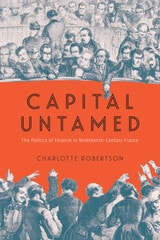
Capital Untamed
The Politics of Finance in Nineteenth-Century FranceCharlotte Robertson
University of Chicago Press, 2026
The story of a bold political experiment in nineteenth-century France to establish power through finance.
Amid the rise of industrial capitalism and revolutionary upheaval, French reformers asserted that finance should be reimagined as an instrument of economic and social transformation rather than left to the logic of private profit and speculation. In the 1850s, under Napoleon III’s authoritarian regime, this vision took institutional form as the Bonapartist state strategically deployed finance, broadened market participation, and sponsored new banks with the promise of directing investment toward infrastructure and industry. Yet this effort to harness and mobilize capital ran into a problem: The financial markets refused to be tamed.
Drawing on rich archival sources—from police surveillance and courtroom transcripts to investment manuals and petitions for incorporation—Capital Untamed reveals how the financial markets became an instrument of political power, frustrated state ambitions, and ultimately escaped attempts at mastery. In this striking debut, historian Charlotte Robertson shows how the French state and its citizens navigated a turbulent era of European capitalism animated by debates over the social purpose of financial capital. Ultimately, politicians’ efforts to establish legitimacy by reorganizing finance—and their confrontations with the limits of that project—set the stage for a form of modern discontent with the financial system that survives to this day.
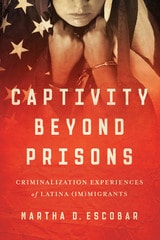
Captivity Beyond Prisons
Criminalization Experiences of Latina (Im)migrantsBy Martha D. Escobar
University of Texas Press, 2016
Today the United States leads the world in incarceration rates. The country increasingly relies on the prison system as a “fix” for the regulation of societal issues. Captivity Beyond Prisons is the first full-length book to explicitly link prisons and incarceration to the criminalization of Latina (im)migrants.
Starting in the 1990s, the United States saw tremendous expansion in the number of imprisoned (im)migrants, specifically Latinas/os. Consequently, there was also an increase in the number of deportations. In addition to regulating society, prisons also serve as a reproductive control strategy, both in preventing female inmates from having children and by separating them from their families. With an eye to racialized and gendered technologies of power, Escobar argues that incarcerated Latinas are especially depicted as socially irrecuperable because they are not considered useful within the neoliberal labor market. This perception impacts how they are criminalized, which is not limited to incarceration but also extends to and affects Latina (im)migrants’ everyday lives. Escobar also explores the relationship between the immigrant rights movement and the prison abolition movement, scrutinizing a variety of social institutions working on solutions to social problems that lead to imprisonment.
Accessible to both academics and those in the justice and social service sectors, Escobar’s book pushes readers to consider how, even in radical spaces, unequal power relations can be reproduced by the very entities that attempt to undo them.
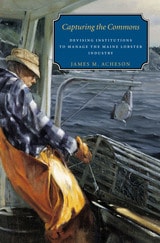
Capturing the Commons
Devising Institutions to Manage the Maine Lobster IndustryJames M. Acheson
University Press of New England, 2004
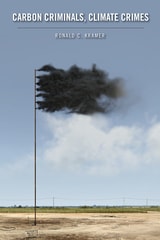
Carbon Criminals, Climate Crimes
Ronald C. Kramer
Rutgers University Press, 2020
Carbon Criminals, Climate Crimes analyzes the looming threats posed by climate change from a criminological perspective. It advances the field of green criminology through a examination of the criminal nature of catastrophic environmental harms resulting from the release of greenhouse gases. The book describes and explains what corporations in the fossil fuel industry, the U.S. government, and the international political community did, or failed to do, in relation to global warming. Carbon Criminals, Climate Crimes integrates research and theory from a wide variety of disciplines, to analyze four specific state-corporate climate crimes: continued extraction of fossil fuels and rising carbon emissions; political omission (failure) related to the mitigation of these emissions; socially organized climate change denial; and climate crimes of empire, which include militaristic forms of adaptation to climate disruption. The final chapter reviews policies that could mitigate greenhouse gas emissions, adapt to a warming world, and achieve climate justice.
Changes in Exchange Rates in Rapidly Developing Countries
Theory, Practice, and Policy IssuesEdited by Takatoshi Ito and Anne O. Krueger
University of Chicago Press, 1999
Historically, most developing nations have employed strict exchange rate controls and heavy protection of domestic industry-policies now thought to be at odds with sustainable and desirable rates of economic growth. By contrast, many East Asian nations maintained exchange rate regimes designed to achieve an attractive climate for exports and an "outer-oriented" development strategy. The result has been rapid and consistent economic growth over the past few decades.
Changes in Exchange Rates in Rapidly Developing Countries explores the impact of such diverse exchange control regimes in both historical and regional contexts, focusing particular attention on East Asia. This comprehensive, carefully researched volume will surely become a standard reference for scholars and policymakers.
Changing Paths
International Development and the New Politics of InclusionPeter P. Houtzager and Mick Moore, Editors
University of Michigan Press, 2005
The contributors suggest there is little basis for the radical polycentrism that colors so much contemporary development thought. They focus on how the political capabilities of different societal and state actors develop over time and how their development is influenced by state action and a variety of institutional and other factors. The final chapter draws insightful conclusions about the political limitations and opportunities presented by current international discourse on poverty.
Peter P. Houtzager is a Fellow at the Institute of Development Studies, University of Sussex. He has been a visiting scholar at the Center for Latin American Studies, University of California, Berkeley, visiting lecturer at Stanford University, and lecturer at St. Mary's College. A political scientist with broad training in comparative politics and historical-institutional analysis, he has written extensively on the institutional roots of collective action.
Mick Moore is a Fellow at the Institute of Development Studies, University of Sussex, as well as Director of the Centre for the Future State. He has been a visiting professor at the Massachusetts Institute of Technology. His professional interests include political and institutional aspects of poverty reduction and of economic policy and performance, the politics and administration of development, and good government.
Changing Poverty, Changing Policies
Maria Cancian
Russell Sage Foundation, 2009

China's Hidden Children
Abandonment, Adoption, and the Human Costs of the One-Child PolicyKay Ann Johnson
University of Chicago Press, 2016
Johnson spent years talking with the Chinese parents driven to relinquish their daughters during the brutal birth-planning campaigns of the 1990s and early 2000s, and, with China’s Hidden Children, she paints a startlingly different picture. The decision to give up a daughter, she shows, is not a facile one, but one almost always fraught with grief and dictated by fear. Were it not for the constant threat of punishment for breaching the country’s stringent birth-planning policies, most Chinese parents would have raised their daughters despite the cultural preference for sons. With clear understanding and compassion for the families, Johnson describes their desperate efforts to conceal the birth of second or third daughters from the authorities. As the Chinese government cracked down on those caught concealing an out-of-plan child, strategies for surrendering children changed—from arranging adoptions or sending them to live with rural family to secret placement at carefully chosen doorsteps and, finally, abandonment in public places. In the twenty-first century, China’s so-called abandoned children have increasingly become “stolen” children, as declining fertility rates have left the dwindling number of children available for adoption more vulnerable to child trafficking. In addition, government seizures of locally—but illegally—adopted children and children hidden within their birth families mean that even legal adopters have unknowingly adopted children taken from parents and sent to orphanages.
The image of the “unwanted daughter” remains commonplace in Western conceptions of China. With China’s Hidden Children, Johnson reveals the complex web of love, secrecy, and pain woven in the coerced decision to give one’s child up for adoption and the profound negative impact China’s birth-planning campaigns have on Chinese families.

Chino
Anti-Chinese Racism in Mexico, 1880-1940Jason Oliver Chang
University of Illinois Press, 2017
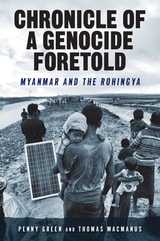
Chronicle of a Genocide Foretold
Myanmar and the RohingyaPenny Green
Rutgers University Press, 2027
Chronicle of a Genocide Foretold is a powerful account of one of the most devastating human crises of the 21st century. Drawing on firsthand research conducted in Burma (Myanmar) and neighboring countries, the book uncovers how the Rohingya Muslims have been systematically isolated, impoverished, and targeted in a state-led genocidal campaign. Through more than 150 interviews with survivors, local officials, religious leaders, and international actors, the authors reveal how discrimination, mass displacement, and organized brutality have created conditions that meet the legal, criminological, and moral definition of genocide. The book also challenges the silence and complicity of the international community. Accessible and grounded in rigorous research, this book speaks to scholars, activists, policymakers, and anyone concerned with justice, human rights, and the global failure to prevent genocide.
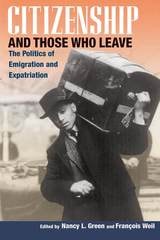
Citizenship and Those Who Leave
The Politics of Emigration and ExpatriationEdited by Nancy L. Green and Fran‡ois Weil
University of Illinois Press, 2006
Exit, like entry, has helped define citizenship over the last two centuries, yet little attention has been given to the politics of emigration. How have countries impeded or facilitated people leaving? How have they perceived and regulated those who leave? What relations do they seek to maintain with their citizens abroad and why? Citizenship and Those Who Leave reverses the immigration perspective to examine how nations define themselves not just through entry but through exit as well.
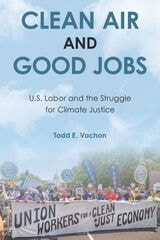
Clean Air and Good Jobs
U.S. Labor and the Struggle for Climate JusticeTodd E. Vachon
Temple University Press, 2023
The labor–climate movement in the U.S. laid the groundwork for the Green New Deal by building a base within labor for supporting climate protection as a vehicle for good jobs. But as we confront the climate crisis and seek environmental justice, a “jobs vs. environment” discourse often pits workers against climate activists. How can we make a “just transition” moving away from fossil fuels, while also compensating for the human cost when jobs are lost or displaced?
In his timely book, Clean Air and Good Jobs, Todd Vachon examines the labor–climate movement and demonstrates what can be envisioned and accomplished when climate justice is on labor’s agenda and unions work together with other social movements to formulate bold solutions to the climate crisis. Vachon profiles the workers and union leaders who have been waging a slow, but steadily growing revolution within their unions to make labor as a whole an active and progressive champion for both workers and the environment.
Clean Air and Good Jobs examines the “movement within the movement” offering useful solutions to the dual crises of climate and inequality.
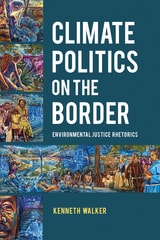
Climate Politics on the Border
Environmental Justice RhetoricsKenneth Walker
University of Alabama Press, 2022
Explores the ways climate change and extreme weather are negotiated politically in a border community
As a borderland city with generations of slow violence and extreme weather events like flash flooding and intense heat waves, San Antonio, Texas, speaks directly to global issues in climate politics. In Climate Politics on the Border: Environmental Justice Rhetorics, Kenneth Walker takes a place-based approach to his study of San Antonio to explore how extreme weather events and responses to them shape local places, publics, and politics, with an eye toward a future characterized by severe climate breakdown.
Attending to the local histories and micropolitics of San Antonio, Walker examines the effects of extreme weather events as they are experienced across radically inequitable social categories. These local histories serve as a guide, not just for future climates, which stand to be unprecedented, but for the necessary public and political responses to them. He shows how extreme weather events in the past have reinforced colonial social orders that weaken democratic goals of pluralism and equity. Conversely, he also shows how diverse coalitions have resisted and responded to these forces.
Walker examines the ethics of Latinx and Anglo relations within state-sponsored productions of racial inequity and environmental degradation, the coalitional capacities of environmental activists and second-wave Chicana/o organizations to protect clean water and transform local political representation, the obligations of place-keeping in Latinx urban design and ecological restoration, and the need to foster pluriversal worlds in city-level climate action and adaptation plans. Collectively these chapters rethink tropes of adaptation, resilience, and coalition as rhetorical and ecological capacities for public and political responses to extractivism.
Based on years of archival work and fieldwork, Climate Politics on the Border demonstrates vividly why ecological and anticolonial approaches to rhetoric are essential for grappling with climate politics. Overall, this is a timely study of how environmental degradation, pollution, and climate change are disputed and negotiated at the local political level in a borderland community.
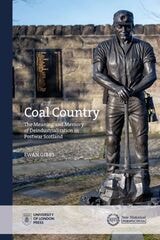
Coal Country
The Meaning and Memory of Deindustrialization in Postwar ScotlandEwan Gibbs
University of London Press, 2022
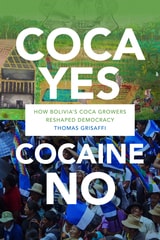
Coca Yes, Cocaine No
How Bolivia's Coca Growers Reshaped DemocracyThomas Grisaffi
Duke University Press, 2019
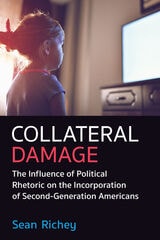
Collateral Damage
The Influence of Political Rhetoric on the Incorporation of Second-Generation AmericansSean Richey
University of Michigan Press, 2023
Collateral Damage provides an overview of how political communication influences the process of incorporation with the broad society as well as its political parties. Sean Richey shows that how politicians talk about immigrants affects how their children perceive America and their feelings about the nation. These perceptions and feelings in turn greatly influence the children’s desire to incorporate into American political society. He also shows that regardless of a speaker’s intended outcome, what is said can still have a deleterious effect on incorporation desire, a communicative process that he terms “collateral damage.” Richey uses new experimental and survey evidence, as well as the rhetoric of Donald Trump as a test case, to examine how anti-immigration communication influences the incorporation of the children of immigrants.
Color Lines
Affirmative Action, Immigration, and Civil Rights Options for AmericaJohn David Skrentny
University of Chicago Press, 2001
Contributors:
Erik Bleich
Lawrence D. Bobo
Frank Dobbin
John Aubrey Douglass
Hugh Davis Graham
Kyra R. Greene
Erin Kelly
George R. La Noue
Jennifer Lee
Michael Lichter
Deborah C. Malamud
Sunita Parikh
John C. Sullivan
Thomas J. Sugrue
Carol M. Swain
Steven M. Teles
Roger Waldinger
Christine Min Wotipka

Combating Jihadism
American Hegemony and Interstate Cooperation in the War on TerrorismBarak Mendelsohn
University of Chicago Press, 2009

Command of the Waters
Iron Triangles, Federal Water Development, and Indian WaterDaniel C. McCool
University of Arizona Press, 1994
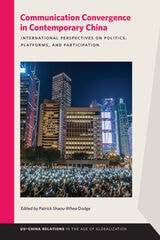
Communication Convergence in Contemporary China
International Perspectives on Politics, Platforms, and ParticipationPatrick Shaou-Whea Dodge
Michigan State University Press, 2020
Competing Norms
State Regulations and Local Praxis in sub-Saharan AfricaEdited by Mamadou Diawara and Ute Röschenthaler
Campus Verlag, 2016
Competitiveness Matters
Industry and Economic Performance in the U.S.Candace Howes and Ajit Singh, Editors
University of Michigan Press, 2000
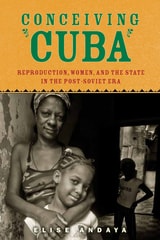
Conceiving Cuba
Reproduction, Women, and the State in the Post-Soviet EraAndaya, Elise
Rutgers University Press, 2014
Winner of the Adele E. Clarke Book Award from ReproNetwork
After Cuba’s 1959 revolution, the Castro government sought to instill a new social order. Hoping to achieve a new and egalitarian society, the state invested in policies designed to promote the well-being of women and children. Yet once the Soviet Union fell and Cuba’s economic troubles worsened, these programs began to collapse, with serious results for Cuban families.
Conceiving Cuba offers an intimate look at how, with the island’s political and economic future in question, reproduction has become the subject of heated public debates and agonizing private decisions. Drawing from several years of first-hand observations and interviews, anthropologist Elise Andaya takes us inside Cuba’s households and medical systems. Along the way, she introduces us to the women who wrestle with the difficult question of whether they can afford a child, as well as the doctors who, with only meager resources at their disposal, struggle to balance the needs of their patients with the mandates of the state.
Andaya’s groundbreaking research considers not only how socialist policies have profoundly affected the ways Cuban families imagine the future, but also how the current crisis in reproduction has deeply influenced ordinary Cubans’ views on socialism and the future of the revolution. Casting a sympathetic eye upon a troubled state, Conceiving Cuba gives new life to the notion that the personal is always political.
Confronting Margaret Mead
Scholarship, Empire, and the South Pacificedited by Lenora Foerstel and Angela Gilliam
Temple University Press, 1994
Conjuring Crisis
Racism and Civil Rights in a Southern Military CityBaca, George
Rutgers University Press, 2010
In the 1990s at Fort Bragg and Fayetteville, North Carolina, the city's dominant political coalition of white civic and business leaders had lost control of the city council. Amid accusations of racism in the police department, two white council members joined black colleagues in support of the NAACP's demand for an investigation. George Baca's ethnographic research reveals how residents and politicians transformed an ordinary conflict into a "crisis" that raised the specter of chaos and disaster. He explores new territory by focusing on the broader intersection of militarization, urban politics, and civil rights.
Contesting Leviathan
Activists, Hunters, and State Power in the Makah Whaling ConflictLes Beldo
University of Chicago Press, 2019
In Contesting Leviathan, anthropologist Les Beldo describes the complex judicial and political climate for whale conservation in the United States, and the limits of the current framework in which whales are treated as “large fish” managed by the National Marine Fisheries Service. Emphasizing the moral dimension of the conflict between the Makah, the US government, and antiwhaling activists, Beldo brings to light the lived ethics of human-animal interaction, as well as how different groups claim to speak for the whale—the only silent party in this conflict. A timely and sensitive study of a complicated issue, this book calls into question anthropological expectations regarding who benefits from the exercise of state power in environmental conflicts, especially where indigenous groups are involved. Vividly told and rigorously argued, Contesting Leviathan will appeal to anthropologists, scholars of indigenous culture, animal activists, and any reader interested in the place of animals in contemporary life.
Controlling the Past, Owning the Future
The Political Uses of Archaeology in the Middle EastEdited by Ran Boytner, Lynn Swartz Dodd, and Bradley J. Parker
University of Arizona Press, 2010
The diverse contributions to this volume share a common framework in which the political use of the past is viewed as a process of social discourse. According to this model, political appropriations are seen as acts of social communication designed to accrue benefits to particular groups. Thus the contributors pay special attention to competing social visions and the filters these impose on archaeological data. But they are also attentive to the potential consequences of their own work. Indeed, as the editors remind us, “people’s lives may be affected, sometimes dramatically, because of the material remains that surround them.”
Rounding out this important volume are critiques by two top scholars who summarize and synthesize the preceding chapters.
Coronavirus Politics
The Comparative Politics and Policy of COVID-19Scott L. Greer, Elizabeth J. King, Elize Massard da Fonseca, André Peralta-Santos, Editors
University of Michigan Press, 2021
Crime and Justice, Volume 31
Youth Crime and Youth Justice: Comparative and Cross-national PerspectivesEdited by Michael Tonry and Anthony N. Doob
University of Chicago Press Journals, 2004
Contributors:
Hans-Jörg Albrecht
Anthony Bottoms
James Dignan
Anthony N. Doob
Carl-Gunnar Janson
Josine Junger-Tas
Britta Kyvsgaard
Allison Morris
Julian V. Roberts
Jane B. Sprott
Lode Walgrave
Crime and Justice, Volume 36
Crime, Punishment, and Politics in Comparative PerspectiveEdited by Michael Tonry
University of Chicago Press Journals, 2008
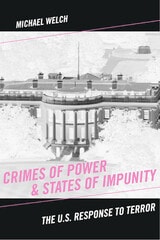
Crimes of Power & States of Impunity
The U.S. Response to TerrorWelch, Michael
Rutgers University Press, 2009
Welch continues the work he began in Scapegoats of September 11th and argues that current U.S. policies, many enacted after the attacks, undermine basic human rights and violate domestic and international law. He recounts these offenses and analyzes the system that sanctions them, offering fresh insight into the complex relationship between power and state crime. Welch critically examines the unlawful enemy combatant designation, Guantanamo Bay, recent torture cases, and collateral damage relating to the war in Iraq. This book transcends important legal arguments as Welch strives for a broader sociological interpretation of what transpired early this century, analyzing the abuses of power that jeopardize our safety and security.
Criminology and Public Policy
Putting Theory to WorkHugh Barlow
Temple University Press, 2009
In applying theories to real world issues—such as reducing crime and violence, prisoner reentry policies, gang behavior, and treatment courts—the contributors take both a macro and micro level approach. They find, too, that it is often difficult to turn theory into practice. Still, the very attempt pushes the criminal justice system toward workable solutions rather than ideological approaches, an orientation the editors believe will lead to greater progress in combating one of our society’s greatest difficulties.
Contributors include: Robert Agnew, Ronald L. Akers, Gordon Bazemore, Ronald V. Clarke, J. Heith Copes, Frank Cullen, Marcus Felson, Marie Griffin, Scott Jacques, David Kauzlarich, Jean McGloin, Steven Messner, Alex Piquero, Nicole Leeper Piquero, Nancy Rodriguez, Richard B. Rosenfeld, Dawn Rothe, Andrea Schoepfer, Neal Shover, Cassia Spohn, Katherine Tellis, Charles Tittle, Richard Wright, and the editors.
Criminology and Public Policy
Putting Theory to WorkScott H. Decker and Kevin A. Wright
Temple University Press, 2018
In the field of criminal justice, public policy is designed to address the problems brought on by criminal behavior and the response to that behavior. However, too often, the theories carefully developed in the academy fail to make their way into programs and policy. The editors and contributors to this second edition of Criminology and Public Policy highlight the recent development of “translational criminology” to address the growing movement in criminology to use the results of criminological research and theory to better inform policy and practice.
The essays in Criminology and Public Policy propose an in-depth look at both theory and practice and how they are integrated across a number of key criminal justice problems—from racial and environmental concerns to gun control and recidivism rates as well as police use of force and mass incarceration. The end result is an essential volume that blends both theory and practice in an effort to address the critical problems in explaining, preventing, responding to, and correcting criminal behavior.
Contributors include: Robert K. Ax, Michelle N. Block, Anthony A. Braga, Rod K. Brunson, Jennifer Carlson, Ronald V. Clarke, Shea Cronin, Megan Denver, Kevin M. Drakulich, Grant Duwe, Amy Farrell, Cheryl Jonson, Charis E. Kubrin, Justin Kurland, Megan Kurlychek, Shannon Magnuson, Daniel P. Mears, Robert D. Morgan, Kathleen Powell, Danielle Rudes, Cassia Spohn, Cody Telep, Natalie Todak, Glenn Trager, Jillian J. Turanovic, Sara Wakefield, Patricia Warren, David Weisburd, Michael D. White, Rob White, Lauren Wilson and the editors
Crisis of the Wasteful Nation
Empire and Conservation in Theodore Roosevelt's AmericaIan Tyrrell
University of Chicago Press, 2014
In Crisis of the Wasteful Nation, Ian Tyrrell gives us a cohesive picture of Roosevelt’s engagement with the natural world along with a compelling portrait of how Americans used, wasted, and worried about natural resources in a time of burgeoning empire. Countering traditional narratives that cast conservation as a purely domestic issue, Tyrrell shows that the movement had global significance, playing a key role in domestic security and in defining American interests around the world. Tyrrell goes beyond Roosevelt to encompass other conservation advocates and policy makers, particularly those engaged with shaping the nation’s economic and social policies—policies built on an understanding of the importance of crucial natural resources. Crisis of the Wasteful Nation is a sweeping transnational work that blends environmental, economic, and imperial history into a cohesive tale of America’s fraught relationships with raw materials, other countries, and the animal kingdom.
Critical Perspectives on Latino Education in Massachusetts
Lorna Rivera and Melissa Colón, editors
University of Massachusetts Press, 2025
In Massachusetts, the Latino population increased by 475 percent between 1980 and 2017, marking a dramatic growth. This diverse ethnic community of Puerto Ricans, Dominicans, Salvadoreans, Colombians, Brazilians, and more also contains a wide range of cultures, immigration and migration experiences, languages, and socio-political backgrounds. However, there are numerous commonalities involving education. Recent research at the Mauricio Gastón Institute for Latino Community Development and Policy reveals that Latino students in Massachusetts are more likely to attend public schools, in communities with significant academic achievement and opportunity gaps as well as other challenges, from food scarcity to higher rates of unemployment. At the same time, the state-wide shift to standards-based education has had a disproportionately negative impact on Latino students, who already feel the effects of politically motivated anti-immigrant policies and laws that limit bilingual education.
This collection of essays, from those working inside the classroom as well as researchers taking a broader look at policy, addresses the array of issues facing Latino students in Massachusetts. These perspectives paint a complex picture of the educational experience for Latinos, and offer expert suggestions for improving classrooms, school environments, and ultimate educational outcomes for an important growing demographic in the Commonwealth.
In addition to editors Lorna Rivera and Melissa Colón, this volume’s contributors include Almudena G. Abeyta, Nasteho Ali, Cristina Araujo Brinkerhoff, Michael Berardino, Alex Briesacher, Thomas Conroy, Judenie Dabel, Liya Escalera, Luis Enrique Esquivel, Deyja Enriquez, Isahiah Erilus, Nyal Fuentes, Jazmin Rubi Flete Gomez, Manuel Frau-Ramos, Kimberly A. S. Howard, Patricia Krueger-Henney, Steven Lue, Mary Jo Marion, Timothy E. Murphy, Cecilia Nardi, Laurie Occhipinti, Alexandra Oliver-Davila, Chong Myung Park, Angelica Rodriquez, Marta T. Rosa, Diana Santiago, Melissa Sargent, Ester Shapiro, V. Scott H. Solberg, Fabián Torres-Ardila, Ashley Torres Carrasquillo, Paul Trunfio, Carmen N. Veloria, and Heilam Xie.
Crosscurrents Along the Colorado
The Impact of Government Policy on the Quechan IndiansRobert L. Bee
University of Arizona Press, 1981
This intriguing book, original published in 1981, considers the Quechans as a case history of the frequent discrepancy between benevolently phrased national intention and exploitative local action. The story of their changing life is traced through the anti-poverty programs of the 1960s and '70s—showing how the implementation of these programs was affected by features of community life that had evolved over preceding decades—and culminates in the Quechans’ forging a self-sustaining though fragile economy despite their status as Federal wards.
This book is more than a product of archival research. Author Robert Bee attended Quechan public gatherings, canvassed the community, and conducted intensive interviews over a thirteen-year period to attain an intimate understanding of this people’s perseverance in the face of age-old frustration. In presenting their story, Bee focuses on the behavior and actions of individuals thrust into key decision-making roles to provide more than just abstract analysis. What emerges is not only a unique ethnohistorical approach to economic development, but a model history of a modern tribe.
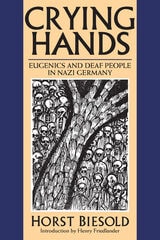
Crying Hands
Eugenics and Deaf People in Nazi GermanyHorst Biesold
Gallaudet University Press, 2003
When the Nazis assumed power in Germany in 1933, they wasted no time in implementing their radical policies, first by securing passage of the Law for the Prevention of Offspring with Hereditary Diseases. Among those designated by this law as “congenitally disabled” were deaf people. Horst Biesold’s newly translated book examines this neglected aspect of Nazi “racial hygiene” through interviews with more than 1,000 deaf survivors of this brutal law that authorized forced sterilizations, abortions, and eventually murder.
Crying Hands meticulously delineates the antecedents of Nazi eugenics, beginning with Social Darwinism (postulated in the mid-nineteenth century) and tracing the various sterilization laws later initiated throughout the world, including many passed and practiced in the United States. This exceptional scholarship is movingly paralleled by the human faces fixed to the numbing statistics, as in story after story those affected recount their irretrievable loss, pain, and misplaced shame imposed upon them by the Nazi regime. Through their stories, told to Biesold in German Sign Language, they have given voice to the countless others who died from the specious science practiced by the Third Reich. And now their own trials have finally been acknowledged.
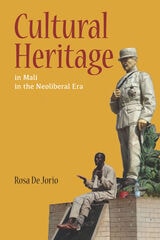
Cultural Heritage in Mali in the Neoliberal Era
Rosa De Jorio
University of Illinois Press, 2016
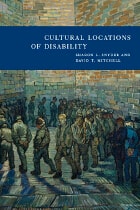
Cultural Locations of Disability
Sharon L. Snyder and David T. Mitchell
University of Chicago Press, 2006
Snyder and Mitchell reveal cracks in the social production of human variation as aberrancy. From our modern obsessions with tidiness and cleanliness to our desire to attain perfect bodies, notions of disabilities as examples of human insufficiency proliferate. These disability practices infuse more general modes of social obedience at work today. Consequently, this important study explains how disabled people are instrumental to charting the passage from a disciplinary society to one based upon regulation of the self.
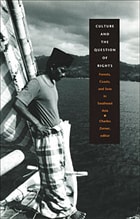
Culture and the Question of Rights
Forests, Coasts, and Seas in Southeast AsiaCharles Zerner, ed.
Duke University Press, 2003
Calling for radical redefinitions of development and ownership and for new understandings of the translation of culture and rights in politically dangerous contexts—natural resource frontiers—this volume links social injustice and the degradation of Southeast Asian environments. Charles Zerner and his colleagues show how geographical areas once viewed as wild and undeveloped are actually cultural artifacts shaped by complex interactions with human societies. Drawing on richly varied sources of evidence and interpretation—from trance dances, court proceedings, tree planting patterns, marine and forest rituals, erotic poems, and codifications of customary law, Culture and the Question of Rights reveals the ironies, complexities, and histories of contemporary communities’ struggles to retain their gardens, forests, fishing territories, and graveyards. The contributors examine how these cultural activities work to both construct and to lay claim to nature. These essays open up new avenues for negotiating indigenous rights against a background of violence, proliferating markets, and global ideas of biodiversity and threatened habitat.
Contributors. Jane Atkinson, Don Brenneis, Stephanie Fried, Nancy Peluso, Marina Roseman, Anna Tsing, Charles Zerner