Results by title
133 books match the query 'Guatemala' and 9 start with c
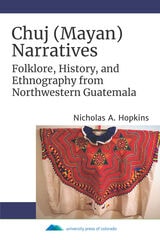
Chuj (Mayan) Narratives
Folklore, History, and Ethnography from Northwestern GuatemalaNicholas A. Hopkins
University Press of Colorado, 2020
The book illustrates the broad range of stories people tell each other, from mythological and legendary topics to procedural discussions and stories borrowed from European and African societies. Hopkins provides context for the narratives by introducing the reader to Chuj culture and history, conveying important events as described by indigenous participants. These events include customs and practices related to salt production as well as the beginnings of the disastrous civil war of the last century, which resulted in the destruction of several villages from which the narratives in this study originated. Hopkins also provides an analytical framework for the strategies of the storytellers and presents the narratives with Chuj text and English translation side-by-side.
Chuj (Mayan) Narratives analyzes the strategies of storytelling in an innovative framework applicable to other corpora and includes sufficient grammatical information to function as an introduction to the Chuj language. The stories illustrate the persistence of Classic Maya themes in contemporary folk literature, making the book significant to Mesoamericanists and Mayanists and an essential resource for students and scholars of Maya linguistics and literary traditions, storytelling, and folklore.
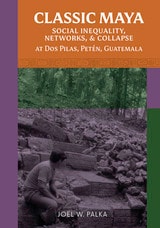
Classic Maya Social Inequality, Networks, and Collapse at Dos Pilas, Petén, Guatemala
Joel W. Palka
University of Utah Press, 2026
The Classic Maya collapse (ca. CE 800) in Mesoamerica has been the focus of much scholarly debate over the last century. In Classic Maya Social Inequality, Networks, and Collapse at Dos Pilas, Petén, Guatemala, Joel W. Palka further explores possible causes of the collapse and breaks new ground by examining its differing effects on Maya elites and commoners.
Drawing on four years of extensive household excavations, Palka reveals how the unraveling of Maya society unfolded not through drought or economic decline alone, but through the disintegration of elite social networks and shifting strategies of survival among high-status commoners. Using data from monumental architecture, hieroglyphic inscriptions, and domestic archaeology, this study illuminates the lived experience of collapse from multiple social strata. By integrating political, environmental, and household perspectives, Palka provides one of the most comprehensive archaeological analyses of social change at an ancient Maya capital. This richly illustrated volume redefines our understanding of collapse, resilience, and transformation in ancient Mesoamerica, offering vital insights for archaeologists, anthropologists, and historians alike.

Coffee and Community
Maya Farmers and Fair-Trade MarketsSarah Lyon
University Press of Colorado, 2010
Focusing on La Voz Que Clama en el Desierto-a cooperative in San Juan la Laguna, Guatemala-and its relationships with coffee roasters, importers, and certifiers in the United States, Coffee and Community argues that while fair trade does benefit small coffee-farming communities, it is more flawed than advocates and scholars have acknowledged. However, through detailed ethnographic fieldwork with the farmers and by following the product, fair trade can be understood and modified to be more equitable.
This book will be of interest to students and academics in anthropology, ethnology, Latin American studies, and labor studies, as well as economists, social scientists, policy makers, fair-trade advocates, and anyone interested in globalization and the realities of fair trade. Winner of the Society for Economic Anthropology Book Award
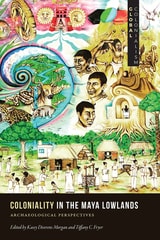
Coloniality in the Maya Lowlands
Archaeological Perspectivesedited by Kasey Diserens Morgan &Tiffany C. Fryer
University Press of Colorado, 2022
The work takes a hemispheric approach to the historical and material analysis of colonialism, bridging the often disparate literatures on coloniality and settler colonialism. Archaeologists and anthropologists working in what are today southeastern Mexico, Belize, Guatemala, and Honduras grapple with the material realities of coloniality at a regional level. They provide sustained discussions of Maya experiences with wide-ranging colonial endurances: violence, resource insecurity, land rights, refugees, the control of borders, the movement of contraband, surveillance, individual and collective agency, consumption, and use of historic resources.
Considering a future for historical archaeologies of the Maya region that bridges anthropology, ethnohistory, Indigenous studies, settler colonial studies, and Latin American studies, Coloniality in the Maya Lowlands presents a new understanding of how ways of being in the Maya world have formed and changed over time, as well as the shared investments of historical archaeologists and sociocultural anthropologists working in the Maya region.
Contributors: Fernando Armstrong-Fumero, Alejandra Badillo Sánchez, Adolfo Iván Batún Alpuche, A. Brooke Bonorden, Maia C. Dedrick, Scott L. Fedick, Fior García Lara, John Gust, Brett A. Houk, Rosemary A. Joyce, Gertrude B. Kilgore, Jennifer P. Mathews, Patricia A. McAnany, James W. Meierhoff, Fabián A. Olán de la Cruz, Julie K. Wesp
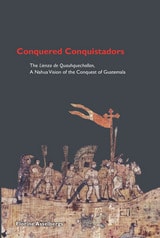
Conquered Conquistadors
The <i>Lienzo de Quauhquechollan,</i> A Nahua Vision of the Conquest of GuatemalaFlorine Asselbergs
University Press of Colorado, 2004
The people of the Nahua community of Quauhquechollan (present-day San Martín Huaquechula), in central Mexico, allied with Cortés during the Spanish-Aztec War and were assigned to the Spanish conquistador Jorge de Alvarado. De Alvarado and his allies, including the Quauhquecholteca and thousands of other indigenous warriors, set off for Guatemala in 1527 to start a campaign against the Maya. The few Quauhquecholteca who lived to tell the story recorded their travels and eventual victory on the huge cloth map, the Lienzo de Quauhquechollan.
Conquered Conquistadors, published in a European edition in 2004, overturned conventional views of the European conquest of indigenous cultures. American historians and anthropologists will relish this new edition and Asselbergs's astute analysis, which includes context, interpretation, and comparison with other pictographic accounts of the "Spanish" conquest. This heavily illustrated edition includes an insert reproduction of the Lienzo de Quauhquechollan.

Conquistadores de la Calle
Child Street Labor in Guatemala CityBy Thomas A. Offit
University of Texas Press, 2008
The first comprehensive, book-length study of its kind, Conquistadores de la Calle presents the findings of nearly two years of ethnographic research on the streets of Guatemala City, toppling conventional wisdom that the region's youth workers are solely victims, or that their labor situations are entirely the result of poverty and family breakdown.
Documenting the voices and experiences of the city's working children, this fascinating study reveals counterintuitive motivations for those who choose to abandon schooling in favor of participating more fully in their families' economies. The processes of developing skills and planning for their social and economic futures are covered in depth, presenting evidence that many members of this population operate well above survival level and are decidedly not marginalized or members of an underclass. Conquistadores de la Calle also makes important distinctions between these young workers—a generation of Maya and Ladino boys and girls—and the homeless children or gang youth who have been so much more widely studied.
Contextualizing a variety of data, ranging from detailed ethnographic portraits of the children's lives and the monthly income of children engaged in common street vocations (such as shining shoes or serving as porters) to educational histories and socialization activities, Thomas Offit has produced a rich trove of findings in a significant segment of urban economics that is tremendously important for anthropologists, Latin Americanists, and those interested in the lives and labors of children in the cities of the developing world.
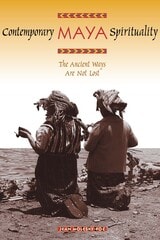
Contemporary Maya Spirituality
The Ancient Ways Are Not LostBy Jean Molesky-Poz
University of Texas Press, 2006
Since the mid-1980s, when Guatemala returned to civilian rule and achieved relative peace and stability, the Maya have begun openly expressing their spiritual beliefs and practices. Jean Molesky-Poz draws on in-depth dialogues with Maya Ajq'ijab' (keepers of the ritual calendar), her own participant observation, and inter-disciplinary resources to offer a comprehensive, innovative, and well-grounded understanding of contemporary Maya spirituality and its theological underpinnings. She reveals significant continuities between contemporary and ancient Maya worldviews and spiritual practices.
Molesky-Poz opens with a discussion of how the public emergence of Maya spirituality is situated within the religious political history of the Guatemalan highlands, particularly the recent pan-Maya movement. She investigates Maya cosmovision and its foundational principles, as expressed by Ajq'ijab'. At the heart of this work, Ajq'ijab' interpret their obligation, lives, and spiritual work. In subsequent chapters, Molesky-Poz explores aspects of Maya spirituality—sacred geography (the reciprocal relationship between the earth and humans, sacred places, and the significance of the cross or quatrefoil map), sacred time (how the 260-day sacred calendar is "the heart of the wisdom of the Maya," the matrix of Maya culture), and ritual practice (the distinct way and method of ancestral study, with special attention to fire ceremonialism). She confirms contemporary Maya spirituality as a faith tradition with elaborate historical roots that has significance for individual, collective, and historical lives, reaffirming its own public space and legal right to be practiced.
Crucifixion by Power
Essays on Guatemalan National Social Structure, 1944–1966By Richard Newbold Adams
University of Texas Press, 1970
"Quite the contrary of old generals, nations do not fade away; they have to be killed."
Richard Adams' view of the nation as a basic social unit is central to this pioneering study in social anthropology. The result of many years of research in Guatemala, this volume utilizes the author's fieldwork as well as that of his colleagues and students to construct a set of concepts explaining how Guatemala reached the difficult circumstances in which it found itself in the 1960s—and still finds itself today.
With the breakup of the great colonial empires after the Second World War, the curtain that had been drawn around Marx by Western social scientists fell away; countries once called "primitive" began to be seen as "underdeveloped," while those once thought to be stable and advanced began to appear predatory and conflict ridden. The theme of Mr. Adams' book is that, in the world as a whole, there is a structural escalation of power concentration.
The author believes that Guatemala, as a small nation within the general domain of the United States, is caught in the developmental hinterland of that powerful neighbor and that the United States, within its own capitalistic development pattern and in competition with other leading world powers, cannot allow the smaller nation to resolve its own political and social problems. Thus Guatemala, he declares, finds itself crucified by unyielding and uncontrollable power plays beyond its national borders.
As a background for the study of specific sectors in Guatemalan society, the author discusses the theoretical nature of complex societies. He shows the cohesive force of a nation to be its power structure and then examines mechanisms whereby this structure is kept intact in Guatemala. Special emphasis is given to the lack of access to power by the poor, the development of the military, the organization of power within the Catholic Church, and the expansion of upper-sector interest groups.
While there was important growth in the power of upper-sector Guatemalan society over the two decades of the study, there was no comparable increase in distribution; the position of the lower sectors within the power structure has therefore changed very slightly. "Development," then, in Guatemala was principally in terms of what was advantageous to the major powers.
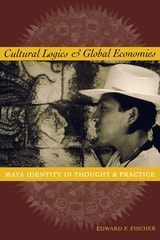
Cultural Logics and Global Economies
Maya Identity in Thought and PracticeBy Edward F. Fischer
University of Texas Press, 2002
A Choice Outstanding Academic Book, 2002
As ideas, goods, and people move with increasing ease and speed across national boundaries and geographic distances, the economic changes and technological advances that enable this globalization are also paradoxically contributing to the balkanization of states, ethnic groups, and special interest movements. Exploring how this process is playing out in Guatemala, this book presents an innovative synthesis of the local and global factors that have led Guatemala's indigenous Maya peoples to assert and defend their cultural identity and distinctiveness within the dominant Hispanic society.
Drawing on recent theories from cognitive studies, interpretive ethnography, and political economy, Edward F. Fischer looks at individual Maya activists and local cultures, as well as changing national and international power relations, to understand how ethnic identities are constructed and expressed in the modern world. At the global level, he shows how structural shifts in international relations have opened new venues of ethnic expression for Guatemala's majority Maya population. At the local level, he examines the processes of identity construction in two Kaqchikel Maya towns, Tecpán and Patzún, and shows how divergent local norms result in different conceptions and expressions of Maya-ness, which nonetheless share certain fundamental similarities with the larger pan-Maya project. Tying these levels of analysis together, Fischer argues that open-ended Maya "cultural logics" condition the ways in which Maya individuals (national leaders and rural masses alike) creatively express their identity in a rapidly changing world.