Results by title
133 books match the query 'Argentina' and 18 start with a
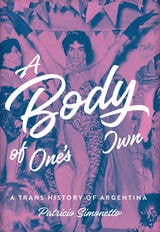
A Body of One's Own
A Trans History of ArgentinaPatricio Simonetto
University of Texas Press, 2024
2026 Silver Medal for the Best LGBTQ+ Themed Book, Conference on Latin American History (CLAH)
2026 Honorable Mention, Book Award, Social History Society
2025 Best Book in Social Sciences Award, Southern Cone Section, Latin American Studies Association
2024 Sylvia Rivera Award in Transgender Studies, The Center for LGBTQ Studies at the Graduate Center, CUNY
A history of Argentina that examines how trans bodies were understood, policed, and shaped in a country that banned medically assisted gender affirmation practices and punished trans lives.
As a trans history of Argentina, a country that banned medically assisted gender affirmation practices and punished trans lives, A Body of One’s Own places the histories of trans bodies at the core of modern Argentinian history. Patricio Simonetto documents the lives of people who crossed the boundaries of gender from the early twentieth century to the present. Based on extensive archival research in public and community-based archives, this book explores the mainstream medical and media portrayals of trans or travesti people, the state policing of gender embodiment, the experiences of those transgressing the boundaries of gender, and the development of homemade technologies from prosthetics to the self-injection of silicone. A Body of One's Own explores how trans activists' challenges to the exclusionary effects of Argentina’s legal, cultural, social, and political cisgender order led to the passage of the Gender Identity Law in 2012. Analyzing the decisive yet overlooked impact of gender transformation in the formation of the nation-state, gender-belonging, and citizenship, this book ultimately shows that supposedly abstract struggles to define the shifting notions of "sex," citizenship, and nationhood are embodied material experiences.
A Feminist Reading of Debt
Luci Cavallero
Pluto Press, 2021
***Winner of an English PEN Award 2021***
In this sharp intervention, authors Lucí Cavallero and Verónica Gago defiantly develop a feminist understanding of debt, showing its impact on women and members of the LGBTQ+ community and examining the relationship between debt and social reproduction.
Exploring the link between financial activity and the rise of conservative forces in Latin America, the book demonstrates that debt is intimately linked to gendered violence and patriarchal notions of the family. Yet, rather than seeing these forces as insurmountable, the authors also show ways in which debt can be resisted, drawing on concrete experiences and practices from Latin America and around the world.
Featuring interviews with women in Argentina and Brazil, the book reveals the real-life impact of debt and how it falls mainly on the shoulders of women, from the household to the wider effects of national debt and austerity. However, through discussions around experiences of work, prisons, domestic labour, agriculture, family, abortion and housing, a narrative of resistance emerges.
Translated by Liz Mason-Deese.

A Feminist Reading of Debt
Luci Cavallero
Pluto Press, 2021
***Winner of an English PEN Award 2021***
"Of great value to those interested in the financialisation of everyday life and social reproduction."—LSE Review of Books
In this sharp evaluation and call to action, authors Lucí Cavallero and Verónica Gago defiantly develop a feminist understanding of debt, showing its impact on women and members of the LGBTQ+ community and examining the relationship between debt and social reproduction.
Exploring the link between financial activity and the rise of conservative forces in Latin America, the book demonstrates that debt is intimately linked to gendered violence and patriarchal notions of the family. Yet, rather than seeing these forces as insurmountable, the authors also show ways in which debt can be resisted, drawing on concrete experiences and practices from Latin America and around the world. Chapters include:
*Debt and Social Reproduction
*Debt as a “Counter-revolution” of Everyday Life
*The writing on the Body of Women
*Neither Victims not Entrepreneurs
*Feminist Insubordination and Fascist Neoliberalism
*The Patriarchy Has My Missing Contributions
*Hunger and Gender Mandates
*Us Against Debt
The authors state in their Introduction, “Our investigations and activism show that there is an urgent need to develop a specifically feminist analysis of finance. Here we do so by bringing together methodological elements, political hypotheses, and narratives of practices elaborated by the feminist movement that are challenging finance.”
Featuring interviews with women in Argentina and Brazil, the book reveals the real-life impact of debt and how it falls mainly on the shoulders of women, from the household to the wider effects of national debt and austerity. However, through discussions around experiences of work, prisons, domestic labor, agriculture, family, abortion and housing, a narrative of resistance emerges.
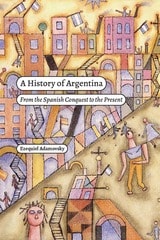
A History of Argentina
From the Spanish Conquest to the PresentEzequiel Adamovsky
Duke University Press, 2024
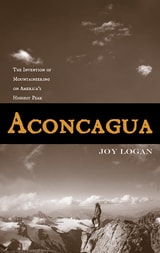
Aconcagua
The Invention of Mountaineering on America’s Highest PeakJoy Logan
University of Arizona Press, 2011
Having done fieldwork on Aconcagua for six years, Logan offers keen insights into how the invention of mountaineering in the nineteenth century—and adventure tourism a century later—have both shaped and been shaped by local and global cultural narratives. She examines the roles and functions of mountain guides, especially in regard to notions of gender and nation; re-reads the mountaineering stories forged by explorers, scientists, tourism officials, and the gear industry; and considers the distinctions between foreign and Argentine climbers (some of whom are celebrities in their own right).
In Logan’s revealing analysis, Aconcagua is emblematic of the tensions produced by modernity, nation-building, tourism development, and re-ethnification. The evolution of mountain climbing on Aconcagua registers seismic shifts in attitudes toward adventure, the national, and the global. With an eye for detail and a flair for description, Logan invites her readers onto the mountain and into the lives it supports.

Acoustic Properties
Radio, Narrative, and the New Neighborhood of the AmericasTom McEnaney
Northwestern University Press, 2017
Based on original archival research in Buenos Aires, Havana, Paris, and the United States, the book develops a literary media theory that understands sound as a transmedial phenomenon and radio as a transnational medium. Analyzing the construction of new social and political relations in the wake of the United States’ 1930s Good Neighbor Policy, Acoustic Properties challenges standard narratives of hemispheric influence through new readings of Richard Wright’s cinematic work in Argentina, Severo Sarduy’s radio plays in France, and novels by John Dos Passos, Manuel Puig, Raymond Chandler, and Carson McCullers. Alongside these writers, the book also explores Che Guevara and Fidel Castro’s Radio Rebelde, FDR’s fireside chats, Félix Caignet’s invention of the radionovela in Cuba, Evita Perón’s populist melodramas in Argentina, Orson Welles’s experimental New Deal radio, Cuban and U.S. “radio wars,” and the 1960s African American activist Robert F. Williams’s proto–black power Radio Free Dixie.
From the doldrums of the Great Depression to the tumult of the Cuban Revolution, Acoustic Properties illuminates how novelists in the radio age converted writing into a practice of listening, transforming realism as they struggled to channel and shape popular power.
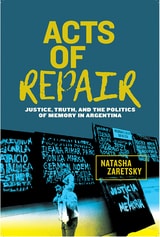
Acts of Repair
Justice, Truth, and the Politics of Memory in ArgentinaNatasha Zaretsky
Rutgers University Press, 2021
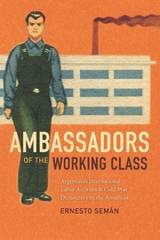
Ambassadors of the Working Class
Argentina's International Labor Activists and Cold War Democracy in the AmericasErnesto Semán
Duke University Press, 2017
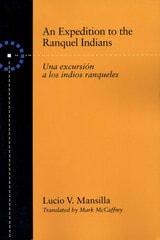
An Expedition to the Ranquel Indians
Excursion a los indios ranquelesBy Lucio V. Mansilla
University of Texas Press, 1997
The encounter between Native American peoples and Europeans and their descendants has marked the history of every nation in the Americas, both North and South. Lucio Mansilla's Una excursión a los indios ranqueles, published in Argentina in 1870, is one of very few works in American letters that presents a vivid, firsthand account of a noncombative encounter between Native American and European civilizations.
This volume is the first English translation of Mansilla's classic work. Long noted for its humor, adventurousness, and narrative ingenuity, the book offers penetrating insights into fundamental issues of "civilization and barbarism," immigration, ethnic and racial diversity, and land ownership and tenancy.
Mansilla alone among his contemporaries espoused open dialogue as the best approach to the "Indian problem." Although the peace accord he sought to enact with the Ranquels was summarily disregarded by the Argentine government, which slowly gravitated towards a policy of ethnic cleansing and expropriation of Indian lands, the Expedition does narrate a rehearsal for a reconciliation that in the end never took place.
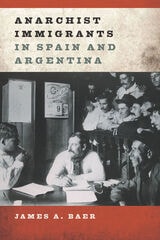
Anarchist Immigrants in Spain and Argentina
James A. Baer
University of Illinois Press, 2015
James A. Baer follows the lives, careers, and travels of Diego Abad de Santillán, Manuel Villar, and other migrating anarchists to highlight the ideological and interpersonal relationships that defined a vital era in anarchist history. Drawing on extensive interviews with Abad de Santillán, José Grunfeld, and Jacobo Maguid, along withunusual access to anarchist records and networks, Baer uncovers the ways anarchist migrants in pursuit of jobs and political goals formed a critical nucleus of militants, binding the two countries in an ideological relationship that profoundly affected the history of both. He also considers the impact of reverse migration and discusses political decisions that had a hitherto unknown influence on the course of the Spanish Civil War.
Personal in perspective and transnational in scope, Anarchist Immigrants in Spain and Argentina offers an enlightening history of a movement and an era.
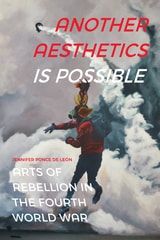
Another Aesthetics Is Possible
Arts of Rebellion in the Fourth World WarJennifer Ponce de León
Duke University Press, 2021
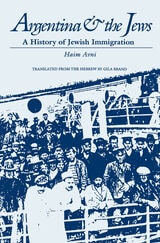
Argentina and the Jews
A History of Jewish ImmigrationHaim Avni
University of Alabama Press, 1991
Traces the shifting patterns of Jewish immigration and Argentine immigration policy.
Argentina is home to the largest Jewish community in the Hispanic world, the second largest in the Western hemisphere. During successive political and social regimes, Argentina alternately barred Jews from entering the country and recruited them to immigrate, persecuted Jews as heretics or worse and welcomed them as productive settlers, restricted Jews by law and invested them with the fullest rights of citizenship. This volume traces the shifting patterns of Jewish immigration and Argentine immigration policy, both as manifestations of cultural and historical processes and as forces shaping the emergence of a large and energetic Jewish community.
Within Argentina, many Jews followed traditional immigration strategies by consolidating communities and institutions in Buenos Aires and other cities. But many others settled on the land, in agricultural colonies sponsored by Baron Maurice de Hirsch’s Jewish Colonization Association, a group with far-reaching impact that is examined closely in this book. The Israeli kibbutz movement drew strength from the Argentine farming colonies, when beginning in 1949 groups of Argentine Jews immigrated to Israel to found kibbutzes. Eventually, in the face of political and economic upheavals with anti-Semitic undercurrents, almost 40,000 Jews left Argentina for Israel. A country of absorption became a country of exodus, and Zionism became a central focus of Argentine Jewry, interlocking families and fates separated by oceans and continents.
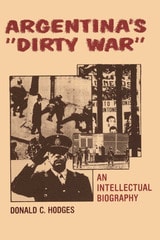
Argentina's "Dirty War"
An Intellectual BiographyBy Donald C. Hodges
University of Texas Press, 1991
Argentines ask how their ultracivilized country, reputedly the most European in Latin America, could have relapsed into near-barbarism in the 1970s. This enlightening study seeks to answer that question by reviewing the underlying political events and intellectual foundations of the "dirty war" (1975–1978) and overlapping Military Process (1976–1982). It examines the ideologies and actions of the main protagonists—the armed forces, guerrillas, and organized labor—over time and traces them to their roots.
In the most comprehensive treatment of the subject to date, Hodges examines primary materials never seen by other researchers, including clandestinely published guerrilla documents, and interviews important actors in Argentina's political drama. His wide-ranging scholarship traces the origins of the national security and national salvation doctrines to the Spanish Inquisition, sixteenth-century witch hunts, and nineteenth-century reactions to the modernizing ideologies of liberalism, democracy, socialism, and communism.
Hodges posits that the "dirty war," Military Process, and revolutionary war to which they responded represented the culmination of social tensions that arose in 1930 with the launching of the Military Era by Argentina's first successful twentieth-century coup. He offers the disquieting hypothesis that as long as the "Argentine Question" remains unsettled the military may intervene again, the resistance movement will remain strong, and violence may continue even under a democratic government.

Argentina, the United States, and the Anti-Communist Crusade in Central America, 1977–1984
Mis Lam#26Ariel Armony
Ohio University Press, 1997
Ariel Armony focuses, in this study, on the role played by Argentina in the anti–Communist crusade in Central America. This systematic examination of Argentina’s involvement in the Central American drama of the late 1970s and early 1980s fine–tunes our knowledge of a major episode of the Cold War era.
Basing his study on exhaustive research in the United States, Argentina, and Nicaragua, Armony adroitly demolishes several key assumptions that have shaped the work of scholars in U.S. foreign policy, Argentine military politics, and Central American affairs.

Argentina
Stories for a NationAmy K. Kaminsky
University of Minnesota Press, 2008
By the end of the twentieth century, Argentina’s complex identity-tango and chimichurri, Eva Perón and the Mothers of the Plaza de Mayo, the Falklands and the Dirty War, Jorge Luis Borges and Maradona, economic chaos and a memory of vast wealth-has become entrenched in the consciousness of the Western world.
In this wide-ranging and at times poetic new work, Amy K. Kaminsky explores Argentina’s unique national identity and the place it holds in the minds of those who live beyond its physical borders. To analyze the country’s meaning in the global imagination, Kaminsky probes Argentina’s presence in a broad range of literary texts from the United States, Poland, England, Western Europe, and Argentina itself, as well as internationally produced films, advertisements, and newspaper features.
Kaminsky’s examination reveals how Europe consumes an image of Argentina that acts as a pivot between the exotic and the familiar. Going beyond the idea of suffocating Eurocentrism as a theory of national identity, Kaminsky presents an original and vivid reading of national myths and realities that encapsulates the interplay among the many meanings of “Argentina” and its place in the world’s imagination.
Amy Kaminsky is professor of gender, women, and sexuality studies and global studies at the University of Minnesota and author of After Exile (Minnesota, 1999).

Artificial Respiration
Ricardo Piglia
Duke University Press, 1994
As a prize winning detective novel, Artificial Respiration reaches through many levels of mystery to explore the forces that have been at play in Argentina throughout its violent history. The narrator, a writer named Renzi, begins to look for an uncle who has vanished, a man he knows only through a web of contradictory family stories and an exchange of letters. Through these letters he learns about his uncle’s research into the life of Enrique Ossario, secretary to the 19th-century Argentine dictator Rosas and spy for the dictator’s enemy. As Renzi’s search leads further into his uncle’s work and to conversations with his literary and chess-playing friends, the reader is led by Piglia to consider the nature of Argentine identity, its literature and history, and its relation, for example, to Europe, exile, and democracy. Finally, and made most vividly appreciable by the retelling of a story in which Kafka meets Hitler, it is the encounter between literature and history that is explored.

At the Edge of the Pampas
Land and Longing in ArgentinaRachel Cypher
University of Arizona Press, 2027
Industrial agriculture has transformed vast stretches of the Earth, but few places reveal its contradictions more clearly than the Pampas of Argentina.
In At the Edge of the Pampas, anthropologist Rachel Cypher traces the explosive rise of genetically modified soybeans across one of the world’s great agricultural heartlands. Drawing on immersive long-term fieldwork, the book moves from soybean fields and cattle feedlots to dryland forests to show that industrial agriculture takes many forms. Soy—one of the world’s most standardized commodities—must first pass through local ecologies, informal economies, inherited obligations, and intimate relations of trust before it can circulate as a global asset.
Urgent and deeply original, At the Edge of the Pampas offers a major rethinking of how value is gathered within industrial capitalism and how unruly social and ecological life persists inside even the most engineered landscapes.
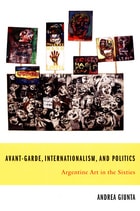
Avant-Garde, Internationalism, and Politics
Argentine Art in the SixtiesAndrea Giunta
Duke University Press, 2007
The renowned Argentine art historian and critic Andrea Giunta analyzes projects specifically designed to internationalize Argentina’s art and avant-garde during the 1960s: the importation of exhibitions of contemporary international art, the sending of Argentine artists abroad to study, the organization of prize competitions involving prestigious international art critics, and the export of exhibitions of Argentine art to Europe and the United States. She looks at the conditions that made these projects possible—not least the Alliance for Progress, a U.S. program of “exchange” and “cooperation” meant to prevent the spread of communism through Latin America in the wake of the Cuban Revolution—as well as the strategies formulated to promote them. She describes the influence of Romero Brest, prominent art critic, supporter of abstract art, and director of the Centro de Artes Visuales del Instituto Tocuato Di Tella (an experimental art center in Buenos Aires); various group programs such as Nueva Figuración and Arte Destructivo; and individual artists including Antonio Berni, Alberto Greco, León Ferrari, Marta Minujin, and Luis Felipe Noé. Giunta’s rich narrative illuminates the contentious postwar relationships between art and politics, Latin America and the United States, and local identity and global recognition.