Results by title
883 books match the query 'Historical' and 46 start with c
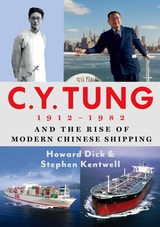
C. Y. Tung (1912–1982) and the Rise of Modern Chinese Shipping
Howard Dick and Stephen Kentwell
Hong Kong University Press, 2026
A business biography of C. Y. Tung, founder of the Orient Overseas Container Line and philanthropist.
Shanghai-born and later Hong Kong–resident shipowner Tung Chao-Yung (1912–1982) is remembered worldwide as a champion for Chinese shipping, founding the companies Chinese Maritime Transport and Island Navigation, and pioneering container shipping for Asia in Orient Overseas Container Line/OOCL. Despite coming from a humble background, by the time of his death he controlled a huge fleet of passenger liners, bulk carriers, tankers, and container ships, while also being diversified into port terminals, dockyards, banks, and prime real estate. This business biography sets out his pathway from a junior executive in the early 1930s to one of the world’s leading private shipowners. The authors argue that Tung achieved his desire to develop Chinese ocean shipping through his ability to learn, innovate, network, and devise strategies through decades of rapid technical and organizational change. He also earned respect for his generous philanthropy. After his death, sons Tung Chee-Hwa and Tung Chee-Chen were able to navigate a financial crisis, restructure the group in the face of intensifying competition in the 1980s, and grow through the challenges and opportunities of globalization and advancement in supply chain management and technology within the industry in the 1990s through 2010s. OOCL became one of the most competitive liner companies in the industry until divestment in 2017. Eight decades since their establishment, privately owned Island Navigation and, now independently, Chinese Maritime Transport continue to trade globally in dry-bulk and tanker markets. C. Y. Tung (1912–1982) and the Rise of Modern Chinese Shipping concludes with an overview of the emergence of the state-owned PRC fleet and brief histories of other multi-generational family companies.
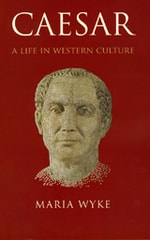
Caesar
A Life in Western CultureMaria Wyke
University of Chicago Press, 2008
Caliburn
Merlin's TaleVirgil Renzulli
Arizona Center for Medieval and Renaissance Studies, 2015
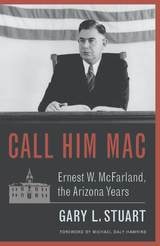
Call Him Mac
Ernest W. McFarland, the Arizona YearsGary L. Stuart; Foreword by Michael Daly Hawkins
University of Arizona Press, 2018
In Call Him Mac, Gary L. Stuart renders a nuanced portrait of a young, ambitious, restless, and smiling man on the verge of becoming a political force headed for the highest levels of governance in Arizona and America. Stuart reveals how Mac became an expert on water law and a visionary in Arizona’s agricultural future. Using interviews with friends and family and extensive primary source research, Stuart spotlights Mac’s unerring focus as a loving husband, father, and grandfather, even in times of great personal tragedy. Mac’s commitments to his family mirrored his sense of fiduciary duty in public life. His enormous political successes were answers to how he dealt with threats to his own life in 1919, the loss of his first wife and three children in the 1930s, and a political loss in 1952 that no one saw coming.
Stuart writes the little-known story of how Arizona’s culture and citizens shaped this energetic, determined, likable lawyer. The fame Mac created was not for himself but for those he served in Arizona and beyond. Mac’s unparalleled political success was fermented during his early Arizona years, the bridge that brought him to his future as an approachable and likable elder statesman of Arizona politics.
Callaghan
Harry Conroy
Haus Publishing, 2006
Camp Nine
A NovelVivienne Schiffer
University of Arkansas Press, 2011

Campbell-Bannerman
Roy Hattersley
Haus Publishing, 2006
Caroline Quarlls and the Underground Railroad
Julia Pferdehirt
Wisconsin Historical Society Press, 2008
Cartucho and My Mother's Hands
By Nellie Campobello
University of Texas Press, 1988
Nellie Campobello, a prominent Mexican writer and "novelist of the Revolution," played an important role in Mexico's cultural renaissance in the 1920s and early 1930s, along with such writers as Rafael Muñoz and Gregorio López y Fuentes and artists Diego Rivera, Orozco, and others. Her two novellas, Cartucho (first published in 1931) and My Mother's Hands (first published as Las manos de Mamá in 1938), are autobiographical evocations of a childhood spent amidst the violence and turmoil of the Revolution in Mexico. Campobello's memories of the Revolution in the north of Mexico, where Pancho Villa was a popular hero and a personal friend of her family, show not only the stark realism of Cartucho but also the tender lyricism of My Mother's Hands. They are noteworthy, too, as a first-person account of the female experience in the early years of the Mexican Revolution and unique in their presentation of events from a child's perspective.
Casement
Angus Mitchell
Haus Publishing, 2026
At the time of his execution for treason in 1916, few were aware who Roger Casement was or what he represented. Since then, he has been lauded for his investigations into Belgian brutality in the Congo Free State and human rights abuses in the Peruvian rubber industry, but much else about him has remained obscured behind speculation about his sexuality and secret Irish revolutionary activity while in service of the British Empire. As such, his place in history has been ill-defined and multifarious: his involvement in the waging of war followed by the delicate negotiation of peace; his republicanism perceived variously as an eccentric enthusiasm and as a threat to the British Empire; his contemporary legacy overshadowed by the Black Diaries of disputed legitimacy, detailing alleged liaisons with young men.
In Casement, Angus Mitchell illuminates a life shrouded in mystery, which operated in the conflicting spheres of British foreign diplomacy and Irish revolutionary activity. Considering Casement’s rebellious nature, Mitchell asks if it was motivated as much by his “incorrigible” Irishness as by his exposure of the appalling crimes against humanity that he witnessed in Africa and South America. Most significantly, Casement demonstrates that his legacy cannot be ascribed to just one cause, whether as a critic of global colonialism or as a founding father of the modern Irish nation-state. Casement’s true commitment was to a universal understanding based on humanity, tolerance, and justice.
Cases of Circumstantial Evidence
Janet Lewis
Ohio University Press, 2013
This is the first digital version of Cases of Circumstantial Evidence, a collection of three historical novels by noted American writer Janet Lewis. For the first time, these works have been brought together in a single edition, each with a new introduction by Kevin Haworth:
The Wife of Martin Guerre
Based on a notorious trial in sixteenth-century France, The Wife of Martin Guerre follows Bertrande de Rois and her lost-and-returned husband through a tale of impersonation, conspiracy, and small-town intrigue. Their fascinating story has also inspired a bestselling historical study and two films, including The Return of Martin Guerre.
The Trial of Sören Qvist
Although set in seventeenth-century Denmark, The Trial of Sören Qvist has a contemporary feel and has been praised for its intriguing plot and for Lewis’s powerful writing. In this second novel in the Cases of Circumstantial Evidence, Lewis recounts the story of a murder, an investigation, and a pious town pastor who confesses to the crime, driven perhaps more by a recognition of his own moral flaws than by guilt for the acts of which he stood accused.
The Ghost of Monsieur Scarron
The court of Louis XIV and a modest Paris street provide the incongruous settings for this tale of a humble bookbinder, his wife, and the young craftsman who seduces her and blackmails her husband into covering up a terrible crime. This third and last case of circumstantial evidence bristles with character, the smell of blood, and considerable suspense against a backdrop of national political unrest in the cruel and dingy Paris of the seventeenth century.
Casper Jaggi
Master Swiss Cheese MakerJerry Apps
Wisconsin Historical Society Press, 2008
The book opens the doors to Jaggi's Brodhead Swiss Cheese Factory - largest factory of its kind in Wisconsin in the 1950s. Archival photos help illustrate, step-by-step, the process Jaggi and his workers followed to transform 2,000 pounds of milk in a copper kettle into a 200-pound wheel of Swiss cheese.
Catching Stories
A Practical Guide to Oral HistoryDonna M. DeBlasio
Ohio University Press, 2009
In neighborhoods, schools, community centers, and workplaces, people are using oral history to capture and collect the kinds of stories that the history books and the media tend to overlook: stories of personal struggle and hope, of war and peace, of family and friends, of beliefs, traditions, and values—the stories of our lives.
Catching Stories: A Practical Guide to Oral History is a clear and comprehensive introduction for those with little or no experience in planning or undertaking oral history projects. Opening with the key question, “Why do oral history?” the guide outlines the stages of a project from idea to final product—planning and research, the interviewing process, basic technical principles, and audio and video recording techniques. The guide covers interview transcribing, ethical and legal issues, archiving, funding sources, and sharing oral history with audiences.
Intended for teachers, students, librarians, local historians, and volunteers as well as individuals, Catching Stories is the place to start for anyone who wants to document the memories and collect the stories of community or family.
Categories
Historical and Systematic Essays (Studies in Philosophy and the History of Philosophy, Volume 41)Michael Gorman
Catholic University of America Press, 2004
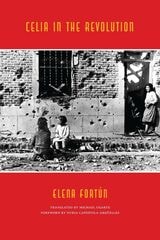
Celia in the Revolution
Elena Fortún
Swan Isle Press, 2023
Set during the Spanish Civil War (1936–39), Celia in the Revolution is the last in a series of young adult novels written by Encarnación Aragoneses, known by the pen name Elena Fortún, one of the most prolific and popular Spanish authors of the mid-twentieth century.
In a series of more than twenty novels, Fortún’s protagonist is Celia Gálvez de Montalbán, a precocious and rebellious girl from an affluent family who’s not afraid to question authority and dream, and that often gets her into trouble. Readers watch her grow from age seven through adolescence to the threshold of womanhood at seventeen, which is her age in this dark, inspiring novel about the war that changed Spain.
In this last narrative in the legendary series, Celia has an awakening that not even her lively imagination could have anticipated. The once carefree, innocent child prone to playful fantasies must suddenly confront a world that’s utterly changed, finding herself amid a bloody conflict, la Guerra Civil. Celia, now a madrecita, a little mother to her two younger sisters since the death of their mother, is forced into a life of hardship, a world of hunger, witness to violence, executions, bombing raids, and death. With Celia’s sorrows come her courageous and profound compassion, consoling and caring for virtually every war victim that crosses her path, no matter their political inclinations, and no matter all that Celia must contend with herself. Celia, despite all her travails, manages to survive with determination, defiance, and dignity.
Written immediately after the war, Celia in the Revolution was not published during Elena Fortún’s lifetime, until after the death of the dictator, Francisco Franco, due to censorship. This first major English translation by eminent scholar and Hispanist Michael Ugarte captures the narrative and nuances of Celia’s voice and others in this character-rich novel, and fellow eminent scholar and Hispanist Nuria Capdevila-Arguëlles’s preface brings powerful insights into this remarkable work by Elena Fortún that transcends young adult literature.
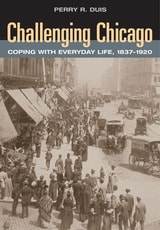
Challenging Chicago
Coping with Everyday Life, 1837-1920Perry R. Duis
University of Illinois Press, 2006
Follow along and encounter some of Chicago’s most infamous citizens--the loathed Traction Baron, high-speed “scorchers,” and peddlers of “swill milk.” Learn about the perils of payday, the lunchtime problems of women, the lure of dime museums, and the fatal attraction of Chicago’s “cruelest place.” Against this bleak backdrop emerged the innovators and institutions that made Chicago the vibrant city it is today. The superbly textured narrative is enhanced by eighty-six historic photographs and illustrations.
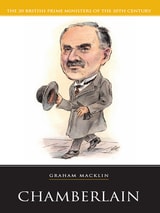
Chamberlain
Graham Macklin
Haus Publishing, 2006
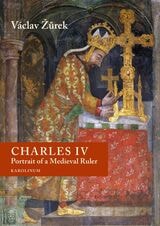
Charles IV
Portrait of a Medieval RulerVáclav Žurek
Karolinum Press, 2023
Charles IV, King of Bohemia and Holy Roman Emperor, has been called “one of the most learned and diplomatically skillful sovereigns” of the fourteenth century. Having moved the seat of the Holy Roman Empire to Prague and founding the first university in Central Europe, Charles IV is a towering figure in Czech history and a crucial character in the story of medieval Europe.
Recent research, especially in art history, has tended to present Charles IV in a purely positive, unblemished light: viewing him and his imperial court as the engine behind a flourishing of culture in the region. This book views Charles IV through a more critical lens, examining the careful construction that went into the way he presented himself and the characteristic manifestations of Charles’ execution of royal power. The first part of the book offers a chronological description of Charles’ life within the broader context of the times and the House of Luxembourg. The second part provides a close look into Charles IV’s style of rule while focusing on phenomena that reveal his personal conception of power and how it was wielded.
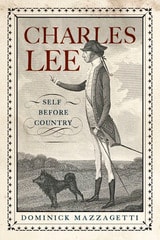
Charles Lee
Self Before CountryMazzagetti, Dominick
Rutgers University Press, 2013
Received an Honorable Mention for the American Revolution Round Table of Richmond's 2014 Book Award
Dominick Mazzagetti presents an engaging account of the life of Charles Lee, the forgotten man of the American Revolution. History has not been kind to Lee—for good reason. In this compelling biography, Mazzagetti compares Lee’s life and attributes to those of George Washington and offers significant observations omitted from previous Lee biographies, including extensive correspondence with British officers in 1777 that reflects Lee’s abandonment of the Patriots’ cause.
Lee, a British officer, a veteran of the French and Indian War, and a critic of King George III, arrived in New York City in 1773 with an ego that knew no bounds and tolerated no rivals. A highly visible and newsworthy personality, he quickly took up the American cause and encouraged rebellion. As a result of this advocacy and his military skills, Lee was granted a commission as a major general in the Continental Army and soon became second-in-command to George Washington. He helped organize the defense of Boston, designed defenses for New York City, and commanded the force that repelled the British attack on Charleston.
Upon his return to New York in 1776, Lee was considered by some leaders of the Revolution to be an alternative to George Washington, who was in full retreat from British forces. Lee’s capture by the British in December 1776 put an end to that possibility. Lee’s subsequent release in a prisoner exchange in 1778 and return to an American command led to a dramatic confrontation with Washington on the battlefield at Monmouth, New Jersey, in June 1778. Washington chastised Lee publicly for ordering an unnecessary retreat. Lee suffered the ignominy of a court-martial conviction for this blunder and spent the remaining years to his death in 1782 attacking Washington. Although few doubted Lee’s loyalty at the time, his actions at Monmouth fueled speculation that he switched sides during his imprisonment.
A discovery years after his death completed Lee’s tale. In 1862, a researcher discovered “Mr. Lee’s Plan,” a detailed strategy for the defeat of the American rebels delivered to British General William Howe while Lee was held in captivity. This discovery sealed Lee’s historical record and ended all further discussion of his contributions to the American Revolution. Today, few people even realize that Fort Lee, on the New Jersey side of the George Washington Bridge, was named in his honor.
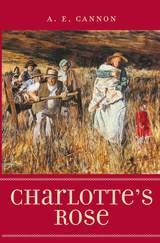
Charlotte's Rose
A. E. Cannon
University of Utah Press, 2011
Charlotte’s Rose—justifiably back in print—tells the story of a young Welsh girl, Charlotte Edwards, who, soon after her mother dies, sails with her father from England to the United States to become part of a company of Mormon handcart pioneers—emigrants with no horses or oxen who themselves pulled the heavy carts filled with their belongings. These were arduous journeys. While on the Mormon Trail, Charlotte befriends a young mother who later dies in childbirth. Though only 12 years old, Charlotte assumes responsibility for the infant and carries her to Utah. Over the course of their journey together, Charlotte becomes deeply attached to the baby she calls Rose, which makes Charlotte’s choice at the novel’s end particularly poignant.
The author, A. E. Cannon, is adept at creating vivid, multifaceted, believable characters and has crafted a story of pioneers that will seem relevant to today’s young people. The reader will quickly be drawn into the story as Charlotte struggles to navigate the trials of an adolescent moving into adulthood. Although this is a book about Mormon pioneers, it is in fact about the larger American experience of immigration—a drama still unfolding today—and Charlotte’s coming-of-age journey will resonate with readers young and old.
Chicago
With the Chicago Tribune Articles That Inspired ItMaurine Watkins, Edited by Thomas H. Pauly, Foreword by Charles H. Cosgrove
Southern Illinois University Press, 2025
In 1924, the murder trials of Beulah Annan and Belva Gaertner shocked the world, providing the real-life inspiration for Maurine Watkins’s unforgettable characters, Roxie Hart and Velma Kelly. Now, a century later, this reissue of Watkins’s play offers a fresh look at the origins of the story that has since become a household name.
From the silent film Chicago produced by Cecil B. DeMille in 1927 to the 1942 film Roxie Hart starring Ginger Rogers and the Broadway sensation created by Bob Fosse, Fred Ebb, and John Kander, this play has continuously evolved. It even inspired the 2002 Oscar-winning film Chicago starring Renée Zellweger, Catherine Zeta-Jones, and Richard Gere. But until recently, as editor Thomas H. Pauly writes in the book’s introduction, the real-life roots of the story were obscured.
While researching for a book on crime-as-entertainment during the 1920s, Pauly came across Maurine Watkins’s play, which was then out of print. After noticing similarities between the play and a series of articles Watkins penned for the Chicago Tribune prior to the creation of her play, Pauly knew he had stumbled upon a revelation: Watkins’s play was based on real people. His republication of the play, alongside substantial background material and a reprinting of Watkins’s news articles, has become an indispensable starting point for all subsequent interest in Watkins and Chicago, whose subject remains as topical as ever.
This special edition includes a new foreword by Charles H. Cosgrove, author of They Both Reached for the Gun: Beulah Annan, Maurine Watkins, and the Trial That Became Chicago. Cosgrove’s extensive research into the real-life cases provides deeper insight into the world that Watkins portrayed with such satirical brilliance. Additionally, the original editor, Thomas H. Pauly, has contributed a new preface, further enhancing understanding of the play and its inspiration, the thrilling true-crime story that captivated a nation and birthed a cultural phenomenon.
Chinese Theories of Literary Creation
A Historical and Critical IntroductionZong-qi Cai, issue editor
Duke University Press, 2024
Churchill
Sebastian Haffner
Haus Publishing, 2003
Churchill
Chris Wrigley
Haus Publishing, 2006
Citizen
Jane Addams and the Struggle for DemocracyLouise W. Knight
University of Chicago Press, 2005
Citizen covers the first half of Addams's life, from 1860 to 1899. Knight recounts how Addams, a child of a wealthy family in rural northern Illinois, longed for a life of larger purpose. She broadened her horizons through education, reading, and travel, and, after receiving an inheritance upon her father's death, moved to Chicago in 1889 to co-found Hull House, the city's first settlement house. Citizen shows vividly what the settlement house actually was—a neighborhood center for education and social gatherings—and describes how Addams learned of the abject working conditions in American factories, the unchecked power wielded by employers, the impact of corrupt local politics on city services, and the intolerable limits placed on women by their lack of voting rights. These experiences, Knight makes clear, transformed Addams. Always a believer in democracy as an abstraction, Addams came to understand that this national ideal was also a life philosophy and a mandate for civic activism by all.
As her story unfolds, Knight astutely captures the enigmatic Addams's compassionate personality as well as her flawed human side. Written in a strong narrative voice, Citizen is an insightful portrait of the formative years of a great American leader.
“Knight’s decision to focus on Addams’s early years is a stroke of genius. We know a great deal about Jane Addams the public figure. We know relatively little about how she made the transition from the 19th century to the 20th. In Knight’s book, Jane Addams comes to life. . . . Citizen is written neither to make money nor to gain academic tenure; it is a gift, meant to enlighten and improve. Jane Addams would have understood.”—Alan Wolfe, New York Times Book Review
“My only complaint about the book is that there wasn’t more of it. . . . Knight honors Addams as an American original.”—Kathleen Dalton, Chicago Tribune
Clarence Edward Dutton
An AppraisalStegner, Wallace
University of Utah Press, 2006
This combination of biography, history, and environmental primer written with the flair and the technical skill of a novelist who could masterfully evoke scenes and sustain a gripping factual narrative sprang from Clarence Edward Dutton: An Appraisal. Seldom has such a classic book had such a humble beginning.
Stegner was a young English instructor at the University of Utah when he produced the Dutton essay. He was ambitious and desperate for recognition, a raise (he was earning $1,700 a year), and steady employment in the Depression years. The essay contains hints, in terms of style and content, of what Stegner would eventually produce. Dutton was Stegner’s first published work of nonfiction, and it is fair to say that it lead him, in conjunction with Bernard DeVoto’s prodding, to the subject of conservation."
—from the foreword
Clarence Edward Dutton: An Appraisal was first published by the University of Utah in 1936 and has since become a rarity on the antiquarian book market. It is reproduced in facsimile for this edition.
Cleopatra
Prudence Jones
Haus Publishing, 2006
Cloak of Ashes
The Women of Beowulf Book ThreeDonnita L. Rogers
Arizona Center for Medieval and Renaissance Studies, 2000
Colonel Greene and the Copper Skyrocket
The Spectacular Rise and Fall of William Cornell Greene: Copper King, Cattle Baron, and Promoter Extraordinary in Mexico, the American Southwest, and the New York Financial DistrictC. L. Sonnichsen
University of Arizona Press, 1974
"A solid account of a southwestern 'character' who has flitted in and out of frontier and economic history."—American Historical Review
"A creditable work on a fascinating individual. In delightful writing style he has reconstructed Greene's life, explaining the ambitions as well as the frailties of this extraordinary entrepreneur."—History
"A rewarding study of the later days of mining."—Arizona and the West
Comfort
A Novel of the Reverse Underground RailroadH.A. Maxson and Claudia H. Young
Parkhurst Brothers, Inc., 2014
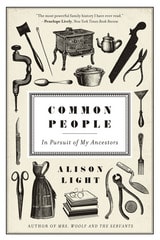
Common People
In Pursuit of My AncestorsAlison Light
University of Chicago Press, 2015
Most of us, however, give up a few generations back. We run into a gap, get embarrassed by a ne’er-do-well, or simply find our ancestors are less glamorous than we’d hoped. That didn’t stop Alison Light: in the last weeks of her father’s life, she embarked on an attempt to trace the history of her family as far back as she could reasonably go. The result is a clear-eyed, fascinating, frequently moving account of the lives of everyday people, of the tough decisions and hard work, the good luck and bad breaks, that chart the course of a life. Light’s forebears—servants, sailors, farm workers—were among the poorest, traveling the country looking for work; they left few lasting marks on the world. But through her painstaking work in archives, and her ability to make the people and struggles of the past come alive, Light reminds us that “every life, even glimpsed through the chinks of the census, has its surprises and secrets.”
What she did for the servants of Bloomsbury in her celebrated Mrs. Woolf and the Servants Light does here for her own ancestors, and, by extension, everyone’s: draws their experiences from the shadows of the past and helps us understand their lives, estranged from us by time yet inextricably interwoven with our own. Family history, in her hands, becomes a new kind of public history.
Company K
William March
University of Alabama Press, 1989
Through fragmented testimonies of Marines, the novel exposes the psychological and moral wreckage left in the wake of modern warfare.
This book was originally published in 1933. It is the first novel by William March, pen name for William Edward Campbell. Stemming directly from the author's experiences with the US Marines in France during World War I, the book consists of 113 sketches, or chapters, tracing the fictional Company K's war exploits and providing an emotional history of the men of the company that extends beyond the boundaries of the war itself.
William Edward Campbell served courageously in France as evidenced by his chestful of medals and certificates, including the Croix de Guerre, the Distinguished Service Cross, and the Navy Cross. However, without the medals and citations we would know of his bravery. For it is clear in the pages of Company K that this book was written by a man who had been to war, who had clearly seen his share of the worst of it, who had somehow survived, and who had committed himself afterward to the new bravery of sense-making embodied in the creation of major literary art. It is of that bravery that we still have the record of magnificent achievement, the brave terrible gift of Company K.
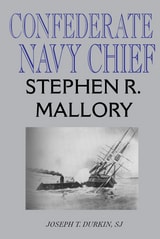
Confederate Navy Chief
Stephen R. MalloryJoseph T. Durkin
University of Alabama Press, 2005
The book tells of Stephen R. Mallory's support of naval inventions, strategy, and ideas. It also sheds light on the the successes and failures of Jefferson Davis. Durkin gives a well-balanced biography of Mallory and his life in the Confederate navy.
Constructing European Historical Narratives in the Early Modern World
Edited by Hilary J. Bernstein, Fabien Montcher, and Megan Armstrong
Iter Press, 2025
Exploring the art of crafting historical narratives during the early modern period, Constructing European Historical Narratives in the Early Modern World reflects on the social and political implications of the diversification of research methods and writing practices associated with historical writing. It does so by considering the global and local situatedness of historical narratives from the perspective of both their makers and publics while interrogating the extent of the hegemony that a composite European world acquired over the elaboration of historical narratives.
The contributions to this volume take into account historical texts ranging from those most concerned with the self—revealing questions of personal or familial agency and identity—to those in which groups of writers collaborated to produce engaged narratives, to those focused on broader, disembodied concepts, such as language development and geographical features, using a significant mixture of textual references and personal experience. This volume deliberately mixes studies from numerous parts of Europe and its colonial outposts and juxtaposes writings by published scholars with the manuscript testimonies of occasional memorialists.
Constructing Nineteenth-Century Religion
Literary, Historical, and Religious Studies in DialogueEdited by Joshua King and Winter Jade Werner
The Ohio State University Press, 2019
The participle in its title—Constructing—acknowledges that any articulation of nineteenth-century religion is never just a work of the past: scholars also actively construct religion as their disciplinary assumptions (and indeed personal and lived investments) shape their research and findings. Constructing NineteenthCentury Religion newly analyzes the diverse ways in which religion was debated and deployed in a wide range of nineteenthcentury texts and contexts. While focusing primarily on nineteenthcentury Britain, the collection also contributes to the increasingly transnational and transcultural outlook of postsecular studies, drawing connections between Britain and the United States, continental Europe, and colonial India.
Contemporary Black Women Filmmakers and the Art of Resistance
Christina N. Baker
The Ohio State University Press, 2018
Analyzing the cultural texts of filmmakers such as Ava DuVernay, Tanya Hamilton, Kasi Lemmons, Gina Prince-Bythewood, and Dee Rees—and including interviews she conducted with three of the filmmakers—Baker emphasizes the importance of applying an intersectional perspective that centers on the shared experiences of Black women and the role of film as a form of artistic expression and a tool of social resistance.
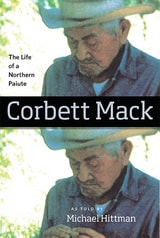
Corbett Mack
The Life of a Northern PaiuteMichael Hittman
University of Nevada Press, 2013
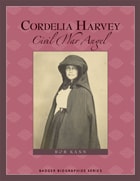
Cordelia Harvey
Civil War AngelBob Kann
Wisconsin Historical Society Press, 2011
Cordelia Harvey: Civil War Angel includes sidebars on medical care, early nursing, and military prisons. A timeline, glossary of terms, and suggestions for activities and discussion round out this spirited narrative.
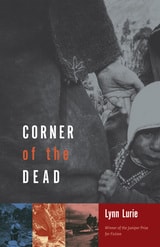
Corner of the Dead
Lynn Lurie
University of Massachusetts Press, 2008
"I use the camera to block my view," says Lisette. This is the start of her double vision—trying to forget and trying to recall—and her struggle to come to terms with the human capacity for cruelty. But the grim reality in Peru is so overpowering that she carries it with her back to New York and through the rest of her life. Having abandoned a lover along with the fight, she desperately tries to find meaning beyond that of mere survival.
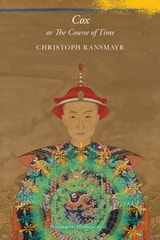
Cox
or, The Course of TimeChristoph Ransmayr
Seagull Books, 2020
The world’s most powerful man, Qiánlóng, emperor of China, invites the famous eighteenth-century clockmaker Alister Cox to his court in Beijing. There, in the heart of the Forbidden City, the Englishman and his assistants are to build machines that mark the passing of time as a child or a condemned man might experience it and that capture the many shades of happiness, suffering, love, and loss that come with that passing.
Mystified by the rituals of a rigidly hierarchical society dominated by an unimaginably wealthy, god-like ruler, Cox musters all his expertise and ingenuity to satisfy the emperor’s desires. Finally, Qiánlóng, also known by the moniker Lord of Time, requests the construction of a clock capable of measuring eternity—a perpetuum mobile. Seizing this chance to realize a long-held dream and honor the memory of his late beloved daughter, yet conscious of the impossibility of his task, Cox sets to work. As the court is suspended in a never-ending summer, festering with evil gossip about the monster these foreigners are creating, the Englishmen wonder if they will ever escape from their gilded cage. More than a meeting of two men, one isolated by power, the other by grief, this is an exploration of mortality and a virtuoso demonstration that storytelling alone can truly conquer time.

Creekside
An Archaeological NovelKelli Carmean
University of Alabama Press, 2010
Uncovering a frontier family’s secrets before progress wipes them away.
In Creekside, dedicated archaeologist Meg Harrington guides her students in a race against time to protect the legacy of the past before bulldozers rip it to shreds.
The setting is a Kentucky pasture slated for development—the construction of the new Creekside subdivision. Once, that same beautiful stretch of land was home to three generations who experienced love, loss, and tragedy in their log cabin beside the creek. It was here during the late 18th century that Estelle Mullins struggled to build her home on the dangerous frontier.
In Meg’s 21st-century world of archaeology we read about excavation techniques, daily experiences at a dig, tight construction deadlines, the use of heavy equipment, report writing, artifact analysis, damage from looters and collectors, and the reality of site destruction in the path of modern development. The depiction of Estelle’s frontier life includes Kentucky’s early Euro-American settlement of the Cumberland Gap, encounters with Shawnee defending their land, Protestant fragmentation, the rise of religious fundamentalism, the immigrant stampede down the Ohio River, and the persistent issue of class-based land ownership.
The two partially interwoven story lines link artifact and place, ancestors and descendants, the present and the past, and inspire us to explore the personal connections between them all in fresh and vital ways.
Crimes of August
A NovelRubem Fonseca
Tagus Press, 2014
Rubem Fonseca's Crimes of August offers the first serious literary treatment of the cataclysmic events of August 1954, arguably the most turbulent month in Brazilian history. A rich novel, both culturally and historically, Crimes of August tells two stories simultaneously. The first is private, involving the well-delineated character of Alberto Mattos, a police officer. The other is public, focusing on events that begin with the attempted assassination of Carlos Lacerda, a demagogic journalist and political enemy of President Getúlio Vargas, and culminate in Vargas's suicide on August 24,1954. Throughout this suspenseful novel, deceptively couched as a thriller, Fonseca interweaves fact and fiction in a complex, provocative plot. At the same time, he re-creates the atmosphere of the 1950s, when Rio de Janeiro was Brazil's capital and the nexus of political intrigue and corruption. Mattos is assigned to solve the brutal murder of a wealthy entrepreneur in the aftermath of what appears to be a homosexual liaison. An educated and introspective man, and one of the few in his precinct not on the take from the bankers of the illegal lottery, Mattos suffers from alienation and a bleeding ulcer. His investigation puts him on a dangerous collision course with the conspiracy to depose Vargas, the novel's other narrative thread. The two overlap at several points, coming to their tragic end with the aged politician's suicide and Mattos's downfall.
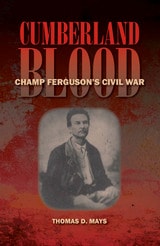
Cumberland Blood
Champ Ferguson's Civil WarThomas D. Mays
Southern Illinois University Press, 2008
By the end of the Civil War, Champ Ferguson had become a notorious criminal whose likeness covered the front pages of Harper’s Weekly, Leslie’s Illustrated, and other newspapers across the country. His crime? Using the war as an excuse to steal, plunder, and murder Union civilians and soldiers.
Cumberland Blood: Champ Ferguson’s Civil War offers insights into Ferguson's lawless brutality and a lesser-known aspect of the Civil War, the bitter guerrilla conflict in the Appalachian highlands, extending from the Carolinas through Tennessee, Kentucky, Virginia, and West Virginia. This compelling volume delves into the violent story of Champ Ferguson, who acted independently of the Confederate army in a personal war that eventually garnered the censure of Confederate officials.
Author Thomas D. Mays traces Ferguson's life in the Cumberland highlands of southern Kentucky, where—even before the Civil War began—he had a reputation as a vicious killer.
Ferguson, a rising slave owner, sided with the Confederacy while many of his neighbors and family members took up arms for the Union. For Ferguson and others in the highlands, the war would not be decided on the distant fields of Shiloh or Gettysburg: it would be local—and personal.
Cumberland Blood describes how Unionists drove Ferguson from his home in Kentucky into Tennessee, where he banded together with other like-minded Southerners to drive the Unionists from the region. Northern sympathizers responded, and a full-scale guerrilla war erupted along the border in 1862. Mays notes that Ferguson's status in the army was never clear, and he skillfully details how raiders picked up Ferguson's gang to work as guides and scouts. In 1864, Ferguson and his gang were incorporated into the Confederate army, but the rogue soldier continued operating as an outlaw, murdering captured Union prisoners after the Battle of Saltville, Virginia.
Cumberland Blood, enhanced by twenty-one illustrations, is an illuminating assessment of one of the Civil War's most ruthless men.
Ferguson's arrest, trial, and execution after the war captured the attention of the nation in
1865, but his story has been largely forgotten. Cumberland Blood: Champ Ferguson's Civil War returns the story of Ferguson's private civil war to its place in history.
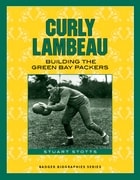
Curly Lambeau
Building the Green Bay PackersStuart Stotts
Wisconsin Historical Society Press, 2007
When Earl "Curly" Lambeau was a young boy growing up in Green Bay in the early 1900s, he and his friends didn't have money for a football. Instead, they kicked around a salt sack filled with sand, leaves, and pebbles. That humble beginning produced a single-minded drive for the figure whose name now graces the Green Bay Packers' stadium.
This title in the Badger Biographies series charts the course of Curly Lambeau's career as a flamboyant player and coach, which paralleled the rise of professional football in this country. Lambeau revolutionized the way football is played by legitimizing passing in a game that had previously centered on running. His dedication to popularizing football in Green Bay and in the state helped build the Packer organization into the institution it has become. Yet, he was not without flaws, and this biography presents a full picture of a man whose ambitions complicated his legacy.
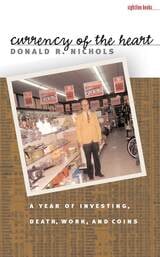
Currency of the Heart
A Year of Investing, Death, Work, and CoinsDonald Nichols
University of Iowa Press, 2002
Nichols uses money in myriad forms—a grandfather‘s silver dollar, stocks and bonds, salaries, pallets of coins at the U.S. Mint, on-the-job dealings with coin collectors—as touchstones for reflections on relationships, motives, and a career "like one of those moving walkways in airports." His father's health is measured, tested, and evaluated in part by the health of his finances; at the same time, the turmoil and mystery surrounding both money and relationships are reflected in this memorable story.
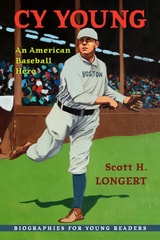
Cy Young
An American Baseball HeroScott H. Longert
Ohio University Press, 2020
Cy Young was one of the hardest-throwing pitchers of all time. He recorded three no-hitters—including a perfect game—and accumulated more than 2,800 strikeouts on his way to the National Baseball Hall of Fame. Scott H. Longert uses Young’s life story to introduce middle-grade readers to the game, explaining balls, strikes, and outs in an easy-to-understand way. Longert narrates each season and each milestone game with an enthusiastic play-by-play that is sure to draw readers into the excitement on the field and in the crowd, fostering a better understanding of and a passion for baseball.
Baseball fans today know Cy Young’s name chiefly through the award given in his honor each year to the best pitcher in the National and the American Leagues. Denton True “Cyclone” Young won more than five hundred games over a career that spanned four decades, a record that no other major league pitcher has come close to matching. In addition to being the winningest pitcher in baseball history, he was also a kind, self-effacing, and generous man. Born into a farm family in rural Ohio, he never lost touch with the small-town values he grew up with.