Results by title
95 books match the query 'Ideology' and 7 start with c
China's Economic Development
The Interplay of Scarcity and IdeologyAlexander Eckstein
University of Michigan Press, 1975
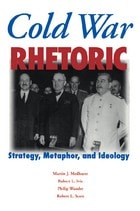
Cold War Rhetoric
Strategy, Metaphor, and IdeologyMartin J. Medhurst
Michigan State University Press, 1997
Cold War Rhetoric is the first book in over twenty years to bring a sustained rhetorical critique to bear on central texts of the Cold War. The rhetorical texts that are the subject of this book include speeches by Presidents Eisenhower and Kennedy, the Murrow- McCarthy confrontation on CBS, the speeches and writings of peace advocates, and the recurring theme of unAmericanism as it has been expressed in various media throughout the Cold War years. Each of the authors brings to his texts a particular approach to rhetorical criticism—strategic, metaphorical, or ideological. Each provides an introductory chapter on methodology that explains the assumptions and strengths of their particular approach.
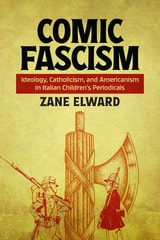
Comic Fascism
Ideology, Catholicism, and Americanism in Italian Children’s PeriodicalsZane Elward
The Ohio State University Press, 2025

Commentary and Ideology
Dante in the RenaissanceDeborah Parker
Duke University Press, 1993
Parker begins by tracing the criticism of Dante commentaries from the nineteenth century to the present and then examines the tradition of commentary from the Middle Ages to the Renaissance. She shows how the civic, institutional, and social commitments of commentators shaped their response to the Comedy, and how commentators tried to use the poem as an authoritative source for various kinds of social legitimation. Parker discusses how different commentators dealt with a deeply political section of the poem: the damnation of Brutus and Cassius.
The scope and importance of Commentary and Ideology will command the attention of a broad group of scholars, including Italian specialists on Dante, late medievalists, students and professionals in early modern European literature, bibliographers, critical theorists, historians of literary criticism and theory, and cultural and intellectual historians.
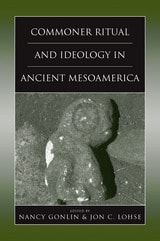
Commoner Ritual and Ideology in Ancient Mesoamerica
Nancy Gonlin
University Press of Colorado, 2016
This volume explores the ritual life of Mesoamerica's common citizens, inside and outside of the domestic sphere, from Formative through Postclassic periods. Building from the premise that ritual and ideological expression inhered at all levels of society in Mesoamerica, the contributors demonstrate that ideology did not emanate solely from exalted individuals and that commoner ritual expression was not limited to household contexts. Taking an empirical approach to this under-studied and under-theorized area, contributors use material evidence to discover how commoner status conditioned the expression of ideas and values.
Revealing complex social hierarchies that varied across time and region, this volume offers theoretical approaches to commoner ideology, religious practice, and sociopolitical organization and builds a framework for future study of the correlation of ritual and ideological expression with social position for Mesoamericanists and archaeologists worldwide.
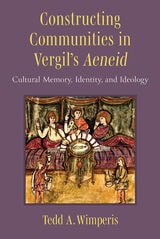
Constructing Communities in Vergil's Aeneid
Cultural Memory, Identity, and IdeologyTedd A. Wimperis
University of Michigan Press, 2024
Where previous studies of identity and memory in the Aeneid have focused on the poem’s constructions of Roman identity, Constructing Communities turns the spotlight onto the characters themselves to show how the world inside the poem is replicating, as if in miniature, real forms of contemporary political and cultural discourse, reflecting an historical milieu where appeals to Roman identity were vigorously asserted in political rhetoric. The book applies this evidence to a broad literary analysis of the Aeneid, as well as a reevaluation of its engagement with Roman imperial ideology in the Age of Augustus.
Criticism in the Borderlands
Studies in Chicano Literature, Culture, and IdeologyHéctor Calderón and José David Saldívar, eds.
Duke University Press, 1991
The editors have organized essays around four board themes: the situation of Chicano literary studies within American literary history and debates about the “canon”; representations of the Chicana/o subject; genre, ideology, and history; and the aesthetics of Chicano literature. The volume as a whole aims at generating new ways of understanding what counts as culture and “theory” and who counts as a theorist. A selected and annotated bibliography of contemporary Chicano literary criticism is also included.
By recovering neglected authors and texts and introducing readers to an emergent Chicano canon, by introducing new perspectives on American literary history, ethnicity, gender, culture, and the literary process itself, Criticism in the Borderlands is an agenda-setting collection that moves beyond previous scholarship to open up the field of Chicano literary studies and to define anew what is American literature.
Contributors. Norma Alarcón, Héctor Calderón, Angie Chabram, Barbara Harlow, Rolando Hinojosa, Luis Leal, José E. Limón, Terese McKenna, Elizabeth J. Ordóñez, Genero Padilla, Alvina E. Quintana, Renato Rosaldo, José David Saldívar, Sonia Saldívar-Hull, Rosaura Sánchez, Roberto Trujillo