Results by title
433 books match the query 'Immigrants' and 29 start with c
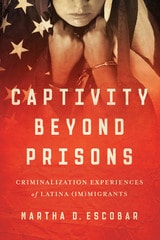
Captivity Beyond Prisons
Criminalization Experiences of Latina (Im)migrantsBy Martha D. Escobar
University of Texas Press, 2016
Today the United States leads the world in incarceration rates. The country increasingly relies on the prison system as a “fix” for the regulation of societal issues. Captivity Beyond Prisons is the first full-length book to explicitly link prisons and incarceration to the criminalization of Latina (im)migrants.
Starting in the 1990s, the United States saw tremendous expansion in the number of imprisoned (im)migrants, specifically Latinas/os. Consequently, there was also an increase in the number of deportations. In addition to regulating society, prisons also serve as a reproductive control strategy, both in preventing female inmates from having children and by separating them from their families. With an eye to racialized and gendered technologies of power, Escobar argues that incarcerated Latinas are especially depicted as socially irrecuperable because they are not considered useful within the neoliberal labor market. This perception impacts how they are criminalized, which is not limited to incarceration but also extends to and affects Latina (im)migrants’ everyday lives. Escobar also explores the relationship between the immigrant rights movement and the prison abolition movement, scrutinizing a variety of social institutions working on solutions to social problems that lead to imprisonment.
Accessible to both academics and those in the justice and social service sectors, Escobar’s book pushes readers to consider how, even in radical spaces, unequal power relations can be reproduced by the very entities that attempt to undo them.
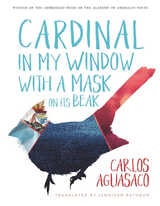
Cardinal in My Window with a Mask on Its Beak
Carlos Aguasaco, Translated by Jennifer Rathbun
University of Arizona Press, 2022
A first-generation immigrant to the United States, Aguasaco embraces his transborder/transnational/intercultural identity by building a bridge across time and distance to unite the great voices of the Renaissance with his lyrical poems. The collection offers bold and fascinating dialogue with Spanish authors such as Juan Boscán, Francisco de Quevedo, Garcilaso de la Vega, and Sor Juana Inés de la Cruz. The poems examine the fundamental liberties inherent to humanity through stunning verse. In a quest for freedom, the poems openly criticize the treatment of immigrants in the United States, drawing poignant parallels with human rights abuses throughout history.
Cardinal in My Window with a Mask on Its Beak brings potent voices of the past to life in poems that critically examine the present and future of the human experience.
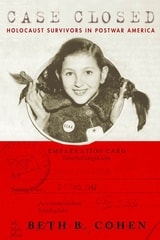
Case Closed
Holocaust Survivors in Postwar AmericaCohen, Beth B
Rutgers University Press, 2006
Case Closed challenges the prevailing optimistic perception of the lives of Holocaust survivors in postwar America by scrutinizing their first years through the eyes of those who lived it. The facts brought forth in this book are supported by case files recorded by Jewish social service workers, letters and minutes from agency meetings, oral testimonies, and much more.
Cohen explores how the Truman Directive allowed the American Jewish community to handle the financial and legal responsibility for survivors, and shows what assistance the community offered the refugees and what help was not available. She investigates the particularly difficult issues that orphan children and Orthodox Jews faced, and examines the subtleties of the resettlement process in New York and other locales. Cohen uncovers the truth of survivors' early years in America and reveals the complexity of their lives as "New Americans."
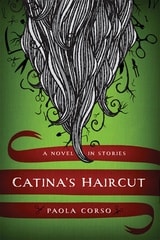
Catina’s Haircut
A Novel in StoriesPaola Corso
University of Wisconsin Press, 2010
Catina’s Haircut: A Novel in Stories spans four generations of a peasant family in the brutal poverty of post-Unification southern Italy and in an immigrant’s United States. The women in these tales dare to cross boundaries by discovering magical leaps inherent in the landscape, in themselves, and in the stories they tell and retell of family tragedy at a time of political unrest. Through an oral tradition embedded in the stone of memory and the flow of its reinvention, their passionate tale of resistance and transformation courses forward into new generations in a new world.
A woman threatens to join the land reform struggle in her Calabrian hill town, against her husband’s will, during a call for revolution in 1919. A brother and sister turn to the village sorceress in Fascist Italy to bring rain to their father’s drought-stricken farm. In Pittsburgh, new immigrants witness a miraculous rescue during the Great Flood of 1936. A young girl courageously dives into the Allegheny River to save her grandfather’s only memento of the old country. With only broken English to guide her, a widow hops a bus in search of live chickens to cook for Easter dinner in her husband’s memory. An aging woman in the title story is on a quest to cut the ankle-length hair as hard as the rocky soil of Calabria in a drought. A lonely woman who survived World War II bombings in her close-knit village, struggles to find community as a recent immigrant. A daughter visits her mother’s hill town to try and fulfill a wish for her to see the Fata Morgana. These haunting images permeate Corso’s linked stories of loss, hope, struggle, and freedom.
An official selection of The Sons of Italy® Book Club
Best Books for General Audiences, selected by the Public Library Association
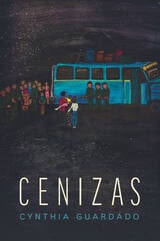
Cenizas
PoemsCynthia Guardado
University of Arizona Press, 2022
Guardado crafted the poems in Cenizas over a ten-year period, often traveling to El Salvador for research and to conduct interviews. The Salvadoran Civil War haunts the pages of this collection as it unflinchingly explores war, its aftermath, and the bittersweet legacies that are passed down from one generation to the next. The poems mourn those who were lost and honor the strength of the speaker’s ancestors. “All my people have been born from the ashes of volcanoes,” she writes, invoking a family lineage that has endured the atrocities committed against them. Even so, El Salvador keeps pulling the speaker back—and despite warnings of danger, she still manages to find beauty among the ruins.
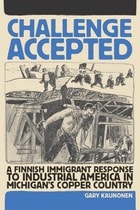
Challenge Accepted
A Finnish Immigrant Response to Industrial America in Michigan's Copper CountryGary Kaunonen
Michigan State University Press, 2010
The copper mines of Michigan's Copper Country, in the Upper Peninsula, were active for 150 years, from 1845 until 1995. Many of the mine workers attempted to unionize, in order to obtain better working conditions, wages, and hours.
The Michigan miners were unsuccessful in their struggles with mine owners, which came to a climax in the 1913–14 Copper Country Strike. This nine-month battle between workers represented by the Western Federation of Miners (WFM) and the three major mining companies in the region took a particularly nasty turn on Christmas Eve, 1913, at a party for strikers and their families organized by the WFM. As many as 500 people were in the Italian Benevolent Society hall in Calumet, Michigan, when someone reportedly shouted "fire." There was no fire, but it is estimated that 73–79 people, more than 60 of them children, died in the stampede for the exit.
Against this dramatic backdrop, Gary Kaunonen tells the story of Finnish immigrants to Copper Country. By examining the written record and material culture of Finnish immigrant proletarians-analyzing buildings, cultural institutions, and publications of the socialist-unionist media—Kaunonen adds a new depth to our understanding of the time and place, the events and a people.
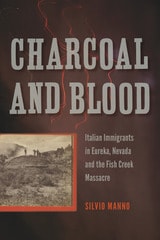
Charcoal and Blood
Italian Immigrants in Eureka, Nevada, and the Fish Creek MassacreSilvio Manno
University of Nevada Press, 2016
Through meticulous research on the event, relying on such primary sources as newspaper articles, author Silvio Manno provides the only comprehensive account of Eureka’s charcoal crisis and what came to be known as the Fish Creek Massacre. This is a well-documented narrative history of an important instance of class and ethnic conflict in the West. Readers interested in Nevada history, Italian American history, frontier trade unionism, and mining in the West will find this book a unique examination of an incident that occurred almost a century and a half ago and that has, until now, been largely overlooked.
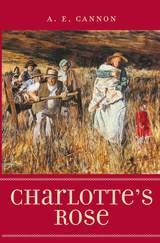
Charlotte's Rose
A. E. Cannon
University of Utah Press, 2011
Charlotte’s Rose—justifiably back in print—tells the story of a young Welsh girl, Charlotte Edwards, who, soon after her mother dies, sails with her father from England to the United States to become part of a company of Mormon handcart pioneers—emigrants with no horses or oxen who themselves pulled the heavy carts filled with their belongings. These were arduous journeys. While on the Mormon Trail, Charlotte befriends a young mother who later dies in childbirth. Though only 12 years old, Charlotte assumes responsibility for the infant and carries her to Utah. Over the course of their journey together, Charlotte becomes deeply attached to the baby she calls Rose, which makes Charlotte’s choice at the novel’s end particularly poignant.
The author, A. E. Cannon, is adept at creating vivid, multifaceted, believable characters and has crafted a story of pioneers that will seem relevant to today’s young people. The reader will quickly be drawn into the story as Charlotte struggles to navigate the trials of an adolescent moving into adulthood. Although this is a book about Mormon pioneers, it is in fact about the larger American experience of immigration—a drama still unfolding today—and Charlotte’s coming-of-age journey will resonate with readers young and old.
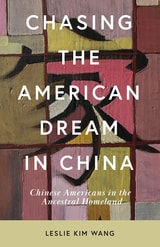
Chasing the American Dream in China
Chinese Americans in the Ancestral HomelandLeslie Kim Wang
Rutgers University Press, 2021
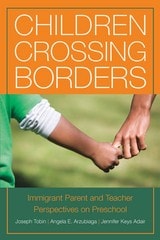
Children Crossing Borders
Immigrant Parent and Teacher Perspectives on Preschool for Children of ImmigrantsJoseph Tobin
Russell Sage Foundation, 2013
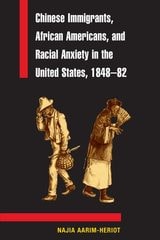
Chinese Immigrants, African Americans, and Racial Anxiety in the United States, 1848-82
Najia Aarim-Heriot
University of Illinois Press, 2003
The “Chinese question” and the “Negro problem” were bound up with one another in nineteenth-century America. Indeed, the negative stereotypes, exclusionary laws, and incendiary rhetoric employed against both populations bore striking similarities.
Najia Aarim-Heriot forcefully demonstrates that the anti-Chinese sentiment behind the passage of the Chinese Exclusion Act of 1882 is inseparable from the racial double standards applied by mainstream white society toward white and nonwhite groups during the same period. Aarim-Heriot argues that previous studies on American Sinophobia have overemphasized the resentment labor organizations felt toward incoming Chinese workers. As a result, scholars have overlooked the broader ways in which the growing nation sought to define and unify itself through the exclusion and oppression of nonwhite peoples.
A challenge to traditional approaches to Chinese American history, Chinese immigrants, African Americans, and Racial Anxiety in the United States, 1848–82 offers a holistic examination of American Sinophobia and the racialization of national immigration policies.
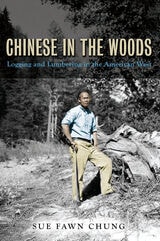
Chinese in the Woods
Logging and Lumbering in the American WestSue Fawn Chung
University of Illinois Press, 2015
Chino
Anti-Chinese Racism in Mexico, 1880-1940Jason Oliver Chang
University of Illinois Press, 2017
Churches and Charity in the Immigrant City
Religion, Immigration, and Civic Engagement in MiamiStepick, Alex
Rutgers University Press, 2009
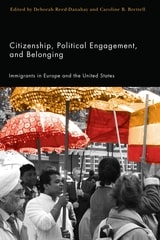
Citizenship, Political Engagement, and Belonging
Immigrants in Europe and the United StatesReed-Danahay, Deborah
Rutgers University Press, 2008
Immigration is continuously and rapidly changing the face of Western countries. While newcomers are harbingers of change, host nations also participate in how new populations are incorporated into their social and political fabric.
Bringing together a transcontinental group of anthropologists, this book provides an in-depth look at the current processes of immigration, political behavior, and citizenship in both the United States and Europe. Essays draw on issues of race, national identity, religion, and more, while addressing questions, including: How should citizenship be defined? In what ways do immigrants use the political process to achieve group aims? And, how do adults and youth learn to become active participants in the public sphere?
Among numerous case studies, examples include instances of racialized citizenship in “Algerian France,” Ireland’s new citizenship laws in response to asylum-seeking mothers, the role of Evangelical Christianity in creating a space for the construction of an identity that transcends state borders, and the Internet as one of the new public spheres for the expression of citizenship, be it local, national, or global.
Civic Hopes and Political Realities
Immigrants, Community Organizations, and Political EngagementS. Karthick Ramakrishnan
Russell Sage Foundation, 2008

Communal Solidarity
Immigration, Settlement, and Social Welfare in Winnipeg's Jewish Community, 1882–1930Arthur Ross
University of Manitoba Press, 2019
Conceptualising "Home"
The Question of Belonging among Turkish Families in GermanyEsin Bozkurt
Campus Verlag, 2009
Contemporary Chinese America
Immigration, Ethnicity, and Community TransformationMin Zhou, foreword by Alejandro Portes
Temple University Press, 2009
Contemporary Chinese America is the most comprehensive sociological investigation of the experiences of Chinese immigrants to the United States—and of their offspring—in the late twentieth and early twenty-first centuries. The author, Min Zhou, is a well-known sociologist of the Chinese American experience. In this volume, she collects her original research on a range of subjects, including the causes and consequences of emigration from China, demographic trends of Chinese Americans, patterns of residential mobility in the U.S., Chinese American "ethnoburbs," immigrant entrepreneurship, ethnic enclave economies, gender and work, Chinese language media, Chinese schools, and intergenerational relations. The concluding chapter, "Rethinking Assimilation," ponders the future for Chinese Americans. Also included are an extensive bibliography and a list of recommended documentary films.
While the book is particularly well-suited for college courses in Chinese American studies, ethnic studies, Asian studies, and immigration studies, it will interest anyone who wants to more fully understand the lived experience of contemporary Chinese Americans.
Contentious Citizenship
Salvadoran Activism and Belonging Across BordersArely M. Zimmerman
University of Arizona Press, 2026
Drawing on nearly fifty interviews with activists who fled El Salvador, Zimmerman traces how political refugees carried with them strategies of resistance and community organizing that shaped social justice movements in the United States. The book addresses the political turmoil and grassroots mobilizations in El Salvador, the sanctuary movement of the 1980s, contemporary activism, and the impact of women’s strategies and forms of resistance.
Essential reading for scholars and students of migration, Central American studies, and political movements, Contentious Citizenship is a bold intervention into contemporary debates on identity, legality, and resistance. Zimmerman’s work honors the ingenuity and resilience of Salvadoran activists and invites readers to consider what it means to belong.
Conversations Across Our America
Talking About Immigration and the Latinoization of the United StatesBy Louis G. Mendoza
University of Texas Press, 2012
In the summer of 2007, Louis G. Mendoza set off on a bicycle trip across the United States with the intention of conducting a series of interviews along the way. Wanting to move beyond the media’s limited portrayal of immigration as a conflict between newcomers and “citizens,” he began speaking with people from all walks of life about their views on Latino immigration. From the tremendous number of oral histories Mendoza amassed, the resulting collection offers conversations with forty-three different people who speak of how they came to be here and why they made the journey. They touch upon how Latino immigration is changing in this country, and how this country is being changed by Latinoization. Interviewees reflect upon the concerns and fears they’ve encountered about the transformation of the national culture, and they relate their own experiences of living and working as “other” in the United States.
Mendoza’s collection is unique in its vastness. His subjects are from big cities and small towns. They are male and female, young and old, affluent and impoverished. Many are political, striving to change the situation of Latina/os in this country, but others are “everyday people,” reflecting upon their lives in this country and on the lives they left behind. Mendoza’s inclusion of this broad swath of voices begins to reflect the diverse nature of Latino immigration in the United States today.
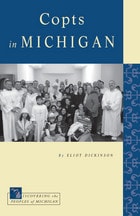
Copts in Michigan
Eliot Dickinson
Michigan State University Press, 2008
The Copts, or Egyptian Christians, are a relatively small and tight-knit ethno-religious group, numbering perhaps three thousand people and living mostly in the Detroit metropolitan area. Since they began immigrating to Michigan in the mid-1960s, their community has grown exponentially.
Granted exceptional access to the Coptic community, Eliot Dickinson provides the first in- depth profile of this unique and remarkably successful immigrant group. Drawing on personal interviews to infuse the book with warmth and depth. Copts in Michigan offers readers a compelling view into this vibrant community.
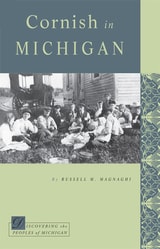
Cornish in Michigan
Russell M. Magnaghi
Michigan State University Press, 2007
Several ethnic groups have come to Michigan from the British Isles. Each group of immigrants from this region—the Cornish, English, Irish, and Welsh—has played a significant role in American history.
Historic records show that some early nineteenth-century Cornish immigrants were farmers and settled in the Lower Peninsula of Michigan. However, the majority of early Cornish immigrants were miners, and much of their influence was felt in the Upper Peninsula of the state. Many of the underground miners from Cornwall got their start in this region before they migrated to other mining regions throughout the United States.
Hard-working families came from throughout the peninsula of Cornwall, bringing their history, recipes, songs, religions, and other traditions to Michigan’s northern mining country. This nineteenth-century migration brought them to new homes in Keweenaw County, Houghton County, Copper Harbor, Eagle Harbor, and Presque Isle. In the 1830s, newly arrived immigrants also settled in the lower parts of Michigan, in Macomb, Washtenaw, Lenawee, and Oakland counties. The automobile boom of the 1920s sent many of these immigrants and their children to Metro Detroit from the Upper Peninsula, where their traditions are perpetuated today.
Crime and Justice, Volume 21
Comparative and Cross-National Perspectives on Ethnicity, Crime, and ImmigrationEdited by Michael Tonry
University of Chicago Press Journals, 1997
ethnic differences in criminal offending, victimization by crime, and
disparities and discrimination in justice systems. These nine essays
provide comrehensive up-to-date summaries of research and experience
concerning those subjects in Australia, Canada, England and Wales,
France, Germany, the Netherlands, Sweden, Switzerland, and the United
States. Population migration has reached an all time high in Europe and
with it, "immigration and crime" has become the single most volatile and
topical crime control issue in most of these countries.
The nine essays in this book are written by the leading specialists in
each country. Contributors include Roderic Broadhurst, Julian V. Roberts
and Anthony N. Doob, David J. Smith, Pierre Tournier, Hans-Jörg
Albrecht, Josine Junger-Tas, Peter L. Martens, Martin Killias, Robert J.
Sampson and Janet L. Lauritsen.
Michael Tonry is Sonosky Professor of Law and Public Policy at the
University of Minnesota.
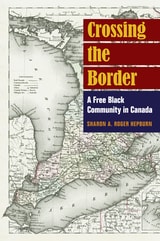
Crossing the Border
A Free Black Community in CanadaSharon A. Roger Hepburn
University of Illinois Press, 2007
How formerly enslaved people found freedom and built community in Ontario
In 1849, the Reverend William King and fifteen once-enslaved people he had inherited founded the Canadian settlement of Buxton on Ontario land set aside for sale to Blacks. Though initially opposed by some neighboring whites, Buxton grew into a 700-person agricultural community that supported three schools, four churches, a hotel, a lumber mill, and a post office.
Sharon A. Roger Hepburn tells the story of the settlers from Buxton’s founding of through its first decades of existence. Buxton welcomed Black men, woman, and children from all backgrounds to live in a rural setting that offered benefits of urban life like social contact and collective security. Hepburn’s focus on social history takes readers inside the lives of the people who built Buxton and the hundreds of settlers drawn to the community by the chance to shape new lives in a country that had long represented freedom from enslavement.
Crossing the Border
Research from the Mexican Migration ProjectJorge Durand
Russell Sage Foundation, 2004
Culinary Mestizaje
Racial Mixing and Foodways across the United StatesEdited by Felipe Hinojosa and Rudy P. Guevarra Jr.
University of Texas Press, 2025
2026 Gold Medal for the Victor Villaseñor Best Latino Focused Nonfiction Book Award – English, Conference on Latin American History (CLAH)
How cross-racial and ethnic communities have created new culinary traditions and food cultures in the United States.
Culinary Mestizaje is about food, cooking, and community, but it’s also about how immigrant labor and racial mixing are transforming established US food cultures from Hawai’i to the coast of Maine, South Philadelphia to the Pacific Northwest. This collection of essays asks what it means that Chamorro cooking is now considered a regional specialty of the Bay Area, and that a fusion like brisket tacos registers as “native” to Houston, while pupusas are the pride of Atlanta.
Combining community scholarly insights, cooking tips, and recipes, the pieces assembled here are interested in how the blending of culinary traditions enables marginalized people to thrive in places fraught with racial tension, anti-immigrant sentiment, and the threat of gentrification. Chefs and entrepreneurs matter in these stories, but so do dishwashers, farm laborers, and immigrants doing the best they can with the ingredients they have. Their best, it turns out, is often delicious and creative, sparking culinary evolutions while maintaining ancestral connections. The result is that cooking under the weight of colonial rule and white supremacy has, in revealing ways, created American food.
Culture of Empire
American Writers, Mexico, and Mexican Immigrants, 1880–1930By Gilbert G. González
University of Texas Press, 2003
A history of the Chicano community cannot be complete without taking into account the United States' domination of the Mexican economy beginning in the late nineteenth and early twentieth centuries, writes Gilbert G. González. For that economic conquest inspired U.S. writers to create a "culture of empire" that legitimated American dominance by portraying Mexicans and Mexican immigrants as childlike "peons" in need of foreign tutelage, incapable of modernizing without Americanizing, that is, submitting to the control of U.S. capital. So powerful was and is the culture of empire that its messages about Mexicans shaped U.S. public policy, particularly in education, throughout the twentieth century and even into the twenty-first.
In this stimulating history, Gilbert G. González traces the development of the culture of empire and its effects on U.S. attitudes and policies toward Mexican immigrants. Following a discussion of the United States' economic conquest of the Mexican economy, González examines several hundred pieces of writing by American missionaries, diplomats, business people, journalists, academics, travelers, and others who together created the stereotype of the Mexican peon and the perception of a "Mexican problem." He then fully and insightfully discusses how this misinformation has shaped decades of U.S. public policy toward Mexican immigrants and the Chicano (now Latino) community, especially in terms of the way university training of school superintendents, teachers, and counselors drew on this literature in forming the educational practices that have long been applied to the Mexican immigrant community.
Cut from Whole Cloth
An Immigrant ExperienceRichard J. Franke
University of Chicago Press, 2004
Franke draws on extensive primary sources to create an engrossing narrative of his Catholic grandfather and Lutheran grandmother as they flee religious intolerance and economic adversity in Germany and immigrate to America in 1884. They settle in Springfield, Illinois, where they start a family and business and live out the American dream—with its attendant perils and promises—as their business evolves from a tailor's shop to a modern, thriving dry cleaner. Their story is one of strife, frustration, and success. Franke chronicles how they struggle to raise a family in a foreign culture with radically different values, as the old world morals that fuel their prosperity give rise to ancient family tensions that haunt each new generation.
By turns charming, wrenching, and poetic, Cut from Whole Cloth is an intensely personal yet timeless tale that will appeal to nearly every descendant of immigrants.