Results by title
59 books match the query 'Indians, Treatment of' and 6 start with c
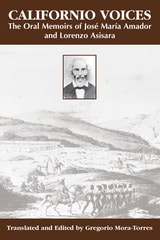
Californio Voices
The Oral Memoirs of Jose Maria Amador and Lorenzo AsisaraGregorio Mora-Torres
University of North Texas Press, 2005
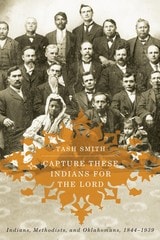
Capture These Indians for the Lord
Indians, Methodists, and Oklahomans, 1844-1939Tash Smith
University of Arizona Press, 2014
In Capture These Indians for the Lord, Tash Smith traces the trajectory of the Southern Methodist Church in Oklahoma when it was at the frontlines of the relentless push toward western expansion. Although many Native people accepted the missionaries’ religious practices, Smith shows how individuals found ways to reconcile the Methodist force with their traditional cultural practices. When the white population of Indian Territory increased and Native sovereignty came under siege during the allotment era of the 1890s, white communities marginalized Indians within the Church and exploited elements of mission work for their own benefit.
Later, with white indifference toward Indian missions peaking in the early twentieth century, Smith explains that as the remnants of the Methodist power weakened, Indian membership regained control and used the Church to regenerate their culture. Throughout, Smith explores the complex relationships between white and Indian community members and how these phenomena shaped Methodist churches in the twentieth century.
Colonial Racial Capitalism
Susan Koshy, Lisa Marie Cacho, Jodi A. Byrd, and Brian Jordan Jefferson, editors
Duke University Press, 2022
Contributors. Joanne Barker, Jodi A. Byrd, Lisa Marie Cacho, Michael Dawson, Iyko Day, Ruth Wilson Gilmore, Alyosha Goldstein, Cheryl I. Harris, Kimberly Kay Hoang, Brian Jordan Jefferson, Susan Koshy, Marisol LeBrón, Jodi Melamed, Laura Pulido
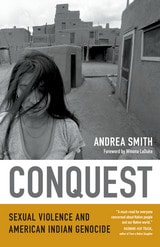
Conquest
Sexual Violence and American Indian GenocideAndrea Smith
Duke University Press, 2005
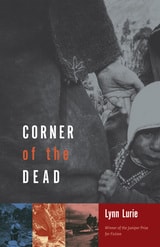
Corner of the Dead
Lynn Lurie
University of Massachusetts Press, 2008
"I use the camera to block my view," says Lisette. This is the start of her double vision—trying to forget and trying to recall—and her struggle to come to terms with the human capacity for cruelty. But the grim reality in Peru is so overpowering that she carries it with her back to New York and through the rest of her life. Having abandoned a lover along with the fight, she desperately tries to find meaning beyond that of mere survival.
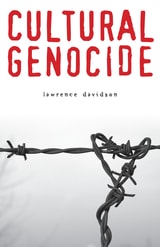
Cultural Genocide
Davidson, Lawrence
Rutgers University Press, 2012
Most scholars of genocide focus on mass murder. Lawrence Davidson, by contrast, explores the murder of culture. He suggests that when people have limited knowledge of the culture outside of their own group, they are unable to accurately assess the alleged threat of others around them. Throughout history, dominant populations have often dealt with these fears through mass murder. However, the shock of the Holocaust now deters today’s great powers from the practice of physical genocide. Majority populations, cognizant of outside pressure and knowing that they should not resort to mass murder, have turned instead to cultural genocide as a “second best” politically determined substitute for physical genocide.
In Cultural Genocide, this theory is applied to events in four settings, two events that preceded the Holocaust and two events that followed it: the destruction of American Indians by uninformed settlers who viewed these natives as inferior and were more intent on removing them from the frontier than annihilating them; the attack on the culture of Eastern European Jews living within Russian-controlled areas before the Holocaust; the Israeli attack on Palestinian culture; and the absorption of Tibet by the People’s Republic of China.
In conclusion, Davidson examines the mechanisms that may be used to combat today’s cultural genocide as well as the contemporary social and political forces at work that must be overcome in the process.