Results by title
944 books match the query 'Indians of North America' and 58 start with c
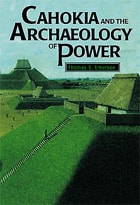
Cahokia and the Archaeology of Power
Thomas E. Emerson
University of Alabama Press, 1997
Examines the authority a ruling elite exercised over the surrounding countryside through a complex of social, political, and religious symbolism
This study uses the theoretical concepts of agency, power, and ideology to explore the development of cultural complexity within the hierarchically organized Cahokia Middle Mississippian society of the American Bottom from the 11th to the 13th centuries. By scrutinizing the available archaeological settlement and symbolic evidence, Emerson demonstrates that many sites previously identified as farmsteads were actually nodal centers with specialized political, religious, and economic functions integrated into a centralized administrative organization. These centers consolidated the symbolism of such 'artifacts of power' as figurines, ritual vessels, and sacred plants into a rural cult that marked the expropriation of the cosmos as part of the increasing power of the Cahokian rulers.
During the height of Cahokian centralized power, it is argued, the elites had convinced their subjects that they ruled both the physical and the spiritual worlds. Emerson concludes that Cahokian complexity differs significantly in degree and form from previously studied Eastern Woodlands chiefdoms and opens new discussion about the role of rural support for the Cahokian ceremonial center.
Cahokia's Complexities
Ceremonies and Politics of the First Mississippian FarmersSusan M. Alt
University of Alabama Press, 2018
The reasons for the rise and fall of early cities and ceremonial centers around the world have been sought for centuries. In the United States, Cahokia has been the focus of intense archaeological work to explain its mysteries. Cahokia was the first and exponentially the largest of the Mississippian centers that appeared across the Midwest and Southeast after AD 1000. Located near present-day East St. Louis, Illinois, the central complex of Cahokia spanned more than 12 square kilometers and encompassed more than 120 earthen mounds.
As one of the foremost experts on Cahokia, Susan M. Alt addresses long-standing considerations of eastern Woodlands archaeology—the beginnings, character, and ending of Mississippian culture (AD 1050–1600)—from a novel theoretical and empirical vantage point. Through this case study on farmers’ immigration and resettling, Alt’s narrative reanalyzes the relationship between administration and diversity, incorporating critical new discoveries and archaeological patterns from outside of Cahokia.
Alt examines the cultural landscape of the Cahokia flood plain and the layout of one extraordinary upland site, Grossman, as an administrative settlement where local farmers might have seen or participated in Cahokian rituals and ceremonies involving a web of ancestors, powers, and places. Alt argues that a farming district outside the center provides definitive evidences of the attempted centralized administration of a rural hinterland.

Cahokia, the Great Native American Metropolis
Biloine Whiting Young and Melvin L. Fowler
University of Illinois Press, 2000
Cahokia
Mirror of the CosmosSally A. Kitt Chappell
University of Chicago Press, 2002
Chappell seeks to answer fundamental questions about this unique, yet still relatively unknown space, which was designated a UNESCO World Heritage Site in 1982. How did this swampy land become so amenable to human life? Who were the remarkable people who lived here before the Europeans came? Why did the whole civilization disappear so rapidly? What became of the land in the centuries after the Mississippians abandoned it? And finally, what can we learn about ourselves as we look into the changing meaning of Cahokia through the ages?
To explore these questions, Chappell probes a wide range of sources, including the work of astronomers, geographers, geologists, anthropologists, and archaeologists. Archival photographs and newspaper accounts, as well as interviews with those who work at the site and Native Americans on their annual pilgrimage to the site, bring the story up to the present.
Tying together these many threads, Chappell weaves a rich tale of how different people conferred their values on the same piece of land and how the transformed landscape, in turn, inspired different values in them-cultural, spiritual, agricultural, economic, and humanistic.
California Futures
Haunted Ecologies, Decolonial RelationsDaniel Lanza Rivers
Duke University Press, 2026
California's Channel Islands
The Archaeology of Human-Environment InteractionsChristopher S. Jazwa
University of Utah Press, 2013
California’s Ancient Past
From Pacific to the Range of LightJeanne E. Arnold
University Press of Colorado, 2010
Californio Voices
The Oral Memoirs of Jose Maria Amador and Lorenzo AsisaraGregorio Mora-Torres
University of North Texas Press, 2005
Canyon de Chelly
Its People and Rock ArtCampbell Grant
University of Arizona Press, 1978
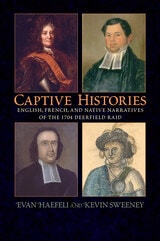
Captive Histories
English, French, and Native Narratives of the 1704 Deerfield RaidEvan Haefeli
University of Massachusetts Press, 2006
This volume draws together an unusually rich body of original sources that tell the story of the 1704 French and Indian attack on Deerfield, Massachusetts, from different vantage points. Texts range from one of the most famous early American captivity narratives, John Williams's The Redeemed Captive, to the records of French soldiers and clerics, to little-known Abenaki and Mohawk stories of the raid that emerged out of their communities' oral traditions. Evan Haefeli and Kevin Sweeney provide a general introduction, extensive annotations, and headnotes to each text.
Although the oft-reprinted Redeemed Captive stands at the core of this collection, it is juxtaposed to less familiar accounts of captivity composed by other Deerfield residents: Quentin Stockwell, Daniel Belding, Joseph Petty, Joseph Kellogg, and the teenaged Stephen Williams. Presented in their original form, before clerical editors revised and embellished their content to highlight religious themes, these stories challenge long-standing assumptions about classic Puritan captivity narratives.
The inclusion of three Abenaki and Mohawk narratives of the Deerfield raid is equally noteworthy, offering a rare opportunity not only to compare captors' and captives' accounts of the same experiences, but to do so with reference to different Native oral traditions. Similarly, the memoirs of French military officers and an excerpt from the Jesuit Relations illuminate the motivations behind the attack and offer fresh insights into the complexities of French-Indian alliances.
Taken together, the stories collected in this volume, framed by the editors' introduction and the assessments of two Native scholars, Taiaiake Alfred and Marge Bruchac, allow readers to reconstruct the history of the Deerfield raid from multiple points of view and, in so doing, to explore the interplay of culture and memory that shapes our understanding of the past.
Capture These Indians for the Lord
Indians, Methodists, and Oklahomans, 1844-1939Tash Smith
University of Arizona Press, 2014
In Capture These Indians for the Lord, Tash Smith traces the trajectory of the Southern Methodist Church in Oklahoma when it was at the frontlines of the relentless push toward western expansion. Although many Native people accepted the missionaries’ religious practices, Smith shows how individuals found ways to reconcile the Methodist force with their traditional cultural practices. When the white population of Indian Territory increased and Native sovereignty came under siege during the allotment era of the 1890s, white communities marginalized Indians within the Church and exploited elements of mission work for their own benefit.
Later, with white indifference toward Indian missions peaking in the early twentieth century, Smith explains that as the remnants of the Methodist power weakened, Indian membership regained control and used the Church to regenerate their culture. Throughout, Smith explores the complex relationships between white and Indian community members and how these phenomena shaped Methodist churches in the twentieth century.
Capturing Labor
A History of Unfree Work in the SouthwestEdited by Jessica R. Pliley and John Mckiernan-González
University of Texas Press, 2026
A collection of essays grappling with the many, often overlooked, forms of unfree labor in the West.
When Americans think of unfree labor—coerced, extracted from workers unable to freely enter and exit contracts—what comes to mind is Black slavery and peonage in the South. But other forms of unfree labor also built the United States. Collecting a diverse range of sharply argued historical essays, Capturing Labor shares the story of unfree labor in the Southwest, affecting mainly Indigenous people, Mexican Americans, and people of color.
In Texas and elsewhere, state agents developed various methods for directing the movement of workers, seizing their time, and controlling the products of their efforts. Case studies highlight the detention during World War I of Indigenous children and unaccompanied women, who were placed in boarding schools, fined, and obligated to work off the resulting debt. Other essays expose authorities forcing workers to break strikes and jailing Americans who supported labor uprisings in rural Mexico and the United States. Prisons and asylums supplied coerced agricultural workers and musicians who were never compensated for their labor or by the labels that took their recordings.
Editors Jessica Pliley and John Mckiernan-González contend that unfree labor continues to shape American life, and is all around us today. Understanding its history aids us in recognizing and bringing attention to the grim realities of the present.
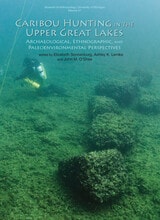
Caribou Hunting in the Upper Great Lakes
Edited by Elizabeth Sonnenburg, Ashley K. Lemke and John M. O'Shea
University of Michigan Press, 2015

Cartographic Encounters
Perspectives on Native American Mapmaking and Map UseEdited by G. Malcolm Lewis
University of Chicago Press, 1998
G. Malcolm Lewis provides accessible and detailed overviews of the history of native North American maps, mapmaking, and scholarly interest in these topics. Other contributions include a study of colonial Aztec cartography that highlights the connections among maps, space, and history; an account of the importance of native maps as archaeological evidence; and an interpretation of an early-contact-period hide painting of an actual encounter involving whites and two groups of warring natives.
Although few original native maps have survived, contemporary copies and accounts of mapmaking form a rich resource for anyone interested in the history of Native American encounters or the history of cartography and geography.
Center Places and Cherokee Towns
Archaeological Perspectives on Native American Architecture and Landscape in the Southern AppalachiansChristopher B. Rodning
University of Alabama Press, 2015
In Center Places and Cherokee Towns, Christopher B. Rodning opens a panoramic vista onto protohistoric Cherokee culture. He posits that Cherokee households and towns were anchored within their cultural and natural landscapes by built features that acted as “center places.”
Rodning investigates the period from just before the first Spanish contact with sixteenth-century Native American chiefdoms in La Florida through the development of formal trade relations between Native American societies and English and French colonial provinces in the American South during the late 1600s and 1700s. Rodning focuses particularly on the Coweeta Creek archaeological site in the upper Little Tennessee Valley in southwestern North Carolina and describes the ways in which elements of the built environment were manifestations of Cherokee senses of place.
Drawing on archaeological data, delving into primary documentary sources dating from the eighteenth century, and considering Cherokee myths and legends remembered and recorded during the nineteenth century, Rodning shows how the arrangement of public structures and household dwellings in Cherokee towns both shaped and were shaped by Cherokee culture. Center places at different scales served as points of attachment between Cherokee individuals and their communities as well as between their present and past. Rodning explores the ways in which Cherokee architecture and the built environment were sources of cultural stability in the aftermath of European contact, and how the course of European contact altered the landscape of Cherokee towns in the long run.
In this multi-faceted consideration of archaeology, ethnohistory, and recorded oral tradition, Rodning adeptly demonstrates the distinct ways that Cherokee identity was constructed through architecture and other material forms. Center Places and Cherokee Towns will have a broad appeal to students and scholars of southeastern archaeology, anthropology, Native American studies, prehistoric and protohistoric Cherokee culture, landscape archaeology, and ethnohistory.
Ceramic Petrography and Hopewell Interaction
James B. Stoltman
University of Alabama Press, 2015
Petrography is the microscopic examination of thin sections of pottery to determine their precise mineralogical composition. In this groundbreaking work, James B. Stoltman applies quantitative as well as qualitative methods to the petrography of Native American ceramics. As explained in Ceramic Petrography and Hopewell Interaction, by adapting refinements to the technique of petrography, Stoltman offers a powerful new set of tools that enables fact-based and rigorous identification of the composition and sources of pottery.
Stoltman’s subject is the cultural interaction among the Hopewell Interaction Sphere societies of the Ohio Valley region and contemporary peoples of the Southeast. Inferring social and commercial relationships between disparate communities by determining whether objects found in one settlement originated there or elsewhere is a foundational technique of archaeology. The technique, however, rests on the informed but necessarily imperfect visual inspection of objects by archaeologists. Petrography greatly amplifies archaeologists’ ability to determine objects’ provenance with greater precision and less guesswork.
Using petrography to study a vast quantity of pottery samples sourced from Hopewell communities, Stoltman is able for the first time to establish which items are local, which are local but atypical, and which originated elsewhere. Another exciting possibility with petrography is to further determine the home source of objects that came from afar. Thus, combining traditional qualitative techniques with a wealth of new quantitative data, Ceramic Petrography and Hopewell Interaction offers a map of social and trade relationships among communities within and beyond the Hopewell Interaction Sphere with much greater precision and confidence than in the past.
Ceramic Petrography and Hopewell Interaction provides a clear and concise explanation of petrographic methods, Stoltman’s findings about Hopewell and southeastern ceramics in various sites, and the fascinating discovery that visits to Hopewell centers by southeastern Native Americans were not only for trade purposes but more for such purposes as pilgrimages, vision- and power-questing, healing, and the acquisition of knowledge.
Ceremonial Time
Fifteen Thousand Years on One Square MileJohn Hanson Mitchell
University Press of New England, 2013
Ceremonies Of The Damned
PoemsAdrian C. Louis
University of Nevada Press, 1997
Chaco and After in the Northern San Juan
Excavations at the Bluff Great HouseCatherine M. Cameron
University of Arizona Press, 2009
Bluff’s massive great house, great kiva, and earthen berms are described and compared to other great houses in the northern Chaco region. Those assessments support intriguing new ideas about the Chaco region and the effect of the collapse of Chaco Canyon on “outlying” great houses.
New insights from the Bluff Great House clarify the construction and use of great houses during the Chaco era and trace the history of great houses in the generations after Chaco’s decline. An innovative comparative study of the northern and southern portions of the Chaco world (the northern San Juan area around Bluff and the Cibola area around Zuni) leads to new ideas about population aggregation and regional abandonment in the Southwest. Appendixes present details and descriptions of artifacts recovered from Bluff: ceramics, projectile points, pollen analyses, faunal remains, bone tools, ornaments, and more.
This book is one of only a handful of reports on Chacoan great houses in the northern San Juan region. It provides an in-depth study of the Chaco era and clarifies the relationship of “outlying” great houses to Chaco Canyon. Research at the Bluff Great House begins to answer key questions about the nature of Chaco and its region, and the history of the northern San Juan in the Chaco and post-Chaco worlds.
Challenging Colonial Narratives
Nineteenth-Century Great Lakes ArchaeologyMatthew A. Beaudoin
University of Arizona Press, 2019
To create a conceptual bridge between disparate dialogues, Beaudoin examines multigenerational nineteenth-century Mohawk and settler sites in southern Ontario, Canada. He demonstrates that few obvious differences exist and calls for more nuanced interpretive frameworks. Using conventional categories, methodologies, and interpretative processes from Indigenous and settler archaeologies, Beaudoin encourages archaeologists and scholars to focus on the different or similar aspects among sites to better understand the nineteenth-century life of contemporaneous Indigenous and settler peoples.
Beaudoin posits that the archaeological record represents people’s navigation through the social and political constraints of their time. Their actions, he maintains, were undertaken within the understood present, the remembered past, and perceived future possibilities. Deconstructing existing paradigms in colonial and postcolonial theories, Matthew A. Beaudoin establishes a new, dynamic discourse on identity formation and politics within the power relations created by colonization that will be useful to archaeologists in the academy as well as in cultural resource management.
Cherokee Women In Crisis
Trail of Tears, Civil War, and Allotment, 1838-1907Carolyn Johnston
University of Alabama Press, 2003
American Indian women have traditionally played vital roles in social hierarchies at the family, clan, and tribal levels. In the Cherokee Nation, specifically, women and men are considered equal contributors to the culture. With this study, however, we learn that three key historical events in the 19th and early 20th centuries—removal, the Civil War, and allotment of their lands—forced a radical renegotiation of gender roles and relations in Cherokee society.
Carolyn Johnston (who is related to John Ross, principal chief of the Nation) looks at how Cherokee women navigated these crises in ways that allowed them to retain their traditional assumptions, ceremonies, and beliefs and to thereby preserve their culture. In the process, they both lost and retained power. The author sees a poignant irony in the fact that Europeans who encountered Native societies in which women had significant power attempted to transform them into patriarchal ones and that American women struggled for hundreds of years to achieve the kind of equality that Cherokee women had enjoyed for more than a millennium.
Johnston examines the different aspects of Cherokee women’s power: authority in the family unit and the community, economic independence, personal autonomy, political clout, and spirituality. Weaving a great-grandmother theme throughout the narrative, she begins with the protest of Cherokee women against removal and concludes with the recovery of the mother town of Kituwah and the elections of Wilma Mankiller and Joyce Dugan as principal chiefs of the Cherokee Nation and the Eastern Band of Cherokees.
Children of the Dragonfly
Native American Voices on Child Custody and EducationRobert Bensen
University of Arizona Press, 2001
Native American children have long been subject to removal from their homes for placement in residential schools and, more recently, in foster or adoptive homes. The governments of both the United States and Canada, having reduced Native nations to the legal status of dependent children, historically have asserted a surrogate parentalism over Native children themselves.
Children of the Dragonfly is the first anthology to document this struggle for cultural survival on both sides of the U.S.-Canadian border. Through autobiography and interviews, fiction and traditional tales, official transcripts and poetry, these voices— Seneca, Cherokee, Mohawk, Navajo, and many others— weave powerful accounts of struggle and loss into a moving testimony to perseverance and survival. Invoking the dragonfly spirit of Zuni legend who helps children restore a way of life that has been taken from them, the anthology explores the breadth of the conflict about Native childhood.
Included are works of contemporary authors Sherman Alexie, Joy Harjo, Luci Tapahonso, and others; classic writers Zitkala-Sa and E. Pauline Johnson; and contributions from twenty important new writers as well. They take readers from the boarding school movement of the 1870s to the Sixties Scoop in Canada and the Indian Child Welfare Act of 1978 in the United States. They also spotlight the tragic consequences of racist practices such as the suppression of Indian identity in government schools and the campaign against Indian childbearing through involuntary sterilization.
CONTENTS
Part 1. Traditional Stories and Lives
Severt Young Bear (Lakota) and R. D. Theisz, To Say "Child"
Zitkala-Sa (Yankton Sioux), The Toad and the Boy
Delia Oshogay (Chippewa), Oshkikwe's Baby
Michele Dean Stock (Seneca), The Seven Dancers
Mary Ulmer Chiltoskey (Cherokee), Goldilocks Thereafter
Marietta Brady (Navajo), Two Stories
Part 2. Boarding and Residential Schools
Embe (Marianna Burgess), from Stiya: or, a Carlisle Indian Girl at Home
Black Bear (Blackfeet), Who Am I?
E. Pauline Johnson (Mohawk), As It Was in the Beginning
Lee Maracle (Stoh:lo), Black Robes
Gordon D. Henry, Jr. (White Earth Chippewa), The Prisoner of Haiku
Luci Tapahonso (Navajo), The Snakeman
Joy Harjo (Muskogee), The Woman Who Fell from the Sky
Part 3. Child Welfare and Health Services
Problems That American Indian Families Face in Raising Their Children, United States Senate, April 8 and 9, 1974
Mary TallMountain (Athabaskan), Five Poems
Virginia Woolfclan, Missing Sister
Lela Northcross Wakely (Potawatomi/Kickapoo), Indian Health
Sherman Alexie (Spokane/Coeur d'Alene), from Indian Killer
Milton Lee (Cheyenne River Sioux) and Jamie Lee, The Search for Indian
Part 4. Children of the Dragonfly
Peter Cuch (Ute), I Wonder What the Car Looked Like
S. L. Wilde (Anishnaabe), A Letter to My Grandmother
Eric Gansworth (Onondaga), It Goes Something Like This
Kimberly Roppolo (Cherokee/Choctaw/Creek), Breeds and Outlaws
Phil Young (Cherokee) and Robert Bensen, Wetumka
Lawrence Sampson (Delaware/Eastern Band Cherokee), The Long Road Home
Beverley McKiver (Ojibway), When the Heron Speaks
Joyce carlEtta Mandrake (White Earth Chippewa), Memory Lane Is the Next Street Over
Alan Michelson (Mohawk), Lost Tribe
Patricia Aqiimuk Paul (Inupiaq), The Connection
Terry Trevor (Cherokee/Delaware/Seneca), Pushing up the Sky
Annalee Lucia Bensen (Mohegan/Cherokee), Two Dragonfly Dream Songs
Children of the Stars
Indigenous Science Education in a Reservation ClassroomEd Galindo
Oregon State University Press, 2022
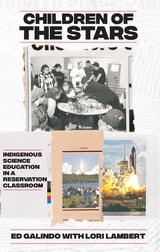
In Children of the Stars, Galindo relates his experience with this first team and with successive student teams, who continued to participate in NASA programs over the course of a decade. He discusses the challenges of teaching American Indian students, from the practical limits of a rural reservation school to the importance of respecting and incorporating Indigenous knowledge systems. In describing how he had to earn the trust of his students to truly be successful as their teacher, Galindo also touches on the complexities of community belonging and understanding; although Indigenous himself, Galindo is not a member of the Shoshone-Bannock tribes and was still an outsider who had as much to learn as the students.
Children of the Stars is the story of students and a teacher, courage and hope. Written in a conversational style, it’s an accessible story about students who were supported and educated in culturally relevant ways and so overcame the limitations of an underfunded reservation school to reach great heights.
Chipped Stone Technological Organization
Central Place Foraging and Exchange on the Northern Great PlainsCraig M. Johnson
University of Utah Press, 2019
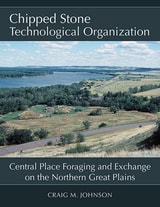
Central place foraging theory, through the field processing model, posits that the farther a source material is from the central living area, the more it will be processed before it is transported back, to avoid hauling heavy, nonusable parts on long trips. Johnson’s data support this theory and demonstrate that this model applies not only to nomadic hunter-gatherers but also to semisedentary farmer-hunters. His results also indicate that toolstone usage creates distinctive spatial patterns along the Missouri River, largely related to village distance from the sources. This is best illustrated with Knife River flint, which gradually declines in popularity downriver from its source in west-central North Dakota but increases in central South Dakota because of exchange.
Chocolate Woman Dreams the Milky Way
Mapping Embodied Indigenous PerformanceMonique Mojica and Brenda Farnell
University of Michigan Press, 2023
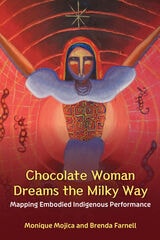
Co-authored with anthropologist Brenda Farnell, the book challenges the divide between artist and scholar, and addresses the many levels of cultural, disciplinary, and linguistic translations required to achieve this. Placing the complex intellect inherent to Indigenous Knowledges at its center, the book engages Indigenous performance theory, and concepts that link body, land, and story, such as terra nullius/corpus nullius, mapping, pattern literacy, land literacy, and movement literacy. Enhanced by contributions from other artists and scholars, the book challenges Eurocentric ideologies about what counts as “performance” and what is required from an “audience,” as well as long-standing body-mind dualisms.
Circular Villages of the Monongahela Tradition
Bernard K. Means
University of Alabama Press, 2007
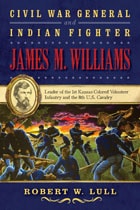
Civil War General and Indian Fighter James M. Williams
Leader of the 1st Kansas Colored Volunteer Infantry and the 8th U.S. CavalryRobert W. Lull
University of North Texas Press, 2013
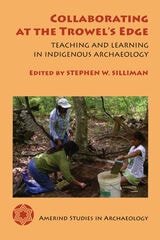
Collaborating at the Trowel's Edge
Teaching and Learning in Indigenous ArchaeologyEdited by Stephen W. Silliman
University of Arizona Press, 2008
Eighteen contributors—many with tribal ties—cover the current state of collaborative indigenous archaeology in North America to show where the discipline is headed. Continent-wide cases, from the Northeast to the Southwest, demonstrate the situated nature of local practice alongside the global significance of further decolonizing archaeology. And by probing issues of indigenous participation with an eye toward method, theory, and pedagogy, many show how the archaeological field school can be retailored to address politics, ethics, and critical practice alongside traditional teaching and research methods.
These chapters reflect the strong link between politics and research, showing what can be achieved when indigenous values, perspectives, and knowledge are placed at the center of the research process. They not only draw on experiences at specific field schools but also examine advances in indigenous cultural resource management and in training Native American and non-native students.
Theoretically informed and practically grounded, Collaborating at the Trowel’s Edge is a virtual guide for rethinking field schools and is an essential volume for anyone involved in North American archaeology—professionals, students, tribal scholars, or avocationalists—as well as those working with indigenous peoples in other parts of the world. It both reflects the rapidly changing landscape of archaeology and charts new directions to ensure the ongoing vitality of the discipline.
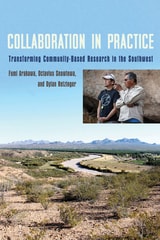
Collaboration in Practice
Transforming Community-Based Research in the SouthwestFumi Arakawa, Octavius Seowtewa, and Dylan Retzinger
University of Arizona Press, 2026
The book situates this collaboration within the broader historical and political context of archaeology and museology. It critically explores how museums and academic institutions can shift from extractive practices to ones that prioritize Indigenous sovereignty, knowledge systems, and cultural continuity. Through personal narratives, historical context, and methodological insights, the authors highlight the challenges and transformative potential of working collaboratively. They show how true collaboration requires humility, mutual respect, and a commitment to shared authority in both research and representation.
Ultimately, this work charts a path forward for community-based research that centers Indigenous voices and values. It advocates for an archaeology that is not only more inclusive but also more meaningful to the communities whose histories are being studied. A vital resource for scholars, students, and practitioners, this work seeks to engage in ethical, reciprocal, and culturally grounded research in the Southwest and beyond.
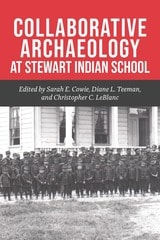
Collaborative Archaeology at Stewart Indian School
Sarah E. Cowie
University of Nevada Press, 2019
This edited volume addresses the theory, methods, and outcomes of collaborative archaeology conducted at the Stewart Indian School site and is a genuine collective effort between archaeologists, former students of the school, and other tribal members. With more than twenty contributing authors from the University of Nevada, Reno, Nevada Indian Commission, Washoe Tribal Historic Preservation Office, and members of Washoe, Paiute, and Shoshone tribes, this rich case study is strongly influenced by previous work in collaborative and Indigenous archaeologies. It elaborates on those efforts by applying concepts of governmentality (legal instruments and practices that constrain and enable decisions, in this case, regarding the management of historical populations and modern heritage resources) as well as social capital (valued relations with others, in this case, between Native and non-Native stakeholders).
As told through the trials, errors, shared experiences, sobering memories, and stunning accomplishments of a group of students, archaeologists, and tribal members, this rare gem humanizes archaeological method and theory and bolsters collaborative archaeological research.
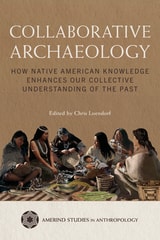
Collaborative Archaeology
How Native American Knowledge Enhances Our Collective Understanding of the PastEdited by Chris Loendorf
University of Arizona Press, 2026
Collaborative Archaeology brings together a diverse group of scholars and tribal cultural resource professionals to showcase how Indigenous knowledge is transforming archaeological practice. Edited by Chris Loendorf, this volume features twelve case studies that highlight the power of partnership between Native American communities and archaeologists. These collaborations not only enrich our understanding of the past but also affirm Indigenous cultural continuity. From the establishment of Tribal Historic Preservation Offices to tribally led research initiatives, the book illustrates how Native voices are reshaping the field.
This timely collection bridges disciplinary divides between archaeology, history, and traditional knowledge, challenging outdated narratives that separate “prehistory” from living Indigenous communities. Contributors demonstrate how ethical, community-based research can lead to more accurate and respectful interpretations of the past. Collaborative Archaeology is essential reading for scholars, students, and practitioners committed to scientific understanding and cultural preservation.
Contributors
Nicole Armstrong-Best
Skylar Begay
Jennifer Bess
Hannah F. Chavez
Robert B. Ciaccio
Shannon Cowell
William H. Doelle
Karl A. Hoerig
Anabel Galindo
Barnaby V. Lewis
Chris Loendorf
Brian Medchill
Linda Morgan
Laurene G. Montero
Stephen E. Nash
Eloise Pedro
Glen E. Rice
Teresa Rodrigues
Hoski Schaafsma
Thomas E. Sheridan
Katrina Soke
Lindsey Vogel-Teeter
Anastasia Walhovd
Reylynne Williams
M. Kyle Woodson
Aaron M. Wright
Colonial Genocide in Indigenous North America
Andrew Woolford, Jeff Benvenuto and Alexander Laban Hinton, eds.
Duke University Press, 2014
Contributors. Jeff Benvenuto, Robbie Ethridge, Theodore Fontaine, Joseph P. Gone, Alexander Laban Hinton, Tasha Hubbard, Margaret D. Jabobs, Kiera L. Ladner, Tricia E. Logan, David B. MacDonald, Benjamin Madley, Jeremy Patzer, Julia Peristerakis, Christopher Powell, Colin Samson, Gray H. Whaley, Andrew Woolford
Colonial Racial Capitalism
Susan Koshy, Lisa Marie Cacho, Jodi A. Byrd, and Brian Jordan Jefferson, editors
Duke University Press, 2022
Contributors. Joanne Barker, Jodi A. Byrd, Lisa Marie Cacho, Michael Dawson, Iyko Day, Ruth Wilson Gilmore, Alyosha Goldstein, Cheryl I. Harris, Kimberly Kay Hoang, Brian Jordan Jefferson, Susan Koshy, Marisol LeBrón, Jodi Melamed, Laura Pulido
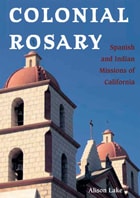
Colonial Rosary
The Spanish and Indian Missions of CaliforniaAlison Lake
Ohio University Press, 2006
California would be a different place today without the imprint of Spanish culture and the legacy of Indian civilization. The colonial Spanish missions that dot the coast and foothills between Sonoma and San Diego are relics of a past that transformed California’s landscape and its people.
In a spare and accessible style, Colonial Rosary looks at the complexity of California’s Indian civilization and the social effects of missionary control. While oppressive institutions lasted in California for almost eighty years under the tight reins of royal Spain, the Catholic Church, and the government of Mexico, letters and government documents reveal the missionaries’ genuine concern for the Indian communities they oversaw for their health, spiritual upbringing, and material needs.
With its balanced attention to the variety of sources on the mission period, Colonial Rosary illuminates ongoing debates over the role of the Franciscan missions in the settlement of California.
By sharing the missions’ stories of tragedy and triumph, author Alison Lake underlines the importance of preserving these vestiges of California’s prestatehood period. An illustrated tour of the missions as well as a sensitive record of their impact on California history and culture, Colonial Rosary brings the story of the Spanish missions of California alive.
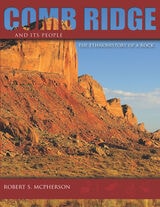
Comb Ridge and Its People
The Ethnohistory of a RockRobert McPherson
Utah State University Press, 2009
West of the Four Corners and east of the Colorado River, in southeastern Utah, a unique one-hundred-mile-long, two-hundred-foot-high, serrated cliff cuts the sky. Whether viewed as barrier wall or sheltering sanctuary, Comb Ridge has helped define life and culture in this region for thousands of years. Today, the area it crosses is still relatively remote, though an important part of a scenic complex of popular tourist destinations that includes Natural Bridges National Monument and Grand Gulch just to the west, Glen Canyon National Recreation Area and Lake Powell a bit farther west, Canyonlands National Park to the north, Hovenweep National Monument to the east, and the San Juan River and Monument Valley to the south. Prehistorically Comb Ridge split an intensively used Ancient Puebloan homeland. It later had similar cultural—both spiritual and practical—significance to Utes, Paiutes, and Navajos and played a crucial role in the history of European American settlement. To tell the story of this rock that is unlike any other rock in the world and the diverse people whose lives it has affected, Robert S. McPherson, author of multiple books on Navajos and on the Four Corners region, draws on the findings of a major, federally funded project to research the cultural history of Comb Ridge. He carries the story forward to contention over present and future uses of Comb Ridge and the spectacular country surrounding it.
The book is the winner of the 2009 Utah Book Award for Nonfiction.
Command of the Waters
Iron Triangles, Federal Water Development, and Indian WaterDaniel C. McCool
University of Arizona Press, 1994
Communities and Households in the Greater American Southwest
New Perspectives and Case StudiesRobert J. Stokes
University Press of Colorado, 2019
Today’s archaeologists and anthropologists understand that communities operate as a multi-level, -organizational, -contextual, and -referential human creation, which informs their understanding of how people actively negotiate their way through and around community constraints. The chapters in this book creatively examine these interactions, revealing the dynamic nature of ancient and modern groups in the American Southwest. The book has two broad complementary themes: one focusing on household decision-making, identity, and structural relations with the greater community; the other concerned with community organization and integration, household roles within the community, and changes in community organization—violence and destabilization, coalescence and cooperation—over time.
Communities and Households in the Greater American Southwest weaves a rich tapestry of ancient and modern life through innovative approaches that will be of interest not only to Southwestern archaeologists but to all researchers and students interested in social organization at the household and community levels.
Contributors: James R. Allison, Andrew Duff, Lindsay Johansson, Michael Lindeman, Myles Miller, James Potter, Alison E. Rautman, J. Jefferson Reid, Katie Richards, Oscar Rodriguez, Barbara Roth, Kristin Safi, Deni Seymour, Robert J. Stokes, Richard K. Talbot, Scott Ure, Henry Wallace, Stephanie M. Whittlesey
Conquering the American Wilderness
The Triumph of European Warfare in the Colonial NortheastGuy Chet
University of Massachusetts Press, 2003
A study of military tactics and strategy before the War of Independence, this book reexamines the conquest of the North American wilderness and its native peoples by colonial settlers. Historians have long believed that the peculiar conditions of the New World, coupled with the success of Indians tactics, forced the colonists to abandon traditional European methods of warfare and to develop a new “American” style of combat. By combining firearms with guerrilla-like native tactics, colonial commanders were able not only to subdue their Indian adversaries but eventually to prevail against more conventionally trained British forces during the American Revolution. Yet upon closer scrutiny, this common understanding of early American warfare turns out to be more myth than reality.
As Guy Chet reveals, clashes between colonial and Indian forces during the seventeenth and eighteenth centuries did not lead to a reevaluation and transformation of conventional military doctrine. On the contrary, the poor performance of the settlers during King Philip's War (1675–76) and King William's War (1689–1697) prompted colonial magistrates to address the shortcomings of their military forces through a greater reliance on British troops and imperial administrators. Thus, as the eighteenth century wore on, growing military success in the New England colonies reflected an increasing degree of British planning, administration, participation, and command. The colonies' military and political leadership, Chet argues, never rejected the time-tested principles of European warfare, and even during the American War of Independence, the republic's military leadership looked to Europe for guidance in the art of combat.
Conquistador in Chains
Cabeza de Vaca and the Indians of the AmericasDavid A. Howard
University of Alabama Press, 1996
Unlike many Spanish conquistadores who brought to the Americas a wave of disease, destruction, and oppression, Cabeza de Vaca’s stated intention was to pursue a different kind of conquest—one that would be just and humane, true to Spanish religion and law, and one that safeguarded liberty and justice for the indigenous peoples of the New World.
Bringing to South America skills and experiences earned with native peoples in North America, however, Cabeza de Vaca both failed to understand the indigenous peoples in the south and alienated many Spanish settlers in the Rio de la Plata Province, whose economic interests he threatened. Eventually the Spanish colonists formed a conspiracy to remove him from power and return him to Spain in chains.
That Cabeza de Vaca was overthrown is not surprising. His ideas and policies opposed the self-interest of most of the first Spaniards who had come to America, although he inspired the support of many even after his humiliating return to Spain. In Conquistador in Spain, historian David Howard provides a fascinating account of the rise and fall of this colonial idealist.
Constructing Cooperation
The Evolution of Institutions of ComanagementSara Singleton
University of Michigan Press, 1999
This book will appeal to policy makers concerned with the management of natural resources as well as to economists, political scientists, and sociologists concerned with collective action problems.
Sara Singleton is Assistant Professor of Political Science, Tulane University.
Constructing Tomorrow's Federalism
New Perspectives on Canadian GovernanceIan Peach
University of Manitoba Press, 2007
Contact, Structure, and Change
A Festschrift in Honor of Sarah G. ThomasonEdited by Anna M. Babel and Mark A. Sicoli
Michigan Publishing Services, 2021
Contemporary American Indian Literatures and the Oral Tradition
Susan Berry Brill de Ramírez
University of Arizona Press, 1999
. To demonstrate this point, she explores literary works both by established Native writers such as Sherman Alexie, N. Scott Momaday, Leslie Marmon Silko, and Luci Tapahonso and by less-well-known writers such as Anna Lee Walters, Della Frank, Lee Maracle, and Louis Owens. Through her literary engagements with many poems, novels, and short stories, she demonstrates a new way to read and understand the diverse body of American Indian literatures. Brill de Ramírez's conversive approach interweaves two interconnected processes: co-creating the stories by participating in them as listener-readers and recognizing orally informed elements in the stories such as verbal minimalism and episodic narrative structures.
Because this methodology is rooted in American Indian oral storytelling traditions, Native voices from these literary works are able to more directly inform the scholarly process than is the case in more textually based critical strategies. Through this innovative approach, Brill de Ramírez shows that literature is not a static text but an interactive and potentially transforming conversation between listener-readers, storyteller-writers, and the story characters as well. Her book furthers the discussion of how to read American Indian and other orally informed literatures with greater sensitivity to their respective cultural traditions and shows that the immediacy of the relationship between teller, story, and listener can also be experienced in the relationships between writers, literary works, and their listener-readers.
Contemporary Archaeologies of the Southwest
William Walker
University Press of Colorado, 2011
Chapters address place-making in Chaco Canyon, recent trends in landscape archaeology, the formation of identities, landscape boundaries, and the movement associated with these aspects of place-making. They address how interaction of peoples with objects brings landscapes to life. Representing a diverse cross section of Southwestern archaeologists, the authors of this volume push the boundaries of archaeological method and theory, building a strong foundation for future Southwest studies.
This book will be of interest to professional and academic archaeologists, as well as students working in the American Southwest.
Contemporary Lithic Analysis in the Southeast
Problems, Solutions, and InterpretationsPhilip J. Carr
University of Alabama Press, 2012
William Andrefsky Jr. / Andrew P. Bradbury / Philip J. Carr / CarolynConklin /
Contested Territories
Native Americans and Non-Natives in the Lower Great Lakes, 1700-1850Charles Beatty-Medina
Michigan State University Press, 2012
A remarkable multifaceted history, Contested Territories examines a region that played an essential role in America's post-revolutionary expansion—the Lower Great Lakes region, once known as the Northwest Territory. As French, English, and finally American settlers moved westward and intersected with Native American communities, the ethnogeography of the region changed drastically, necessitating interactions that were not always peaceful. Using ethnohistorical methodologies, the seven essays presented here explore rapidly changing cultural dynamics in the region and reconstruct in engaging detail the political organization, economy, diplomacy, subsistence methods, religion, and kinship practices in play. With a focus on resistance, changing worldviews, and early forms of self-determination among Native Americans, Contested Territories demonstrates the continuous interplay between actor and agency during an important era in American history.
Cooperation without Submission
Indigenous Jurisdictions in Native Nation–US EngagementsJustin B. Richland
University of Chicago Press, 2021
It is well-known that there is a complicated relationship between Native American Tribes and the US government. Relations between Tribes and the federal government are dominated by the principle that the government is supposed to engage in meaningful consultations with the tribes about issues that affect them.
In Cooperation without Submission, Justin B. Richland, an associate justice of the Hopi Appellate Court and ethnographer, closely examines the language employed by both Tribes and government agencies in over eighty hours of meetings between the two. Richland shows how Tribes conduct these meetings using language that demonstrates their commitment to nation-to-nation interdependency, while federal agents appear to approach these consultations with the assumption that federal law is supreme and ultimately authoritative. In other words, Native American Tribes see themselves as nations with some degree of independence, entitled to recognition of their sovereignty over Tribal lands, while the federal government acts to limit that authority. In this vital book, Richland sheds light on the ways the Tribes use their language to engage in “cooperation without submission.”
Cowboy Cave
UUAP 104Jesse D. Jennings
University of Utah Press, 1980
Coyote Stories
Edited by William Bright
University of Chicago Press Journals, 1978
Coyote Stories II
Edited by Martha B. Kendall
University of Chicago Press Journals, 1980