Results by title
129 books match the query 'Individual Philosophers' and 4 start with c

Cinema without Reflection
Jacques Derrida’s Echopoiesis and Narcissim AdriftAkira Mizuta Lippit
University of Minnesota Press, 2016
Cinema without Reflection traces an implicit film theory in Jacques Derrida’s oeuvre, especially in his frequent invocation of the myth of Echo and Narcissus. Derrida’s reflections on the economies of image and sound that reverberate in this story, along with the spectral dialectics of love, mirrors, and poiesis, serve as the basis for a theory of cinema that Derrida perhaps secretly imagined.
Following Derrida’s interventions on Echo and Narcissus across his thought on the visual arts, Akira Mizuta Lippit seeks to return to a theory of cinema adrift in Derrida’s philosophy.
Forerunners is a thought-in-process series of breakthrough digital works. Written between fresh ideas and finished books, Forerunners draws on scholarly work initiated in notable blogs, social media, conference plenaries, journal articles, and the synergy of academic exchange. This is gray literature publishing: where intense thinking, change, and speculation take place in scholarship.
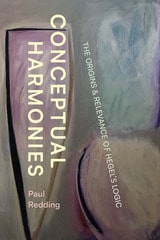
Conceptual Harmonies
The Origins and Relevance of Hegel’s LogicPaul Redding
University of Chicago Press, 2023
Conceptual Harmonies develops an original account of G. W. F. Hegel’s perplexing Science of Logic from a simple insight: philosophical and mathematical thought have shaped each other since classical times. Situating Science of Logic within the rise of modern mathematics, Redding stresses Hegel’s attention to Pythagorean ratios, Platonic reason, and Aristotle’s geometrically inspired logic. He then explores how later traditions shaped Hegel’s world, through both Leibniz and new forms of algebraic geometry. This enlightening reading recovers an overlooked stream in Hegel’s philosophy that remains, Redding argues, important for contemporary conceptions of logic.
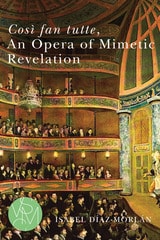
Così fan tutte, An Opera of Mimetic Revelation
Isabel Díaz-Morlán
Michigan State University Press, 2025

Crisis of European Sciences and Transcendental Phenomenology
Edmund Husserl
Northwestern University Press, 1970
Husserl provides not only a history of philosophy but a philosophy of history. As he says in Part I, "The genuine spiritual struggles of European humanity as such take the form of struggles between the philosophies, that is, between the skeptical philosophies--or nonphilosophies, which retain the word but not the task—and the actual and still vital philosophies. But the vitality of the latter consists in the fact that they are struggling for their true and genuine meaning and thus for the meaning of a genuine humanity."