Results by title
748 books match the query 'Influence' and 37 start with c
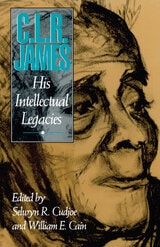
C.L.R. James
His Intellectual LegaciesEdited by Selwyn R. Cudjoe and William E. Cain
University of Massachusetts Press, 1995
C.L.R. James (1901–1989) made important contributions in a host of fields—literature, criticism, cultural studies, political theory, history, and philosophy. One of the most astute minds of this century, he served as mentor for two generations of international intellectuals. He contributed enormously to their understanding of the colonial question, the Negro question, the Russian question, the role of dialectics in proletarian struggle, and the theory and practice of Marxism in the Americas. In addition to The Black Jacobins, his incisive account of the Haitian revolution of the 1790s, and Notes on Dialectics, James published a range of other books, including a classic work on the game of cricket and a study of Herman Melville.
This collection of essays offers a variety of fresh perspectives on James's life and writings. Included are reminiscences of those who knew James well and critical essays by eminent scholars. The book is the first to offer a full treatment of James's many contributions to twentieth-century intellectual life.

COVID and...
How to Do Rhetoric in a PandemicEmily Winderman
Michigan State University Press, 2023
Cadaverland
Inventing a Pathology of Catastrophe for Holocaust Survival [The Limits of Medical Knowledge and Historical Memory in France]Michael Dorland
Brandeis University Press, 2009
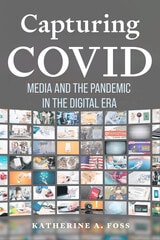
Capturing COVID
Media and the Pandemic in the Digital EraKatherine A. Foss
University of Massachusetts Press, 2025
When health authorities quarantined guests aboard the Diamond Princess on February 5, 2020, the cruise ship abruptly shifted from a dream vacation vessel to a public health nightmare. Over the next three weeks, 712 passengers tested positive for coronavirus, with fourteen deaths, and the ship outbreak quickly became the largest cluster of cases outside of China. Guests began to routinely share quarantine updates on social media, ranging from the quality of the ship’s food to their sense of imprisonment. These Facebook, Twitter, Instagram, YouTube, and TikTok accounts became a key source of information for news outlets like the Associated Press, and they helped to set the tone for how the media would cover and frame the pandemic for the next several years.
Unlike past outbreaks, epidemics, and pandemics, COVID-19 emerged in a 21st-century digital landscape of instant communication and abundant online platforms, with older models of news and entertainment media mingling with new types of citizen-produced content. In Capturing COVID, Katherine A. Foss makes sense of how this contemporary media landscape shaped the public’s knowledge and perceptions of the new pandemic. The book focuses on crucial media moments, including the initial reporting from Wuhan; news and social media content on the Diamond Princess quarantine; stories of inequality, stigma, and injustice; narratives of the vaccine rollout; and representations of pandemic life in popular culture. Drawing on press releases, interviews, websites, blogs, social media posts, and other publicly available materials, and guided by critical media analysis, Foss illuminates how this new digital era profoundly shaped the progression of the pandemic. This media landscape kept people informed and connected, but also led to the politicization of the virus, rampant mis/disinformation, and stigmatizing messaging that contributed to public distrust and division. Capturing COVID deftly helps make sense of the entire affair.
Catastrophe and Meaning
The Holocaust and the Twentieth CenturyEdited by Moishe Postone and Eric Santner
University of Chicago Press, 2003
This collection features essays that consider the role of anti-Semitism in the recounting of the Holocaust; the place of the catastrophe in the narrative of twentieth-century history; the questions of agency and victimhood that the Holocaust inspires; the afterlife of trauma in literature written about the tragedy; and the gaps in remembrance and comprehension that normal historical works fail to notice.
Contributors:
Omer Bartov, Dan Diner, Debòrah Dwork, Saul Friedländer, Geoffrey Hartman, Dominick LaCapra, Paul Mendes-Flohr, Anson Rabinbach, Frank Trommler, Shulamit Volkov, Froma Zeitlin
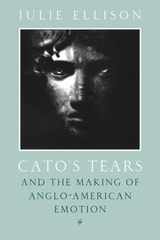
Cato's Tears and the Making of Anglo-American Emotion
Julie Ellison
University of Chicago Press, 1999
Early popular dramas of this time, Ellison shows, linked male stoicism with sentimentality through portrayals of stoic figures whose civic sacrifices bring other men to tears. Later works develop a different model of sensibility, drawing their objects of sympathy from other races and classes—Native Americans, African slaves, servants. Only by examining these texts in light of the complex masculine tradition of stoic sentimentality, Ellison argues, can one interpret women's roles in the culture of sensibility.
In her conclusion, Ellison offers "a short history of liberal guilt," exploring the enduring link between male stoicism and male sensibility in political and cultural life from the late seventeenth century to today.
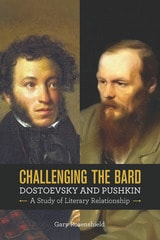
Challenging the Bard
Dostoevsky and Pushkin, a Study of Literary RelationshipGary Rosenshield
University of Wisconsin Press, 2013

Changing Minds or Changing Channels?
Partisan News in an Age of ChoiceKevin Arceneaux and Martin Johnson
University of Chicago Press, 2013
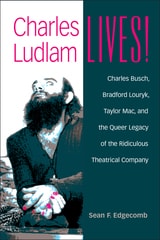
Charles Ludlam Lives!
Charles Busch, Bradford Louryk, Taylor Mac, and the Queer Legacy of the Ridiculous Theatrical CompanySean F. Edgecomb
University of Michigan Press, 2017
Author Sean F. Edgecomb focuses on the neo-Ridiculous artists Charles Busch, Bradford Louryk, and Taylor Mac to trace the connections between Ludlam’s legacy and their performances, using alternative queer models such as kinetic kinship, lateral historiography, and a new approach to camp. Charles Ludlam Lives! demonstrates that the queer legacy of Ludlam is one of distinct transformation—one where artists can reject faithful interpretations in order to move in new interpretive directions.
Chaucer's Italian Tradition
Warren Ginsberg
University of Michigan Press, 2002
Because divergent political, municipal, and literary histories would have made the Italian cities--Genoa, Florence, and Milan--unfamiliar to an English poet from medieval London, Ginsberg argues that we must consider what Chaucer overlooked and mistook from his Italian models alongside the material he did appropriate. To make sense of premises in texts like Dante's Comedy that were peculiarly Italian, Chaucer would look to Boccaccio as a gloss; by reading these authors in conjunction with one another, Chaucer generates an "Italian tradition" that translates into the terms of his English experience works already mediated by a prior stage of transposition.
Ginsberg explores Chaucer's relationship to Italian poets not in terms of the interaction of individual talents with accredited authorities (Chaucer and Dante, Boccaccio and Petrarch, etc.). Rather, he focuses on the shifts in tension that occur when the civic engagements and disengagements of Florence's poets are brought into contact with Chaucer's growing metropolitanism and increasing reluctance to make London the locus of his poetic art.
Beyond its appeal to medievalists and those who study the Renaissance, Chaucer's Italian Tradition will be welcomed by readers interested in theoretical questions about translation and the development of tradition, including individuals who study history, literature, and the nature of the humanities.
Warren Ginsberg is Professor of English, University of Oregon.
Children of Ezekiel
Aliens, UFOs, the Crisis of Race, and the Advent of End TimeMichael Lieb
Duke University Press, 1998
Beginning with the merkabah chariot literature of Hebrew and Gnostic mysticism, Lieb shows how religiously inspired people concerned with annihilating their heretical enemies seized on Ezekiel’s vision as revealing the technologically superior instrument of God’s righteous anger. He describes how many who seek to know the unknowable that is the power of God conceive it in technological terms—and how that power is associated with political aims and a heralding of the end of time. For Milton, Ezekiel’s chariot becomes the vehicle in which the Son of God does battle with the rebellious angels. In the modern age, it may take the form of a locomotive, tank, airplane, missile, or UFO. Technology itself is seen as a divine gift and an embodiment of God in the temporal world. As Lieb demonstrates, the impetus to produce modern technology arises not merely from the desire for profit or military might but also from religious-spiritual motives.
Including discussions of conservative evangelical Christian movements, Reagan’s ballistic shooting gallery in the sky, and the Nation of Islam’s vision of the “mother plane” as the vehicle of retribution in the war against racial oppression, Children of Ezekiel will enthrall readers who have been captivated, either through religious belief or intellectual interests, by a common thread uniting millennial religious beliefs, racial conflict, and political and militaristic aspirations.
Choreographing Mexico
Festive Performances and Dancing Histories of a NationManuel R. Cuellar
University of Texas Press, 2022
2023 de la Torre Bueno® First Book Award, Dance Studies Association
The impact of folkloric dance and performance on Mexican cultural politics and national identity.
The years between 1910 and 1940 were formative for Mexico, with the ouster of Porfirio Díaz, the subsequent revolution, and the creation of the new state. Amid the upheaval, Mexican dance emerged as a key arena of contestation regarding what it meant to be Mexican. Through an analysis of written, photographic, choreographic, and cinematographic renderings of a festive Mexico, Choreographing Mexico examines how bodies in motion both performed and critiqued the nation.
Manuel Cuellar details the integration of Indigenous and regional dance styles into centennial celebrations, civic festivals, and popular films. Much of the time, this was a top-down affair, with cultural elites seeking to legitimate a hegemonic national character by incorporating traces of indigeneity. Yet dancers also used their moving bodies to challenge the official image of a Mexico full of manly vigor and free from racial and ethnic divisions. At home and abroad, dancers made nuanced articulations of female, Indigenous, Black, and even queer renditions of the nation. Cuellar reminds us of the ongoing political significance of movement and embodied experience, as folklórico maintains an important and still-contested place in Mexican and Mexican American identity today.
Christopher Dawson
A Cultural Mind in the Age of the Great WarJoseph T. Stuart
Catholic University of America Press, 2022
Cinema's Original Sin
D.W. Griffith, American Racism, and the Rise of Film CulturePaul McEwan
University of Texas Press, 2022
For over a century, cinephiles and film scholars have had to grapple with an ugly artifact that sits at the beginnings of film history. D. W. Griffith’s profoundly racist epic, The Birth of a Nation, inspired controversy and protest at its 1915 release and was defended as both a true history of Reconstruction (although it was based on fiction) and a new achievement in cinematic art. Paul McEwan examines the long and shifting history of its reception, revealing how the film became not just a cinematic landmark but also an influential force in American aesthetics and intellectual life.
In every decade since 1915, filmmakers, museums, academics, programmers, and film fans have had to figure out how to deal with this troublesome object, and their choices have profoundly influenced both film culture and the notion that films can be works of art. Some critics tried to set aside the film’s racism and concentrate on the form, while others tried to relegate that racism safely to the past. McEwan argues that from the earliest film retrospectives in the 1920s to the rise of remix culture in the present day, controversies about this film and its meaning have profoundly shaped our understandings of film, race, and art.
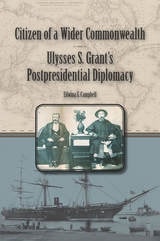
Citizen of a Wider Commonwealth
Ulysses S. Grant's Postpresidential DiplomacyEdwina S. Campbell
Southern Illinois University Press, 2012
Traveling commercially and on U.S. Navy warships, Grant visited ports of call throughout the British Empire, Europe, and Asia, including Britain, France, Egypt, the Ottoman Empire, Greece, Italy, the Netherlands, Germany, Scandinavia, Russia, Spain, Portugal, Gibraltar, Ireland, India, Singapore, Hong Kong, China, and Japan. Along the way, he met with monarchs, ministers, and average citizens, creating the model for the summitry and public diplomacy practiced by future American presidents and articulating concepts of national self-determination, international organization, and the peaceful settlement of international disputes decades before Elihu Root’s advocacy of binding international arbitration and Woodrow Wilson’s proposal for the League of Nations.
Campbell reveals Grant to be a skillful envoy who brought to his travels the deep interest in foreign policy issues he had shown during his administration. Grant confirmed the United States’ commitment to Anglo-American cooperation, demonstrated America’s interest in the territorial integrity of China, affirmed American faith in universal (male) suffrage as the basis for governmental legitimacy, and asserted the importance of an international order based on equality and justice for all states and their citizens. Grant’s efforts shaped not only John Hay’s Open Door policy in 1899–1900 but also the broader American approach to twentieth-century international relations. Throughout the trip, Julia Grant proved essential to the success of her husband’s mission, and Campbell tells how the couple impressed people around the world with an enduring image of an American president and first lady.
By illuminating the significance of Grant’s often overlooked postpresidential travels, Citizen of a Wider Commonwealth establishes the eighteenth president as a key diplomat whose work strongly influenced the direction of future U.S. foreign policy and contributes substantially to the study of American international relations.
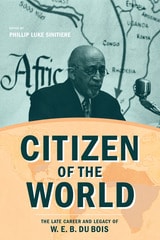
Citizen of the World
The Late Career and Legacy of W. E. B. Du BoisEdited by Phillip Luke Sinitiere
Northwestern University Press, 2019
From his birth in 1868 until his death in 1963, Du Bois sought the liberation of black people in the United States and across the world through intellectual and political labor. His tireless efforts documented and demonstrated connections between freedom for African-descended people abroad and black freedom at home.
In concert with growing scholarship on his twilight years, the essays in this volume assert the fundamental importance of considering Du Bois’s later decades not as a life in decline that descended into blind ideological allegiance to socialism and communism but as the life of a productive, generative intellectual who responded rationally, imaginatively, and radically to massive mid-century changes around the world, and who remained committed to freedom’s realization until his final hour.
Civic War and the Corruption of the Citizen
Peter Alexander Meyers
University of Chicago Press, 2008
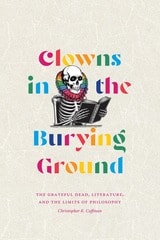
Clowns in the Burying Ground
The Grateful Dead, Literature, and the Limits of PhilosophyChristopher K. Coffman
Duke University Press, 2026
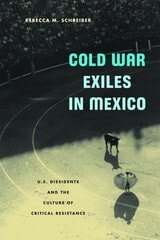
Cold War Exiles in Mexico
U.S. Dissidents and the Culture of Critical ResistanceRebecca M. Schreiber
University of Minnesota Press, 2008
As Schreiber recounts, the first exiles to arrive in Mexico after World War II were visual artists, many of them African-American, including Elizabeth Catlett, Charles White, and John Wilson. Individuals who were blacklisted from the Hollywood film industry, such as Dalton Trumbo and Hugo Butler, followed these artists, as did writers, including Willard Motley. Schreiber examines the artists’ work with the printmaking collective Taller de Gráfica Popular and the screenwriters’ collaborations with filmmakers such as Luis Buñuel, as well as the influence of the U.S. exiles on artistic and political movements.
The Cold War culture of political exile challenged American exceptionalist ideology and, as Schreiber reveals, demonstrated the resilience of oppositional art, literature, and film in response to state repression.
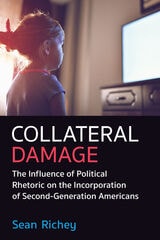
Collateral Damage
The Influence of Political Rhetoric on the Incorporation of Second-Generation AmericansSean Richey
University of Michigan Press, 2023
Collateral Damage provides an overview of how political communication influences the process of incorporation with the broad society as well as its political parties. Sean Richey shows that how politicians talk about immigrants affects how their children perceive America and their feelings about the nation. These perceptions and feelings in turn greatly influence the children’s desire to incorporate into American political society. He also shows that regardless of a speaker’s intended outcome, what is said can still have a deleterious effect on incorporation desire, a communicative process that he terms “collateral damage.” Richey uses new experimental and survey evidence, as well as the rhetoric of Donald Trump as a test case, to examine how anti-immigration communication influences the incorporation of the children of immigrants.

Commentary and Ideology
Dante in the RenaissanceDeborah Parker
Duke University Press, 1993
Parker begins by tracing the criticism of Dante commentaries from the nineteenth century to the present and then examines the tradition of commentary from the Middle Ages to the Renaissance. She shows how the civic, institutional, and social commitments of commentators shaped their response to the Comedy, and how commentators tried to use the poem as an authoritative source for various kinds of social legitimation. Parker discusses how different commentators dealt with a deeply political section of the poem: the damnation of Brutus and Cassius.
The scope and importance of Commentary and Ideology will command the attention of a broad group of scholars, including Italian specialists on Dante, late medievalists, students and professionals in early modern European literature, bibliographers, critical theorists, historians of literary criticism and theory, and cultural and intellectual historians.
Community and Solitude
New Essays on Johnson’s CircleLee, Anthony W
Bucknell University Press, 2019
Contributors: Christopher Catanese, James Caudle, Marilyn Francus, Christine Jackson-Holzberg, Claudia Thomas Kairoff, Elizabeth Lambert, Anthony W. Lee, James E. May, John Radner, and Lance Wilcox.
Published by Bucknell University Press. Distributed worldwide by Rutgers University Press.
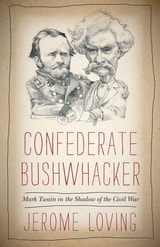
Confederate Bushwhacker
Mark Twain in the Shadow of the Civil WarJerome Loving
University Press of New England, 2013
Conscience and Community
Sterling M. McMurrin, Obert C. Tanner, and Lowell L. BennionEdited by Robert Alan Goldberg, L. Jackson Newell, and Linda K. Newell
University of Utah Press, 2018
Lowell Bennion was founding director of the LDS Institute of Religion and professor of sociology at the University of Utah. He established multiple community service entities. Sterling McMurrin was distinguished professor of philosophy and history, dean of the graduate school, and former commissioner of education under JFK. He dismissed dogma and doctrine as barriers to a search for moral and spiritual understanding. Obert Tanner, also of the university’s Philosophy Department, excelled in teaching and business and became especially well known for philanthropy. The lives and work of these three men reveal the tensions between faith and reason, conscience and obedience. Their stories speak to us today because their concerns remain our concerns: racial justice, women’s equality, gay rights, and the meaning of integrity and conscience.
Consequences of Peace
The Versailles Settlement - Aftermath and LegacyAlan Sharp
Haus Publishing, 2010
Consuming Environments
Television and Commercial CultureMichael Budd
Rutgers University Press, 1999
Whether we love it, hate it, or use it just to pass the time, most adults in the United States are watching more television than ever, up to four hours a day by some estimates. Our devotion to commercial television gives it unprecedented power in our lives.
Advertisers and television executives want us to spend as much time as we can in front of our sets, for it is access to our brains that they buy and sell. Yet the most important effect of television may be one that no one intends-accelerated destruction of the natural environment.
Consuming Environments explores how, with its portrayals of a world of simulated abundance, television has nurtured a culture of consumerism and overconsumption. The average person in the U.S. consumes more than twice the grain and ten times the oil of a citizen of Brazil or Indonesia. And people in less industrialized countries suffer while their resources are commandeered to support comfortable lifestyles in richer nations.
Using detailed examples illustrated with images from actual commercials, news broadcasts, and television shows, the authors demonstrate how ads and programs are put together in complex ways to manipulate viewers, and they offer specific ways to counteract the effects of TV and overconsumption's assault on the environment.
Consuming Environments
Television and Commercial CultureCraig, Steve
Rutgers University Press, 1999
Advertisers and television executives want us to spend as much time as we can in front of our sets, for it is access to our brains that they buy and sell. Yet the most important effect of television may be one that no one intends--accelerated destruction of the natural environment.
Consuming Environments explores how, with its portrayals of a world of simulated abundance, television has nurtured a culture of consumerism and overconsumption. The average person in the U.S. consumes more than twice the grain and ten times the oil of a citizen in Brazil or Indonesia. And people in less industrialized countries suffer while their resources are commandeered to support comfortable lifestyles in richer nations. Using detailed examples illustrated with images from actual commercials, news broadcasts, and television shows, the authors demonstrate how ads and programs are put together in complex ways to manipulate viewers, and they offer specific ways to counteract the effects of TV and overconsumption's assault on the environment.
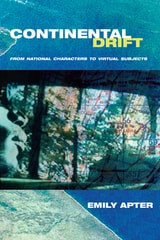
Continental Drift
From National Characters to Virtual SubjectsEmily Apter
University of Chicago Press, 1999
Among the many topics Apter explores are the fate of national literatures in an increasingly transnational literary climate; the volatile stakes of Albert Camus's life and reputation against the backdrop of Algerian civil strife; the use of literary and theatrical productions to "script" national character for the colonies; belly-dancing and aesthetic theory; and the impact of new media on colonial and postcolonial representation, from tourist photography to the videos of Digital Diaspora.
Continental Drift advances debates not just in postcolonial studies, but also in gender, identity, and cultural studies; ethnography; psychoanalysis; and performance studies.
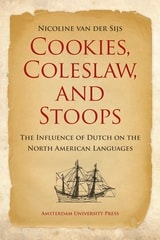
Cookies, Coleslaw, and Stoops
The Influence of Dutch on the North American LanguagesNicoline van der Sijs
Amsterdam University Press, 2010
From Santa Claus (after the Dutch folklore saint Sinterklaas) and his sleigh (the pronunciation of the Dutch slee is almost identical) to a dumbhead talking poppycock, the contributions of the Dutch language to American English are indelibly embedded to some of our most vernacular terms and expressions. The menu in most of our restaurants sports some originally Dutch names, and even our dollar is named after a Dutch coin (daalder). In this captivating volume, the renowned linguist Nicoline van der Sijs glosses over 300 Dutch loan words like these that travelled to the New World on board the Dutch ship the Halve Maan, captained by Henry Hudson, which dropped anchor in Manhattan more than 400 years ago. Surprisingly, the Dutch also gave several Native American languages words for everyday things like “pants”, “cat” and “turkey”. Lively and accessible, the information presented in this volume charts the journey of these words into the American territory and languages, from more obscure uses which maybe have survived in only regional dialects to such ubiquitous contributions to our language like Yankee, cookie, and dope. Each entry marks the original arrival of its term into American English and adds up-to-date information on its evolving meaning, etymology, and regional spread. Not to be missed by anyone with a passion for the history behind our everyday expressions, Cookies, Coleslaw and Stoops is the perfect gift for the linguistic adventurer in us all.
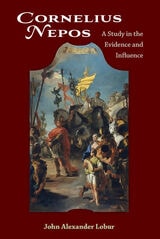
Cornelius Nepos
A Study in the Evidence and InfluenceJohn Alexander Lobur
University of Michigan Press, 2021
Cornelius Nepos: A Study in the Evidence and Influence begins by exploring the writer's ancient reception, which suggests he was in no way seen as beneath consideration by the Romans themselves. The volume then deconstructs the critical framework that cast him as an "inferior" author in the classical canon. What emerges is an author who reworked Greek historical narratives in a learned, sophisticated way, yet one still limited by the compositional logistics and limitations inherent in ancient scholarship. The study then explores his contemporary relationships and embeds his work among the crucial ideological activity at play in the late Republic and Triumviral periods. Cornelius Nepos spends considerable time on the fragmentary evidence (which highlights Nepos' interest in changes in fashion and consumption) to suggest that he was a valued cultural elder who informed a public eager to recover a sense of tradition during a period of bewilderingly fast social and cultural change. The book finishes with a thematic examination of the entire Lives of the Foreign Commanders (a set of biographies on ancient non-Roman generals) to show that despite the expression of very “Republican” sentiments, he was in fact fashioning an ideological framework for something imperial and quasi-monarchic which, though autocratic, was still antityrannical and imagined as resting on a broad and “democratic” foundation of social consent. Nepos saw that Rome would soon be ruled by one person, and his biographies show how the elites of the day both processed that reality and attempted to circumscribe it for good ends through the creation of new models of legitimacy.
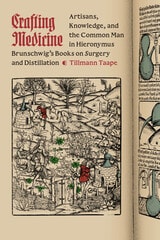
Crafting Medicine
Artisans, Knowledge, and the Common Man in Hieronymus Brunschwig's Books on Surgery and DistillationTillmann Taape
University of Chicago Press, 2025
Between 1497 and 1512, Hieronymus Brunschwig (ca. 1450–ca. 1530), an obscure craftsman from Strasbourg, wrote books on surgery and pharmacy that transformed medical expertise, how it was codified in print, and how it was communicated to new audiences. Brunschwig was an unlikely author. He apprenticed as a surgeon in the local guild and dispensed medicines from his own shop. But he was remarkably well-read in surgery, alchemy, and medical theory, even if he lacked a university education. His unique authorial voice spoke to the healing practices of craftsmen and common people in a down-to-earth German dialect.
Crafting Medicine, by Tillmann Taape, is the first in-depth study of Brunschwig and his works. In it, Taape argues that Brunschwig’s writings shaped a nascent tradition of vernacular medicine. Brunschwig’s books represent a key moment in the history of medical print, for they conveyed medical expertise to a new readership of nonacademic practitioners, who became a key audience for a flood of vernacular medical publications during the sixteenth century. Using Brunschwig’s books as a unique window into the past, Crafting Medicine beautifully reconstructs the world of science inhabited by Brunschwig, his fellow craftsmen, his translators, and his readers.
Critiquing Communication Innovation
New Media in a Multipolar WorldRolien Hoyng
Michigan State University Press, 2022
Cultivating Peace
The Virgilian Georgic in English, 1650-1750Schoenberger, Melissa
Bucknell University Press, 2019
Published by Bucknell University Press. Distributed worldwide by Rutgers University Press.
Cultural Worlds of the Jesuits in Colonial Latin America
Edited by Linda Newson
University of London Press, 2020
Culture Concept
Writing and Difference in the Age of RealismMichael A. Elliott
University of Minnesota Press, 2002
Examines the prehistory of the American struggle to address cultural difference.
"Culture" is a term we commonly use to explain the differences in our ways of living. In this book Michael A. Elliott returns to the moment this usage was first articulated, tracing the concept of culture to the writings-folktales, dialect literature, local color sketches, and ethnographies-that provided its intellectual underpinnings in turn-of-the-century America.
The Culture Concept explains how this now-familiar definition of "culture" emerged during the late nineteenth century through the intersection of two separate endeavors that shared a commitment to recording group-based difference-American literary realism and scientific ethnography. Elliott looks at early works of cultural studies as diverse as the conjure tales of Charles Chesnutt, the Ghost Dance ethnography of James Mooney, and the prose narrative of the Omaha anthropologist-turned-author Francis La Flesche. His reading of these works-which struggle to find appropriate theoretical and textual tools for articulating a less chauvinistic understanding of human difference-is at once a recovery of a lost connection between American literary realism and ethnography and a productive inquiry into the usefulness of the culture concept as a critical tool in our time and times to come.
Culture and Identity in Early Modern Europe (1500-1800)
Essays in Honor of Natalie Zemon DavisBarbara B. Diefendorf and Carla Hesse, Editors
University of Michigan Press, 1993
Culture and Revolution
Violence, Memory, and the Making of Modern MexicoBy Horacio Legrás
University of Texas Press, 2017
In the twenty years of postrevolutionary rule in Mexico, the war remained fresh in the minds of those who participated in it, while the enigmas of the revolution remained obscured. Demonstrating how textuality helped to define the revolution, Culture and Revolution examines dozens of seemingly ahistorical artifacts to reveal the radical social shifts that emerged in the war’s aftermath.
Presented thematically, this expansive work explores radical changes that resulted from postrevolution culture, including new internal migrations; a collective imagining of the future; popular biographical narratives, such as that of the life of Frida Kahlo; and attempts to create a national history that united indigenous and creole elite society through literature and architecture. While cultural production in early twentieth-century Mexico has been well researched, a survey of the common roles and shared tasks within the various forms of expression has, until now, been unavailable. Examining a vast array of productions, including popular festivities, urban events, life stories, photographs, murals, literature, and scientific discourse (including fields as diverse as anthropology and philology), Horacio Legrás shows how these expressions absorbed the idiosyncratic traits of the revolutionary movement.
Tracing the formation of modern Mexico during the 1920s and 1930s, Legrás also demonstrates that the proliferation of artifacts—extending from poetry and film production to labor organization and political apparatuses—gave unprecedented visibility to previously marginalized populations, who ensured that no revolutionary faction would unilaterally shape Mexico’s historical process during these formative years.