Results by title
448 books match the query 'Interviews' and 38 start with c
Californio Voices
The Oral Memoirs of Jose Maria Amador and Lorenzo AsisaraGregorio Mora-Torres
University of North Texas Press, 2005
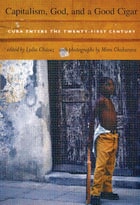
Capitalism, God, and a Good Cigar
Cuba Enters the Twenty-first CenturyLydia Chávez, ed.
Duke University Press, 2005
Based on reporting by journalists, writers, and documentary filmmakers since 2001, each of the essays collected here covers a particular dimension of contemporary Cuban society, revealing what it is like to have lived, for more than a decade, suspended between communism and capitalism. There are pieces on hip hop musicians, fiction writing and censorship, the state of ballet and the performing arts, and the role of computers and the Internet. Other essays address the shrinking yet still sizeable numbers of true believers in the promise of socialist revolution, the legendary cigar industry, the changing state of religion, the significance of the recent influx of money and people from Spain, and the tensions between recent Cuban emigrants and previous generations of exiles. Including more than seventy striking documentary photographs of Cuba’s people, countryside, and city streets, this richly illustrated collection offers keen, even-handed insights into the abundant ironies of life in Cuba today.
Contributors. Juliana Barbassa, Ana Campoy, Mimi Chakarova, Lydia Chávez, John Coté, Julian Foley, Angel González, Megan Lardner, Ezequiel Minaya, Daniela Mohor, Archana Pyati, Alicia Roca, Olga R. Rodríguez, Bret Sigler, Annelise Wunderlich
Carrying a Secret in My Heart
Children of the Victims of the Reprisals after the Hungarian Revolution in 1956 - An Oral HistoryZsuzsanna Korösi
Central European University Press, 2003
Centering Student Activism
Feminist Rhetorical Interruptions of Sexual Assault CultureShari J. Stenberg
Utah State University Press, 2026
Centering Student Activism is a deep exploration of institutional responses to sexual assault. It addresses critical issues facing campuses today, examining how students navigate institutional dynamics and utilize the power of new and traditional rhetorical strategies to effect change. In doing so, it provides a profound understanding of the mechanisms by which coalitions can transform educational environments.
Centering Student Activism features a national interview-based study of contemporary student activists who deploy rhetorical strategies and tactics—old and new, embodied and digital—with agility and awareness. They aim their strategies and tactics of “intersectional rhetorical feminism” to interrupt and transform a sedimented culture. The students’ activism highlights not only the harms experienced by survivors in the aftermath of their assaults but also how their efforts to communicate those harms are often stymied or silenced by official responses and practices. These student activists pair interruption with rhetorical transformation as they seek to create a survivor-centric culture. In so doing they spotlight the systemic roots of sexual violence and respond to sexual assault through intersectional, coalition-based work.
Through detailed analysis and compelling narratives, Shari J. Stenberg underscores the importance of community care and mutual support in advocacy efforts. Centering Student Activism is an essential work for navigating institutional dynamics, providing an important resource to students, educators, and administrators who seek to understand how universities silence survivors and how students create ways to speak back and transform institutional culture.
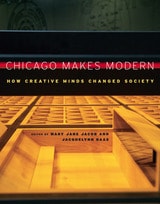
Chicago Makes Modern
How Creative Minds Changed SocietyEdited by Mary Jane Jacob and Jacquelynn Baas
University of Chicago Press, 2012
Chicago is a city dedicated to the modern—from the skyscrapers that punctuate its skyline to the spirited style that inflects many of its dwellings and institutions, from the New Bauhaus to Hull-House. Despite this, the city has long been overlooked as a locus for modernism in the arts, its rich tradition of architecture, design, and education disregarded. Still the modern in Chicago continues to thrive, as new generations of artists incorporate its legacy into fresh visions for the future. Chicago Makes Modern boldly remaps twentieth-century modernism from our new-century perspective by asking an imperative question: How did the modern mind—deeply reflective, yet simultaneously directed—help to dramatically alter our perspectives on the world and make it new?
Returning the city to its rightful position at the heart of a multidimensional movement that changed the face of the twentieth century, Chicago Makes Modern applies the missions of a brilliant group of innovators to our own time. From the radical social and artistic perspectives implemented by Jane Addams, John Dewey, and Buckminster Fuller to the avant-garde designs of László Moholy-Nagy and Mies van der Rohe, the prodigious offerings of Chicago's modern minds left an indelible legacy for future generations. Staging the city as a laboratory for some of our most heralded cultural experiments, Chicago Makes Modern reimagines the modern as a space of self-realization and social progress—where individual visions triggered profound change. Featuring contributions from an acclaimed roster of contemporary artists, critics, and scholars, this book demonstrates how and why the Windy City continues to drive the modern world.
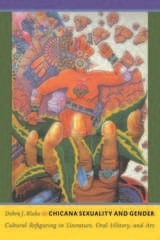
Chicana Sexuality and Gender
Cultural Refiguring in Literature, Oral History, and ArtDebra J. Blake
Duke University Press, 2008
Blake looks at how the Chicana professional intellectuals and the U.S. Mexicana women refigure confining and demeaning constructions of female gender roles and racial, ethnic, and sexual identities. She organizes her analysis around re-imaginings of La Virgen de Guadalupe, La Llorona, indigenous Mexica goddesses, and La Malinche, the indigenous interpreter for Hernán Cortés during the Spanish conquest. In doing so, Blake reveals how the professional intellectuals and the working-class and semiprofessional women rework or invoke the female icons to confront the repression of female sexuality, limiting gender roles, inequality in male and female relationships, and violence against women. While the representational strategies of the two groups of women are significantly different and the U.S. Mexicanas would not necessarily call themselves feminists, Blake nonetheless illuminates a continuum of Chicana feminist thinking, showing how both groups of women expand lifestyle choices and promote the health and well-being of women of Mexican origin or descent.
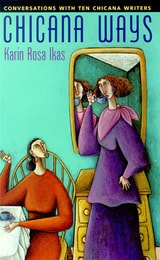
Chicana Ways
Conversations With Ten Chicana WritersKarin Rosa Ikas
University of Nevada Press, 2001

Chicano Authors
Inquiry by InterviewBy Bruce-Novoa
University of Texas Press, 1980
The need for this book became apparent to Bruce-Novoa when he first taught a Chicano culture course in 1970. His students could find no source to satisfy their curiosity about Chicano writers' backgrounds, opinions, and attitudes. Chicano Authors: Inquiry by Interview provides that information.
Fourteen leading Chicano authors respond to questions about their personal and educational backgrounds, their perception of the role of the Chicano writer, and their evaluation of the literary, linguistic, and sociocultural significance of Chicano literature. The authors included are José Antonio Villarreal, Rolando Hinojosa, Sergio Elizondo, Miguel Méndez M., Abelardo Delgado, José Montoya, Tomás Rivera, Estela Portillo, Rudolfo A. Anaya, Bernice Zamora, Ricardo Sánchez, Ron Arias, Tino Villanueva, and Alurista.
Each interview is preceded by a brief introductory note which locates the author in the context of Chicano literature and provides a sense of his or her writing. Also included are a general introduction to Chicano literature, a chronological chart of publications by genre, and a selected bibliography. The volume will be an essential research tool for the student of Chicano literature and culture and a useful introduction for the general reader.

Children of Zion
Henryk Grynberg
Northwestern University Press, 1997
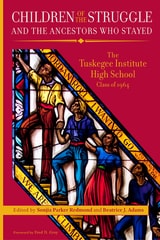
Children of the Struggle and the Ancestors Who Stayed
The Tuskegee Institute High School Class of 1964Edited by Sonjia Parker Redmond and Beatrice J. Adams, Foreword by Fred D. Gray
University of Alabama Press, 2025
WINNER OF THE ANNE B. AND JAMES B. MCMILLAN PRIZE
A powerful collection of firsthand stories from the Tuskegee Institute High School Class of 1964—students who came of age in the crucible of the Civil Rights Movement. Their stories uncover the bold choices of their ancestors who chose to stay and help shape the South.
Children of the Struggle and the Ancestors Who Stayed, edited by Sonjia Parker Redmond and Beatrice J. Adams, brings together twenty-one deeply personal narratives from members of the Tuskegee Institute High School Class of 1964. These students grew up at the heart of the Civil Rights Movement, coming of age during landmark legal battles, community-led voter registration efforts, and the long shadow of Jim Crow.
Graduating in the year of the Civil Rights Act and Freedom Summer, these young people had already helped desegregate Alabama schools. They marched from Selma to Montgomery, mourned the assassination of classmate Sammy Younge Jr., and witnessed firsthand the violent resistance to change that defined the era.
Rather than join the Great Migration northward, many of them followed the lead of their ancestors and chose to stay—becoming educators, organizers, and civic leaders. Their lives reflect a powerful legacy of resistance and renewal, rooted in a deep sense of place and purpose. This collection preserves their voices and honors the generations of Black families who fought for justice not only through protest, but by staying, building, and believing in the promise of the South.
Christian Petzold
Jaimey Fisher
University of Illinois Press, 2013
In the first book-length study on Petzold in English, Jaimey Fisher frames Petzold's cinema at the intersection of international art cinema and sophisticated genre cinema. This approach places his work in the context of global cinema and invites comparisons to the work of directors like Pedro Almodovar and Rainer Werner Fassbinder, who repeatedly deploy and reconfigure genre cinema to their own ends. These generic aspects constitute a cosmopolitan gesture in Petzold's work as he interprets and elaborates on cult genre films and popular genres, including horror, film noir, and melodrama. Fisher explores these popular genres while injecting them with themes like terrorism, globalization, and immigration, central issues for European art cinema. The volume also includes an extended original interview with the director about his work.
Cinema Today
A Conversation with Thirty-nine Filmmakers from around the WorldOumano, Elena
Rutgers University Press, 2011
Can't spare the time from work or class? Travel expense too great? What? You can't even find such a collaborative event?
Then imagine curling up with a good book, maybe a shot of espresso in hand, and becoming engrossed in the exciting and informative conversation that Elena Oumano has ingeniously crafted from her personal and individual interviews with these artists. Straying far from the usual choppy question-and-answer format, Cinema Today saves you from plowing through another tedious read, in which the same topics and issues are directed to each subject, over and over-an experience that is like being trapped in a revolving door.
Oumano stops that revolving door by following a lively symposium-in-print format, with the filmmakers' words and thoughts grouped together under various key cinema topics. It is as though these experts are speaking to each other and you are their audience--collectively they reflect on and explore issues and concerns of modern filmmaking, from the practical to the aesthetic, including the process, cinematic rhythm and structure, and the many aspects of the media: business, the viewer, and cinema's place in society. Whether you are a movie lover, a serious student of cinema, or simply interested in how we communicate in today's global village through films that so profoundly affect the world, Cinema Today is for you.
Cinema and Social Change in Latin America
Conversations with FilmmakersEdited by Julianne Burton
University of Texas Press, 1986
Since the late 1960s, films from Latin America have won widening audiences in North America and Europe. Until now, no single book has offered an introduction to the diverse personalities and practices that make up this important regional film movement.
In Cinema and Social Change in Latin America, Julianne Burton presents twenty interviews with key figures of Latin American cinema, covering three decades and ranging from Argentina to Mexico. Interviews with pioneers Fernando Birri, Nelson Pereira dos Santos, and Glauber Rocha, renowned feature filmmakers Tomás Gutiérrez Alea and Carlos Diegues, prize-winning documentarists Patricio Guzmán and Helena Solberg-Ladd, among others, endeavor to balance personal achievement against the backdrop of historical, political, social, and economic circumstances that have influenced each director's career. Presented also are conversations that cast light on the related activities of acting, distribution, theory, criticism, and film-based community organizing.
More than their counterparts in other regions of the world, Latin American artists and intellectuals acknowledge the degree to which culture is shaped by history and politics. Since the mid-1950s, a period of rising nationalism and regional consciousness, talented young artists and activists have sought to redefine the uses of the film medium in the Latin American context. Questioning the studio and star systems of the Hollywood industrial model, these innovators have developed new forms, content, and processes of production, distribution, and reception.
The specific approaches and priorities of the New Latin American Cinema are far from monolithic. They vary from realism to expressionism, from observational documentary to elaborate fictional constructs, from "imperfect cinema" to a cinema that emulates the high production values of the developed sectors, from self-reflexive to "transparent" cinematic styles, from highly industrialized modes of production to purely artisanal ones. What does not vary is the commitment to film as a vehicle for social transformation and the expression of national and regional cultural autonomy.
From early alternative cinema efforts in Argentina, Brazil, and Cuba to a contemporary perspective from within the Mexican commercial industry to the emerging cinema and video production from Central America, Cinema and Social Change in Latin America offers the most comprehensive look at Latin American film available today.
Cinematic Encounters 2
Portraits and PolemicsJonathan Rosenbaum
University of Illinois Press, 2019
Rosenbaum takes on filmmakers like Chantal Akerman, Richard Linklater, Manoel De Oliveira, Mark Rappaport, Elaine May, and Béla Tarr. He also engages, implicitly and explicitly, with other writers, arguing with Pauline Kael—and Wikipedia—over Jacques Demy, with the Hollywood Reporter and Variety reviewers of Jarmusch’s The Limits of Control, with David Thomson about James L. Brooks, and with many American and English film critics about misrepresented figures from Jerry Lewis to Yasujiro Ozu to Orson Welles. Throughout, Rosenbaum mines insights, pursues pet notions, and invites readers to join the fray.
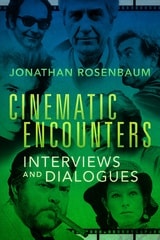
Cinematic Encounters
Interviews and DialoguesJonathan Rosenbaum
University of Illinois Press, 2018
Cinematic Encounters collects more than forty years of interviews that embrace Rosenbaum's vision of film criticism as a collaboration involving multiple voices. Rosenbaum accompanies Orson Welles on a journey back to Heart of Darkness, the unmade film meant to be Welles's Hollywood debut. Jacques Tati addresses the primacy of décor and soundtrack in his comedic masterpiece PlayTime, while Jim Jarmusch explains the influence of real and Hollywoodized Native Americans in Dead Man. By arranging the chapters chronologically, Rosenbaum invites readers to pursue thematic threads as if the discussions were dialogues between separate interviews. The result is a rare gathering of filmmakers trading thoughts on art and process, on great works and false starts, and on actors and intimate moments.
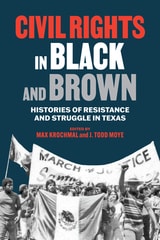
Civil Rights in Black and Brown
Histories of Resistance and Struggle in TexasEdited by Max Krochmal and J. Todd Moye
University of Texas Press, 2021
2022 Best Book Award, Oral History Association
Hundreds of stories of activists at the front lines of the intersecting African American and Mexican American liberation struggle
Not one but two civil rights movements flourished in mid-twentieth-century Texas, and they did so in intimate conversation with one another. Far from the gaze of the national media, African American and Mexican American activists combated the twin caste systems of Jim Crow and Juan Crow. These insurgents worked chiefly within their own racial groups, yet they also looked to each other for guidance and, at times, came together in solidarity. The movements sought more than integration and access: they demanded power and justice.
Civil Rights in Black and Brown draws on more than 500 oral history interviews newly collected across Texas, from the Panhandle to the Piney Woods and everywhere in between. The testimonies speak in detail to the structure of racism in small towns and huge metropolises—both the everyday grind of segregation and the haunting acts of racial violence that upheld Texas’s state-sanctioned systems of white supremacy. Through their memories of resistance and revolution, the activists reveal previously undocumented struggles for equity, as well as the links Black and Chicanx organizers forged in their efforts to achieve self-determination.

Class Warfare
Interviews with David BarsamianNoam Chomsky
Pluto Press, 2002
Clio's Southern Sisters
Interviews with Leaders of the Southern Association for Women HistoriansEdited by Constance B. Schulz & Elizabeth Hayes Turner
University of Missouri Press, 2004
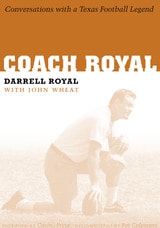
Coach Royal
Conversations with a Texas Football LegendBy Darrell Royal, with John Wheat
University of Texas Press, 2005
Many legendary men have been associated with University of Texas football, but for most fans one man will always be "Coach"—Darrell K Royal. One of the most successful coaches in college football, Royal led the Longhorns to three national championships and eleven Southwest Conference titles during his twenty years (1956-1976) as UT's head coach. He coached some of the Horns' best players, including future Heisman Trophy winner Earl Campbell, and was named NCAA Coach of the Year three times. In 1969, an ABC-TV poll of sportswriters called Royal the Coach of the Decade. In 1996 UT recognized his unrivalled contribution to Longhorn football when it designated Memorial Stadium the Darrell K Royal-Texas Memorial Stadium in his honor.
Now, for the first time, Darrell Royal tells his life story in his own words. He remembers growing up poor in Hollis, Oklahoma, during the Great Depression, and describes playing college football for the University of Oklahoma and then coaching a succession of college teams and one pro team before settling in at UT for the rest of his career. He gives a fascinating, behind-the-scenes look at Longhorn football during his time-recruiting strategies, coaching techniques, the famous wishbone offense, unforgettable wins and losses, and his impressions of rival teams and coaches, including Bear Bryant of Texas A&M and Alabama and Frank Broyles of Arkansas.
Proving that he's still the same straight shooter as always, Darrell Royal even discusses some of the controversies he's dealt with, including early charges of racism in the UT football program, the impact of Title IX on college athletics, his association with Jim Bob Moffett and the Freeport-MacMoRan Corporation, his longtime friendship with Willie Nelson, and his decision to retire from coaching. But whether he's describing the tough times he's faced professionally and personally or the rewards of being UT's most beloved coach and goodwill ambassador, Royal maintains the same plainspoken honesty and sense of honor that—as much as the winning seasons—have made him a legend to so many people.
Condition Red
Essays, Interviews, and CommentariesYusef Komunyakaa; Edited by Radiclani Clytus
University of Michigan Press, 2017
Connected
Engagements with MediaEdited by George E. Marcus
University of Chicago Press, 1996
Connected, the third volume in the groundbreaking and highly acclaimed Late Editions series, confronts these provocative questions through unique experiments with the interview format. It explores both the new pathways being forged through media and the predicaments of those struggling to find their way in the twilight of the twentieth century.
Conversations Across Our America
Talking About Immigration and the Latinoization of the United StatesBy Louis G. Mendoza
University of Texas Press, 2012
In the summer of 2007, Louis G. Mendoza set off on a bicycle trip across the United States with the intention of conducting a series of interviews along the way. Wanting to move beyond the media’s limited portrayal of immigration as a conflict between newcomers and “citizens,” he began speaking with people from all walks of life about their views on Latino immigration. From the tremendous number of oral histories Mendoza amassed, the resulting collection offers conversations with forty-three different people who speak of how they came to be here and why they made the journey. They touch upon how Latino immigration is changing in this country, and how this country is being changed by Latinoization. Interviewees reflect upon the concerns and fears they’ve encountered about the transformation of the national culture, and they relate their own experiences of living and working as “other” in the United States.
Mendoza’s collection is unique in its vastness. His subjects are from big cities and small towns. They are male and female, young and old, affluent and impoverished. Many are political, striving to change the situation of Latina/os in this country, but others are “everyday people,” reflecting upon their lives in this country and on the lives they left behind. Mendoza’s inclusion of this broad swath of voices begins to reflect the diverse nature of Latino immigration in the United States today.
Conversations in Exile
Russian Writers AbroadJohn Glad, ed.
Duke University Press, 1993
Glad's introduction situates the three distinct waves of westward emigration in their historical and political framework. Organized by genre, the book begins with discussions with the older generation of writers and then moves on to more recent arrivals: the makers of fantasy and humor, the aesthetes, the moralists, and the realists. Each voice is compelling for its invaluable testimony--some reveal startling insights into the persecution of dissidents under Soviet rule while others address the relationship between creativity, writing, and conditions of exile. Taken together these interviews reveal the range of modern Russian writing and document the personalities and positions that have made Russian writers in emigration so diverse, experimental, and controversial.
The Writers: Vasily Aksyonov, Joseph Brodsky, Igor Chinnov, Natalya Goranevskaya, Frifrikh Gorensetin, Roman Goul, Yury Ivask, Boris Khazanov, Edward Liminov, Vladimir Makisimov, Andrei Siniavsky and Maria Rozanova, Sasha Sokolov, Vladimir Voinovich, Aleksandr Zinoviev
Excerpt
John Glad: You're a Russian poet but an American essayist. Does that bring on any measure of split personality? Do you think you are becoming less and less Russian?
Joseph Brodsky (recipient of 1987 Nobel Prize for Literature): That's not for me to say. As far as I'm concerned, in my inner self, inside, it feels quite natural. I think being a Russian poet and an American essayist is an ideal situation. It's all a matter of whether you have (a) the heart and (b) the brains to be able to do both. Sometimes I think I do. Sometimes I think I don't. Sometimes I think that one interferes with the other.
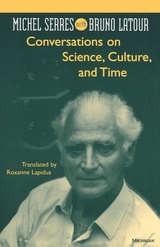
Conversations on Science, Culture, and Time
Michel Serres with Bruno LatourMichel Serres
University of Michigan Press, 1995
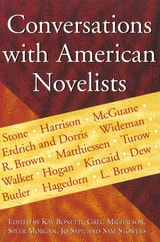
Conversations with American Novelists
Edited by Kay Bonetti, Greg Michalson, Speer Morgan, Jo Sapp, & Sam Stowers
University of Missouri Press, 1997
Readers of fine novels cherish the opportunity to hear their favorite novelists speak directly, without commentary or interpretation, about how their lives and concerns drive their fiction writing. For twenty years The Missouri Review has brought these readers some of the most compelling and thought- provoking literary interviews in print. In this collection of fifteen in-depth interviews with contemporary novelists, the authors discuss the style and themes of their work, their writing habits, their cultural and social backgrounds, and larger aesthetic issues with refreshing insight about themselves and their art.
Originally conducted for the American Audio Prose Library, the interviews were then edited for publication in The Missouri Review. Here they are reproduced with an introduction and with a brief biographical and bibliographical headnote for each writer. These candid interviews with some of our favorite novelists are sure to delight all readers.
Authors Interviewed in This Volume:Robert Stone
Jamaica Kincaid
Jim Harrison
Tom McGuane
Louise Erdrich and Michael Dorris
John Edgar Wideman
Robb Forman Dew
Rosellen Brown
Peter Matthiessen
Scott Turow
Margaret Walker
Linda Hogan
Robert Olen Butler
Jessica Hagedorn
Larry Brown
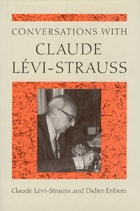
Conversations with Claude Levi-Strauss
Claude Lévi-Strauss and Didier Eribon
University of Chicago Press, 1991
Now available in English, the conversations are rich in Lévi-Strauss's candid appraisals of some of the best-known figures of the Parisian intelligentsia: surrealists André Breton and Max Ernst, with whom Lévi-Strauss shared a bohemian life in 1940s Manhattan; de Beauvoir, Sartre, and Camus, the stars of existentialism; Leiris, Foucault, Dumézil, Jacob, Lacan, and others. His long friendships with Jakobson and Merleau-Ponty are recalled, as well as his encounters with prominent figures in American anthropology: Lowie, Boas (who suddenly died in his chair beside Lévi-Strauss at a banquet at Columbia University), Benedict, Linton, Mead, and Kroeber.
Lévi-Strauss speaks frankly about how circumstances and his own inclinations, after his early fieldwork in Brazil, led him to embrace theoretical work. His straightforward answers to Eribon's penetrating questions—What is a myth? What is structuralism? Are you a philosopher?—clarify his intellectual motives and the development of his research; his influential role as an administrator, including the founding of the Laboratory of Social Anthropology and of the journal L'Homme; the course of his writings, from Elementary Structures of Kinship to The Jealous Potter; and his thoughts on the conduct of anthropology today.
Never before has Lévi-Strauss spoken so freely on so many aspects of his life: his initial failure to be elected to the Collège de France; his reaction to the events of May 1968; his regrets at not being a great investigative reporter or playwright; his deep identification with Wagner, Proust, and Rousseau. This is a rare opportunity to become acquainted with a great thinker in all his dimensions.
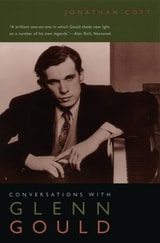
Conversations with Glenn Gould
Jonathan Cott
University of Chicago Press, 2005
Jonathan Cott, a prolific author and poet praised by Larry McMurtry as "the ideal interviewer," was one of the very few people to whom Gould ever granted an interview. Cott spoke with Gould in 1974 for Rolling Stone and published the transcripts in two long articles; after Gould's death, Cott gathered these interviews in Conversations with Glenn Gould, adding an introduction, a selection of photographs, a list of Gould's recorded repertoire, a filmography, and a listing of Gould's programs on radio and TV. A brilliant one-on-one in which Gould discusses his dislike of Mozart's piano sonatas, his partiality for composers such as Orlando Gibbons and Richard Strauss, and his admiration for the popular singer Petula Clark (and his dislike of the Beatles), among other topics, Conversations with Glenn Gould is considered by many, including the subject, to be the best interview Gould ever gave and one of his most remarkable performances.
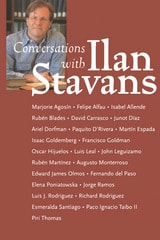
Conversations with Ilan Stavans
Ilan Stavans
University of Arizona Press, 2005
Spontaneous and surprising, these conversations reflect Latino life in the United States in all its facets. Among the more than two dozen selections, Edward James Olmos talks about Hispanics in Hollywood; John Leguizamo describes how he shapes a stage show; author Richard Rodriguez reflects on his gang background; Esmeralda Santiago takes on the Puerto Rican stereotype; and Piri Thomas shares thoughts on the writing of Down These Mean Streets. "A conversation is a tango," writes Stavans, "for it takes two to dance it." Conversations with Ilan Stavans invites readers to catch the rhythm and enjoy these unique meetings of minds.

Conversations with Isabel Allende
Revised EditionEdited by John Rodden
University of Texas Press, 2004
This revised edition has been updated to cover Allende's three newest books—City of the Beasts, Portrait in Sepia: A Novel, and Daughter of Fortune. It includes four new interviews in which Allende discusses completing her trilogy of novels that began with House of the Spirits, as well as her ongoing spiritual adventure and political interests.

Conversations with Nelson Algren
H. E. F. Donohue and Nelson Algren
University of Chicago Press, 2001
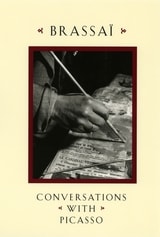
Conversations with Picasso
Brassaï
University of Chicago Press, 1999
Conversations with Picasso offers a remarkable vision of both Picasso and the entire artistic and intellectual milieu of wartime Paris, a vision provided by the gifted photographer and prolific author who spent the early portion of the 1940s photographing Picasso's work. Brassaï carefully and affectionately records each of his meetings and appointments with the great artist, building along the way a work of remarkable depth, intimate perspective, and great importance to anyone who truly wishes to understand Picasso and his world.
Conversations with Primo Levi
Ferdinando Camon
Northwestern University Press, 1989
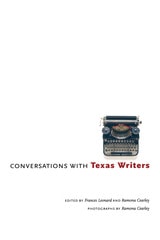
Conversations with Texas Writers
Edited by Frances Leonard and Ramona Cearley, for Humanities Texas
University of Texas Press, 2005
Larry McMurtry declares, "Texas itself doesn't have anything to do with why I write. It never did." Horton Foote, on the other hand, says, "I've just never had a desire to write about any place else." In between those figurative bookends are hundreds of other writers—some internationally recognized, others just becoming known—who draw inspiration and often subject matter from the unique places and people that are Texas. To give everyone who is interested in Texas writing a representative sampling of the breadth and vitality of the state's current literary production, this volume features conversations with fifty of Texas's most notable established writers and emerging talents.
The writers included here work in a wide variety of genres—novels, short stories, poetry, plays, screenplays, essays, nonfiction, and magazine journalism. In their conversations with interviewers from the Writers' League of Texas and other authors' organizations, the writers speak of their apprenticeships, literary influences, working habits, connections with their readers, and the domestic and public events that have shaped their writing. Accompanying the interviews are excerpts from the writers' work, as well as their photographs, biographies, and bibliographies. Joe Holley's introductory essay—an overview of Texas writing from Cabeza de Vaca's 1542 Relación to the work of today's generation of writers, who are equally at home in Hollywood as in Texas—provides the necessary context to appreciate such a diverse collection of literary voices.
A sampling from the book:
"This land has been my subject matter. One thing that distinguishes me from the true naturalist is that I've never been able to look at land without thinking of the people who've been on it. It's fundamental to me." —John Graves
"Writing is a way to keep ourselves more in touch with everything we experience. It seems the best gifts and thoughts are given to us when we pause, take a deep breath, look around, see what's there, and return to where we were, revived." —Naomi Shihab Nye
"I've said this many times in print: the novel is the middle-age genre. Very few people have written really good novels when they are young, and few people have written really good novels when they are old. You just tail off, and lose a certain level of concentration. Your imaginative energy begins to lag. I feel like I'm repeating myself, and most writers do repeat themselves." —Larry McMurtry
"I was a pretty poor cowhand. I grew up on the Macaraw Ranch, east of Crane, Texas. My father tried very hard to make a cowboy out of me, but in my case it never seemed to work too well. I had more of a literary bent. I loved to read, and very early on I began to write small stories, short stories, out of the things I liked to read." —Elmer Kelton
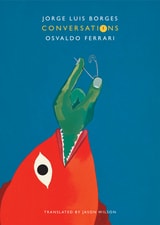
Conversations, Volume 1
Jorge Luis Borges and Osvaldo Ferrari
Seagull Books, 2014
The Argentine short-story writer, essayist, poet and translator, contributed immensely to twentieth-century literature, and more specifically to the genres of magical realism and fantasy. As he progressively lost his sight—he became completely blind by the age of fifty-five—the darkness behind his eyelids held enchanting imagery that translated into rich symbolism in his work. The inner workings of his curious mind are seen vividly in his conversations with Ferrari, and there’s not a subject on which he doesn’t cast surprising new light. As in his tale “The Other,” where two Borgeses meet up on a bench beside the River Charles, this is a dialogue between a young poet and the elder teller of tales where all experience floats in a miracle that defies linear time.
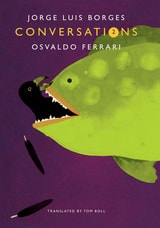
Conversations
Volume 2Jorge Luis Borges and Osvaldo Ferrari
Seagull Books, 2015
In Conversations: Volume 2, Borges and Ferrari engage in a dialogue that is both improvisational and frequently humorous as they touch on subjects as diverse as epic poetry, detective fiction, Buddhism, and the moon landing. With his signature wit, Borges offers insight into the philosophical basis of his stories and poems, his fascination with religious mysticism, and the idea of life as a dream. He also dwells on more personal themes, including the influence of his mother and father on his intellectual development, his friendships, and living with blindness. These recollections are alive to the passage of history, whether in the changing landscape of Buenos Aires or a succession of political conflicts, leading Borges to contemplate what he describes as his “South American destiny.”
The recurrent theme of these conversations, however, is a life lived through books. Borges draws on the resources of a mental library that embraces world literature—ancient and modern. He recalls the works that were a constant presence in his memory and maps his changing attitudes to a highly personal canon. In the prologue to the volume, Borges celebrates dialogue and the transmission of culture across time and place. These conversations are a testimony to the supple ways that Borges explored his own relation to numerous traditions.

Craftsmanship and the Michigan Union Carpenter
Philip A. Korth
University of Wisconsin Press, 1991
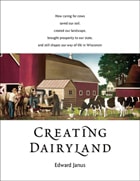
Creating Dairyland
How caring for cows saved our soil, created our landscape, brought prosperity to our state, and still shapes our way of life in WisconsinEdward Janus
Wisconsin Historical Society Press, 2011
The story of dairying in Wisconsin is the story of how our very landscape and way of life were created. By making cows the center of our farm life and learning how to care for them, our ancestors launched a revolution that changed much more than the way farmers earned their living — it changed us.

Creating Dairyland
How caring for cows saved our soil, created our landscape, brought prosperity to our state, and still shapes our way of life in WisconsinEdward Janus
Wisconsin Historical Society Press, 2011
The story of dairying in Wisconsin is the story of how our very landscape and way of life were created. By making cows the center of our farm life and learning how to care for them, our ancestors launched a revolution that changed much more than the way farmers earned their living — it changed us.