Results by title
99 books match the query 'Knowledge, Theory of' and 4 start with c

Cognition and Work
A Study concerning the Value and Limits of the Pragmatic Motifs in the Cognition of the WorldMax Scheler; Translated from the German by Zachary Davis
Northwestern University Press, 2021
Max Scheler’s Cognition and Work (Erkenntnis und Arbeit) first appeared in German in 1926, just two years before his death. The first part of the book offers one of the earliest critical analyses of American pragmatism, an analysis that would come to have a significant impact on the reception of pragmatism in Germany and western Europe. The second part of the work contains Scheler’s phenomenological account of perception and the experience of reality, an account that is as original as both Husserl’s and Merleau-Ponty’s phenomenologies of perception. Scheler aims to show that the modern mechanistic view of nature fails to account for the dynamic relation that not only the human being but all living beings have to the environment they inhabit.
Available in English translation for the first time, Cognition and Work pushes the boundaries of phenomenology as it is traditionally understood and offers insight into Scheler’s distinct metaphysics. This book is essential reading for those interested in phenomenology, pragmatism, perception, and living beings in their relation to the natural world.

Constructing the Pluriverse
The Geopolitics of KnowledgeBernd Reiter, editor
Duke University Press, 2018
Contributors. Zaid Ahmad, Manuela Boatcă, Hans-Jürgen Burchardt, Raewyn Connell, Arturo Escobar, Sandra Harding, Ehsan Kashfi, Venu Mehta, Walter D. Mignolo, Ulrich Oslender, Issiaka Ouattara, Bernd Reiter, Manu Samnotra, Catherine E. Walsh, Aram Ziai

Conversations with Jean Piaget
Jean-Claude Bringuier
University of Chicago Press, 1989
"The tone is one of constant movement from the most ordinary to the most abstruse. There are 14 conversations with 'le Patron,' some in 1969, some in 1975, and several more with co-workers in various fields. . . . In Mr. Bringuier's book, in a pleasant informal way, we see a sophisticated non-scientist exploring Piaget's domain with the master. Some of Piaget's best-known findings about children as explained along the way, but Mr. Bringuier has ways of bringing out the relation of this psychological work to the whole of Piaget's enterprise, and we get a good sense of the man and his work."—Howard E. Gruber, New York Times Book Review
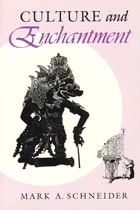
Culture and Enchantment
Mark A. Schneider
University of Chicago Press, 1993
For interpretive disciplines, Schneider suggests, meaning often behaves behaves as mysteriously as the apparitions pursued by centuries ago by natural philosophers. He demonstrates this using two case studies from anthropology: Clifford Geertz's description of Balinese cockfights and Yoruba statuary, and Claude Levi-Strauss's analyses of myths. These provide a basis for actively engaging disputes over the meaning and interpretation of culture.
Culture and Enchantment will appeal to an interdisciplinary audience in anthropology, sociology, history, history and sociology of science, culture studies, and literary theory. Schneider's provocative arguments will make this book a fulcrum in the continuing debate over the nature and prospects of cultural inquiry.