Results by title
128 books match the query 'Language and languages' and 7 start with c
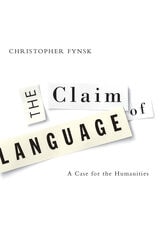
Claim Of Language
A Case For The HumanitiesChristopher Fynsk
University of Minnesota Press, 2004
Argues for the importance of humanities research in an era of globalization and technical reason
The humanities—in their conceptual and intellectual specificity, disciplinary rigor, and ethical, social, and political potential—are very much in need of defense and rearticulation in our time, particularly from a perspective that moves beyond the political and philosophical reductions of identity politics. In The Claim of Language, Christopher Fynsk clearly and eloquently does just that. Leaving aside polemics, Fynsk asserts that discourses in the humanities will find real ethical-political purchase when they engage with the material events in art, literature, and social life that call for humanistic reflection.
Fynsk describes the collapse of the traditional terms of defense in the contemporary academy, and then sets out to establish that the humanities are more than a loose affiliation of academic disciplines and research projects. Showing how events in language raise questions fundamental to the humanities—questions about the nature of human experience in the modern era and the nature of the human itself—The Claim of Language proposes a renewed relationship to language as a way to rethink humanistic research. Fynsk extends his philosophical meditation with two essays on the university and the politics of philosophy. The first, devoted to the work of Gérard Granel, explores the political implications of a quite radical project of fundamental critique. The second focuses on Jacques Derrida’s propositions for a reconception of the nature and task of critical thought in the new Collège International de Philosophie.
Connecting Reading & Writing in Second Language Writing Instruction
Alan Hirvela
University of Michigan Press, 2004
Although the integrated reading-writing model has gained popularity in recent years, many teachers have little more than an intuitive sense of the connections between these skills. As part of the popular Michigan Series on Teaching Multilingual Writers, Connecting Reading and Writing in Second Language Instruction will provide invaluable background knowledge on this issue to ESL teachers in training, as well as teachers who are already practicing.
Connecting Reading & Writing in Second Language Writing Instruction, Second Edition
Alan R. Hirvela
University of Michigan Press, 2016
The new edition features two new chapters. The first is a chapter on assessment because students are now being asked to connect reading and writing in the classroom and on formal assessments like the TOEFL®. The second new chapter is an argument for accounting for transfer elements in the teaching and researching of reading-writing connections.
The goals of this revised volume are to provide: resources for those wishing to pursue reading-writing connections, summaries of the beliefs underlying those connections, ideas for teaching the connections in the classroom, and information about the work others have done to develop this domain of L2 writing.
Constraint-Based Syntax and Semantics
Papers in Honor of Danièle GodardEdited by Anne Abeille and Olivier Bonami
CSLI, 2018
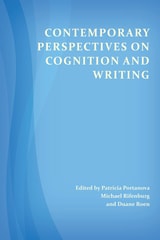
Contemporary Perspectives on Cognition and Writing
Patricia Portanova
University Press of Colorado, 2017
Co-Published with CSU Open Press
Since the 1980s, even as international writing scholars have embraced cognitive science, the number of studies building on research in writing and cognition has decreased in the United States. Despite this decline, significant interest and ongoing research in this critical area continues. Contemporary Perspectives on Cognition and Writing explores the historical context of cognitive studies, the importance to our field of studies in neuroscience, the applicability of habits of mind, and the role of cognition in literate development and transfer. These works—each of which offers a timely contribution to research, teaching, and learning in the composition classroom—are book-ended by a foreword and afterword by cognition and writing pioneers John Hayes and Linda Flower. This collection, as a result, offers a historical marker of where we were in cognitive studies and where we might go.
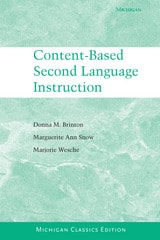
Content-Based Second Language Instruction
Michigan Classics EditionDonna M. Brinton, Marguerite Ann Snow, and Marjorie Wesche
University of Michigan Press, 2003
While the core of the book remains the same, new features discuss important CBI-related research and modifications to the pedagogy in the past many years.
Content-Based Second Language Instruction, Michigan Classics Edition, now includes:
a new preface
a glossary of key terms
an updated bibliography
an epilogue highlighting the major developments in the field since 1989.
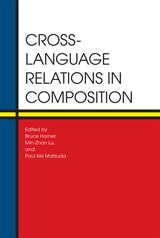
Cross-Language Relations in Composition
Edited by Bruce Horner, Min-Zhan Lu, and Paul Kei Matsuda
Southern Illinois University Press, 2010
Cross-Language Relations in Composition brings together the foremost scholars in the fields of composition, second language writing, education, and literacy studies to address the limitations of the tacit English-only policy prevalent in composition pedagogy and research and to suggest changes for the benefit of writing students and instructors throughout the United States. Recognizing the growing linguistic diversity of students and faculty, the ongoing changes in the English language as a result of globalization, and the increasingly blurred categories of native, foreign, and second language English speakers, editors Bruce Horner, Min-Zhan Lu, and Paul Kei Matsuda have compiled a groundbreaking anthology of essays that contest the dominance of English monolingualism in the study and teaching of composition and encourage the pursuit of approaches that embrace multilingualism and cross-language writing as the norm for teaching and research.
The nine chapters comprising part 1 of the collection focus on the origins of the “English only” bias dominating U.S. composition classes and present alternative methods of teaching and research that challenge this monolingualism. In part 2, nine composition teachers and scholars representing a variety of theoretical, institutional, and professional perspectives propose new, compelling, and concrete ways to understand and teach composition to students of a “global,” plural English, a language evolving in a multilingual world.
Drawing on recent theoretical work on genre, complexity, performance and identity, as well as postcolonialism, Cross-Language Relations in Composition offers a radically new approach to composition teaching and research, one that will prove invaluable to all who teach writing in today’s multilingual college classroom.