Results by title
1445 books match the query 'Life Sciences' and 66 start with c
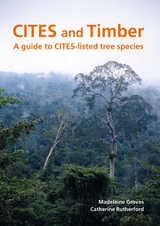
CITES and Timber
A guide to CITES-listed tree speciesMadeline Groves and Catherine Rutherford
Royal Botanic Gardens, Kew, 2015
Additional sections cover timber identification and measurement, guidance on CITES documentation and key resources.
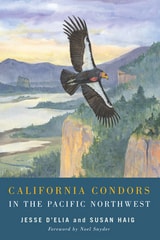
California Condors in the Pacific Northwest
Jesse D'Elia and Susan M. Haig
Oregon State University Press, 2013
Despite frequent depiction as a bird of California and the desert southwest, North America’s largest avian scavenger once graced the skies of the Pacific Northwest, from northern California to British Columbia. This important volume documents the condor’s history in the region, from prehistoric times to the early twentieth century, and explores the challenges of reintroduction.
Jesse D’Elia and Susan Haig investigate the paleontological and observational record as well as the cultural relationships between Native American tribes and condors, providing the most complete assessment to date of the condor’s occurrence in the Pacific Northwest. They evaluate the probable causes of regional extinction and the likelihood that condors once bred in the region, and they assess factors that must be considered in determining whether they could once again thrive in Northwest skies.
Incorporating the newest research and findings and more than eighty detailed historical accounts of human encounters with these birds of prey, California Condors in the Pacific Northwest sets a new standard for examining the historical record of a species prior to undertaking a reintroduction effort. It is a vital reference for academics, agency decision makers, conservation biologists, and readers interested in Northwest natural history. The volume is beautifully illustrated by Ram Papish and includes a number of previously unpublished photographs.
California
A Fire SurveyStephen J. Pyne
University of Arizona Press, 2016
In this collection of essays on the region, Stephen J. Pyne colorfully explores the ways the region has approached fire management and what sets it apart from other parts of the country. Pyne writes that what makes California’s fire scene unique is how its dramatically distinctive biomes have been yoked to a common system, ultimately committed to suppression, and how its fires burn with a character and on a scale commensurate with the state’s size and political power. California has not only a ferocity of flame but a cultural intensity that few places can match. California’s fires are instantly and hugely broadcast. They shape national institutions, and they have repeatedly defined the discourse of fire’s history. No other place has so sculpted the American way of fire.
California is part of the multivolume series describing the nation’s fire scene region by region. The volumes in To the Last Smoke also cover Florida, the Northern Rockies, the Great Plains, the Southwest, and several other critical fire regions. The series serves as an important punctuation point to Pyne’s fifty-year career with wildland fire—both as a firefighter and a fire scholar. These unique surveys of regional pyrogeography are Pyne’s way of “keeping with it to the end,” encompassing the directive from his rookie season to stay with every fire “to the last smoke.”

Camouflage and Mimicry
Denis Owen
University of Chicago Press, 1982
Camouflage and Mimicry describes the remarkably varied attempts of species to deceive their predators and prey. It illustrates a group of strategies which help to increase an individual's chances of survival.
Can Microbial Communities Regenerate?
Uniting Ecology and Evolutionary BiologyAndrew Inkpen and Ford Doolittle
University of Chicago Press, 2022
Microorganisms, such as bacteria, are important determinants of health at the individual, ecosystem, and global levels. And yet many aspects of modern life, from the overuse of antibiotics to chemical spills and climate change, can have devastating, lasting impacts on the communities formed by microorganisms. Drawing on the latest scientific research and real-life examples such as attempts to reengineer these communities through microbial transplantation, the construction of synthetic communities of microorganisms, and the use of probiotics, this book explores how and why communities of microorganisms respond to disturbance, and what might lead to failure. It also unpacks related and interwoven philosophical questions: What is an organism? Can a community evolve by natural selection? How can we make sense of function and purpose in the natural world? How should we think about regeneration as a phenomenon that occurs at multiple biological scales? Provocative and nuanced, this primer offers an accessible conceptual and theoretical understanding of regeneration and evolution at the community level that will be essential across disciplines including philosophy of biology, conservation biology, microbiomics, medicine, evolutionary biology, and ecology.

Canine Confidential
Why Dogs Do What They DoMarc Bekoff
University of Chicago Press, 2018
Canine Confidential has the answers. Written by award-winning scientist—and lifelong dog lover—Marc Bekoff, it not only brilliantly opens up the world of dog behavior, but also helps us understand how we can make our dogs’ lives the best they can possibly be. Rooted in the most up-to-date science on cognition and emotion—fields that have exploded in recent years—Canine Confidential is a wonderfully accessible treasure trove of new information and myth-busting. Peeing, we learn, isn’t always marking; grass-eating isn’t always an attempt to trigger vomiting; it’s okay to hug a dog—on their terms; and so much more. There’s still much we don’t know, but at the core of the book is the certainty that dogs do have deep emotional lives, and that as their companions we must try to make those lives as rich and fulfilling as possible. It’s also clear that we must look at dogs as unique individuals and refrain from talking about “the dog.”
Bekoff also considers the practical importance of knowing details about dog behavior. He advocates strongly for positive training—there’s no need to dominate or shame dogs or to make them live in fear—and the detailed information contained in Canine Confidential has a good deal of significance for dog trainers and teachers. He also suggests that trainers should watch and study dogs in various contexts outside of those in which they are dealing with clients, canine and human, with specific needs.
There’s nothing in the world as heartwarming as being greeted by your dog at the end of the workday. Read Canine Confidential, and you’ll be on the road to making your shared lives as happy, healthy, and rewarding as they can possibly be.
Canyon and Cosmos
Searching for Human Identity in the Grand CanyonDon Lago
University of Nevada Press, 2025
Named one of the 2026 Southwest Books of the Year
Throughout history, humans have sought creation stories to define our identity and affirm our connections with the universe, diverse life forms, and one another. Over the last two centuries, science has delivered a bold new creation story full of immense time and space, extraordinary objects, and powerful natural forces. Science ideas can seem mere abstractions, but at the Grand Canyon, better than anywhere else on Earth, our new creation story is manifested physically and powerfully.
A major work of literary nature writing, Canyon and Cosmos takes readers on a journey through the Grand Canyon's deep time, geological forces, and biological evolution, making them very real, personal, and meaningful. Through decades of hiking and kayaking, author Don Lago has gotten to know the canyon intimately. Ranging through world mythologies and Native American spirituality, he explores how humans have sought to understand the universe. He confronts existential questions of whether humans can find enough meaning in the scientific cosmos. Through poetic prose, symbolism, and philosophical insight, he shows how existence itself is our deepest source of life and meaning.
Carex of Illinois and Surrounding States
The Oval SedgesMichael Murphy, Greg Spyreas, and Paul Marcum
University of Illinois Press, 2025
Drawing on the study of thousands of specimens, Carex of Illinois and Surrounding States: The Oval Sedges is an invaluable resource for botanists, ecologists, environmental engineers, and professional and amateur environmentalists interested in a deeper understanding of these essential plants.
Cat Musculature
A Photographic AtlasGordon Greenblatt
University of Chicago Press, 1981
This series of brilliant photographs shows the dissection of the cat musculature. It is designed for use in conjunction with the third edition of Hyman's Comparative Vertebrate Anatomy, edited by Marvalee Wake, although it can be used with other textbooks. Every possible step has been taken to make the photographs easy to interpret and to follow. Reference indications to the Wake texts are included, and also concise data on the origin, insertion, and action of each muscle. The scale is such that in most cases no more than five muscles are shown per photograph, thus simplifying the task of visualizing the individual muscles. An invaluable aid for every student of cat anatomy.

Catalogue of Fungi of Colombia
Edited by Rafael F. De Almeida, Robert Lücking, Aída Vasco-Palacios, Ester Gaya, and Mauricio Diazgranados
Royal Botanic Gardens, Kew, 2022
Catalogue of Fungi of Colombia is the first comprehensive listing of the known Colombian fungi. It was compiled by a team of Colombian and international mycologists from the Royal Botanic Gardens, Kew, the Humboldt Institute, and other partner organizations. The catalog is accompanied by fifteen chapters written by specialists providing perspectives on the state of knowledge of the Colombian fungi covering a range of topics, from the diversity of the main groups of fungi and history of mycological studies in Colombia to aspects of the biogeography, ecology, biotechnology, conservation, and uses of Colombian fungi. The catalog is further enriched by supplementary material that allows readers to explore open questions, develop new ideas on the use of fungi and their conservation, and foster social and environmental awareness.
Catalogue of Useful Plants of Colombia
Edited by Raquel Negrão, Alexandre K. Monro, Carolina Castellanos-Castro, and Mauricio Diazgranados
Royal Botanic Gardens, Kew, 2022
The Catalogue of Useful Plants of Colombia is the most comprehensive listing of the known useful plants found in Colombia. It was compiled by a team of Colombian and international botanists from the Royal Botanic Gardens, Kew, the Humboldt Institute, and other partner organizations. The catalog is accompanied by eleven chapters written by specialists covering a range of topics, from taxonomic, geographic, and conservation aspects to the plants’ uses in sustainable value chains and contributions to the bioeconomy. Specific topics such as medicinal, edible, and insecticide plants and their representation in the Amazon region are also covered. The catalog includes supplementary material that allows readers to explore open questions and opportunities, develop new ideas on the use of plants and their conservation, and foster social and environmental awareness.
Catastrophic Thinking
Extinction and the Value of Diversity from Darwin to the AnthropoceneDavid Sepkoski
University of Chicago Press, 2020
We live in an age in which we are repeatedly reminded—by scientists, by the media, by popular culture—of the looming threat of mass extinction. We’re told that human activity is currently producing a sixth mass extinction, perhaps of even greater magnitude than the five previous geological catastrophes that drastically altered life on Earth. Indeed, there is a very real concern that the human species may itself be poised to go the way of the dinosaurs, victims of the most recent mass extinction some 65 million years ago.
How we interpret the causes and consequences of extinction and their ensuing moral imperatives is deeply embedded in the cultural values of any given historical moment. And, as David Sepkoski reveals, the history of scientific ideas about extinction over the past two hundred years—as both a past and a current process—is implicated in major changes in the way Western society has approached biological and cultural diversity. It seems self-evident to most of us that diverse ecosystems and societies are intrinsically valuable, but the current fascination with diversity is a relatively recent phenomenon. In fact, the way we value diversity depends crucially on our sense that it is precarious—that it is something actively threatened, and that its loss could have profound consequences. In Catastrophic Thinking, Sepkoski uncovers how and why we learned to value diversity as a precious resource at the same time as we learned to think catastrophically about extinction.
Catholicism, Race and Empire
Eugenics in Portugal, 1900-1950Richard Cleminson
Central European University Press, 2014
Cattle In The Cold Desert, Expanded Edition
James A. Young
University of Nevada Press, 2002
A sophisticated ecological analysis of ranching in northern Nevada featuring a new chapter and new epilogue by the authors.First published in 1985, Cattle in the Cold Desert has become a classic in the environmental history of the Great Basin, brilliantly combining a lively account of the development of the Great Basin grazing industry with a detailed scientific discussion of the ecology of its sagebrush/grassland plant communities. The volume traces the history of white settlement in the Great Basin from about 1860, along with the arrival of herds of cattle and sheep to exploit the forage resources of a pristine environment and, through the history of John Sparks, a pioneer cattleman, illustrates how the herdsmen interacted with the sagebrush/grasslands of the cold desert West. As the story unfolds on two levels—that of the herdsmen adapting their livelihood to the challenging conditions of the Great Basin's scanty forage, aridity, and fierce winters, and that of the fragile ecology of the desert plant communities responding to the presence of huge herds of livestock—we see the results of a grand experiment initiated by men willing to venture beyond the limits of accepted environmental potential to settle the Great Basin, as well as the often ruinous consequences of the introduction of domestic livestock into the plant communities of the region. The result is a remarkably balanced and insightful discussion of the grazing industry in the Intermountain West. This new paperback edition includes an additional chapter that addresses the impact of wild mustangs on the Great Basin rangelands, and an epilogue that discusses changes in rangeland management and in rangeland conditions, especially the impact of recent wildfires. As concern over the future of the Great Basin's unique rangeland environment and its principal agricultural industry grows, Cattle in the Cold Desert remains essential reading for everyone who cares about this underappreciated region of the American West.
Causes of Evolution
A Paleontological PerspectiveEdited by Robert M. Ross and Warren D. Allmon
University of Chicago Press, 1990
Causes of Evolution presents a broad sampling of paleontological research programs encompassing vertebrates, invertebrates, and vascular plants; empirical work and theoretical models; organisms ranging in age from Cambrian to Recent; and temporal scales from ecological time to hundreds of millions of years. The diverse array of research styles and opinions presented will acquaint scientists in related fields with the strengths and weaknesses of paleontology as an approach to evolutionary studies and will give evolutionary biologists of every stripe new bases for evaluating the scope and bias of their own work.
Cetacean Societies
Field Studies of Dolphins and WhalesEdited by Janet Mann, Richard C. Connor, Peter L. Tyack, and Hal Whitehead
University of Chicago Press, 1999
Long-lived, slow to reproduce, and often hidden beneath the water's surface, whales and dolphins (cetaceans) have remained elusive subjects for scientific study even though they have fascinated humans for centuries. Until recently, much of what we knew about cetaceans came from commercial sources such as whalers and trainers for dolphin acts. Innovative research methods and persistent efforts, however, have begun to penetrate the depths to reveal tantalizing glimpses of the lives of these mammals in their natural habitats.
Cetacean Societies presents the first comprehensive synthesis and review of these new studies. Groups of chapters focus on the history of cetacean behavioral research and methodology; state-of-the-art reviews of information on four of the most-studied species: bottlenose dolphins, killer whales, sperm whales, and humpback whales; and summaries of major topics, including group living, male and female reproductive strategies, communication, and conservation drawn from comparative research on a wide range of species.
Written by some of the world's leading cetacean scientists, this landmark volume will benefit not just students of cetology but also researchers in other areas of behavioral and conservation ecology as well as anyone with a serious interest in the world of whales and dolphins.
Contributors are Robin Baird, Phillip Clapham, Jenny Christal, Richard Connor, Janet Mann, Andrew Read, Randall Reeves, Amy Samuels, Peter Tyack, Linda Weilgart, Hal Whitehead, Randall S. Wells, and Richard Wrangham.
Chance in Evolution
Edited by Grant Ramsey and Charles H. Pence
University of Chicago Press, 2016
The book begins by placing chance in historical context, starting with the ancients and moving through Darwin and his contemporaries, documenting how the understanding of chance changed as Darwin’s theory of evolution by natural selection developed into the modern synthesis, and how the acceptance of chance in Darwinian theory affected theological resistance to it. Subsequent chapters detail the role of chance in contemporary evolutionary theory—in particular, in connection with the concepts of genetic drift, mutation, and parallel evolution—as well as recent empirical work in the experimental evolution of microbes and in paleobiology. By engaging in collaboration across biology, history, philosophy, and theology, this book offers a comprehensive and synthetic overview both of the history of chance in evolution and of our current best understanding of the impact of chance on life on earth.
Changing Precipitation Regimes and Terrestrial Ecosystems
A North American PerspectiveJake F. Weltzin
University of Arizona Press, 2003
This volume provides a central source of information about this newly emerging area of global change research. It presents ongoing investigations into the responses of plant communities and ecosystems to the experimental manipulation of precipitation in a variety of field settings—particularly in the western and central United States, where precipitation is already scarce or variable. By exploring methods that can be used to predict responses of ecosystems to changes in precipitation regimes, it demonstrates new approaches to global change research and highlights the importance of precipitation regimes in structuring ecosystems.
The contributors first document the importance of precipitation, soil characteristics, and soil moisture to plant life. They then focus on the roles of precipitation amount, seasonality, and frequency in shaping varied terrestrial ecosystems: desert, sagebrush steppe, oak savanna, tall- and mixed-grass prairie, and eastern deciduous forest. These case studies illustrate many complex, tightly woven, interactive relationships among precipitation, soils, and plants—relationships that will dictate the responses of ecosystems to changes in precipitation regimes.
The approaches utilized in these chapters include spatial comparisons of vegetation structure and function across different ecosytems; analyses of changes in plant architecture and physiology in response to temporal variation in precipitation; experiments to manipulate water availability; and modeling approaches that characterize the relationships between climate variables and vegetation types. All seek to assess vegetation responses to major shifts in climate that appear to be occurring at present and may become the norm in the future.
As the first volume to discuss and document current and cutting-edge concepts and approaches to research into changing precipitation regimes and terrestrial ecosystems, this book shows the importance of developing reliable predictions of the precipitation changes that may occur with global warming. These studies clearly demonstrate that patterns of environmental variation and the nature of vegetation responses are complex phenomena that are only beginning to be understood, and that these experimental approaches are critical for our understanding of future change.
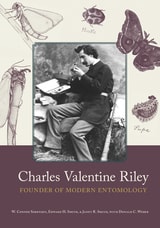
Charles Valentine Riley
Founder of Modern EntomologyW. Conner Sorensen, Edward H. Smith, and Janet R. Smith, with Donald C. Weber
University of Alabama Press, 2019
This definitive biography is the first full account of a fascinating American scientist whose leadership created the modern science of entomology that recognizes both the essential role of insects in natural systems and their challenge to the agricultural food supply that sustains humankind. Charles Valentine Riley: Founder of Modern Entomology tells the story of how Riley (1843–1895), a young British immigrant to America—with classical schooling, only a smattering of natural history knowledge, and with talent in art and writing but no formal training in science—came to play a key role in the reorientation of entomology from the collection and arrangement of specimens to a scientific approach to insect evolution, diversity, ecology, and applied management of insect pests.
Drawing on Riley’s personal diaries, family records, correspondence, and publications, the authors trace Riley’s career as farm laborer, Chicago journalist, Missouri State Entomologist, chief federal entomologist, founder of the National Insect Collection, and initiator of the professional organization that became the Entomological Society of America. Also examined in detail are his spectacular campaigns against the Rocky Mountain Locust that stalled western migration in the 1870s, the Grape Phylloxera that threatened French vineyards in the 1870s and 80s, the Cotton Worm that devastated southern cotton fields after the Civil War, and the Cottony Cushion Scale that threatened the California citrus industry in the 1880s. The latter was defeated through importation of the Vedalia Beetle from Australia, the spectacular first example of biological control of an invasive insect pest by its introduced natural enemy.
A striking figure in appearance and deed, Riley combined scientific, literary, artistic, and managerial skills that enabled him to influence every aspect of entomology. A correspondent of Darwin and one of his most vocal American advocates, he discovered the famous example of mimicry of the Monarch butterfly by the Viceroy, and described the intricate coevolution of yucca moths and yuccas, a complex system that fascinates evolutionary scientists to this day. Whether applying evolutionary theory to pest control, promoting an American silk industry, developing improved spray technologies, or promoting applied entomology in state and federal government and to the public, Riley was the central figure in the formative years of the entomology profession. In addition to showcasing his own renderings of the insects he investigated, this comprehensive account provides fresh insight into the personal and public life of an ingenious, colorful, and controversial scientist, who aimed to discover, understand, and outsmart the insects.
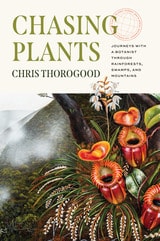
Chasing Plants
Journeys with a Botanist through Rainforests, Swamps, and MountainsChris Thorogood
University of Chicago Press, 2022
From an acclaimed botanist and artist, a thrilling and beautifully illustrated expedition around the globe in search of the world’s most extraordinary plants.
After making a strange discovery on a childhood trip to Ikea—a stand of sap-sucking, leafless broomrapes, stealing nutrients from their neighbors’ roots—Chris Thorogood dreamed of becoming a botanist and would stop at nothing to feed his growing addiction to plants. In his hair-raising adventures across Europe, Africa, the Middle East, and Asia, Thorogood treads a death-defying path over cliffs, up erupting volcanoes, through typhoons, and out into the very heart of the world’s vast, green wilderness. Along the way, he encounters pitcher plants, irises, and orchids more heart-piercingly beautiful than could ever be imagined.
But with Thorogood as our guide in Chasing Plants, we not only imagine: we see. An internationally acclaimed botanical illustrator, Thorogood conjures his adventures spent seed-collecting and conserving plants around the world back to life in his electric paintings, which feature throughout the book. They bring plants out of the shadows, challenging us to see their intrigue and their character, and helping us to understand why plant species must be protected. To join Thorogood in his wild adventures is to be cast under his green spell: readers will never think of plants the same way again.
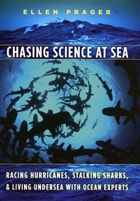
Chasing Science at Sea
Racing Hurricanes, Stalking Sharks, and Living Undersea with Ocean ExpertsEllen Prager
University of Chicago Press, 2008
With passion and wit, well-known marine scientist Ellen Prager shares her stories as well as those of her colleagues, revealing that in the field ingenuity and a good sense of humor are as essential as water, sunblock, and GPS. Serendipity is invaluable, and while collecting data is the goal, sometimes just getting back to shore means success. But despite the physical hardship and emotional duress that come with the work, optimism and adventure prompt a particularly hardy species of scientist to return again and again to the sea.
Filled with firsthand accounts of the challenges and triumphs of dealing with the extreme forces of nature and the unpredictable world of the ocean, Chasing Science at Sea is a unique glimpse below the water line at what it is like and why it is important to study, explore, and spend time in one of our planet’s most fascinating and foreign environments.
Cheatgrass
Fire and Forage on the RangeJames A. Young
University of Nevada Press, 2009
Cheatgrass (Bromus tectorum) is an exotic species that appeared in North America in the late nineteenth century and has since become a dominant plant in the arid and semiarid rangelands between the Sierra Nevadas, Cascades, and Rocky Mountains. It is the first grass to appear after the region's long, cold winters and thus has become an important forage plant for livestock and wildlife. Cheatgrass is also a major environmental hazard in the sagebrush plant communities where it has established itself, providing highly combustible fuel for the wildfires that have ravaged so much of the Great Basin since the mid-twentieth century. Cheatgrass is the first comprehensive study of this highly invasive plant that has changed the ecology of millions of acres of western rangeland. Authors Young and Clements have researched the biology and impact of cheatgrass for four decades. Their book addresses the subject from several perspectives: the history of the invasion; the origins and biology of cheatgrass; its genetic variations, breeding systems, and patterns of distribution; its impact on grazing management; and the role it plays, both positive and negative, in the lives of high desert wildlife.
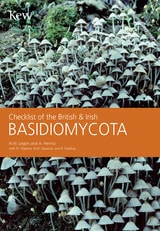
Checklist of the British & Irish Basidiomycota
M. Legon, A. Henrici, T. J. Roberts, and V. N. Spooner
Royal Botanic Gardens, Kew, 2005
An essential companion for amateur and professional mycologists, and a valuable reference tool for all wildlife recorders, ecologists and conservationists.
Chemically Imbalanced
Everyday Suffering, Medication, and Our Troubled Quest for Self-MasteryJoseph E. Davis
University of Chicago Press, 2020
Chemically Imbalanced is a field report on how ordinary people dealing with common problems explain their suffering, how they’re increasingly turning to the thin and mechanistic language of the “body/brain,” and what these encounters might tell us. Drawing on interviews with people dealing with struggles such as underperformance in school or work, grief after the end of a relationship, or disappointment with how their life is unfolding, Joseph E. Davis reveals the profound revolution in consciousness that is underway. We now see suffering as an imbalance in the brain that needs to be fixed, usually through chemical means. This has rippled into our social and cultural conversations, and it has affected how we, as a society, imagine ourselves and envision what constitutes a good life. Davis warns that what we envision as a neurological revolution, in which suffering is a mechanistic problem, has troubling and entrapping consequences. And he makes the case that by turning away from an interpretive, meaning-making view of ourselves, we thwart our chances to enrich our souls and learn important truths about ourselves and the social conditions under which we live.
Chemically Imbalanced
Everyday Suffering, Medication, and Our Troubled Quest for Self-MasteryJoseph E. Davis
University of Chicago Press, 2020
Everyday suffering—those conditions or feelings brought on by trying circumstances that arise in everyone’s lives—is something that humans have grappled with for millennia. But the last decades have seen a drastic change in the way we approach it. In the past, a person going through a time of difficulty might keep a journal or see a therapist, but now the psychological has been replaced by the biological: instead of treating the heart, soul, and mind, we take a pill to treat the brain.
Chemically Imbalanced is a field report on how ordinary people dealing with common problems explain their suffering, how they’re increasingly turning to the thin and mechanistic language of the “body/brain,” and what these encounters might tell us. Drawing on interviews with people dealing with struggles such as underperformance in school or work, grief after the end of a relationship, or disappointment with how their life is unfolding, Joseph E. Davis reveals the profound revolution in consciousness that is underway. We now see suffering as an imbalance in the brain that needs to be fixed, usually through chemical means. This has rippled into our social and cultural conversations, and it has affected how we, as a society, imagine ourselves and envision what constitutes a good life. Davis warns that what we envision as a neurological revolution, in which suffering is a mechanistic problem, has troubling and entrapping consequences. And he makes the case that by turning away from an interpretive, meaning-making view of ourselves, we thwart our chances to enrich our souls and learn important truths about ourselves and the social conditions under which we live.
Chicago Gardens
The Early HistoryCathy Jean Maloney
University of Chicago Press, 2008
Cathy Jean Maloney has spent decades researching the city’s horticultural heritage, and here she reveals the unusual history of Chicago’s first gardens. Challenged by the region’s clay soil, harsh winters, and fierce winds, Chicago’s pioneering horticulturalists, Maloney demonstrates, found imaginative uses for hardy prairie plants. This same creative spirit thrived in the city’s local fruit and vegetable markets, encouraging the growth of what would become the nation’s produce hub. The vast plains that surrounded Chicago, meanwhile, inspired early landscape architects, such as Frederick Law Olmsted, Jens Jensen, and O.C. Simonds, to new heights of grandeur.
Maloney does not forget the backyard gardeners: immigrants who cultivated treasured seeds and pioneers who planted native wildflowers. Maloney’s vibrant depictions of Chicagoans like “Bouquet Mary,” a flower peddler who built a greenhouse empire, add charming anecdotal evidence to her argument–that Chicago’s garden history rivals that of New York or London and ensures its status as a world-class capital of horticultural innovation.
With exquisite archival photographs, prints, and postcards, as well as field guide descriptions of living legacy gardens for today’s visitors, Chicago Gardens will delight green-thumbs from all parts of the world.
Chimpanzees in Context
A Comparative Perspective on Chimpanzee Behavior, Cognition, Conservation, and WelfareEdited by Lydia M. Hopper and Stephen R. Ross
University of Chicago Press, 2020
After a foreword by Jane Goodall, the book features sections that examine chimpanzee life histories and developmental milestones, behavior, methods of study, animal communication, cooperation, communication, and tool use. The book ends with chapters that consider how we can apply contemporary knowledge of chimpanzees to enhance their care and conservation. Collectively, these chapters remind us of the importance of considering the social, ecological, and cognitive context of chimpanzee behavior, and how these contexts shape our comprehension of chimpanzees. Only by leveraging these powerful perspectives do we stand a chance at improving how we understand, care for, and protect this species.
Christmas Trees for Pleasure and Profit
Wray, Robert D
Rutgers University Press, 2008
A perennial bestseller, this illustrated guide covers selecting land, choosing species, planting, harvesting, and managing a plantation. Wray provides guidance for choosing species suitable for the grower's situation, where and how to get planting stock, and how to care for it. The planting process is described in detail, including both hand and machine methods. The book presents useful techniques for protecting the growing trees from weeds, animals, fire, insects, and disease, and offers a full description of shearing or shaping trees to improve their form and densityùkeys to a successful crop.
As the grower's job is not done until the trees are sold, issues of grading, harvesting, advertising, and marketing are examined. A chapter on finances deals with costs, profits, and taxes. From novice to experienced grower, there is something in this book for everyone.
Citrus
A HistoryPierre Laszlo
University of Chicago Press, 2007
“Laszlo . . . has approached the lore of citrus fruit with the élan of a master chef (the man is French, after all), mixing history, economics, biology and chemistry to produce a book that will bring a smile to readers of every taste.”—Natural History
“Altogether charming, eccentric, erudite, and definitely worth the price.”—Times Higher Education Supplement
“Stimulating. . . . Laszlo shows that the citrus fruit ‘is a treasure trove of chemicals that are highly useful to humankind’—which also happens to taste wonderful.”—Sunday Times (UK)
“Did you know there are a billion citrus trees under cultivation, or that grapefruit juice may potentiate the effects of Viagra? Citrus mines over two millennia of history to explore the spread of these fruits out of Asia, their commercialization in the United States, and enduring symbolism the world over.”—New Scientist
City Creatures
Animal Encounters in the Chicago WildernessEdited by Gavin Van Horn and Dave Aftandilian
University of Chicago Press, 2015
We usually think of cities as the domain of humans—but we are just one of thousands of species that call the urban landscape home. Chicago residents knowingly move among familiar creatures like squirrels, pigeons, and dogs, but might be surprised to learn about all the leafhoppers and water bears, black-crowned night herons and bison, beavers and massasauga rattlesnakes that are living alongside them. City Creatures introduces readers to an astonishing diversity of urban wildlife with a unique and accessible mix of essays, poetry, paintings, and photographs.
The contributors bring a story-based approach to this urban safari, taking readers on birding expeditions to the Magic Hedge at Montrose Harbor on the North Side, canoe trips down the South Fork of the Chicago River (better known as Bubbly Creek), and insect-collecting forays or restoration work days in the suburban forest preserves.
The book is organized into six sections, each highlighting one type of place in which people might encounter animals in the city and suburbs. For example, schoolyard chickens and warrior wasps populate “Backyard Diversity,” live giraffes loom at the zoo and taxidermy-in-progress pheasants fascinate museum-goers in “Animals on Display,” and a chorus of deep-freeze frogs awaits in “Water Worlds.” Although the book is rooted in Chicago’s landscape, nature lovers from cities around the globe will find a wealth of urban animal encounters that will open their senses to a new world that has been there all along. Its powerful combination of insightful narratives, numinous poetry, and full-color art throughout will help readers see the city—and the creatures who share it with us—in an entirely new light.
Clathraceae
D. M. Dring
Royal Botanic Gardens, Kew, 1980
Reprinted from Kew Bulletin Vol. 35 (1).
Clean Water, 2nd ed
An Introduction to Water Quality and Water Pollution ControlKenneth M. Vigil
Oregon State University Press, 2003
Most other books on water quality and pollution control are highly technical and very specific, and are aimed at engineers, scientists, or attorneys. Clean Water, on the other hand, is a comprehensive discussion of the subject intended for a wider audience of science students, educators, and the general public.
Vigil avoids the use of technical jargon and uses many photos and diagrams to illustrate and explain concepts. He provides sufficient detail to educate readers about many broad topics and includes additional references at the end of each chapter for exploring specific topics in more detail.
Clean Water summarizes the basic fundamentals of water chemistry and microbiology and outlines important water quality rules and regulations, all in concise, understandable prose. It describes the basic scientific principles behind water pollution control and the broader approach of addressing water pollution problems through watershed management. There are sections on drinking water and on citizen involvement in water pollution control efforts at home and in the community.
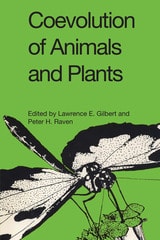
Coevolution of Animals and Plants
Symposium V, First International Congress of Systematic and Evolutionary Biology, 1973Edited by Lawrence E. Gilbert and Peter H. Raven
University of Texas Press, 1975
It has long been recognized that plants and animals profoundly affect one another’s characteristics during the course of evolution. However, the importance of coevolution as a dynamic process involving such diverse factors as chemical communication, population structure and dynamics, energetics, and the evolution, structure, and functioning of ecosystems has been widely recognized for a comparatively short time. Coevolution represents a point of view about the structure of nature that only began to be fully explored in the late twentieth century. The papers presented here herald its emergence as an important and promising field of biological research.
Coevolution of Animals and Plants is the first book to focus on the dynamic aspects of animal-plant coevolution. It covers, as broadly as possible, all the ways in which plants interact with animals. Thus, it includes discussions of leaf-feeding animals and their impact on plant evolution as well as of predator-prey relationships involving the seeds of angiosperms. Several papers deal with the most familiar aspect of mutualistic plant-animal interactions—pollination relationships. The interactions of orchids and bees, ants and plants, and butterflies and plants are discussed. One article provides a fascinating example of more indirect relationships centered around the role of carotenoids, which are produced by plants but play a fundamental part in the visual systems of both plants and animals.
Coevolution of Animals and Plants provides a general conceptual framework for studies on animal-plant interaction. The papers are written from a theoretical, rather than a speculative, standpoint, stressing patterns that can be applied in a broader sense to relationships within ecosystems.
Contributors to the volume include Paul Feeny, Miriam Rothschild, Christopher Smith, Brian Hocking, Lawrence Gilbert, Calaway Dodson, Herbert Baker, Bernd Heinrich, Doyle McKey, and Gordon Frankie.
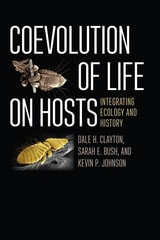
Coevolution of Life on Hosts
Integrating Ecology and HistoryDale H. Clayton, Sarah E. Bush, and Kevin P. Johnson
University of Chicago Press, 2015
Following an introduction to coevolutionary concepts, the authors combine experimental and comparative host-parasite approaches for testing coevolutionary hypotheses to explore the influence of ecological interactions and coadaptation on patterns of diversification and codiversification among interacting species. Ectoparasites—a diverse assemblage of organisms that ranges from herbivorous insects on plants, to monogenean flatworms on fish, and feather lice on birds—are powerful models for the study of coevolution because they are easy to observe, mark, and count. As lice on birds and mammals are permanent parasites that spend their entire lifecycles on the bodies of their hosts, they are ideally suited to generating a synthetic overview of coevolution—and, thereby, offer an exciting framework for integrating the concepts of coadaptation and codiversification.
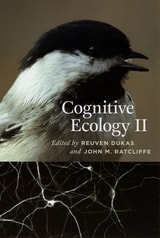
Cognitive Ecology II
Edited by Reuven Dukas and John M. Ratcliffe
University of Chicago Press, 2009
Merging evolutionary ecology and cognitive science, cognitive ecology investigates how animal interactions with natural habitats shape cognitive systems, and how constraints on nervous systems limit or bias animal behavior. Research in cognitive ecology has expanded rapidly in the past decade, and this second volume builds on the foundations laid out in the first, published in 1998.
Cognitive Ecology II integrates numerous scientific disciplines to analyze the ecology and evolution of animal cognition. The contributors cover the mechanisms, ecology, and evolution of learning and memory, including detailed analyses of bee neurobiology, bird song, and spatial learning. They also explore decision making, with mechanistic analyses of reproductive behavior in voles, escape hatching by frog embryos, and predation in the auditory domain of bats and eared insects. Finally, they consider social cognition, focusing on alarm calls and the factors determining social learning strategies of corvids, fish, and mammals.
With cognitive ecology ascending to its rightful place in behavioral and evolutionary research, this volume captures the promise that has been realized in the past decade and looks forward to new research prospects.
Cognitive Ecology
The Evolutionary Ecology of Information Processing and Decision MakingEdited by Reuven Dukas
University of Chicago Press, 1998
Individual chapters consider such issues as the evolution of learning and its influence on behavior; the effects of cognitive mechanisms on the evolution of signaling behavior; how neurobiological and evolutionary processes have shaped navigational activities; functional and mechanical explanations for altered behaviors in response to changing environments; how foragers make decisions and how these decisions are influenced by the risks of predation; and how cognitive mechanisms affect partner choice.
Cognitive Ecology will encourage biologists to consider how animal cognition affects behavior, and will also interest comparative psychologists and cognitive scientists.
Collecting Experiments
Making Big Data BiologyBruno J. Strasser
University of Chicago Press, 2019
Every scientist working today draws on databases to produce scientific knowledge. Databases have become more common than microscopes, voltmeters, and test tubes, and the increasing amount of data has led to major changes in research practices and profound reflections on the proper professional roles of data producers, collectors, curators, and analysts.
Collecting Experiments traces the development and use of data collections, especially in the experimental life sciences, from the early twentieth century to the present. It shows that the current revolution is best understood as the coming together of two older ways of knowing—collecting and experimenting, the museum and the laboratory. Ultimately, Bruno J. Strasser argues that by serving as knowledge repositories, as well as indispensable tools for producing new knowledge, these databases function as digital museums for the twenty-first century.
Coloniality in the Cliff Swallow
The Effect of Group Size on Social BehaviorCharles R. Brown and Mary Bomberger Brown
University of Chicago Press, 1996
Drawing on their twelve-year study of a population of cliff swallows in Nebraska, the Browns investigate twenty-six social and ecological costs and benefits of coloniality, many never before addressed in a systematic way for any species. They explore how these costs and benefits are reflected in reproductive success and survivorship, and speculate on the evolution of cliff swallow coloniality.
This work, the most comprehensive and detailed study of vertebrate coloniality to date, will be of interest to all who study social animals, including behavioral ecologists, population biologists, ornithologists, and parasitologists. Its focus on the evolution of coloniality will also appeal to evolutionary biologists and to psychologists studying decision making in animals.
Colorado Flora
Eastern Slope, Fourth Edition <br>A Field Guide to the Vascular PlantsWilliam A. Weber
University Press of Colorado, 2011
The revised and updated editions reflect current taxonomic knowledge. The authors describe botanical features of this unparalleled biohistorical region and its mountain ranges, basins, and plains and discuss plant geography, giving detailed notes on habitat, ecology, and range. The keys recount interesting anecdotes and introductions for each plant family. The book is rounded out with historical background of botanical work in the state, suggested readings, glossary, index to scientific and common names, references, and hundreds of illustrations. The books also contain a new contribution from Donald R. Farrar and Steve J. Popovich on moonworts. The fourth editions of both Colorado Flora: Eastern Slope and Colorado Flora: Western Slope are ideal for both student and scientist and essential for readers interested in Colorado's plant life.
Columnar Cacti and Their Mutualists
Evolution, Ecology, and ConservationEdited by Theodore H. Fleming and Alfonso Valiente-Banuet
University of Arizona Press, 2002
This book summarizes our current knowledge about the ecology, evolution, and conservation of columnar cacti and their vertebrate mutualists to show that the very survival of these cacti depends on animals who pollinate them and disperse their seeds. Contributors from the United States, Mexico, Venezuela, and Colombia explore aspects of geology and evolution that have forged this relationship, review findings in anatomy and physiology, and discuss recent research in population and community ecology as well as conservation issues. Ranging from the Sonoran Desert to the northern Andes, these studies reflect recent progress in understanding how abiotic and biotic factors interact to influence the evolution, distribution, and abundance of cacti and mutualists alike.
In addition, this book examines the ways in which humans, through the process of domestication, have modified these plants for economic benefit. The contributors also review phylogenetic relationships between cacti and nectar-feeding bats in an effort to understand how bat-plant interactions have influenced the evolution of diversity and ecological specialization of both. Because of the number of migratory pollinators feeding on columnar cacti, the authors make conservation recommendations aimed at preserving fully functional ecosystems in arid portions of the New World tropics and subtropics.
No other book treats the pollination ecology of cacti in such depth or offers such a wealth of up-to-date material on the nectar-feeding bats of the New World. As scientists become increasingly concerned with the need to protect biotic interactions, Columnar Cacti and Their Mutualists provides a benchmark for both conservation efforts and future research.
Common Ground
Encounters with Nature at the Edges of LifeRob Cowen
University of Chicago Press, 2016
That’s what Rob Cowen discovered after moving to a new home in northern England. After ten years in London he was suddenly adrift, searching for a sense of connection. He found himself drawn to a square-mile patch of waste ground at the edge of town. Scrappy, weed-filled, this heart-shaped tangle of land was the very definition of overlooked—a thoroughly in-between place that capitalism no longer had any use for, leaving nature to take its course. Wandering its meadows, woods, hedges, and fields, Cowen found it was also a magical, mysterious place, haunted and haunting, abandoned but wildly alive—and he fell in fascinated love.
Common Ground is a true account of that place and Cowen’s transformative journey through its layers and lives, but it’s much more too. As the land’s stories intertwine with events in his own life—and he learns he is to become a father for the first time—the divisions between human and nature begin to blur and shift. The place turns out to be a mirror, revealing what we are, what we’re not and how those two things are ultimately inseparable.
This is a book about discovering a new world, a forgotten world on the fringes of our daily lives, and the richness that comes from uncovering the stories and lives—animal and human—contained within. It is an unforgettable piece of nature writing, part of a brilliant tradition that stretches from Gilbert White to Robert Macfarlane and Helen Macdonald.
“I am dreaming of the edge-land again,” Cowen writes. Read Common Ground, and you, too, will be dreaming of the spaces in between, and what—including us—thrives there.
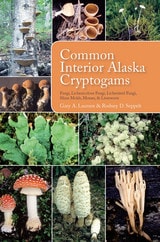
Common Interior Alaska Cryptogams
Fungi, Lichenicolous Fungi, Lichenized Fungi, Slime Molds, Mosses, and LiverwortsGary A. Laursen and Rodney D. Seppelt
University of Alaska Press, 2009
With Common Interior Alaska Cryptogams, Gary A. Laursen and Rodney Seppelt offer the first field guide to cryptogams of the Denali National Park and Preserve. Useful to both lay and professional investigators, this fully illustrated compendium covers mushroom fungi, lichenized fungi, lichenicolous fungi, slime molds, mosses, and liverworts. This field guide to commonly seen cryptogams will provide a basis for understanding their vast diversity of taxa, speciation, edibility, relative abundance, and utility, as well as the ecological roles played by these organisms.
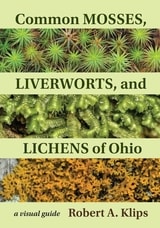
Common Mosses, Liverworts, and Lichens of Ohio
A Visual GuideRobert Klips
Ohio University Press, 2022
This engaging illustrated guidebook reveals the fascinating mosses and lichens that homeowners, outdoorspeople, and nature lovers encounter every day in Ohio and the Midwest.
In this guide to the most common and distinctive moss, liverwort, and lichen species in Ohio, readers will find concise physical descriptions, facts about natural history and ecology, and tips to distinguish look-alike species, all presented in a friendly, conversational tone.
Featuring detailed photographs of the plant and plantlike species in their natural settings, the book covers 106 mosses, thirty liverworts, and one hundred lichens and offers several avenues to match a specimen to its description page. “Where They Grow” chapters spotlight species commonly encountered on field outings, and field keys to help readers quickly identify unfamiliar samples.
While designed primarily as an identification tool, this guide also frames moss and lichen spotting in a scientific context. The two main sections—bryophytes and lichens—detail their respective taxonomic kingdoms, explain their life cycles and means of reproduction, and illustrate variation in the traits used for identification. The book is an introduction to the biology of these intriguing but too-often-overlooked organisms and a means to enjoy, identify, and catalog the biodiversity all around us.
Companion to A Sand County Almanac
Interpretive and Critical EssaysJ. Baird Callicott
University of Wisconsin Press, 1987
Conifers of the New England–Acadian Forest
A Cultural HistorySteve Keating
University of Massachusetts Press, 2024
Why did white pine help spark the American Revolution? How did balsam aid the development of germ theory? What does hemlock have to do with making leather? In Conifers of the New England–Acadian Forest, microbiologist Steve Keating explores how conifers influenced the course of human history, writing in a style that is both scientific and accessible.
Keating’s study focuses on one of the most forested and wild ecoregions in North America, which extends into New York, New England, and Canada and includes Acadia National Park. Here, spruces, firs, and cedars of the northern boreal forest mix with hemlocks and pines of more temperate climates. This combination helps create the appearance, aroma, and ecology of the region, and the trees’ unique botanical traits have been ingeniously utilized by numerous peoples including the Iroquois, French explorers, beer brewers, and shipbuilders. Keating concludes with identification guides for the conifers and where they can be found in Acadia National Park.
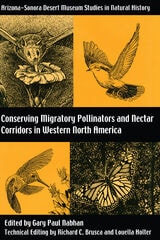
Conserving Migratory Pollinators and Nectar Corridors in Western North America
Gary Paul Nabhan
University of Arizona Press, 2004
This book, a unique work of comparative zoogeography and conservation biology, is the first to bring together studies of these important migratory pollinators and of what we must do to conserve them. It considers the similarities and differences among the behavior and habitat requirements of several species of migratory pollinators and seed dispersers in the West—primarily rufous hummingbirds, white-winged doves, lesser long-nosed bats, and monarch butterflies. It examines the population dynamics of these four species in flyways that extend from the Pacific Ocean to the continental backbone of the Sierra Madre Oriental and Rocky Mountains, and it investigates their foraging and roosting behaviors as they journey from the Tropic of Cancer in western Mexico into the deserts, grasslands, and thornscrub of the U.S.-Mexico borderlands. The four pollinators whose journeys are traced here differ dramatically from one another in foraging strategies and stopover fidelities, but all challenge many of the truisms that have emerged regarding the status of migratory species in general. The rufous hummingbird makes the longest known avian migration in relation to body size and is a key to identifying nectar corridors running through northwestern Mexico to the United States. And there is new evidence to challenge the long-supposed separation of eastern and western monarch butterfly populations by the Rocky Mountains as these insects migrate.
Conserving Migratory Pollinators and Nectar Corridors in Western North America demonstrates new efforts to understand migratory species and to determine whether their densities, survival rates, and health are changing in response to changes in the distribution and abundance of nectar plants found within their ranges. Representing collaborative efforts that bridge field ecology and conservation biology in both theory and practice, it is dedicated to safeguarding dynamic interactions among plants and pollinators that are only now being identified.
Constructed Climates
A Primer on Urban EnvironmentsWilliam G. Wilson
University of Chicago Press, 2011
As our world becomes increasingly urbanized, an understanding of the context, mechanisms, and consequences of city and suburban environments becomes more critical. Without a sense of what open spaces such as parks and gardens contribute, it’s difficult to argue for their creation and maintenance: in the face of schools needing resources, roads and sewers needing maintenance, and people suffering at the hands of others, why should cities and counties spend scarce dollars planting trees and preserving parks?
In Constructed Climates, ecologist William G. Wilson demonstrates the value of urban green. Focusing specifically on the role of vegetation and trees, Wilson shows the costs and benefits reaped from urban open spaces, from cooler temperatures to better quality ground water—and why it all matters. While Constructed Climates is a work of science, it does not ignore the social component. Wilson looks at low-income areas that have poor vegetation, and shows how enhancing these areas through the planting of community gardens and trees can alleviate social ills. This book will be essential reading for environmentalists and anyone making decisions for the nature and well-being of our cities and citizens.
Consumed
Food for a Finite PlanetSarah Elton
University of Chicago Press, 2013
Contesting Leviathan
Activists, Hunters, and State Power in the Makah Whaling ConflictLes Beldo
University of Chicago Press, 2019
In Contesting Leviathan, anthropologist Les Beldo describes the complex judicial and political climate for whale conservation in the United States, and the limits of the current framework in which whales are treated as “large fish” managed by the National Marine Fisheries Service. Emphasizing the moral dimension of the conflict between the Makah, the US government, and antiwhaling activists, Beldo brings to light the lived ethics of human-animal interaction, as well as how different groups claim to speak for the whale—the only silent party in this conflict. A timely and sensitive study of a complicated issue, this book calls into question anthropological expectations regarding who benefits from the exercise of state power in environmental conflicts, especially where indigenous groups are involved. Vividly told and rigorously argued, Contesting Leviathan will appeal to anthropologists, scholars of indigenous culture, animal activists, and any reader interested in the place of animals in contemporary life.
Contingency Across the Life Sciences
How Accidents Can Be ConsequentialEdited by Alison K McConwell, Roberta L. Millstein, Michael R. Dietrich, and John Beatty
University of Chicago Press, 0
With perspectives from biology, history, and philosophy, an investigation of the meaning and importance of contingency in the life sciences.
Were the outcomes of evolution, humans included, inevitable? In his 1989 book Wonderful Life, Stephen Jay Gould invited his readers to replay “life’s tape”—“You press the rewind button and, making sure you thoroughly erase everything that actually happened, go back to any time and place in the past—say, to the seas of the Burgess Shale. Then let the tape run again.” If the outcomes of evolution truly depend on historical contingencies, you might not get anything at all like the same trajectory—maybe no humans or anything human-like. In the first book of its kind, Contingency Across the Life Sciences brings together scientists, philosophers, and historians to explore when historical contingency really matters for our understanding of the biological past and our place within it.
Using Darwin’s and Gould’s views on chance and contingency as a starting point, the chapters clarify the many different meanings of contingency and show how biologists have moved beyond the tape of life metaphor to find contingency in a range of ecological, evolutionary, and developmental processes, including experiments with contingency in actual populations. The collection ends with a set of reflections on how historical contingency can change the ways we see ourselves as biological and moral agents in a world that could have been otherwise.