Results by title
458 books match the query 'Literature' and 28 start with c

Cannibal Democracy
Race and Representation in the Literature of the AmericasZita Nunes
University of Minnesota Press, 2008
Zita Nunes argues that the prevailing narratives of identity formation throughout the Americas share a dependence on metaphors of incorporation and, often, of cannibalism. From the position of the incorporating body, the construction of a national and racial identity through a process of assimilation presupposes a remainder, a residue.
Nunes addresses works by writers and artists who explore what is left behind in the formation of national identities and speak to the limits of the contemporary discourse of democracy. Cannibal Democracy tracks its central metaphor’s circulation through the work of writers such as Mário de Andrade, W. E. B. Du Bois, and Toni Morrison and journalists of the black press, as well as work by visual artists including Magdalena Campos-Pons and Keith Piper, and reveals how exclusion-understood in terms of what is left out-can be fruitfully understood in terms of what is left over from a process of unification or incorporation.
Nunes shows that while this remainder can be deferred into the future-lurking as a threat to the desired stability of the present-the residue haunts discourses of national unity, undermining the ideologies of democracy that claim to resolve issues of race.
Zita Nunes is associate professor of English at the University of Maryland, College Park.
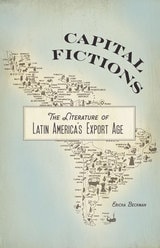
Capital Fictions
The Literature of Latin America's Export AgeEricka Beckman
University of Minnesota Press, 2012
Between 1870 and 1930, Latin American countries were incorporated into global capitalist networks like never before, mainly as exporters of raw materials and importers of manufactured goods. During this Export Age, entire regions were given over to the cultivation of export commodities such as coffee and bananas, capital and labor were relocated to new production centers, and barriers to foreign investment were removed. Capital Fictions investigates the key role played by literature in imagining and interpreting the rapid transformations unleashed by Latin America’s first major wave of capitalist modernization.
Using an innovative blend of literary and economic analysis and drawing from a rich interdisciplinary archive, Ericka Beckman provides the first extended evaluation of Export Age literary production. She traces the emergence of a distinct set of fictions, fantasies, and illusions that accompanied the rise of export-led, dependent capitalism. These “capital fictions” range from promotional pamphlets for Guatemalan coffee and advertisements for French fashions, to novels about stock market collapse in Argentina and rubber extraction in the Amazon.
Beckman explores how Export Age literature anticipated some of the key contradictions faced by contemporary capitalist societies, including extreme financial volatility, vast social inequality, and ever-more-intense means of exploitation. Questioning the opposition between culture and economics in Latin America and elsewhere, Capital Fictions shows that literature operated as a powerful form of political economy during this period.
Cardinal Newman in His Age
His Place in English Theology and LiteratureHarold L. Weatherby
Vanderbilt University Press, 1973
Character
Three Inquiries in Literary StudiesAmanda Anderson, Rita Felski, and Toril Moi
University of Chicago Press, 2019
Across three chapters, leading scholars Amanda Anderson, Rita Felski, and Toril Moi reimagine and renew literary studies by engaging in a conversation about character. Moi returns to the fundamental theoretical assumptions that convinced literary scholars to stop doing character-criticism, and shows that they cannot hold. Felski turns to the question of identification and draws out its diverse strands, as well as its persistence in academic criticism. Anderson shows that character-criticism illuminates both the moral life of characters, and our understanding of literary form. In offering new perspectives on the question of fictional character, this thought-provoking book makes an important intervention in literary studies.
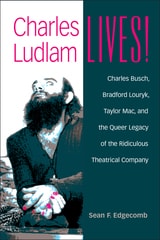
Charles Ludlam Lives!
Charles Busch, Bradford Louryk, Taylor Mac, and the Queer Legacy of the Ridiculous Theatrical CompanySean F. Edgecomb
University of Michigan Press, 2017
Author Sean F. Edgecomb focuses on the neo-Ridiculous artists Charles Busch, Bradford Louryk, and Taylor Mac to trace the connections between Ludlam’s legacy and their performances, using alternative queer models such as kinetic kinship, lateral historiography, and a new approach to camp. Charles Ludlam Lives! demonstrates that the queer legacy of Ludlam is one of distinct transformation—one where artists can reject faithful interpretations in order to move in new interpretive directions.
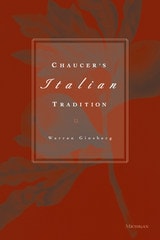
Chaucer's Italian Tradition
Warren Ginsberg
University of Michigan Press, 2002
Because divergent political, municipal, and literary histories would have made the Italian cities--Genoa, Florence, and Milan--unfamiliar to an English poet from medieval London, Ginsberg argues that we must consider what Chaucer overlooked and mistook from his Italian models alongside the material he did appropriate. To make sense of premises in texts like Dante's Comedy that were peculiarly Italian, Chaucer would look to Boccaccio as a gloss; by reading these authors in conjunction with one another, Chaucer generates an "Italian tradition" that translates into the terms of his English experience works already mediated by a prior stage of transposition.
Ginsberg explores Chaucer's relationship to Italian poets not in terms of the interaction of individual talents with accredited authorities (Chaucer and Dante, Boccaccio and Petrarch, etc.). Rather, he focuses on the shifts in tension that occur when the civic engagements and disengagements of Florence's poets are brought into contact with Chaucer's growing metropolitanism and increasing reluctance to make London the locus of his poetic art.
Beyond its appeal to medievalists and those who study the Renaissance, Chaucer's Italian Tradition will be welcomed by readers interested in theoretical questions about translation and the development of tradition, including individuals who study history, literature, and the nature of the humanities.
Warren Ginsberg is Professor of English, University of Oregon.
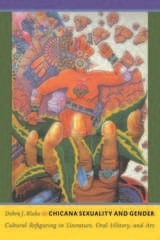
Chicana Sexuality and Gender
Cultural Refiguring in Literature, Oral History, and ArtDebra J. Blake
Duke University Press, 2008
Blake looks at how the Chicana professional intellectuals and the U.S. Mexicana women refigure confining and demeaning constructions of female gender roles and racial, ethnic, and sexual identities. She organizes her analysis around re-imaginings of La Virgen de Guadalupe, La Llorona, indigenous Mexica goddesses, and La Malinche, the indigenous interpreter for Hernán Cortés during the Spanish conquest. In doing so, Blake reveals how the professional intellectuals and the working-class and semiprofessional women rework or invoke the female icons to confront the repression of female sexuality, limiting gender roles, inequality in male and female relationships, and violence against women. While the representational strategies of the two groups of women are significantly different and the U.S. Mexicanas would not necessarily call themselves feminists, Blake nonetheless illuminates a continuum of Chicana feminist thinking, showing how both groups of women expand lifestyle choices and promote the health and well-being of women of Mexican origin or descent.
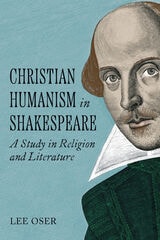
Christian Humanism in Shakespeare
A Study in Religion and LiteratureLee Oser
Catholic University of America Press, 2022
Classicism of the Twenties
Art, Music, and LiteratureTheodore Ziolkowski
University of Chicago Press, 2014
In Classicism of the Twenties, Theodore Ziolkowski offers a compelling account of that movement. Giving equal attention to music, art, and literature, and focusing in particular on the works of Stravinsky, Picasso, and T. S. Eliot, he shows how the turn to classicism manifested itself. In reaction both to the excesses of neoromanticism and early modernism and to the horrors of World War I—and with respectful detachment—artists, writers, and composers adapted themes and forms from the past and tried to imbue their own works with the values of simplicity and order that epitomized earlier classicisms.
By identifying elements common to all three arts, and carefully situating classicism within the broader sweep of modernist movements, Ziolkowski presents a refreshingly original view of the cultural life of the 1920s.
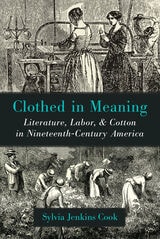
Clothed in Meaning
Literature, Labor, and Cotton in Nineteenth-Century AmericaSylvia Jenkins Cook
University of Michigan Press, 2020
Cloth and clothing provide potent tropes not only for physical but also for intellectual forms of self-expression. Drawing on sources ranging from fugitive slave narratives, newspapers, manifestos, and mill workers’ magazines to fiction, poetry, and autobiographies, Clothed in Meaning examines the significant part played by mill workers and formerly enslaved people, many of whom still worked picking cotton, in this revolution of literary self-expression. They created a new literature from their palpable daily intimacy with cotton, cloth, and clothing, as well as from their encounters with grimly innovative modes of work. In the materials of their labor they discovered vivid tropes for formulating their ideas and an exotic and expert language for articulating them. The harsh conditions of their work helped foster in their writing a trenchant irony toward the demeaning reduction of human beings to “hands” whose minds were unworthy of interest. Ultimately, Clothed in Meaning provides an essential examination of the intimate connections between oppression and luxury as recorded in the many different voices of nineteenth-century labor.
Clowns in the Burying Ground
The Grateful Dead, Literature, and the Limits of PhilosophyChristopher K. Coffman
Duke University Press, 2026
Cognition of the Literary Work of Art
Roman Ingarden
Northwestern University Press, 1973
Cognitive Literary Studies
Current Themes and New DirectionsEdited by Isabel Jaén and Julien Jacques Simon
University of Texas Press, 2012
In the first decade of the twenty-first century, our understanding of the cognition of literature was transformed by scientific discoveries, such as the mirror neuron system and its role in empathy. Addressing questions such as why we care so deeply about fictional characters, what brain activities are sparked when we read literature, and how literary works and scholarship can inform the cognitive sciences, this book surveys the exciting recent developments in the field of cognitive literary studies and includes contributions from leading scholars in both the humanities and the sciences.
Beginning with an overview of the evolution of literary studies, the editors trace the recent shift from poststructuralism and its relativism to a growing interdisciplinary interest in the empirical realm of neuroscience. In illuminating essays that examine the cognitive processes at work when we experience fictional worlds, with findings on the brain’s creativity sites, this collection also explores the impact of literature on self and society, ending with a discussion on the present and future of the psychology of fiction. Contributors include Literature and the Brain author Norman N. Holland, on the neuroscience of metafiction reflected in Don Quixote; clinical psychologist Aaron Mishara on the neurology of self in the hypnagogic (between waking and sleeping) state and its manifestations in Kafka’s stories; and literary scholar Brad Sullivan’s exploration of Romantic poetry as a didactic tool, applying David Hartley’s eighteenth-century theories of sensory experience.

Communication and Women's Friendships
Parallels and Intersections in Literature and LifeJanet Doubler Ward
University of Wisconsin Press, 1993
Composition and Literature
Bridging the GapEdited by Winifred Bryan Horner
University of Chicago Press, 1983
Contemporary Novelists and the Aesthetics of Twenty-First Century American Life
Alexandra Kingston-Reese
University of Iowa Press, 2020
Contemporary Novelists and the Aesthetics of Twenty-First Century American Life gives us a new way to view contemporary art novels, asking the key question: How do contemporary writers imagine aesthetic experience? Examining the works of some of the most popular names in contemporary fiction and art criticism, including Zadie Smith, Teju Cole, Siri Hustvedt, Ben Lerner, Rachel Kushner, and others, Alexandra Kingston-Reese finds that contemporary art novels are seeking to reconcile the negative feelings of contemporary life through a concerted critical realignment in understanding artistic sensibility, literary form, and the function of the aesthetic.
Kingston-Reese reveals how contemporary writers refract and problematize aesthetic experience, illuminating an uneasiness with failure: firstly, about the failure of aesthetic experiences to solve and save; and secondly, the literary inability to articulate the emotional dissonance caused by aesthetic experiences now.
Control of the Imaginary
Reason and Imagination in Modern TimesLuiz Costa LimaTranslated by Ronald W. SousaIntroduction by Ronald W. SousaAfterword by Jochen Schulte-Sasse
University of Minnesota Press, 1989
Control of the Imaginary was first published in 1989. Minnesota Archive Editions uses digital technology to make long-unavailable books once again accessible, and are published unaltered from the original University of Minnesota Press editions.
In Control of the Imaginary Luiz Costa Lima explains how the distinction between truth and fiction emerged at the beginning of modern times and why, upon its emergence, fiction fell under suspicion. Costa Lima not only describes the continuous relationship between Western notions of reason and subjectivity over a broad time-frame—the Renaissance to the first decade of the twentieth century—but he uses this occasion to reexamine the literary traditions of France, Italy, Spain, Portugal, England, and Germany. The book reconstructs the dominant frames in the European tradition between the Middle Ages and the nineteenth century from the perspective of a Latin American who sees the culture of his native Brazil haunted by unresolved questions from the Northern Hemisphere. Costa Lima manages to synthesize positions from philosophy, anthropology, sociology, psychology, linguistics, and history without separating the theoretical discussion from his historical reconstructions.
The first chapter situates the problem and grounds the emergent distinction between truth and fiction in a very close analysis of one of the first European historians, Fernao Lopes, who sets the tone for the condemnation of fiction in the name of the truth of history and the potential for individual interpretation. Costa Lima pursues these notions through the aesthetic debates of the seventeenth and eighteenth centuries to the writings of the French historian Michelet. He also devotes an illuminating chapter to the invention of the strictures imposed on fiction.
Conversations on Cognitive Cultural Studies
Literature, Language, and AestheticsFrederick Luis Aldama and Patrick Colm Hogan
The Ohio State University Press, 2014
With clarity and learning, Aldama and Hogan consider five central topics at the intersection of literature and cognitive science. They begin with the fundamental question of the nature of the self. From here, they turn to language, communication, and thought before moving on to the central issue of the structure and operation of narrative. The book concludes with thought-provoking explorations of aesthetics and politics. Illustrating their arguments with work that ranges from graphic fiction and popular cinema to William Faulkner and Bertolt Brecht, Aldama and Hogan leave the reader with a clear sense of what cognitive cultural studies have already achieved and the significant promise the discipline holds for the future.
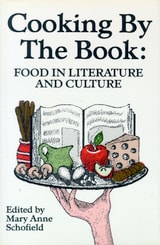
Cooking by the Book
Food in Literature and CultureEdited by Mary Anne Schofield
University of Wisconsin Press, 1989
The second part of Cooking by the Book turns to the more diverse food rhetorics of the marketplace. What, for example, is the fast food rhetoric? Why are there so many eating disorders in our society? Is it possible to teach philosophy through cookery? How long has vegetarianism been popular?
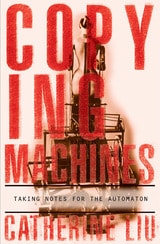
Copying Machines
Taking Notes for the AutomatonCatherine Liu
University of Minnesota Press, 2000
Explores literary theory’s fear of and fascination with the mechanical.
Anxieties about fixing the absolute difference between the human being and the mechanical replica, the automaton, are as old as the first appearance of the machine itself. Exploring these anxieties and the efforts they prompted, this book opens a window on one of the most significant, if subtle, ideological battles waged on behalf of the human against the machine since the Enlightenment—one that continues in the wake of technological and conceptual progress today.
A sustained examination of the automaton as early modern machine and as a curious ancestor of the twentieth-century robot, Copying Machines offers extended readings of mechanistic images in the eighteenth century through the prism of twentieth-century commentary. In readings of texts by Lafayette, Molière, Laclos, and La Bruyère—and in a chapter on the eighteenth-century inventor of automatons, Jacques Vaucanson—Catherine Liu provides a fascinating account of ways in which the automaton and the preindustrial machine haunt the imagination of ancien régime France and structure key moments of the canonical literature and criticism of the period.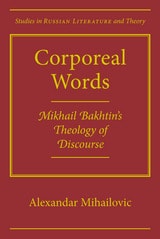
Corporeal Words
Mikhail Bakhtins Theology DiscourseAlexandar Mihailovic
Northwestern University Press, 1997
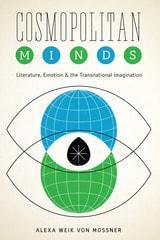
Cosmopolitan Minds
Literature, Emotion, and the Transnational ImaginationBy Alexa Weik von Mossner
University of Texas Press, 2014
During World War II and the early Cold War period, factors such as race, gender, sexual orientation, or class made a number of American writers feel marginalized in U.S. society. Cosmopolitan Minds focuses on a core of transnational writers—Kay Boyle, Pearl S. Buck, William Gardner Smith, Richard Wright, and Paul Bowles—who found themselves prompted to seek experiences outside of their home country, experiences that profoundly changed their self-understanding and creative imagination as they encountered alternative points of views and cultural practices in Europe, Asia, and Africa.
Alexa Weik von Mossner offers a new perspective on the affective underpinnings of critical and reflexive cosmopolitanism by drawing on theories of emotion and literary imagination from cognitive psychology, philosophy, and cognitive literary studies. She analyzes how physical dislocation, and the sometimes violent shifts in understanding that result from our affective encounters with others, led Boyle, Buck, Smith, Wright, and Bowles to develop new, cosmopolitan solidarities across national, ethnic, and religious boundaries. She also shows how, in their literary texts, these writers employed strategic empathy to provoke strong emotions such as love, sympathy, compassion, fear, anger, guilt, shame, and disgust in their readers in order to challenge their parochial worldviews and practices. Reading these texts as emotionally powerful indictments of institutionalized racism and national violence inside and outside of the United States, Weik von Mossner demonstrates that our emotional engagements with others—real and imagined—are crucially important for the development of transnational and cosmopolitan imaginations.
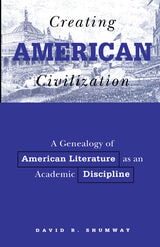
Creating American Civilization
A Genealogy of American Literature as an Academic DisciplineDavid Shumway
University of Minnesota Press, 1994
“Shumway has written a penetrating and provocative account of the making of American civilization as an academic field.”
Gerald GraffUniversity of ChicagoDavid R. Shumway contends that American literature is the product of study - the deliberate invention of a discipline seeking to define the character and legitimate the existence of a specifically American civilization. He traces the various reconstitutions of American literature by examining the discipline’s practices and techniques, discourses and structures, paradigms and unstated assumptions.This genealogy begins around 1890, when American literature as defined by institutions outside the academy, such as magazines and publishing houses, acquired much of the ideology it would display in later phases, including sexism, racism, and class bias. Singular in its treatment of American literary study as a discipline rather than as criticism and in its insistence on the cultural and political work carried on by this discipline, Creating American Civilization will engage literary theorists and historians as well as individuals with an interest in American literature.Critical Practices in Post-Franco Spain
Silvia L. Lopez, Jenaro Talens, and Dario Villanueva, Editors
University of Minnesota Press, 1994
Critical Practices in Post-Franco Spain was first published in 1994. Minnesota Archive Editions uses digital technology to make long-unavailable books once again accessible, and are published unaltered from the original University of Minnesota Press editions.
This volume offers a sample of Spanish critical work in literary theory and cultural studies. Like all critical histories, Spain's is political: Philology dominated the critical scene during the Franco years, and after Franco, this hegemony has been contested by semiotics, poststructuralism, psychoanalysis, and feminisms. Without trying to represent all the theoretical projects presently underway in Spanish criticism, this book opens a window on the vast field of new critical practices in Spain and provides a general picture of influential theoretical currents.
The essays collected here range widely in topic and style, and they reflect a new generation's preoccupation with critical problems that go beyond the field of literary studies. The authors focus on new discourse in various print and electronic media, on the discursive construction of the museum space, and on literary theory as it confronts issues of translation, subjectivity, writing, and narratology.Silvia López is assistant professor of Spanish at Carlton Collegea doctoral candidate in the departments of cultural studies and comparative literature at the University of Minnesota. Jenaro Talens is professor of Hispanic literature and comparative literature at the University of Geneva. He is the author of The Branded Eye: Buñuel's Un Chien Andalou, (Minnesota 1993). Darío Villanueva is professor of theory of literature at the University of Santiago de Compostela, Spain.
Critical Terms for Literary Study, Second Edition
Edited by Frank Lentricchia and Thomas McLaughlin
University of Chicago Press, 1995
Critical Terms for Literary Study is an essential handbook and introduction to the work of literary theory. Covering a broad range of key terms that include popular culture, diversity, imperialism, ethics, desire, class, gender, race, canon, representation, and much more through essays by leading scholars, it provides a concise history of each term alongside a critical exploration of the issues and questions for the field that it raises, followed by demonstrations of reading strategies driven by the term.
Exploring the concepts that shape the way we read, the essays combine to provide an extraordinary introduction to the work of literature and literary study, as the nation's most distinguished scholars put the tools of critical practice vividly to use.
Crossing Borders
Reception Theory, Poststructuralism, DeconstructionRobert C. Holub
University of Wisconsin Press, 1992
Robert C. Holub critically investigates the histories of reception theory, poststructuralism, and deconstruction in postwar Germany and the United States. He looks at how imported theories assume a place in the political discourse of a country, and how indigenous intellectual traditions and prejudices affect, modify, or even distort foreign theories.
Holub addresses many timely questions: Why did reception theory, so prominent in Germany in the 1960s and 1970s, fail to have an impact on American academics until the 1980s? Why did postructuralism, and specifically the writings of Michel Foucault, fail to find a home in German academia while becoming an important theoretical voice in the United States? How did deconstruction, originally considered by American scholars as merely a sophisticated tool for analysis, get taken up by leftists who argued for an affinity between the critique of language and the critique of capitalism? And finally, how have American intellectuals responded to revelations of fascism in the pasts of Paul de Man and Martin Heidegger?
Crossing Borders effectively demonstrates the extent to which theoretical work needs to be understood in cultural, intellectual, and institutional contexts. Holub argues that the praxis of theories is determined not only by their content and style, but also by the environment in which they must function. The success of a transplanted theory, he contends, is due less to its inherent merits than to the hospitability of the environment on to which it is grafted.
Crossings
Nietzsche and the Space of TragedyJohn Sallis
University of Chicago Press, 1991
The Birth of Tragedy is a rethinking of art at the
limit of metaphysics. His close reading focuses on the
complexity of the Apollinian/Dionysian dyad and on the
crossing of these basic art impulses in tragedy.
"Sallis effectively calls into question some commonly
accepted and simplistic ideas about Nietzsche's early
thinking and its debt to Schopenhauer, and proposes
alternatives that are worth considering."—Richard
Schacht, Times Literary Supplement
Cultural Graphology
Writing after DerridaJuliet Fleming
University of Chicago Press, 2016
Fleming shows that the single most important lesson to survive from Derrida’s early work is that we do not know what writing is. Channeling Derrida’s thought into places it has not been seen before, she examines printed errors, spaces, and ornaments (topics that have hitherto been marginal to our accounts of print culture) and excavates the long-forgotten reading practice of cutting printed books. Proposing radical deformations to the meanings of fundamental and apparently simple terms such as “error,” “letter,” “surface,” and “cut,” Fleming opens up exciting new pathways into our understanding of writing all told.