Results by title
85 books match the query 'Literature and history' and 6 start with c
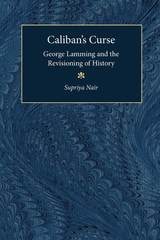
Caliban's Curse
George Lamming and the Revisioning of HistorySupriya Nair
University of Michigan Press, 1996
Caliban's Curse draws upon a range of theories--postcolonial, Marxist, and feminist--to contextualize the black diaspora of the modern Caribbean through one of its primary anglophone novelists. Putting George Lamming in conversation with such contemporaries as C.L.R. James, Derek Walcott, and Wilson Harris, Nair argues that Lamming's works expand the protest of Shakespeare's Caliban to articulate a reinvention of Caribbean cultures. Both cursed by and cursing the weight of colonial history, Lamming works against the paralysis induced by such an encounter; his work serves to rewrite canonical icons and to reimagine popular cultures.
"Supriya Nair writes about the problems of history and social revolution with passion and clarity and an amazing range of critical and cultural reference. . . . She brings to existing studies of Lamming a wide and sustained knowledge of the forces that have shaped the West Indian novel, and the wider postcolonial debates in which these novels are read and discussed." --Simon Gikandi, University of Michigan
Supriya Nair is Associate Professor of English, Tulane University.
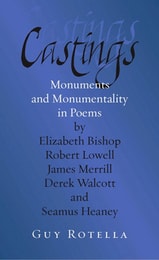
Castings
Monuments and Monumentality in Poems by Elizabeth Bishop, Robert Lowell, James Merrill, Derek Walcott, and Seamus HeaneyGuy Rotella
Vanderbilt University Press, 2004
In Castings, Guy Rotella examines the work of five important poets who have engaged in that effort: Elizabeth Bishop, Robert Lowell, James Merrill, Derek Walcott, and Seamus Heaney. Considering their wider careers as well as particular poems--including Bishop's "The Monument," Lowell's "For the Union Dead," Merrill's "Bronze," Walcott's "The Sea Is History," and Heaney's "In Memoriam Francis Ledwidge"--Rotella argues that these writers are less concerned with defending or condemning monuments than with pursuing ancient and current debates about the political, aesthetic, and broadly cultural issues that monuments condense. Among these concerns are the competing claims of life and art, persistence and change, meaning and meaninglessness, the self and society, and the governing and the governed.
Original and provocative, Rotella's readings will make us ponder how the human impulse to build to last, to reify our culturally derived and ideologically driven faiths, might coexist with those other creeds of our place and time: relativism, multiculuralism, and diversity.
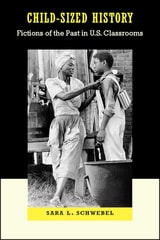
Child-Sized History
Fictions of the Past in U.S. ClassroomsSara L. Schwebel
Vanderbilt University Press, 2011
Books like Johnny Tremain, The Witch of Blackbird Pond, Island of the Blue Dolphins, and Roll of Thunder, Hear My Cry stimulate children's imagination, transporting them into the American past and projecting them into an American future. As works of historical interpretation, however, many are startlingly out of step with current historiography and social sensibilities, especially with regard to race. Unlike textbooks, which are replaced on regular cycles and subjected to public tugs-of-war between the left and right, historical novels have simply--and quietly--endured. Taken individually, many present troubling interpretations of the American past. But embraced collectively, this classroom canon provides a rare pedagogical opportunity: it captures a range of interpretive voices across time and place, a kind of "people's history" far removed from today's state-sanctioned textbooks.
Teachers who employ historical novels in the classroom can help students recognize and interpret historical narrative as the product of research, analytical perspective, and the politics of the time. In doing so, they sensitize students to the ways in which the past is put to moral and ideological uses in the present.
Featuring separate chapters on American Indians, war, and slavery, Child-Sized History tracks the changes in how young readers are taught to conceptualize history and the American nation.
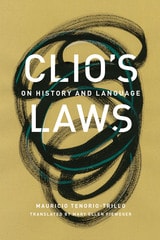
Clio's Laws
On History and LanguageBy Mauricio Tenorio-Trillo; translated by Mary Ellen Fieweger
University of Texas Press, 2019
Offering a unique perspective on the very notions and practices of storytelling, history, memory, and language, Clio’s Laws collects ten essays (some new and some previously published in Spanish) by a revered voice in global history. Taking its title from the Greek muse of history, this opus considers issues related to the historian’s craft, including nationalism and identity, and draws on Tenorio-Trillo’s own lifetime of experiences as a historian with deep roots in both Mexico and the United States. By turns deeply ironic, provocative, and experimental, and covering topics both lowbrow and highbrow, the essays form a dialogue with Clio about idiosyncratic yet profound matters.
Tenorio-Trillo presents his own version of an ars historica (what history is, why we write it, and how we abuse it) alongside a very personal essay on the relationship between poetry and history. Other selections include an exploration of the effects of a historian’s autobiography, a critique of history’s celebratory obsession, and a guide to reading history in an era of internet searches and too many books. A self-described exile, Tenorio-Trillo has produced a singular tour of the historical imagination and its universal traits.
Collisions With History
Latin American Fiction and Social Science from “El Boom” to the New World OrderFrederick M. Nunn
Ohio University Press, 2001
Latin American intellectuals have traditionally debated their region’s history, never with so much agreement as in the fiction, commentary, and scholarship of the late twentieth century. Collisions with History shows how “fictional histories” of discovery and conquest, independence and early nationhood, and the recent authoritarian past were purposeful revisionist collisions with received national versions. These collisions occurred only because of El Boom, thus making Latin America’s greatest literary movement a historical phenomenon as well. Frederick M. Nunn discusses the cataclysmic view of history conveyed in Boom novels and examines the thought and self-perception of selected authors whose political activism enhanced the appeal of their works—historical and otherwise: Alejo Carpentier, Carlos Fuentes, Gabriel García Márquez, and Augusto Roa Bastos; Julio Cortázar, Isabel Allende, Mario Vargas Llosa, and Darcy Ribeiro.
Collisions with History demonstrates how their commentary on history, literature, politics, and international affairs reveals a conscious sense of purpose. From between the lines of their nonfiction emerges a consensus that outside forces have defined as well as controlled Latin America’s history.
Professor Nunn also suggests that, with novelists now no longer very interested in colliding with history, it may fall to social scientists to speak for what remains of the region’s past in the New World Order.
Conscripts of Modernity
The Tragedy of Colonial EnlightenmentDavid Scott
Duke University Press, 2004
Scott explores the political and epistemological implications of how the past is conceived in relation to the present and future through a reconsideration of C. L. R. James’s masterpiece of anticolonial history, The Black Jacobins, first published in 1938. In that book, James told the story of Toussaint L’Ouverture and the making of the Haitian Revolution as one of romantic vindication. In the second edition, published in the United States in 1963, James inserted new material suggesting that that story might usefully be told as tragedy. Scott uses James’s recasting of The Black Jacobins to compare the relative yields of romance and tragedy. In an epilogue, he juxtaposes James’s thinking about tragedy, history, and revolution with Hannah Arendt’s in On Revolution. He contrasts their uses of tragedy as a means of situating the past in relation to the present in order to derive a politics for a possible future.