Results by title
279 books match the query 'Management' and 19 start with c
CEO Leadership
Navigating the New Era in Corporate GovernanceThomas A. Cole
University of Chicago Press, 2019
Drawing on four decades of experience advising boards and CEOs on how to do just that, Thomas A. Cole offers in CEO Leadership a straightforward and accessible guide to navigating corporate governance today. He explores the recurring question of whose benefit a corporation should be governed for, along with related matters of corporate social responsibility, and he explains the role of laws, market forces, and politics and their influence on the governance of public companies. For corporate directors, he provides a comprehensive examination of the roles, responsibilities, and accountability the role entails, while also offering guidance on how to be as effective as possible in addressing both routine corporate matters and special situations such as mergers and acquisitions, succession, and corporate crises. In addition, he offers practical suggestions for CEOs on leadership and their interactions with boards and shareholders. Cole also mounts a compelling case that a corporate culture that celebrates diversity and inclusion and has zero tolerance for sexual misconduct is critical to long-term business success.
Filled with vignettes from Cole’s many years of experience in the board room and C-suite, CEO Leadership is an invaluable resource for current and prospective directors, CEOs, and other senior officers of public companies as well as the next generation of corporate leaders and their business and financial advisors.
Canals and Communities
Small-Scale Irrigation SystemsJonathan B. Mabry
University of Arizona Press, 1996
CONTENTS
Introduction
The Ethnology of Irrigation: Cross-Cultural Characteristics of Local Water Management, Jonathan B. Mabry
Patterns of Cooperation and Conflict in Local Irrigation
1. La Gente es Muy Perra: Conflict and Cooperation over Irrigation Water in Cucurpe, Sonora, Mexico, Thomas E. Sheridan
2. Dhasheeg Agriculture in the Jubba Valley of Somalia, Catherine Besteman
3. The Dry and the Drier: Cooperation and Conflict in Moroccan Irrigation, John R. Welch
4. The Political Ecology of Irrigation in an Andean Peasant Community, Paul H. Gelles
Methods and Models for Analyzing Local Irrigation
5. Rapid Rural Appraisal of Arid Land Irrigation: A Moroccan Example, John R. Welch, Jonathan B. Mabry, and Hsain Ilahiane
6. Simulation Modelling of Balinese Irrigation, J. Stephen Lansing
7. Institutional Innovation in Small-Scale Irrigation Networks: A Cape Verdean Case, Mark W. Langworthy and Timothy J. Finan
Development Lessons from Local Irrigation
8. Qanats and Rural Societies: Sustainable Agriculture and Irrigation Cultures in Contemporary Iran, Michael E. Bonine
9. The Utility of Tradition in Sri Lankan Bureaucratic Irrigation: The Case of the Kirindi Oya Project, Pamela Stanbury
10. The Relevance of Indigenous Irrigation: A Comparative Analysis of Sustainability, Jonathan B. Mabry and David A. Cleveland
Conclusion
The Hydraulics of History: Evolutionary Trajectories of Local and Centralized Irrigation, Jonathan B. Mabry
Changing Forever
The Well-Kept Secrets of America's Leading CompaniesCarl F. Frost
Michigan State University Press, 1996
Do Motorola, Herman Miller, and the Donelly corporations all share a secret of business? Without a doubt, it is the ability to continually change—their "only hope for survival and success"—change based on a participatory management style, often referred to as the Scanlon Plan—identity, participation, equity, and managerial competence—these corporations have succeeded where others have failed.
Changing Forever builds on the forty years of research, experience, and development that have gone into the Scanlon Plan. Documenting fully the principles and processes of the Scanlon Plan, Carl Frost gives the reader a clear view of how the plan works and how it can be adapted to suit the needs of businesses large and small. The conclusions of his research are not surprising: with implementation of the four basic principles of the Scanlon Plan comes an optimal synergistic relationship between all employees and management.
Chasing Success
The Challenge for NonprofitsJudith Van Ginkel
University of Minnesota Press, 2023
Chasing Success follows the first twenty years of the organization Every Child Succeeds under the leadership of their former Executive Director turned author, Judith Van Ginkel. Every Child Succeeds is a regional nonprofit located in Cincinnati, Ohio that focuses on home visitation and support for parents from pregnancy through the first one thousand days of their newborn’s life. The organization was born in the 1990s out of widespread scientific evidence about the impacts of early childhood on development across the lifespan.
Chasing Success uses the story of Every Child Succeeds as a case study for readers interested in the changing landscape of nonprofit administration. With the benefit of Van Ginkel’s years of experience in nonprofit management, this book offers concrete lessons about developing a new nonprofit, utilizing research and best practices, learning to be adaptable, and being accountable to stakeholders. Van Ginkel also explores how changing policies and funding priorities for larger national nonprofits and the state and federal governments can impact how regional nonprofits work to achieve their missions, an often underappreciated and under-discussed reality for many smaller organizations around the country.

Chinese State Enterprises
A Regional Property Rights AnalysisDavid Granick
University of Chicago Press, 1990
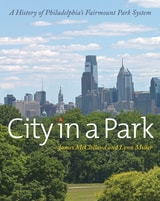
City in a Park
A History of Philadelphia's Fairmount Park SystemLynn Miller
Temple University Press, 2015
Fairmount Park is the municipal park system of Philadelphia, Pennsylvania. It consists of more than one hundred parks, squares, and green spaces totaling about 11,000 acres, and is one of the largest landscaped urban park systems in the world. In City in a Park, James McClelland and Lynn Miller provide an affectionate and comprehensive history of this 200-year-old network of parks.
Originated in the nineteenth century as a civic effort to provide a clean water supply to Philadelphia, Fairmount Park also furnished public pleasure grounds for boat races and hiking, among other activities. Millions travel to the city to view its eighteenth-century villas, attend boat races on the Schuylkill River, hike the Wissahickon Creek, visit the Philadelphia Zoo, hear concerts in summer, stroll the city’s historic squares and the Benjamin Franklin Parkway, and enjoy its enormous collection of public art. Green initiatives flower today; Philadelphia lives amidst its parks.
Filled with nearly 150 gorgeous full-color photographs, City in a Park chronicles the continuing efforts to create what founder William Penn desired: a “greene countrie town.”

Cloud-Based Services for Your Library
A LITA GuideErik T. American Library Association
American Library Association, 2013
Collaborative Crisis Management
Prepare, Execute, Recover, RepeatThomas A. Cole and Paul Verbinnen
University of Chicago Press, 2022
All organizations face crises from time to time, and at a time when news, information (or misinformation), and rumors can spread quickly, a timely and thoughtful response to a crisis, is critical. In this book, two industry insiders offer a primer on how organizational leadership should prepare for and handle crises. The steps, plans, and cautions they offer show how organizations can deal openly and honestly with challenges while continuing to survive and prosper.
Thomas A. Cole and Paul Verbinnen show how successful crisis management requires a multi-disciplined approach enacted collaboratively under strong leadership. Drawing on many real-world examples, they speak to not only what to do during a crisis, but also the need for preparedness and post-crisis follow-up. The book is organized around a broad range of discrete issues that need to be addressed in managing any crisis and provides the steps required to successfully address each of those issues. The authors urge crisis managers to focus attention equally on four phases of management: prepare, execute, recover, and then repeat (after reflecting on the results of the last crisis) with the next one. The emphasis is on preparation and planning, setting up the procedures, and organizing the teams that will respond to each crisis.
Unlike other crisis books that focus solely on communication, Collaborative Crisis Management goes further and in addition to communication, it discusses both the legal obligations and organizational challenges that accompany a crisis. The result is an indispensable guide for leaders, board members, and business students.
Collaborative Crisis Management
Prepare, Execute, Recover, RepeatThomas A. Cole and Paul Verbinnen
University of Chicago Press, 2022
Two experienced corporate crisis advisors offer a thorough and approachable guide to successful crisis management from anticipation to resolution.
All organizations face crises from time to time, and at a time when news, information (or misinformation), and rumors can spread quickly, a timely and thoughtful response to a crisis, is critical. In this book, two industry insiders offer a primer on how organizational leadership should prepare for and handle crises. The steps, plans, and cautions they offer show how organizations can deal openly and honestly with challenges while continuing to survive and prosper.
Thomas A. Cole and Paul Verbinnen show how successful crisis management requires a multi-disciplined approach enacted collaboratively under strong leadership. Drawing on many real-world examples, they speak to not only what to do during a crisis, but also the need for preparedness and post-crisis follow-up. The book is organized around a broad range of discrete issues that need to be addressed in managing any crisis and provides the steps required to successfully address each of those issues. The authors urge crisis managers to focus attention equally on four phases of management: prepare, execute, recover, and then repeat (after reflecting on the results of the last crisis) with the next one. The emphasis is on preparation and planning, setting up the procedures, and organizing the teams that will respond to each crisis.
Unlike other crisis books that focus solely on communication, Collaborative Crisis Management goes further and in addition to communication, it discusses both the legal obligations and organizational challenges that accompany a crisis. The result is an indispensable guide for leaders, board members, and business students.
Company Men
The Invention of Shareholder Value and the Splintering of the American EconomySean Delehanty
University of Chicago Press, 2025
How an esoteric economic theory—and its most devout believers—changed the world forever.
In the modern economy, stock price is king. The value of a corporation is measured in how it enriches its shareholders, even when doing so subtracts from long-term growth or social good. Greed, in the last half-century of corporate practice, has become very good. Company Men is a sweeping intellectual history of how shareholder value rose from the lesser-known edges of academic theory to the vanguard of corporate practice.
Historian Sean Delehanty marshals archival resources to reveal how a group of motivated consultants, activist investors, and academic economists successfully branded shareholder value as the antidote to problems of management and economic stagnation in the 1970s. In their success, they created a class of well-heeled managers who executed shareholder-value theory as an everyday practice—and at the expense of most everything else. Delehanty’s history of the modern American corporation is a sobering account of the business regime that would rule the world and produce no shortage of regrets—even amongst those who championed it. Company Men is intellectual history at its most vital, offering a surprising origin story of our economy’s discontents.
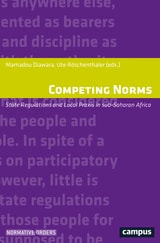
Competing Norms
State Regulations and Local Praxis in sub-Saharan AfricaEdited by Mamadou Diawara and Ute Röschenthaler
Campus Verlag, 2016
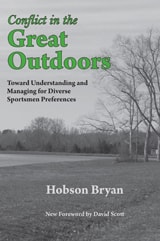
Conflict in the Great Outdoors
Toward Understanding and Managing for Diverse Sportsmen PreferencesHobson Bryan, Jr.
University of Alabama Press, 2008
Managing nature’s playground—where diversity meets design.
A major problem of outdoor recreation management addressed in Hobson Bryan’s Conflict in the Great Outdoors is the difficulty in identifying sportsmen subgroups having distinctive preferences and expectations as to the composition of the “quality” outdoor experience. Land-use managers and planners are faced with the problem of matching resources with more users having increasingly specific motivations. Bryan applies his theory of variations within a leisure activity by addressing what sportsmen do and why they do it in various activities such as mountain climbing, hunting, canoeing, skiing, and backpacking.
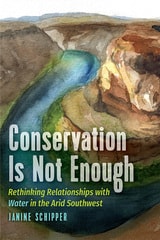
Conservation is not Enough
Rethinking Relationships with Water in the Arid SouthwestJanine Schipper
University of Wyoming Press, 2025
Using an exploratory and qualitative approach, the book draws on more than ninety-five interviews conducted over three years, revealing the complex relationships people have with water in the Southwest, and prominently features the voices of participants, effectively illustrating multiple perspectives and diverse ways of thinking about and relating to water. Schipper highlights various perspectives—including a water manager making conservation decisions, a Hopi elder emphasizing our connection to the water cycle, and a ski instructor reflecting on human-made snow—and interweaves personal experiences and reflections on her own relationship with water and conservation efforts.
Conservation Is Not Enough encourages readers to reflect on their personal connections to water and consider new possibilities, and it also urges readers to think beyond conventional conservation approaches. This book helps to transform the collective approach to water and cultivate fresh ways of engaging with and relating to water and is of great interest to scholars, students, and residents concerned with water issues in the Colorado River Basin.

Corporate Aviation Management
Raoul Castro. Foreword by Torch Lewis
Southern Illinois University Press, 1995
In this comprehensive aviation manual, Raoul Castro provides a source of invaluable corporate aviation management information. He begins by giving an overview of corporate aviation from its inception, then focuses on the management principles and functions that specifically target corporate aviation. Through the utilization of these sound management principles, Castro facilitates the acceptance of corporate aircraft as indispensable tools of industry.
As Castro notes, few companies know how to use corporate aircraft to maximum advantage. Drawing on his expertise and experience, Castro designs a plan by which a company can achieve maximum utilization of an airplane or helicopter fleet. He gives specific instructions on how to facilitate the efficient use of the aviation department of a company, select appropriate aircraft, plan for disasters and establish security measures, fulfill legal requirements of the governmental agencies that regulate the use of aircraft, and manage the maintenance and repair of aircraft. Castro also discusses the scores of details involved in the management of a professional corporate aviation branch and how these details can be handled in a positive, productive manner.
After thoroughly examining the overall managerial functions involved in planning, organizing, controlling, and implementing an aviation arm, Castro concludes by discussing the future of corporate aviation.
This book is a practical and valuable guide for the executive in charge of an aviation department, an aviation department manager or chief pilot, aspirants to aviation management positions, and both students and teachers of aviation management.
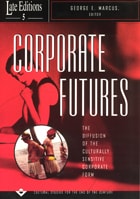
Corporate Futures
The Diffusion of the Culturally Sensitive Corporate FormEdited by George E. Marcus
University of Chicago Press, 1998
Late Editions 5, Corporate Futures, questions this idea of a "cultural landscape" by focusing on the the marked investment of corporations in the concept of culture, long the purview of anthropologists and, more recently, those involved in the humanistic disciplines. Emerging in the discourse of the workplace—and traveling beyond it to traditionally alternative associations—is the idea of a "corporate culture" with its own organization, management policies and practices, and ethos. How can we understand this culture of corporations, and to what extent does it reflect self-contained communities or fragmented human existence in groups under conditions of postmodernity? Corporate Futures tackles these issues and questions through conversations with managers, financial and risk analysts, and other participants in national and international organizations.
The results—engaging, intriguing, speculative, current—continue the work begun in earlier volumes to map the terrain of the present and navigate the uncertain future.
Praise for Late Editions: "If the succeeding volumes are as compassionate and informed as the first, this series could become an essential postmodern guidebook to the world's changing cultural terrain. I plan on letting it ease me into the next century."—Catherine Gysin, Utne Reader

Costing the Earth?
Perspectives on Sustainable DevelopmentBernd Meyer
Haus Publishing, 2009
Counterproductive
Time Management in the Knowledge EconomyMelissa Gregg
Duke University Press, 2018

Creating Worlds Otherwise
Art, Collective Action, and (Post)ExtractivismPaula Serafini
Vanderbilt University Press, 2022
Extractivism has increasingly become the ground on which activists and scholars in Latin America frame the dynamics of ecological devastation, accumulation of wealth, and erosion of rights. These maladies are the direct consequences of long-standing extraction-oriented economies, and more recently from the expansion of the extractive frontier and the implementation of new technologies in the extraction of fossil fuels, mining, and agriculture. But the fields of sociology, political ecology, anthropology, and geography have largely ignored the role of art and cultural practices in studies of extractivism and post-extractivism.
The field of art theory, on the other hand, has offered a number of texts that put forward insightful analyses of artwork addressing extraction, environmental devastation, and the climate crisis. However, an art theory perspective that does not engage firsthand and in depth with collective action remains limited and fails to provide an account of the role, processes, and politics of art in anti- and post-extractivist movements.
Creating Worlds Otherwise examines the narratives that subaltern groups generate around extractivism, and how they develop, communicate, and mobilize these narratives through art and cultural practices. It reports on a six-year project on creative resistance to extractivism in Argentina and builds on long-term engagement working on environmental justice projects and campaigns in Argentina and the UK.
It is an innovative contribution to the fields of Latin American studies, political ecology, cultural studies, and art theory, and addresses pressing questions regarding what post-extractivist worlds might look like as well as how such visions are put into practice.
Cultural Resource Management in the Great Basin 1986–2016
Alice M. Baldrica, Patricia A. DeBunch, and Don D. Fowler
University of Utah Press, 2019
Cultural Resource Management (CRM) refers to the discovery, evaluation, and preservation of culturally significant sites, focusing on but not limited to archaeological and historical sites of significance. CRM stems from the National Historic Preservation Act, passed in 1966. In 1986, archaeologists reviewed the practice of CRM in the Great Basin. They concluded that it was mainly a system of finding, flagging, and avoiding—a means of keeping sites and artifacts safe. Success was measured by counting the number of sites recorded and acres surveyed.
This volume provides an updated review some thirty years later. The product of a 2016 symposium, its measures are the increase in knowledge obtained through CRM projects and the inclusion of tribes, the general public, industry, and others in the discovery and interpretation of Great Basin prehistory and history. Revealing both successes and shortcomings, it considers how CRM can face the challenges of the future. Chapters offer a variety of perspectives, covering highway archaeology, inclusion of Native American tribes, and the legacy of the NHPA, among other topics.