Results by title
491 books match the query 'Moral and ethical aspects' and 32 start with c
Capitalist Humanitarianism
Lucia Hulsether
Duke University Press, 2023
Carbon Criminals, Climate Crimes
Ronald C. Kramer
Rutgers University Press, 2020
Carbon Criminals, Climate Crimes analyzes the looming threats posed by climate change from a criminological perspective. It advances the field of green criminology through a examination of the criminal nature of catastrophic environmental harms resulting from the release of greenhouse gases. The book describes and explains what corporations in the fossil fuel industry, the U.S. government, and the international political community did, or failed to do, in relation to global warming. Carbon Criminals, Climate Crimes integrates research and theory from a wide variety of disciplines, to analyze four specific state-corporate climate crimes: continued extraction of fossil fuels and rising carbon emissions; political omission (failure) related to the mitigation of these emissions; socially organized climate change denial; and climate crimes of empire, which include militaristic forms of adaptation to climate disruption. The final chapter reviews policies that could mitigate greenhouse gas emissions, adapt to a warming world, and achieve climate justice.
Care Ethics in the Age of Precarity
Maurice Hamington
University of Minnesota Press, 2021
How care can resist the stifling force of the neoliberal paradigm
In a world brimming with tremendous wealth and resources, too many are suffering the oppression of precarious existences—and with no adequate relief from free market–driven institutions. Care Ethics in the Age of Precarity assembles an international group of interdisciplinary scholars to explore the question of care theory as a response to market-driven capitalism, addressing the relationship of three of the most compelling social and political subjects today: care, precarity, and neoliberalism.
While care theory often centers on questions of individual actions and choices, this collection instead connects theory to the contemporary political moment and public sphere. The contributors address the link between neoliberal values—such as individualism, productive exchange, and the free market—and the pervasive state of precarity and vulnerability in which so many find themselves. From disability studies and medical ethics to natural-disaster responses and the posthuman, examples from Māori, Dutch, and Japanese politics to the COVID-19 pandemic and the Black Lives Matter movement, this collection presents illuminating new ways of considering precarity in our world.
Care Ethics in the Age of Precarity offers a hopeful tone in the growing valorization of care, demonstrating the need for an innovative approach to precarity within entrenched systems of oppression and a change in priorities around the basic needs of humanity.
Contributors: Andries Baart, U Medical Center Utrecht, Tilburg U, and Catholic Theological U Utrecht, the Netherlands; Vrinda Dalmiya, U of Hawaii, Mānoa; Emilie Dionne, U Laval; Maggie FitzGerald, U of Saskatchewan; Sacha Ghandeharian, Carleton U; Eva Feder Kittay, Stony Brook U/SUNY; Carlo Leget, U of Humanistic Studies in Utrecht, the Netherlands; Sarah Clark Miller, Penn State U; Luigina Mortari, U of Verona; Yayo Okano, Doshisha U, Kyoto, Japan; Elena Pulcini, U of Florence.
Changing Unjust Laws Justly
Pro-Life Solidarity with "The Last and Least"Colin Harte
Catholic University of America Press, 2005
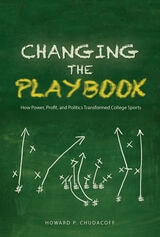
Changing the Playbook
How Power, Profit, and Politics Transformed College SportsHoward Chudacoff
University of Illinois Press, 2015
- the failed 1950 effort to pass a Sanity Code regulating payments to football players;
- the thorny racial integration of university sports programs;
- the boom in television money;
- the 1984 Supreme Court decision that settled who could control skyrocketing media revenues;
- Title IX's transformation of women's athletics;
- the cheating, eligibility, and recruitment scandals that tarnished college sports in the 1980s and 1990s;
- the ongoing controversy over paying student athletes a share of the enormous moneys harvested by schools and athletic departments.
A thought-provoking journey into the whos and whys of college sports history, Changing the Playbook reveals how the turning points of yesterday and today will impact tomorrow."

Chefs, Restaurants, and Culinary Sustainability
Carole Counihan
University of Arkansas Press, 2025
Chefs, Restaurants, and Culinary Sustainability explores how chefs around the world approach culinary sustainability in highly unstable times while working in myriad professional domains. Building on empirical data collected from a wide range of cultural, historical, political, and economic settings, the contributors to this collection provide a sophisticated and engaging examination of how chefs in diverse culinary contexts tackle the increasingly urgent societal and environmental need for a more secure food future.
Children of the Series and How They Grew
or A Century of Heroines & Heroes, Romantic, Comic, MoralFaye Riter Kensinger
University of Wisconsin Press, 1987

Chocolate Islands
Cocoa, Slavery, and Colonial AfricaCatherine Higgs
Ohio University Press, 2012
In Chocolate Islands: Cocoa, Slavery, and Colonial Africa, Catherine Higgs traces the early-twentieth-century journey of the Englishman Joseph Burtt to the Portuguese colony of São Tomé and Príncipe—the chocolate islands—through Angola and Mozambique, and finally to British Southern Africa. Burtt had been hired by the chocolate firm Cadbury Brothers Limited to determine if the cocoa it was buying from the islands had been harvested by slave laborers forcibly recruited from Angola, an allegation that became one of the grand scandals of the early colonial era. Burtt spent six months on São Tomé and Príncipe and a year in Angola. His five-month march across Angola in 1906 took him from innocence and credulity to outrage and activism and ultimately helped change labor recruiting practices in colonial Africa.
This beautifully written and engaging travel narrative draws on collections in Portugal, the United Kingdom, and Africa to explore British and Portuguese attitudes toward work, slavery, race, and imperialism. In a story still familiar a century after Burtt’s sojourn, Chocolate Islands reveals the idealism, naivety, and racism that shaped attitudes toward Africa, even among those who sought to improve the conditions of its workers.
Civic Empowerment in an Age of Corporate Greed
Edward C. Lorenz
Michigan State University Press, 2012
A thought-provoking investigation of an urgent issue facing American communities today, Edward C. Lorenz’s book examines the intersection of corporate irresponsibility and civic engagement. At the heart of this case study is a group of firms responsible for seven of the most contaminated Superfund sites in the United States, the largest food contamination accident in U.S. history, stunning stock and financial manipulations, and a massive shift of jobs off shore. In the face of these egregious environmental, employee, and investor abuses, several communities impacted by these firms organized to confront and combat failures in corporate and bureaucratic leadership, winning notable victories over major financiers, lobbyists, and indifferent or ineffective government agencies. A critical analysis of public and private leadership, business and economic ethics, and civic life, this book concludes with a stirring blueprint for other communities facing similarly overwhelming opposition.

Clean Clothes
A Global Movement to End SweatshopsLiesbeth Sluiter
Pluto Press, 2009
The Clean Clothes Campaign is a worldwide movement that aims to improve the wages and conditions of sweatshop workers. This is the story of their struggle.
Large retailers such as Tesco, Walmart and Carrefour lure shoppers in with prices that seem too good to be true. This book shows that they're too good to be fair. All along the industry's supply chain, workers, often children, are exploited through poverty wages, unpaid overtime and harsh anti-union measures. The campaign urges those in charge of the garment industry's supply lines to protect their workers and treat them fairly.
This dynamic account of direct engagement by concerned consumers is a must read for those that see globalisation differently and want their shopping choices to support the most vulnerable people involved in the clothing industry.
Clearer Than Truth
The Polygraph and the American Cold WarJohn Philipp Baesler
University of Massachusetts Press, 2018
In this first comprehensive history of the polygraph as a tool and symbol of American Cold War policies, John Philipp Baesler tells the story of a technology with weak scientific credentials that was nevertheless celebrated as a device that could expose both internal and external enemies. Considered the go-to technology to test agents' and employees' loyalty, the polygraph's true power was to expose deep ideological and political fault lines. While advocates praised it as America's hard-nosed yet fair answer to communist brainwashing, critics claimed that its use undermined the very values of justice, equality, and the presumption of innocence for which the nation stood.
Clearer Than Truth demonstrates that what began as quick-fix technology promising a precise test of honesty and allegiance eventually came to embody tensions in American Cold War culture between security and freedom, concerns that reach deep into the present day.
Climate Conundrums
What the Climate Debate Reveals About UsWilliam B. Gail
American Meteorological Society, 2014
Climate Conundrums is a journey through how we as humans think, individually and collectively, about the debate. It eschews rhetoric or fist-pounding conclusions and instead explores our ongoing attempts to reach a societal understanding about climate change and how we should respond to it. The essays throughout are broadly organized around our relationship with nature, the challenges facing human society, and the path ahead for civilization. Each begins with a question—Can we make nature better? Could science and religion reconcile?—and from there follows an introspective path through all sides of the debates. Some are longstanding issues, such as whether humans are growing increasingly distant from nature. Others are brought on by recent developments, such as whether technology can eventually solve all of society’s needs.
While no final answers are given, the insights that come from reflecting on these questions can help us better find our way and better connect with each other across the climate divide.

Clinical Labor
Tissue Donors and Research Subjects in the Global BioeconomyMelinda Cooper and Catherine Waldby
Duke University Press, 2014
Cooper and Waldby examine the rapidly expanding transnational labor markets surrounding assisted reproduction and experimental drug trials. As they discuss, the pharmaceutical industry demands ever greater numbers of trial subjects to meet its innovation imperatives. The assisted reproductive market grows as more and more households look to third-party providers for fertility services and sectors of the biomedical industry seek reproductive tissues rich in stem cells. Cooper and Waldby trace the historical conditions, political economy, and contemporary trajectory of clinical labor. Ultimately, they reveal clinical labor to be emblematic of labor in twenty-first-century neoliberal economies.
Cloud Ethics
Algorithms and the Attributes of Ourselves and OthersLouise Amoore
Duke University Press, 2020

Code of Peace
Ethics and Security in the World of the Warlord StatesDorothy V. Jones
University of Chicago Press, 1991
Jones focuses on the progressive development of international law to disclose an underlying code of ethics that enjoys broad support in the world community. Unlike studies that concentrate on what others think that states ought to do, Code of Peace analyzes what states themselves consider proper behavior. Using history as both narrative and argument, Jones shows how the existing ethical code has evolved cumulatively since World War I from a complex interplay between theory and practice. More than an abstract treatise or a merely technical analysis, Jones's study is grounded in the circumstances of war and peace in this century. Treaties and agreements, she argues, are forging a consensus on such principles as human rights, self-determination, and cooperation between states. Jones shows how leaders and representatives of nations, drawing on a rich heritage of philosophical thoughts as well as on their own experiences in a violent world of self-interested conflict, have shaped their thought to the taming of that world in the cause of peace. That is the striking thing about this code: states whose relations are marked by so frequent a recourse to war that they can fairly be called "warlords" have created and pledged themselves to a code of peace.
The implications of Code of Peace for establishing a normative foundation for peace are profound. Historically sound and timely, impeccably researched and elegantly written, the book will be of immediate and lasting value to anyone concerned with the stability of the modern world.
Communication Ethics and Tenacious Hope
Contemporary Implications of the Scottish EnlightenmentRonald C. Arnett with Foreword by Thomas M. Lessl
Southern Illinois University Press, 2022
Tenacious hope, the heart of a just and free society
During the Enlightenment, Scottish intellectuals and administrators met the demands of profit and progress while shepherding concerns for self and other, individual and community, and family and work. Communication Ethics and Tenacious Hope captures the “unity of contraries,” offering the Scottish Enlightenment as an exemplar of tenacious hope countering the excesses of individualism. Ronald C. Arnett reveals two stories: the struggle between optimism and tenacious hope, and optimism’s ultimate triumph in the exclusion of difference and the reification of progress as an ultimate good.
In chapters that detail the legacies of Lord Provost George Drummond, Adam Smith, David Hume, Thomas Reid, George Campbell, Adam Ferguson, and Sir Walter Scott, Arnett highlights the problematic nature of optimism and the ethical agency of tenacious hope. Arnett illustrates the creative union of education and administration, the ability to accept doubt within systems of knowledge and imagination, and an abiding connection to local soil. As principles of progress, free will, and capitalism swept Europe, proponents of optimism envisioned a world of consumerism and absolutes. In contrast, practitioners of tenacious hope embraced uncertainty and compassion as pragmatic necessities.
This work continues Arnett’s scholarship, articulating the vital importance of communication ethics. Those seeking to discern and support a temporal sense of the good in this historical moment will find in this timely work the means to pursue, hold, and nourish tenacious hope. This insightful theorization of the Scottish Enlightenment distills the substance of a just and free society for meeting dangerous and uncertain times.
Communication Ethics in Dark Times
Hannah Arendt's Rhetoric of Warning and HopeRonald C. Arnett
Southern Illinois University Press, 2013
Renowned in the disciplines of political theory and philosophy, Hannah Arendt’s searing critiques of modernity continue to resonate in other fields of thought decades after she wrote them. In Communication Ethics in Dark Times: Hannah Arendt’s Rhetoric of Warning and Hope, author Ronald C. Arnett offers a groundbreaking examination of fifteen of Arendt’s major scholarly works, considering the German writer’s contributions to the areas of rhetoric and communication ethics for the first time.
Arnett focuses on Arendt’s use of the phrase “dark times” to describe the mistakes of modernity, defined by Arendt as the post-Enlightenment social conditions, discourses, and processes ruled by principles of efficiency, progress, and individual autonomy. These principles, Arendt argues, have led humanity down a path of folly, banality, and hubris. Throughout his interpretive evaluation, Arnett illuminates the implications of Arendt’s persistent metaphor of “dark times” and engages the question, How might communication ethics counter the tenets of dark times and their consequences? A compelling study of Hannah Arendt’s most noteworthy works and their connections to the fields of rhetoric and communication ethics, Communication Ethics in Dark Times provides an illuminating introduction for students and scholars of communication ethics and rhetoric, and a tool with which experts may discover new insights, connections, and applications to these fields.
Top Book Award for Philosophy of Communication Ethics by Communication Ethics Division of the National Communication Association, 2013
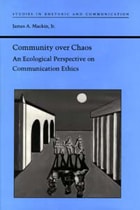
Community over Chaos
An Ecological Perspective on Communication EthicsJames A. Mackin
University of Alabama Press, 1997
This ecology of ethics seeks to balance the needs of the individual and those of the various levels of community.
As James A. Mackin, Jr., shows, both modernism and postmodernism have undermined the traditional foundations for ethics. Using an ecological model, however, Community over Chaos develops a common ground for ethical judgments about communication, thus countering the current theoretical climate of pessimistic cynicism toward the very possibility of ethics.
This theoretical pessimism is not merely an academic problem. The general public is becoming more and more disillusioned about the possibility of ethical communication. We are unable to teach principles of communicative ethics in our primary and secondary schools because we cannot agree on a common ground for those principles. Instead, we teach a narrow form of competence that is concerned primarily with short-term, individual success. Because our communities are built on our communicative practices, our inability to justify communicative ethics must ultimately lead to the disintegration of our communities.
Mackin's ecological model assumes that each of us is a communicative system operating within larger communicative systems that together form our communicative ecosystem. Virtues of the ecological approach are practical wisdom, based in fuzzy logic, and communicative openness and honesty.
Mackin recognizes the importance of both chaos and community in our communicative ecosystems. Chaos, as the source of originality and creativity, can contribute to growth and development; community provides the source of regularity and nurture that makes chaos endurable.
Complacency and Collusion
A Critical Introduction to Business and Financial JournalismKeith J. Butterick
Pluto Press, 2015

Complaint!
Sara Ahmed
Duke University Press, 2021
Conditions Handsome and Unhandsome
The Constitution of Emersonian Perfectionism: The Carus Lectures, 1988Stanley Cavell
University of Chicago Press, 1991
"Cavell's 'readings' of Wittgenstein and Heidegger and Emerson and other thinkers surely deepen our understanding of them, but they do much more: they offer a vision of what life can be and what culture can mean. . . . These profound lectures are a wonderful place to make [Cavell's] acquaintance."—Hilary Putnam
Confronting Torture
Essays on the Ethics, Legality, History, and Psychology of Torture TodayEdited by Scott A. Anderson and Martha C. Nussbaum
University of Chicago Press, 2018
Confronting Torture offers a multidisciplinary investigation of this wrenching topic. Editors Scott A. Anderson and Martha C. Nussbaum bring together a diversity of scholars to grapple with many of torture’s complexities, including: How should we understand the impetus to use torture? Why does torture stand out as a particularly heinous means of war-fighting? Are there any sound justifications for the use of torture? How does torture affect the societies that employ it? And how can we develop ethical or political bulwarks to prevent its use? The essays here resist the temptation to oversimplify torture, drawing together work from scholars in psychology, history, sociology, law, and philosophy, deepening and broadening our grasp of the subject. Now, more than ever, torture is something we must think about; this important book offers a diversity of timely, constructive responses on this resurgent and controversial subject.
Conscience and Memory
Meditations in a Museum of the HolocaustHarold Kaplan
University of Chicago Press, 1994
Kaplan simulates the response to a long visit to the new Holocaust museum in Washington, D.C., which, crucially for Kaplan, is sited in direct view of the Jefferson and Lincoln monuments, powerful symbols of humanist democracy. He insists the Holocaust be viewed not only in terms of personal ethics but modern political ethics as well: for Kaplan the affirmative legacy of the Holocaust is its focus on the dangers of nationalism, racism, and all forms of separatist group identities. It challenges the historicism, cults of power, and scientistic politics of modernity. And it challenges the moral passivity and relativism of mass politics in Western and Eastern societies.
The opening of the Holocaust museum has sparked a debate that reflects a larger debate over the Holocaust's "meaning," its translatability for ordinary understanding. Some deny any possible response except that of overwhelming grief and horror. For others, the "lesson" of the Holocaust implies, in the words of Robert Nozick, that "mankind has fallen. . . . Humanity has lost its claim to continue." The moral life and political institutions will remain endlessly tormented by the Holocaust. That, Kaplan tells us, is the ultimate content of its "meaning," and is what makes the discussion of "meaning" much more than a mourner's symposium.
The Museum itself, according to Kaplan, has become an impressive memorial to the principle of humanism, instructing the collective memory of this democracy and that of nations everywhere which aspire to civil existence. Out of its awful darkness the Holocaust throws the light of conscience for those capable of receiving it.

Contested Medicine
Cancer Research and the MilitaryGerald Kutcher
University of Chicago Press, 2009
In the 1960s University of Cincinnati radiologist Eugene Saenger infamously conducted human experiments on patients with advanced cancer to examine how total body radiation could treat the disease. But, under contract with the Department of Defense, Saenger also used those same patients as proxies for soldiers to answer questions about combat effectiveness on a nuclear battlefield.
Using the Saenger case as a means to reconsider cold war medical trials, Contested Medicine examines the inherent tensions at the heart of clinical studies of the time. Emphasizing the deeply intertwined and mutually supportive relationship between cancer therapy with radiation and military medicine, Gerald Kutcher explores post–World War II cancer trials, the efforts of the government to manage clinical ethics, and the important role of military investigations in the development of an effective treatment for childhood leukemia. Whereas most histories of human experimentation judge research such as Saenger’s against idealized practices, Contested Medicine eschews such an approach and considers why Saenger’s peers and later critics had so much difficulty reaching an unambiguous ethical assessment. Kutcher’s engaging investigation offers an approach to clinical ethics and research imperatives that lays bare many of the conflicts and tensions of the postwar period.
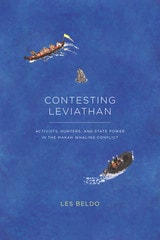
Contesting Leviathan
Activists, Hunters, and State Power in the Makah Whaling ConflictLes Beldo
University of Chicago Press, 2019
In Contesting Leviathan, anthropologist Les Beldo describes the complex judicial and political climate for whale conservation in the United States, and the limits of the current framework in which whales are treated as “large fish” managed by the National Marine Fisheries Service. Emphasizing the moral dimension of the conflict between the Makah, the US government, and antiwhaling activists, Beldo brings to light the lived ethics of human-animal interaction, as well as how different groups claim to speak for the whale—the only silent party in this conflict. A timely and sensitive study of a complicated issue, this book calls into question anthropological expectations regarding who benefits from the exercise of state power in environmental conflicts, especially where indigenous groups are involved. Vividly told and rigorously argued, Contesting Leviathan will appeal to anthropologists, scholars of indigenous culture, animal activists, and any reader interested in the place of animals in contemporary life.
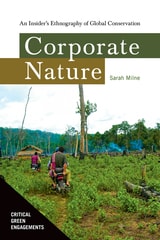
Corporate Nature
An Insider's Ethnography of Global ConservationSarah Milne
University of Arizona Press, 2022
Sarah Milne spent more than a decade working for and observing global conservation projects in Cambodia. During this time, she saw how big environmental NGOs can operate rather like corporations. Their core practice involves rolling out appealing and deceptively simple policy ideas, like Payments for Ecosystem Services (PES). Yet, as policy ideas prove hard to implement, NGOs must also carefully curate evidence from the field to give the impression of success and effectiveness.
In Corporate Nature, Milne delves inside the black box of mainstream global conservation. She reveals how big international NGOs struggle in the face of complexity—especially in settings where corruption and political violence prevail. She uses the case of Conservation International’s work in Cambodia to illustrate how apparently powerful NGOs can stumble in practice: policy ideas are transformed on the ground, while perverse side effects arise, like augmented authoritarian power, illegal logging, and Indigenous dispossession.
The real power of global conservation NGOs is therefore not in their capacity to control what happens in the field but in their capacity to ignore or conceal failings. Milne argues that this produces an undesirable form of socionature, called corporate nature, that values organizational success over diverse knowledges and ethical conduct.
Cosmopolitan Archaeologies
Lynn Meskell, ed.
Duke University Press, 2009
The contributors describe various forms of cosmopolitan engagement involving sites that span the globe. They take up the links between conservation, natural heritage and ecology movements, and the ways that local heritage politics are constructed through international discourses and regulations. They are attentive to how communities near heritage sites are affected by archaeological fieldwork and findings, and to the complex interactions that local communities and national bodies have with international sponsors and universities, conservation agencies, development organizations, and NGOs. Whether discussing the toll of efforts to preserve biodiversity on South Africans living near Kruger National Park, the ways that UNESCO’s global heritage project universalizes the ethic of preservation, or the Open Declaration on Cultural Heritage at Risk that the Archaeological Institute of America sent to the U.S. government before the Iraq invasion, the contributors provide nuanced assessments of the ethical implications of the discursive production, consumption, and governing of other people’s pasts.
Contributors. O. Hugo Benavides, Lisa Breglia, Denis Byrne, Chip Colwell-Chanthaphonh, Alfredo González-Ruibal, Ian Hodder, Ian Lilley, Jane Lydon, Lynn Meskell, Sandra Arnold Scham
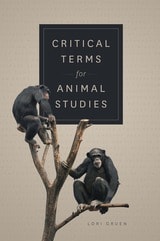
Critical Terms for Animal Studies
Edited by Lori Gruen
University of Chicago Press, 2018
Animal Studies is a rapidly growing interdisciplinary field devoted to examining, understanding, and critically evaluating the complex relationships between humans and
other animals. Scholarship in Animal Studies draws on a variety of methodologies to explore these multi-faceted relationships in order to help us understand the ways in which other animals figure in our lives and we in theirs.
Bringing together the work of a group of internationally distinguished scholars, the contribution in Critical Terms for Animal Studies offers distinct voices and diverse perspectives, exploring significant concepts and asking important questions. How do we take non-human animals seriously, not simply as metaphors for human endeavors, but as subjects themselves? What do we mean by anthropocentrism, captivity, empathy, sanctuary, and vulnerability, and what work do these and other critical terms do in Animal Studies?
An indispensable reference for the field, Critical Terms for Animal Studies not only provides a framework for thinking about animals as subjects of their own experiences, but also serves as a touchstone to help us think differently about our conceptions of what it means to be human, and the impact human activities have on the more than human world.
Critique of Black Reason
Achille Mbembe
Duke University Press, 2017
Crooked Stalks
Cultivating Virtue in South IndiaAnand Pandian
Duke University Press, 2009
In vivid, inventive, and engaging prose, Pandian weaves together ethnographic encounters, archival investigations, and elements drawn from Tamil poetry, prose, and popular cinema. Tacking deftly between ploughed soils and plundered orchards, schoolroom lessons and stationhouse registers, household hearths and riverine dams, he reveals moral life in the postcolonial present as a palimpsest of traces inherited from multiple pasts. Pursuing these legacies through the fragmentary play of desire, dream, slander, and counsel, Pandian calls attention not only to the moral potential of ordinary existence, but also to the inescapable force of accident, chance, and failure in the making of ethical lives. Rarely are the moral coordinates of modern power sketched with such intimacy and delicacy.
Cultural Conceptions
On Reproductive Technologies and the Remaking of LifeValerie Hartouni
University of Minnesota Press, 1997
Cultures of Doing Good
Anthropologists and NGOsEdited by Amanda Lashaw, Christian Vannier, and Steven Sampson
University of Alabama Press, 2018
Cultures of Doing Good: Anthropologists and NGOs serves as a foundational text to advance a growing subfield of social science inquiry: the anthropology of nongovernmental organizations (NGOs). Thorough introductory chapters provide a short history of NGO anthropology, address how the study of NGOs contributes to anthropology more broadly, and examine ways that anthropological studies of NGOs expand research agendas spawned by other disciplines. In addition, the theoretical concepts and debates that have anchored the analysis of NGOs since they entered scholarly discourse after World War II are explained.
The wide-ranging volume is organized into thematic parts: “Changing Landscapes of Power,” “Doing Good Work,” and “Methodological Challenges of NGO Anthropology.” Each part is introduced by an original, reflective essay that contextualizes and links the themes of each chapter to broader bodies of research and to theoretical and methodological debates. A concluding chapter synthesizes how current lines of inquiry consolidate and advance the first generation of anthropological NGO studies, highlighting new and promising directions in this field.
In contrast to studies about surveys of NGOs that cover a single issue or region, this book offers a survey of NGO dynamics in varied cultural and political settings. The chapters herein cover NGO life in Tanzania, Serbia, the Czech Republic, Egypt, Peru, the United States, and India. The diverse institutional worlds and networks include feminist activism, international aid donors, USAID democracy experts, Romani housing activism, academic gender studies, volunteer tourism, Jewish philanthropy, Islamic faith-based development, child welfare, women’s legal arbitration, and environmental conservation.
The collection explores issues such as normative democratic civic engagement, elitism and professionalization, the governance of feminist advocacy, disciplining religion, the politics of philanthropic neutrality, NGO tourism and consumption, blurred boundaries between anthropologists as researchers and activists, and barriers to producing critical NGO ethnographies.