Results by title
968 books match the query 'Movements' and 36 start with c
Calvin O. Schrag and the Task of Philosophy After Postmodernity
Martin Beck Matustik and William Leon McBride
Northwestern University Press, 2002
most distinguished luminaries, this collection is a critical document in Continental philosophy, reflecting its recent history, its present state, and its debt to Calvin O. Schrag. Taking up themes central to Schrag's own philosophical concerns, these essays refer throughout to his salient "interventions" in the dialogue of late-twentieth-century thought characterized as "postmodernity." The authors address, implicitly or directly, the question of philosophy's role and responsibility, or "task."
The volume begins with an overview of this task and of Schrag's contributions to it, written from the perspective of a resolute defender of the phenomenological tradition that Schrag's work has extended and reconfigured. The essays are organized around the four conceptual figures widely considered Schrag's most significant and original philosophical achievements: transversal rationality, the self after post-modernity, the fourth cultural value sphere, and communication praxis. Following and expanding on the implications of these themes, the authors focus on topics ranging from Cartesian rationality to Foucauldian rational relativism; from transcendence in relation to the self to the Schragean self's connections with discourse, action, and community; from religion's disruptive presence in contemporary philosophy to recent developments in the philosophy of language. The book also contains Schrag's responses to many of the works in the collection.
Camus and Sartre
The Story of a Friendship and the Quarrel that Ended ItRonald Aronson
University of Chicago Press, 2003
Albert Camus and Jean-Paul Sartre first met in 1943, during the German occupation of France. The two became fast friends. Intellectual as well as political allies, they grew famous overnight after Paris was liberated. As playwrights, novelists, philosophers, journalists, and editors, the two seemed to be everywhere and in command of every medium in post-war France. East-West tensions would put a strain on their friendship, however, as they evolved in opposing directions and began to disagree over philosophy, the responsibilities of intellectuals, and what sorts of political changes were necessary or possible.
As Camus, then Sartre adopted the mantle of public spokesperson for his side, a historic showdown seemed inevitable. Sartre embraced violence as a path to change and Camus sharply opposed it, leading to a bitter and very public falling out in 1952. They never spoke again, although they continued to disagree, in code, until Camus's death in 1960.
In a remarkably nuanced and balanced account, Aronson chronicles this riveting story while demonstrating how Camus and Sartre developed first in connection with and then against each other, each keeping the other in his sights long after their break. Combining biography and intellectual history, philosophical and political passion, Camus and Sartre will fascinate anyone interested in these great writers or the world-historical issues that tore them apart.
Camus
Portrait of a MoralistStephen Eric Bronner
University of Chicago Press, 2009
Decades after his death, Albert Camus (1913–1960) is still regarded as one of the most influential and fascinating intellectuals of the twentieth century. This biography by Stephen Eric Bronner explores the connections between his literary work, his philosophical writings, and his politics.
Camus illuminates his impoverished childhood, his existential concerns, his activities in the antifascist resistance, and the controversies in which he was engaged. Beautifully written and incisively argued, this study offers new insights—and above all—highlights the contemporary relevance of an extraordinary man.
“A model of a kind of intelligent writing that should be in greater supply. Bronner manages judiciously to combine an appreciation for the strengths of Camus and nonrancorous criticism of his weaknesses. . . . As a personal and opinionated book, it invites the reader into an engaging and informative dialogue.”—American Political Science Review
“This concise, lively, and remarkably evenhanded treatment of the life and work of Albert Camus weaves together biography, philosophical analysis, and political commentary.”—Science & Society

Capital at the Brink
Overcoming the Destructive Legacies of NeoliberalismJeffrey R. Di Leo and Uppinder Mehan, editors
Michigan Publishing Services, 2014
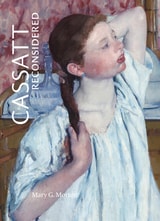
Cassatt Reconsidered
Mary G. Morton
J. Paul Getty Trust, The, 0
A sweeping reconsideration of the artist we thought we knew—and the forces that obscured her legacy.
Fiercely ambitious and independent, Mary Cassatt defied expectations to become one of the most radical artists of the Impressionist movement, though she was—and remains—the least understood. Cassatt commanded and manipulated strains of old master and contemporary painting to express her female subjectivity through a brilliantly modern oeuvre on par with those of the most revered Impressionists. However, mishandled by the Parisian art establishment during her lifetime, and later by art historians and curators, she became known almost exclusively as a sentimentalizing painter of mothers and children.
How did this happen to the most aspiring, revolutionary female artist of the late nineteenth and early twentieth centuries? In Cassatt Reconsidered, author Mary G. Morton probes this central question and more, demonstrating how Cassatt disturbed conventional ideals of femininity, childhood, and maternity, an uncompromising feat for which she paid dearly during her lifetime and in the annals of art historiography.
Vibrantly illustrated with more than 100 images, Cassatt Reconsidered rewards readers with a fuller understanding of an artist who stands apart for daring to express, on her own terms, the unique, intimate experiences of modern women.
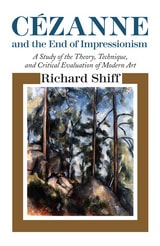
Cezanne and the End of Impressionism
A Study of the Theory, Technique, and Critical Evaluation of Modern ArtRichard Shiff
University of Chicago Press, 1984

Cezanne
A Study of His DevelopmentRoger Fry
University of Chicago Press, 1989
This study established Fry as a critical "father," the first of his line to explicate the ideas of "vision and design" in an attempt to understand modern art. His critical analysis has in many respects never been surpassed. Fry endeavored both to show the essential development of the painter's style and to approach individual works directly; he wrote that he would detect "the profound difference between Cézanne's message and what we have made of it." The result is a book, couched in Fry's most lucid, penetrating language, which is of great technical value to the painter and student and which offers the layman an illuminating demonstration of the remarkable force of Cézanne's art.

Chimera
The Expanded Body for a New Ecosophy of the ArtsMarco Mancuso
Intellect Books, 2026
Exploring the evolving relationship between the human body, technoscience, and the environment, Chimera introduces the concept of the “expanded body” as a transdisciplinary meeting point between art, design, technology, and science. Through a critical examination of developments such as biomechanics, prosthetics, body hacking, and biotechnology, the book investigates how these innovations alter our bodily, sensory, and cognitive capacities. Providing a unique methodological systematization of the main ecological and posthuman philosophy theories, it argues for a new framework in which the human is deeply entangled with both human and nonhuman elements in a shared environment.
Building on ideas from both past and present—ranging from twentieth-century research to current discussions in neuroscience, design, and media theory—Chimera offers a thoughtful response to common fears about futures driven by technology and science. Instead of imagining a world dominated by machines or centered only on human needs, the book imagines fluid, queer, and nonhierarchical relational models between human bodies and the environment. Essential reading for scholars and students in contemporary art, new media, science and technology studies, and environmental and posthuman studies, Chimera also speaks to a wider audience interested in how technology and science are reshaping our understanding of life, identity, and ethical coexistence.

Cinephilia and the Adventure for Existential Health
Recomposing Subjectivity at the CinemaAdam Szymanski
Northwestern University Press, 2025
Exploring how art cinema cultivates existential health through the films of Olivier Assayas
This book proposes that cinephilia can facilitate existential health, which makes palpable the potential for subjectivity to be recomposed through meaningful encounters with cinema. Adam Szymanskidraws on the ethos of psychoanalyst Félix Guattari and thinks with select films from director Olivier Assayas—including Clouds of Sils Maria and Personal Shopper—to theorize how the cinema can be invested with therapeutic value. Cinephilia and the Adventure for Existential Health engages the history of psychoanalytic film theory, excavates its long-standing concern with the production of spectatorial subjectivity, and challenges pathologizing understandings of cinema spectatorship couched in identification, fetishism, and voyeurism. By embracing the indeterminacy of the cinematic experience and the adventurous disposition of cinephilia, the book allies itself to the pursuit of collective health and challenges the logic of medical power.
Cisgender
Disorienting a CategoryPerry Zurn
Duke University Press, 2026
City of the Soul
Rome and the RomanticsJohn A. Pinto
University Press of New England, 2016
Classicism of the Twenties
Art, Music, and LiteratureTheodore Ziolkowski
University of Chicago Press, 2014
In Classicism of the Twenties, Theodore Ziolkowski offers a compelling account of that movement. Giving equal attention to music, art, and literature, and focusing in particular on the works of Stravinsky, Picasso, and T. S. Eliot, he shows how the turn to classicism manifested itself. In reaction both to the excesses of neoromanticism and early modernism and to the horrors of World War I—and with respectful detachment—artists, writers, and composers adapted themes and forms from the past and tried to imbue their own works with the values of simplicity and order that epitomized earlier classicisms.
By identifying elements common to all three arts, and carefully situating classicism within the broader sweep of modernist movements, Ziolkowski presents a refreshingly original view of the cultural life of the 1920s.
Climate Trauma
Foreseeing the Future in Dystopian Film and FictionKaplan, E. Ann
Rutgers University Press, 2015
Drawing from recent scholarship that analyzes climate change as a form of “slow violence” that humans are inflicting on the environment, Climate Trauma theorizes that such violence is accompanied by its own psychological condition, what its author terms “Pretraumatic Stress Disorder.” Examining a variety of films that imagine a dystopian future, renowned media scholar E. Ann Kaplan considers how the increasing ubiquity of these works has exacerbated our sense of impending dread. But she also explores ways these films might help us productively engage with our anxieties, giving us a seemingly prophetic glimpse of the terrifying future selves we might still work to avoid becoming.
Examining dystopian classics like Soylent Green alongside more recent examples like The Book of Eli, Climate Trauma also stretches the limits of the genre to include features such as Blindness, The Happening, Take Shelter, and a number of documentaries on climate change. These eclectic texts allow Kaplan to outline the typical blind-spots of the genre, which rarely depicts climate catastrophe from the vantage point of women or minorities. Lucidly synthesizing cutting-edge research in media studies, psychoanalytic theory, and environmental science, Climate Trauma provides us with the tools we need to extract something useful from our nightmares of a catastrophic future.
Cogito and the Unconscious
sic 2Slavoj Žižek, ed.
Duke University Press, 1998
Noting that for Lacan the Cartesian construct is the same as the Freudian "subject of the unconscious," the contributors follow Lacan's plea for a psychoanalytic return to the cogito. Along the path of this return, they examine the ethical attitude that befits modern subjectivity, the inherent sexualization of modern subjectivity, the impasse in which the Cartesian project becomes involved given the enigmatic status of the human body, and the Cartesian subject's confrontation with its modern critics, including Althusser, Bataille, and Dennett. In a style that has become familiar to Žižek's readers, these essays bring together a strict conceptual analysis and an approach to a wide range of cultural and ideological phenomena—from the sadist paradoxes of Kant's moral philosophy to the universe of Ayn Rand's novels, from the question "Which, if any, is the sex of the cogito?" to the defense of the cogito against the onslaught of cognitive sciences.
Challenging us to reconsider fundamental notions of human consciousness and modern subjectivity, this is a book whose very Lacanian orthodoxy makes it irreverently transgressive of predominant theoretical paradigms. Cogito and the Unconscious will appeal to readers interested in philosophy, psychoanalysis, cultural studies, and theories of ideology.
Contributors. Miran Bozovic, Mladen Dolar, Alain Grosrichard, Marc de Kessel, Robert Pfaller, Renata Salecl, Slavoj Žižek, Alenka Zupancic
Cognition and Work
A Study concerning the Value and Limits of the Pragmatic Motifs in the Cognition of the WorldMax Scheler; Translated from the German by Zachary Davis
Northwestern University Press, 2021
Max Scheler’s Cognition and Work (Erkenntnis und Arbeit) first appeared in German in 1926, just two years before his death. The first part of the book offers one of the earliest critical analyses of American pragmatism, an analysis that would come to have a significant impact on the reception of pragmatism in Germany and western Europe. The second part of the work contains Scheler’s phenomenological account of perception and the experience of reality, an account that is as original as both Husserl’s and Merleau-Ponty’s phenomenologies of perception. Scheler aims to show that the modern mechanistic view of nature fails to account for the dynamic relation that not only the human being but all living beings have to the environment they inhabit.
Available in English translation for the first time, Cognition and Work pushes the boundaries of phenomenology as it is traditionally understood and offers insight into Scheler’s distinct metaphysics. This book is essential reading for those interested in phenomenology, pragmatism, perception, and living beings in their relation to the natural world.
Cognition of the Literary Work of Art
Roman Ingarden
Northwestern University Press, 1973
Collections in Context
The Organization of Knowledge and Community in EuropeEdited by Karen Fresco and Anne D. Hedeman
The Ohio State University Press, 2011
The fourteen essays that comprise Collections in Context: The Organization of Knowledge and Community in Europe interrogate questions posed by French, Flemish, English, and Italian collections of all sorts—libraries as a whole, anthologies and miscellanies assembled within a single manuscript or printed book, and even illustrated ivory boxes.
With essays by a wide array of international scholars, Collections in Context demonstrates that the very act of collecting inevitably imposes some kind of relationship among what might otherwise be naively thought of as disparate elements and simultaneously exposes something about the community that created and used the collection. Thus, Collections in Context offers unusual insights into how collecting both produced knowledge and built community in early modern Europe.
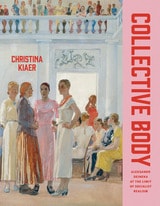
Collective Body
Aleksandr Deineka at the Limit of Socialist RealismChristina Kiaer
University of Chicago Press, 2024
Dislodging the avant-garde from its central position in the narrative of Soviet art, Collective Body presents painter Aleksandr Deineka’s haptic and corporeal version of Socialist Realist figuration as an alternate experimental aesthetic that, at its best, activates and organizes affective forces for collective ends. Christina Kiaer traces Deineka’s path from his avant-garde origins as the inventor of the proletarian body in illustrations for mass magazines after the revolution through his success as a state-sponsored painter of monumental, lyrical canvases during the Terror and beyond. In so doing, she demonstrates that Socialist Realism is best understood not as a totalitarian style but as a fiercely collective art system that organized art outside the market and formed part of the legacy of the revolutionary modernisms of the 1920s. Collective Body accounts for the way the art of the October Revolution continues to capture viewers’ imaginations by evoking the elation of collectivity, making viewers not just comprehend but truly feel socialism, and retaining the potential to inform our own art-into-life experiments within contemporary political art. Deineka figures in this study not as a singular master, in the spirit of a traditional monograph, but as a limit case of the system he inhabited and helped to create.
Community Without Unity
A Politics of Derridian ExtravaganceWilliam Corlett
Duke University Press, 1989
Now available in paperback with a new preface by the author, this award-winning book breaks new ground by challenging traditional concepts of community in political theory. William Corlett brings the diverse (and sometimes contradictory) work of Foucault and Derrida to bear on the thought of Pocock, Burke, Lincoln, and McIntyre, among others, to move beyond the conventional dichotomy of "individual vs. community," arguing instead that community is best advanced within a politics of difference.
Conceptual Activism
Radical Sense-Making and the Struggle for GenderDavina Cooper
Duke University Press, 2026
Congo Style
From Belgian Art Nouveau to African IndependenceRuth Sacks
University of Michigan Press, 2023
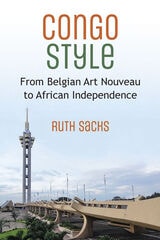
Congo Style presents a postcolonial approach to discussing the visual culture of two now-notorious regimes: King Leopold II’s Congo Colony and the state sites of Mobutu Sese Seko’s totalitarian Zaïre. Readers are brought into the living remains of sites once made up of ambitious modernist architecture and art in Kinshasa, Democratic Republic of the Congo. From the total artworks of Art Nouveau to the aggrandizing sites of post-independence Kinshasa, Congo Style investigates the experiential qualities of man-made environments intended to entertain, delight, seduce, and impress.
In her study of visual culture, Ruth Sacks sets out to reinstate the compelling wonder of nationalist architecture from Kinshasa’s post-independence era, such as the Tower of the Exchange (1974), Gécamines Tower (1977), and the artworks and exhibitions that accompanied them. While exploring post-independence nation-building, this book examines how the underlying ideology of Belgian Art Nouveau, a celebrated movement in Belgium, led to the dominating early colonial settler buildings of the ABC Hotels (circa 1908–13). Congo Style combines Sacks’s practice as a visual artist and her academic scholarship to provide an original study of early colonial and independence-era modernist sites in their African context.
Consciousness and the Acquisition of Language
Maurice Merleau-Ponty
Northwestern University Press, 1979
Consequences Of Pragmatism
Essays 1972-1980Richard Rorty
University of Minnesota Press, 1982
Constituting Critique
Kant's Writing as Critical PraxisWilli Goetschel. Translated by Eric J. Schwab
Duke University Press, 1994
Constituting Critique traces the stages in Kant’s development to reveal how he redefined philosophy as a critical task. Following the philosopher through the experiments of his early essays, Goetschel demonstrates how Kant tests, challenges, and transforms the philosophical essay in his pursuit of a new self-reflective literary genre. From these experiments, critique emerges as the philosophical form for the critical project of the Enlightenment. The imperatives of its transcendental style, Goetschel contends, not only constitute and inform the critical moment of Kant’s philosophical praxis, but also have an enduring place in post-Kantian philosophy and literature.
By situating the Critiques within the context of Kant’s early essays, this work will redirect the attention of Kant scholars to the origins of their form. It will also encourage contemporary critical theorists to reconsider their own practice through an engagement with its source in Kant.
Constructing European Historical Narratives in the Early Modern World
Edited by Hilary J. Bernstein, Fabien Montcher, and Megan Armstrong
Iter Press, 2025
Exploring the art of crafting historical narratives during the early modern period, Constructing European Historical Narratives in the Early Modern World reflects on the social and political implications of the diversification of research methods and writing practices associated with historical writing. It does so by considering the global and local situatedness of historical narratives from the perspective of both their makers and publics while interrogating the extent of the hegemony that a composite European world acquired over the elaboration of historical narratives.
The contributions to this volume take into account historical texts ranging from those most concerned with the self—revealing questions of personal or familial agency and identity—to those in which groups of writers collaborated to produce engaged narratives, to those focused on broader, disembodied concepts, such as language development and geographical features, using a significant mixture of textual references and personal experience. This volume deliberately mixes studies from numerous parts of Europe and its colonial outposts and juxtaposes writings by published scholars with the manuscript testimonies of occasional memorialists.
Correspondence of Jeremy Bentham, Volume 13
July 1828 to June 1832Edited by Philip Schofield, Tim Causer, and Chris Riley
University College London, 2024
The Correspondence of Jeremy Bentham, Volume 13 contains authoritative and fully annotated texts of all known and publishable letters sent both to and from Bentham between 1st July 1828 and his death on 6th June 1832. In addition to 474 letters, the volume contains three memorandums concerning Bentham’s health shortly before his death, his last will and testament, and extracts from both the autobiography and the manuscript diaries of Bentham’s nephew George. Among the letters that have already been published, most are drawn from the edition of The Works of Jeremy Bentham, prepared under the superintendence of Bentham’s literary executor John Bowring. A small number of letters have been reproduced from newspapers and periodicals.
This volume publishes, for the first time, the entire extant correspondence between Bentham and Daniel O’Connell, the Irish Liberator. Other new acquaintances include the barrister and law reformer, Charles Sinclair Cullen, and the Real Property Commissioner, John Tyrrell. Throughout the period, Bentham maintained regular contact with old friends and connections, but he also engaged in sporadic correspondence with such leading figures in government as the Duke of Wellington, Robert Peel, and Henry Brougham. Further afield, Bentham corresponded, amongst others, with the Marquis de La Fayette in France, Edward Livingston in the United States of America, and José Del Valle in Guatemala.
Cosmopolis
The Hidden Agenda of ModernityStephen Toulmin
University of Chicago Press, 1992
In the seventeenth century, a vision arose which was to captivate the Western imagination for the next three hundred years: the vision of Cosmopolis, a society as rationally ordered as the Newtonian view of nature. While fueling extraordinary advances in all fields of human endeavor, this vision perpetuated a hidden yet persistent agenda: the delusion that human nature and society could be fitted into precise and manageable rational categories. Stephen Toulmin confronts that agenda—its illusions and its consequences for our present and future world.
Così fan tutte, An Opera of Mimetic Revelation
Isabel Díaz-Morlán
Michigan State University Press, 2025
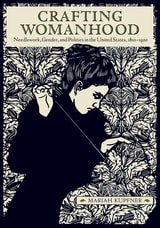
Crafting Womanhood
Needlework, Gender, and Politics in the United States, 1810-1920Mariah Kupfner
University of Delaware Press, 2027
Decorative needlework was a key medium through which American women constructed femininity and its relationship to public and political concerns in the nineteenth and early twentieth centuries. Through samplers, needlecases, lace coats, silk sofas, cotton scraps, banners, and other textile things, scholars can see the ways in which women and girls related to education, property-holding, slavery and freedom, labor, and women’s right to vote. Needlework’s durable association with “traditional” notions about womanhood made it a potent resource through which to make gender in expansive and meaningful ways that had profound public, political implications as educational opportunities for girls and women were expanding, and the antislavery and women's suffrage movements were growing. Indeed, needlework's very conventionality and relationship to the past made it a useful tool for crafting womanhood anew.
Crisis of European Sciences and Transcendental Phenomenology
Edmund Husserl
Northwestern University Press, 1970
Husserl provides not only a history of philosophy but a philosophy of history. As he says in Part I, "The genuine spiritual struggles of European humanity as such take the form of struggles between the philosophies, that is, between the skeptical philosophies--or nonphilosophies, which retain the word but not the task—and the actual and still vital philosophies. But the vitality of the latter consists in the fact that they are struggling for their true and genuine meaning and thus for the meaning of a genuine humanity."
Critical Environments
Postmodern Theory and the Pragmatics of the “Outside”Cary Wolfe
University of Minnesota Press, 1998
Argues for a pragmatist orientation for postmodern theory.
Taking up the problem that has stalled contemporary theory—its treatment of the object of knowledge, the “outside,” as nothing but what a particular discourse makes of it—this book suggests a solution: a reinvigorated, posthumanist form of pragmatism.
Author Cary Wolfe investigates three of the most significant strains of postmodern theory (pragmatism, systems theory, and poststructuralism) and shows how each confronts the specter of an “outside” not wholly constituted by discourses, language games, and interpretive communities. He then assesses these confrontations in light of an essentially pragmatic view of theory, one that constantly asks what practical and material difference it makes, and to whom, how these issues are negotiated. Wolfe concludes by comparing the pragmatist view of the relation of theory to politics with important work in contemporary post-Marxism. In arguing for a pragmatist orientation for postmodern theory, Wolfe deploys continental critical theory to avoid the nativism and “American exceptionalism” that has traditionally accompanied pragmatist philosophy. Unique in its collation of major theorists rarely considered together, Critical Environments incorporates detailed discussions of the work of Richard Rorty, Walter Benn Michaels, Stanley Cavell, Humberto Maturana, Francisco Varela, Niklas Luhmann, Michel Foucault, Gilles Deleuze, Fredric Jameson, and others, and ranges across fields from feminist philosophy of science to the theory of ideology. Wolfe draws on recent work in systems theory to articulate a properly postmodern pragmatism. In doing so, he offers American readers a detailed introduction to systems theory, which he situates and critiques in the broader context of philosophical pragmatism, the theory of democratic social antagonism, and materialist theories of ideology, knowledge, and power. An answer to the widespread charge of relativism leveled against postmodern theory, his work will enhance and inspire new kinds of critical thought.
Critical Theory of Communication
New Readings of Lukács, Adorno, Marcuse, Honneth and Habermas in the Age of the InternetChristian Fuchs
University of Westminster Press, 2016
Critical Theory of Communication offers a vital set of new insights on how communication operates in the age of information, digital media and social media, arguing that we need to transcend the communication theory of Habermas by establishing a dialectical and cultural-materialist critical theory of communication.
It is the first title in a major new book series 'Critical Digital and Social Media Studies' published by the University of Westminster Press.
Critical Theory to Structuralism
Philosophy, Politics, and the Human SciencesEdited by David Ingram
University of Chicago Press, 2010
From Kant to Kierkegaard, from Hegel to Heidegger, continental philosophers have indelibly shaped the trajectory of Western thought since the eighteenth century. Although much has been written about these monumental thinkers, students and scholars lack a definitive guide to the entire scope of the continental tradition. The most comprehensive reference work to date, this eight-volume History of Continental Philosophy will both encapsulate the subject and reorient our understanding of it. Beginning with an overview of Kant’s philosophy and its initial reception, the History traces the evolution of continental philosophy through major figures as well as movements such as existentialism, phenomenology, hermeneutics, and poststructuralism. The final volume outlines the current state of the field, bringing the work of both historical and modern thinkers to bear on such contemporary topics as feminism, globalization, and the environment. Throughout, the volumes examine important philosophical figures and developments in their historical, political, and cultural contexts.
The first reference of its kind, A History of Continental Philosophy has been written and edited by internationally recognized experts with a commitment to explaining complex thinkers, texts, and movements in rigorous yet jargon-free essays suitable for both undergraduates and seasoned specialists. These volumes also elucidate ongoing debates about the nature of continental and analytic philosophy, surveying the distinctive, sometimes overlapping characteristics and approaches of each tradition. Featuring helpful overviews of major topics and plotting road maps to their underlying contexts, A History of Continental Philosophy is destined to be the resource of first and last resort for students and scholars alike.
Cultural Graphology
Writing after DerridaJuliet Fleming
University of Chicago Press, 2016
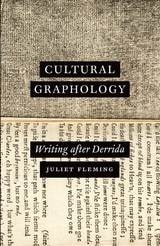
Fleming shows that the single most important lesson to survive from Derrida’s early work is that we do not know what writing is. Channeling Derrida’s thought into places it has not been seen before, she examines printed errors, spaces, and ornaments (topics that have hitherto been marginal to our accounts of print culture) and excavates the long-forgotten reading practice of cutting printed books. Proposing radical deformations to the meanings of fundamental and apparently simple terms such as “error,” “letter,” “surface,” and “cut,” Fleming opens up exciting new pathways into our understanding of writing all told.
Cusanus Today
Thinking with Nicholas of Cusa Between Philosophy and TheologyDavid C. Albertson
Catholic University of America Press, 2024

Czechoslovakia at the World’s Fairs
Behind the FaçadeMarta Filipová
Central European University Press, 2024
Established in 1918, as a new state the First Czechoslovak Republic was keen to project a distinct image. Participation in World Fairs offered the perfect opportunity-. In this comprehensive account of Czechoslovak participation in international exhibitions of the interwar period Marta Filipová looks beyond the sleek façade of the modernist pavilions to examine the intersections of architecture, art and design with commercial interests, state agendas, individual action and the public, offering a complex insight into the production and reception of national displays.
The rich collection of images – mainly photographs – provides a close look at the Czechoslovak pavilions. The design, content and context of the displays convey an idealized narrative that was created for the fairs and the myths on which the Czechoslovak nation and state were built. Heavy machinery, modern art, tourist destinations, and food and drink were presented as Czechoslovak, while many aspects of social life – particularly women or ethnic minorities – were strikingly underrepresented or absent. The book argues that the objects and ideas that the pavilion organizers put on display legitimized and validated the existence of the new state through the inclusion and exclusion of exhibits, people, and ideas.
While Marta Filipová primarily focuses on Czechoslovakia, she also offers insights into how other emerging nations projected and sustained their image during this historical period and how interwar world’s fairs accommodated them.