Results by title
208 books match the query 'Nation' and 14 start with c

Charles E. Hires and the Drink that Wowed a Nation
The Life and Times of a Philadelphia EntrepreneurBill Double
Temple University Press, 2018
Introduced at the 1876 Centennial Exposition and powered by an historic advertising campaign, Hires Root Beer—launched 10 years before Coca-Cola—blazed the trail for development of the American soft drink industry. Its inventor, Charles Elmer Hires, has been described as “a tycoon with the soul of a chemist.” In addition to creating root beer, Hires, a devoted family man and a pillar of the Quaker community, became a leading importer of botanical commodities, an authority on the vanilla bean. Starting from scratch, he also built one of the world’s largest condensed milk companies.
Charles E. Hires and the Drink that Wowed a Nation chronicles the humble origin and meteoric business success of this extraordinary entrepreneur. Author Bill Double uses published interviews, correspondence, newspaper reports, magazine articles, financial data, and a small family archive to tell this story of native ingenuity. Here, the rough-hewn capitalism of the gilded age, the evolution of the neighborhood drugstore, the rise of advertising in creating mass markets, and the emerging temperance movement all come together in a biography that, well, fizzes with entrepreneurial spirit.
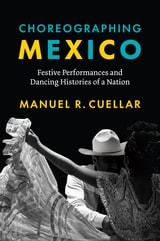
Choreographing Mexico
Festive Performances and Dancing Histories of a NationManuel R. Cuellar
University of Texas Press, 2022
2023 de la Torre Bueno® First Book Award, Dance Studies Association
The impact of folkloric dance and performance on Mexican cultural politics and national identity.
The years between 1910 and 1940 were formative for Mexico, with the ouster of Porfirio Díaz, the subsequent revolution, and the creation of the new state. Amid the upheaval, Mexican dance emerged as a key arena of contestation regarding what it meant to be Mexican. Through an analysis of written, photographic, choreographic, and cinematographic renderings of a festive Mexico, Choreographing Mexico examines how bodies in motion both performed and critiqued the nation.
Manuel Cuellar details the integration of Indigenous and regional dance styles into centennial celebrations, civic festivals, and popular films. Much of the time, this was a top-down affair, with cultural elites seeking to legitimate a hegemonic national character by incorporating traces of indigeneity. Yet dancers also used their moving bodies to challenge the official image of a Mexico full of manly vigor and free from racial and ethnic divisions. At home and abroad, dancers made nuanced articulations of female, Indigenous, Black, and even queer renditions of the nation. Cuellar reminds us of the ongoing political significance of movement and embodied experience, as folklórico maintains an important and still-contested place in Mexican and Mexican American identity today.

Cleansing the Nation
India, the Hindu Modern, and Mediations of GenderRaka Shome
Duke University Press, 2025
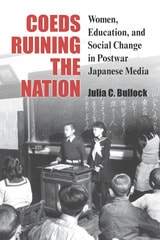
Coeds Ruining the Nation
Women, Education, and Social Change in Postwar Japanese MediaJulia C. Bullock
University of Michigan Press, 2019
This is the first book in English to explore the arguments for and against coeducation as presented in newspaper and magazine articles, cartoons, student-authored school newsletters, and roundtable discussions published in the Japanese press as these reforms were being implemented. It complicates the notion of the postwar years as a moment of rupture, highlighting prewar experiments with coeducation that belied objections that the practice was a foreign imposition and therefore “unnatural” for Japanese culture. It also illustrates a remarkable degree of continuity between prewar and postwar models of femininity, arguing that Occupation-era guarantees of equal educational opportunity were ultimately repurposed toward a gendered division of labor that underwrote the postwar project of economic recovery. Finally, it excavates discourses of gender and sexuality underlying the moral panic surrounding coeducation to demonstrate that claims of rampant sexual deviance and other concerns were employed as disciplinary mechanisms to reinforce an ideology of harmonious gender complementarity and to dissuade women from pursuing conventionally masculine prerogatives.
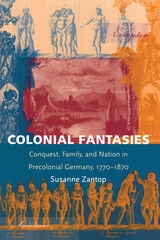
Colonial Fantasies
Conquest, Family, and Nation in Precolonial Germany, 1770-1870Susanne Zantop
Duke University Press, 1997
From as early as the sixteenth century, Germans preoccupied themselves with an imaginary drive for colonial conquest and possession that eventually grew into a collective obsession. Zantop illustrates the gendered character of Germany’s colonial imagination through critical readings of popular novels, plays, and travel literature that imagine sexual conquest and surrender in colonial territory—or love and blissful domestic relations between colonizer and colonized. She looks at scientific articles, philosophical essays, and political pamphlets that helped create a racist colonial discourse and demonstrates that from its earliest manifestations, the German colonial imagination contained ideas about a specifically German national identity, different from, if not superior to, most others.
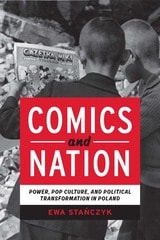
Comics and Nation
Power, Pop Culture, and Political Transformation in PolandEwa Stanczyk
The Ohio State University Press, 2022
Winner, BASEES George Blazyca Award in East European Studies
Comics and Nation offers a fresh perspective on the role of popular culture in the one-hundred-year history of the Polish state, from its foundation in 1918 to the present. Drawing on dozens of press articles, interviews, and readers’ letters, Ewa Stanczyk discusses how journalists, artists, and audiences used comics to probe the boundaries of national culture and scrutinize the established notions of Polishness. Critical moments of Poland’s political transformation ––the establishment of the interwar Polish Republic, the Cold War, the liberalization of the 1970s, the 1989 democratic transition, the turn to memory politics in the 2000s––have all been reflected in the history of Polish comics. Stanczyk offers new insights into how the production of homegrown comics and the influx of foreign works enabled commentators to express their fears, hopes, and disillusionment with political, economic, and cultural changes in Poland and beyond. At its core, Comics and Nation rethinks the impact of popular culture and transnational exchange on Polish nation building, citizenship formation, and the legitimation of power.
Confronting the Nation
Jewish and Western NationalismGeorge L. Mosse
University of Wisconsin Press, 2024
Mosse considers a broad range of topics, from Nazi book burnings to Americans’ search for unifying national symbols during the Great Depression, exploring how the development of particular modes of art, architecture, and mass movements served nationalist agendas by dictating who was included in the image of the nation. These essays retain their significance today in their examination of the cultural and social implications of contemporary nationalism. A new critical introduction by Shulamit Volkov, professor emerita of history at Tel Aviv University, situates Mosse’s analysis within its historiographical context.
Constructions of Race, Place, and Nation
Peter Jackson
University of Minnesota Press, 1993
Contested Histories in Public Space
Memory, Race, and NationDaniel J. Walkowitz and Lisa Maya Knauer, eds.
Duke University Press, 2009
Several contributors examine how the experiences of indigenous groups and the imperial past are incorporated into public histories in British Commonwealth nations: in Te Papa, New Zealand’s national museum; in the First Peoples’ Hall at the Canadian Museum of Civilization; and, more broadly, in late-twentieth-century Australian culture. Still others focus on the role of governments in mediating contested racialized histories: for example, the post-apartheid history of South Africa’s Voortrekker Monument, originally designed as a tribute to the Voortrekkers who colonized the country’s interior. Among several essays describing how national narratives have been challenged are pieces on a dispute over how to represent Nepali history and identity, on representations of Afrocuban religions in contemporary Cuba, and on the installation in the French Pantheon in Paris of a plaque honoring Louis Delgrès, a leader of Guadeloupean resistance to French colonialism.
Contributors. Paul Amar, Paul Ashton, O. Hugo Benavides, Laurent Dubois, Richard Flores, Durba Ghosh, Albert Grundlingh, Paula Hamilton, Lisa Maya Knauer, Charlotte Macdonald, Mark Salber Phillips, Ruth B. Phillips, Deborah Poole, Anne M. Rademacher, Daniel J. Walkowitz
Cosmopolitics
Thinking and Feeling beyond the NationPheng Cheah
University of Minnesota Press, 1998
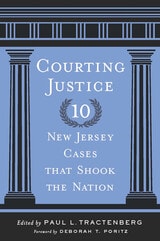
Courting Justice
Ten New Jersey Cases That Shook the NationEdited by Paul L. Tractenberg with a Foreword by Deborah T. Poritz
Rutgers University Press, 2013
Paul Tractenberg has selected ten of the court’s landmark decisions between 1960 and 2011 to illustrate its extensive involvement in major public issues, and to assess its impact. Each case chapter is authored by a distinguished academic or professional expert, several of whom were deeply involved in the cases’ litigation, enabling them to provide special insights. An overview chapter provides context for the court’s distinctive activity.
Many of the cases are so widely known that they have become part of the national conversation about law and policy. In the Karen Ann Quinlan decision, the court determined the right of privacy extends to refusing life-sustaining treatment. The Baby M case reined in surrogate parenting and focused on the child’s best interests. In the Mount Laurel decision, the court sought to increase affordable housing for low- and moderate-income residents throughout the state. The Megan’s Law case upheld legal regulation of sex offender community notification. A series of decisions known as Abbott/Robinson required the state to fund poor urban school districts at least on par with suburban districts.
Other less well known cases still have great public importance. Henningsen v. Bloomfield Motors reshaped product liability and tort law to protect consumers injured by defective cars; State v. Hunt shielded privacy rights from unwarranted searches beyond federal standards; Lehmann v. Toys ‘R’ Us protected employees from sexual harassment and a hostile work environment; Right to Choose v. Byrne expanded state constitutional abortion rights beyond the federal constitution; and Marini v. Ireland protected low-income tenants against removal from their homes.
For some observers, the New Jersey Supreme Court represents the worst of judicial activism; others laud it for being, in its words, “the designated last-resort guarantor of the Constitution's command.” For Tractenberg, the court’s activism means it tends to find for the less powerful over the more powerful and for the public good against private interests, an approach he applauds.
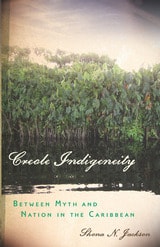
Creole Indigeneity
Between Myth and Nation in the CaribbeanShona N. Jackson
University of Minnesota Press, 2012
During the colonial period in Guyana, the country’s coastal lands were worked by enslaved Africans and indentured Indians. In Creole Indigeneity, Shona N. Jackson investigates how their descendants, collectively called Creoles, have remade themselves as Guyana’s new natives, displacing indigenous peoples in the Caribbean through an extension of colonial attitudes and policies.
Looking particularly at the nation’s politically fraught decades from the 1950s to the present, Jackson explores aboriginal and Creole identities in Guyanese society. Through government documents, interviews, and political speeches, she reveals how Creoles, though unable to usurp the place of aboriginals as First Peoples in the New World, nonetheless managed to introduce a new, more socially viable definition of belonging, through labor. The very reason for bringing enslaved and indentured workers into Caribbean labor became the organizing principle for Creoles’ new identities.
Creoles linked true belonging, and so political and material right, to having performed modern labor on the land; labor thus became the basis for their subaltern, settler modes of indigeneity—a contradiction for belonging under postcoloniality that Jackson terms “Creole indigeneity.” In doing so, her work establishes a new and productive way of understanding the relationship between national power and identity in colonial, postcolonial, and anticolonial contexts.

Creolizing the Nation
Kris F. Sealey
Northwestern University Press, 2020
Winner, 2022 Nicolás Cristóbal Guillén Batista Outstanding Book Award
Creolizing the Nation identifies the nation-form as a powerful resource for political struggles against colonialism, racism, and other manifestations of Western hegemony in the Global South even as it acknowledges the homogenizing effects of the politics of nationalism. Drawing on Caribbean, decolonial, and Latina feminist resources, Kris F. Sealey argues that creolization provides a rich theoretical ground for rethinking the nation and deploying its political and cultural apparatus to imagine more just, humane communities.
Analyzing the work of thinkers such as Édouard Glissant, Frantz Fanon, Gloria Anzaldúa, María Lugones, and Mariana Ortega, Sealey shows that a properly creolizing account of the nation provides an alternative imaginary out of which collective political life might be understood. Creolizing practices are always constitutive of anticolonial resistance, and their ongoing negotiations with power should be understood as everyday acts of sabotage. Sealey demonstrates that the conceptual frame of the nation is not fated to re-create colonial instantiations of nationalism but rather can support new possibilities for liberation and justice.
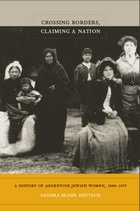
Crossing Borders, Claiming a Nation
A History of Argentine Jewish Women, 1880–1955Sandra McGee Deutsch
Duke University Press, 2010
Drawing on extensive archival research and original oral histories, Deutsch tells the stories of individual women, relating their sentiments and experiences as both insiders and outsiders to state formation, transnationalism, and cultural, political, ethnic, and gender borders in Argentine history. As agricultural pioneers and film stars, human rights activists and teachers, mothers and doctors, Argentine Jewish women led wide-ranging and multifaceted lives. Their community involvement—including building libraries and secular schools, and opposing global fascism in the 1930s and 1940s—directly contributed to the cultural and political lifeblood of a changing Argentina. Despite their marginalization as members of an ethnic minority and as women, Argentine Jewish women formed communal bonds, carved out their own place in society, and ultimately shaped Argentina’s changing pluralistic culture through their creativity and work.