Results by title

17 books match the query 'Eschatology'
cover of Apocalyptic Anxiety: Religion, Science, and America's Obsession with the End of the World

Apocalyptic Anxiety

Religion, Science, and America's Obsession with the End of the World

Anthony Aveni

University Press of Colorado, 2016

Apocalyptic Anxiety traces the sources of American culture’s obsession with predicting and preparing for the apocalypse. Author Anthony Aveni explores why Americans take millennial claims seriously, where and how end-of-the-world predictions emerge, how they develop within a broader historical framework, and what we can learn from doomsday predictions of the past.

The book begins with the Millerites, the nineteenth-century religious sect of Pastor William Miller, who used biblical calculations to predict October 22, 1844 as the date for the Second Advent of Christ. Aveni also examines several other religious and philosophical movements that have centered on apocalyptic themes—Christian millennialism, the New Age movement and the Age of Aquarius, and various other nineteenth- and early twentieth-century religious sects, concluding with a focus on the Maya mystery of 2012 and the contemporary prophets who connected the end of the world as we know it with the overturning of the Maya calendar.

Apocalyptic Anxiety places these seemingly never-ending stories of the world’s end in the context of American history. This fascinating exploration of the deep historical and cultural roots of America’s voracious appetite for apocalypse will appeal to students of American history and the histories of religion and science, as well as lay readers interested in American culture and doomsday prophecies.
[more]
cover of Apocalyptic Sheep and Goats in Matthew and 1 Enoch

Apocalyptic Sheep and Goats in Matthew and 1 Enoch

Elekosi F. Lafitaga

SBL Press, 2022

An alternative understanding of apocalyptic eschatology in the Gospel of Matthew

Matthew’s eschatological imageries of judgment are often identified as apocalyptic and referred to as Matthew’s apocalyptic discourses. In this volume Elekosi F. Lafitaga reexamines Matthew’s vision of the sheep and goats in the judgment of the nations, which are often interpreted as metaphors for the saved and the condemned. Lafitaga views these images in the wider context of the rhetoric of apocalyptic communication stretching back to Matthew 3. This broader context reveals that the vision of Matthew 25 serves to exhort Israel in the here and now according to the torah, with salvation for Israel involving an indispensable responsibility to love and serve humanity. Central to Lafitaga’s analysis is the highly probable scenario that the material in Matthew is dependent on the Book of Dreams (1 Enoch 83–90).
[more]
cover of Bound for Beatitude A Thomistic Study in Eschatology and Ethics

Bound for Beatitude A Thomistic Study in Eschatology and Ethics

Reinhard Hütter

Catholic University of America Press, 2019
Bound for Beatitude is about St. Thomas Aquinas’s theology of beatitude and the journey thereto. Consequently, the work’s topic is the meaning and purpose of human life embedded in that of the whole cosmos. This study is not an antiquarian exercise in the thought of some sundry medieval thinker, but an exercise of ressourcement in the philosophical and theological wisdom of one of the most profound theologians of the Catholic Church, one whom the Church has canonized, granted the title “Doctor of the Church,” and for a long time regarded as the common doctor. This exercise of ressourcement takes its methodological cues from the common doctor; hence, it is an integrated exercise of philosophical, dogmatic, and moral theology. Its specific theological topic, the ultimate human end, perfect happiness, beatitude, and the journey thereto—stands at the very heart of St. Thomas’s theology. Far from being passé, his theology of beatitude is of urgent pertinence as the crisis of humanity and of creation and the exile of God seems to approach its apogee. By way of a presentation, interpretation, and defense of Thomas Aquinas’s doctrine of beatitude and the journey thereto, Bound for Beatitude advances an argument based on four theses: (1) The loss of a theology of beatitude has greatly impoverished contemporary theology. In order to succeed and flourish, theology must recover a sound teleological orientation. (2) In order to recover a sound teleological orientation, theology must recover metaphysics as its privileged instrument. (3) Thomas Aquinas provides a still pertinent model for how theology might achieve these goals in a metaphysically profound theology of beatitude and the beatific vision. Finally, (4) Aquinas’s rich and sophisticated account of the virtues charts the journey to beatitude in a way that still has analytic force and striking relevance in the early twenty-first century.
[more]
cover of Christ Our Hope: An Introduction to Eschatology

Christ Our Hope

An Introduction to Eschatology

Paul O'Callaghan

Catholic University of America Press, 2011
Christ Our Hope is a masterful reflection on Christian eschatology, in a textbook of twelve accessible chapters.
[more]
cover of Death, Judgement, Heaven, and Hell

Death, Judgement, Heaven, and Hell

Edward Condon

Catholic University of America Press, 2019
In this volume, canon lawyer and writer Edward Condon compiles a book full of wisdom and compelling insights. More than anything, the Fathers warn us that our life is short, and the reckoning for how we have lived it eternal. The urgency of the Church’s message, brought to life in the sayings of the Fathers, comes to remind us of our true calling and inheritance in baptism, and of the richness of the heavenly reward, which is not so much the fruit of our efforts on Earth but the fulfillment of God’s promise of love to us. The terror of hell is not the threat of the dictator, but a dire warning of the true scope of our freedom as children of God.
[more]
cover of End of Time: The Maya Mystery of 2012

End of Time

The Maya Mystery of 2012

Anthony Aveni

University Press of Colorado, 2009
December 21, 2012. The Internet, bookshelves, and movie theaters are full of prophecies, theories, and predictions that this date marks the end of the world, or at least the end of the world as we know it. Whether the end will result from the magnentic realignment of the north and south poles, bringing floods, earthquakes, death, and destruction; or from the return of alien caretakers to enlighten or enslave us; or from a global awakening, a sudden evolution of Homo sapiens into non-corporeal beings—theories of great, impending changes abound. In The End of Time, award-winning astronomer and Maya researcher Anthony Aveni explores these theories, explains their origins, and measures them objectively against evidence unearthed by Maya archaeologists, iconographers, and epigraphers. He probes the latest information astronomers and earth scientists have gathered on the likelihood of Armageddon and the oft-proposed link between the Maya Long Count cycle and the precession of the equinoxes. He then expands on these prophecies to include the broader context of how other cultures, ancient and modern, thought about the “end of things” and speculates on why cataclysmic events in human history have such a strong appeal within American pop culture.
[more]
cover of Eschatology: Death and the Eternal Life (Second Edition)

Eschatology

Death and the Eternal Life (Second Edition)

Joseph Ratzinger

Catholic University of America Press, 2007
Originally published in English in 1988, Joseph Ratzinger's Eschatology remains internationally recognized as a leading text on the "last things"—heaven and hell, purgatory and judgment, death and the immortality of the soul. This highly anticipated second edition includes a new preface by Joseph Ratzinger/Pope Benedict XVI and a supplement to the bibliography by theologian Peter A. Casarella. Eschatology presents a balanced perspective of the doctrine at the center of Christian belief—the Church's faith in eternal life. Recognizing the task of contemporary eschatology as "to marry perspectives, so that person and community, present and future, are seen in their unity," Joseph Ratzinger brings together recent emphasis on the theology of hope for the future with the more traditional elements of the doctrine. His book has proven to be as timeless as it is timely.

[more]
cover of Eternal Life and Human Happiness in Heaven: Philosophical Problems, Thomistic Solutions

Eternal Life and Human Happiness in Heaven

Philosophical Problems, Thomistic Solutions

Christopher M. Brown

Catholic University of America Press, 2021
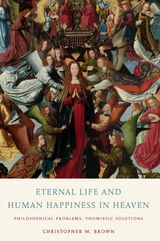
Eternal Life and Human Happiness in Heaven treats four apparent problems concerning eternal life in order to clarify our thinking about perfect human happiness in heaven. The teachings of St. Thomas Aquinas provide the basis for solutions to these four problems about eternal life insofar as his teachings call into question common contemporary theological or philosophical presuppositions about God, human persons, and the nature of heaven itself. Indeed, these Thomistic solutions often require us to think very differently from our contemporaries. But thinking differently with St. Thomas is worth it: for the Thomistic solutions to these apparent problems are more satisfying, on both theological and philosophical grounds, than a number of contemporary theological and philosophical approaches. Christopher Brown deploys his argument in four sections. The first section lays out, in three chapters, four apparent problems concerning eternal life—Is heaven a mystical or social reality? Is heaven other-worldly or this-worldly? Is heaven static or dynamic? Won’t human persons eventually get bored in heaven? Brown then explains how and why some important contemporary Christian theologians and philosophers resolve these problems, and notes serious problems with each of these contemporary solutions. The second section explains, in five chapters, St. Thomas’ significant distinction between the essential reward of the saints in heaven and the accidental reward, and treats in detail his account of that in which the essential reward consists, namely, the beatific vision and the proper accidents of the vision (delight, joy, and charity). The third section treats, in five chapters, St. Thomas’ views on the multifaceted accidental reward in heaven, where the accidental reward includes, among other things, glorified human embodiment, participation in the communion of the saints, and the joy experienced by the saints in sensing God’s “new heavens and new earth.” Finally, section four argues, in four chapters, that St. Thomas’ views allow for powerful solutions to the four apparent problems about eternal life examined in the first section. These solutions are powerful because, not only are they consistent with authoritative, Catholic Christian Tradition, but they do not raise any of the significant theological or philosophical problems that attend the contemporary theological and philosophical solutions examined in the first section.
[more]
cover of From the Dust of the Earth: Benedict XVI, the Bible , and the Theory of Evolution

From the Dust of the Earth

Benedict XVI, the Bible , and the Theory of Evolution

Matthew J. Ramage

Catholic University of America Press, 2022
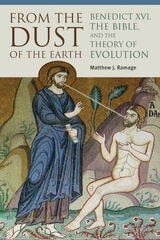
The claim that evolution undermines Christianity is standard fare in our culture. Indeed, many today have the impression that the two are mutually exclusive and that a choice must be made between faith and reason—rejecting Christianity on the one hand or evolutionary theory on the other. Is there a way to square advances in this field of study with the Bible and Church teaching? In this book—his fourth dedicated to applying Joseph Ratzinger/Benedict XVI’s wisdom to pressing theological difficulties—Matthew Ramage answers this question decidedly in the affirmative. Distinguishing between evolutionary theory properly speaking and the materialist attitude that is often conflated with it, Ramage’s work meets the challenge of evolutionary science to Catholic teaching on human origins, guided by Ratzinger’s conviction that faith and evolutionary theory mutually enrich one another. Pope Benedict gifted the Church with many pivotal yet often-overlooked resources for engaging evolution in the light of faith, especially in those instances where he addressed the topic in connection with the Book of Genesis. Ramage highlights these contributions and also makes his own by applying Ratzinger’s principles to such issues as the meaning of man’s special creation, the relationship between sin and death, and the implications of evolution for eschatology. Notably, Ramage shows that many apparent conflicts between Christianity and evolutionary theory lose their force when we interpret creation in light of the Paschal Mystery and fix our gaze on Jesus, the New Adam who reveals man to himself. Readers of this text will find that it does more than merely help to resolve apparent contradictions between faith and modern science. Ramage’s work shows that discoveries in evolutionary biology are not merely difficulties to be overcome but indeed gifts that yield precious insight into the mystery of God’s saving plan in Christ.
[more]
cover of On Resurrection

On Resurrection

Irven M. St. Albert the Great

Catholic University of America Press, 2020
According to 1 Cor 15.44 and 1 Cor 15.52, the human body “is sown an animal body, [but] it will rise a spiritual body” and “the dead will rise again incorruptible, and we will be changed.” These passages prompted many questions: What is a spiritual body? How can a body become incorruptible? Where will the resurrected body be located? And, what will be the nature of its experience? Medieval theologians sought to answer such questions but encountered troubling paradoxes stemming from the conviction that the resurrected body will be an “impassible body” or constituted from “incorruptible matter.” By the thirteenth century the resurrection demanded increased attention from Church authorities, not only in response to certain popular heresies but also to calm heated debates at the University of Paris. William of Auvergne, Bishop of Paris, officially condemned ten errors in 1241 and in 1244, including the proposition that the blessed in the resurrected body will not see the divine essence. In 1270 Parisian Bishop Étienne Tempier condemned the view that God cannot grant incorruption to a corruptible body, and in 1277 he rejected propositions that a resurrected body does not return as numerically one and the same, and that God cannot grant perpetual existence to a mutable, corruptible body. The Dominican scholar Albert the Great was drawn into the university debates in Paris in the 1240s and responded in the text translated here for the first time. In it, Albert considers the properties of resurrected bodies in relation to Aristotelian physics, treats the condition of souls and bodies in heaven, discusses the location and punishments of hell, purgatory, and limbo, and proposes a “limbo of infants” for unbaptized children. Albert’s On Resurrection not only shaped the understanding of Thomas Aquinas but also that of many other major thinkers.
[more]
cover of Paradise in Purgatory: The Eschatological Healing of Victims in the Catholic Tradition

Paradise in Purgatory

The Eschatological Healing of Victims in the Catholic Tradition

Nathan W. O'Halloran

Catholic University of America Press, 2024
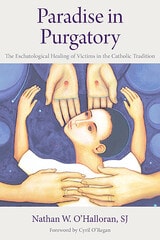
The claim of this book is that it is a precondition for Heaven that victims experience an eschatological healing of their other-inflicted wounds. Nathan O’Halloran, SJ, argues that the best theological space in which to locate this eschatological healing is in what he terms Paradise-in-Purgatory. The doctrine of Purgatory developed as a postmortem theological category for addressing sins committed after baptism and for which adequate penance has not been completed before death. In its full doctrinal articulations at Lyons II, Florence, and Trent, Purgatory is a doctrine concerned with personal, self-inflicted sin. Victims, on the other hand, require healing from other-inflicted sin rather than self-inflicted sin. For this reason, a certain expansion of this Catholic doctrine is required to make theological space for victims. O’Halloran argues that he has found that theological space within the Church’s ample tradition. The wellspring from which the doctrine of Purgatory emerged contains a richer content than has been represented thus far by conciliar definitions. Paradise in Purgatory maintains that the soteriological logic out of which Purgatory developed can be extended also to the postmortem healing of victims, and the soteriological logic of the New Testament supports this conclusion. Using as fundamental touchstones the wiping away of victims’ tears in the Book of Revelation, and the healing of Dinocrates through the prayers of his sister Perpetua in the Passion of Perpetua and Felicity, O’Halloran argues that victims must have an opportunity to experience full postmortem salvation from other-inflicted sin. The volume concludes that Purgatory can be theologically expanded to include a Paradise-in-Purgatory, i.e., a process that heals the other-inflicted wounds of sin which victims carry with them through death. The wounds of victims cannot be eschatologically discarded but must be subjected to the healing salvation which Christ came to offer.
[more]
cover of Reimagining Apocalypticism: Apocalyptic Literature in the Dead Sea Scrolls and Related Writings

Reimagining Apocalypticism

Apocalyptic Literature in the Dead Sea Scrolls and Related Writings

Lorenzo DiTommaso

SBL Press, 2023

The Dead Sea Scrolls have expanded the corpus of early Jewish apocalyptic literature and tested scholars’ ideas of what apocalyptic means. With all the scrolls now available for study, contributors to this volume engage those texts and many more to reexplore not only definitions of the genre but also the influence of the Dead Sea Scrolls on the study of apocalyptic literature in the Second Temple period and beyond. Part 1 focuses on debates about categories and genre. Part 2 explores ancient Jewish texts from the Second Temple period to the early rabbinic era. Part 3 brings the results of scroll research into dialogue with the New Testament and early Christian writings. Contributors include Garrick V. Allen, Giovanni B. Bazzana, Stefan Beyerle, Dylan M. Burns, John J. Collins, Devorah Dimant, Lorenzo DiTommaso, Frances Flannery, Matthew J. Goff, Angela Kim Harkins, Martha Himmelfarb, G. Anthony Keddie, Armin Lange, Harry O. Maier, Andrew B. Perrin, Christopher Rowland, Alex Samely, Jason M. Silverman, and Rebecca Scharbach Wollenberg.
[more]
cover of Resurrection in Paul: Cognition, Metaphor, and Transformation

Resurrection in Paul

Cognition, Metaphor, and Transformation

Frederick S. Tappenden

SBL Press, 2016

Explore the embodied foundations of Paul's resurrection ideals

It is commonly recognized that Paul's resurrection ideals are bodily ideals, though this dictum is usually configured along literal and metaphorical lines. The realism of future resurrected bodies is disconnected from the metaphoricity of bodily transformation in the present. Drawing on cognitive linguistics, this fresh and innovative study addresses this problem. By eschewing the opposition of metaphor and realism, Tappenden explores the concepts and metaphors Paul uses to fashion notions of resurrection, and the uses to which those notions are put. Rather than asserting resurrection as a disembodied, cognicentric proposition, this book illuminates the body's central role in shaping and grounding the apostle's thought and writings.

Features:

  • Close examination of Paul's letters within multiple, interlocking cultural contexts
  • Provides a novel and fresh approach to assessing (in)coherence across the undisputed letters
  • Addresses the materialist nature of early Christian and Judean resurrection ideals without compromising the metaphoricity of those ideals
[more]
cover of The Birth of Purgatory

The Birth of Purgatory

Jacques Le Goff

University of Chicago Press, 1984
In The Birth of Purgatory, Jacques Le Goff, the brilliant medievalist and renowned Annales historian, is concerned not with theological discussion but with the growth of an idea, with the relation between belief and society, with mental structures, and with the historical role of the imagination. Le Goff argues that the doctrine of Purgatory did not appear in the Latin theology of the West before the late twelfth century, that the word purgatorium did not exist until then. He shows that the growth of a belief in an intermediate place between Heaven and Hell was closely bound up with profound changes in the social and intellectual reality of the Middle Ages. Throughout, Le Goff makes use of a wealth of archival material, much of which he has translated for the first time, inviting readers to examine evidence from the writings of great, obscure, or anonymous theologians.
[more]
cover of The Douce Apocalypse: Picturing the End of the World in the Middle Ages

The Douce Apocalypse

Picturing the End of the World in the Middle Ages

Nigel Morgan

Bodleian Library Publishing, 2006

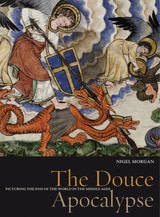
One of the finest of all medieval apocalypse manuscripts, the Douce Apocalypse was part of a series of illuminated texts that brought St. John’s apocalyptic visions to life. 

Now the manuscript—created sometime between 1250 and 1275—reaches an entirely new audience at the hands of noted scholar Nigel Morgan. The Douce Apocalypse explores the manuscript’s royal patronage, looks at its fascinating imagery, and examines its significance in light of contemporary prophecy. The commentary is accompanied by lush, full-color illustrations.

As Morgan relates, the Douce Apocalypse is especially enlightening because of its unfinished nature. A few of its images remain incomplete—and such absences give insight into the artist’s painstaking techniques of drawing, gilding, and painting. The second volume in the Treasures from the Bodleian Library series, The Douce Apocalypse will convey both the beauty of the original and the enduring fascination of its contents.
[more]
cover of The Memory of the World: Deep Time, Animality, and Eschatology

The Memory of the World

Deep Time, Animality, and Eschatology

Ted Toadvine

University of Minnesota Press, 2024

Advancing a phenomenological approach to deep time
 

Our imagination today is dominated by the end of the world, from sci-fi and climate fiction to actual predictions of biodiversity collapse, climate disruption, and the emergence of the Anthropocene. This obsession with the world’s precarity, The Memory of the World contends, relies on a flawed understanding of time that neglects the past and present with the goal of managing the future. Not only does this mislead sustainability efforts, it diminishes our encounters with the world and with human and nonhuman others.


Here, Ted Toadvine takes a phenomenological approach to deep time to show how our apocalyptic imagination forgets the sublime and uncanny dimensions of the geological past and far future. Guided by original readings of Maurice Merleau-Ponty, Emmanuel Levinas, Jacques Derrida, Jean-Luc Nancy, and others, he suggests that reconciling our embodied lives with the memory of the earth transforms our relationship with materiality, other forms of life, and the unprecedented future.


Integrating insights from phenomenology, deconstruction, critical animal studies, and new materialism, The Memory of the World argues for a new philosophy of time that takes seriously the multiple, pleated, and entangled temporal events spanning cosmic, geological, evolutionary, and human durations.

[more]
cover of The Reprobation of Humans and Angels: Augustinus, Tome III, Book X

The Reprobation of Humans and Angels

Augustinus, Tome III, Book X

Cornelius Jansen

Catholic University of America Press, 2026

Cornelius Jansen’s masterful Augustinus (1641) has recently been the center of renewed interest in the theological academic community. After the translation and publication of the chapter Jansen devoted in his work to the topic of predestination of human beings and angels, this is the first ever translation in the English language of the last chapter of the Augustinus, addressing the fate of the reprobates. Jansen illustrated the causes and justice of the divine decision to exclude the damned from the beatific vision by mostly drawing from Augustine’s works. The readers will find that Jansen’s treatment on the subject to be balanced and fair, tracing a middle course between the eschatological optimism of Universalism, which claims that all human beings, and possibly angels as well, will one day be restored to fellowship with God, and the exclusivist soteriology typical of some pre-Vatican II Catholic theology and Evangelicalism. This volume builds upon the translation of some of its central chapters in The Predestination of Humans and Angels, also in the Early Modern Catholic Sources series.
[more]