Results by title
179 books match the query 'Past' and 18 start with c

Catholic Collecting
Catholic Reflection 1538-1850: Objects as a Measure of Reflection on a Catholic Past and the Construction of Recusant Identity in England and AmericaVirginia C. Raguin
Catholic University of America Press, 2006
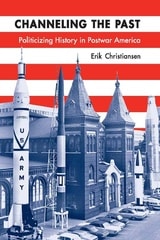
Channeling the Past
Politicizing History in Postwar AmericaErik Christiansen
University of Wisconsin Press, 2013
With insight and wit, Erik Christiansen uncovers in Channeling the Past the ways that powerful corporations rewrote history to strengthen the postwar corporate state, while progressives, communists, and other leftists vied to make their own versions of the past more popular. Christiansen looks closely at several notable initiatives—CBS’s flashback You Are There program; the Smithsonian Museum of American History, constructed in the late 1950s; the Cavalcade of America program sponsored by the Du Pont Company; the History Book Club; and the Freedom Train, a museum on rails that traveled the country from 1947 to 1949 exhibiting historic documents and flags, including original copies of the U.S. Constitution and the Magna Carta.
It is often said that history is written by the victors, but Christiansen offers a more nuanced perspective: history is constantly remade to suit the objectives of those with the resources to do it. He provides dramatic evidence of sophisticated calculations that influenced both public opinion and historical memory, and shows that Americans’ relationships with the past changed as a result.
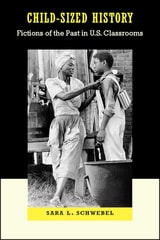
Child-Sized History
Fictions of the Past in U.S. ClassroomsSara L. Schwebel
Vanderbilt University Press, 2011
Books like Johnny Tremain, The Witch of Blackbird Pond, Island of the Blue Dolphins, and Roll of Thunder, Hear My Cry stimulate children's imagination, transporting them into the American past and projecting them into an American future. As works of historical interpretation, however, many are startlingly out of step with current historiography and social sensibilities, especially with regard to race. Unlike textbooks, which are replaced on regular cycles and subjected to public tugs-of-war between the left and right, historical novels have simply--and quietly--endured. Taken individually, many present troubling interpretations of the American past. But embraced collectively, this classroom canon provides a rare pedagogical opportunity: it captures a range of interpretive voices across time and place, a kind of "people's history" far removed from today's state-sanctioned textbooks.
Teachers who employ historical novels in the classroom can help students recognize and interpret historical narrative as the product of research, analytical perspective, and the politics of the time. In doing so, they sensitize students to the ways in which the past is put to moral and ideological uses in the present.
Featuring separate chapters on American Indians, war, and slavery, Child-Sized History tracks the changes in how young readers are taught to conceptualize history and the American nation.
China
Adapting the Past, Confronting the FutureThomas Buoye, Kirk Denton, Bruce Dickson, Barry Naughton, and Martin K. Whyte, Editors
University of Michigan Press, 2002

Cinematic Uses of the Past
Marcia Landy
University of Minnesota Press, 1996
Cinematic Uses of the Past was first published in 1996. Minnesota Archive Editions uses digital technology to make long-unavailable books once again accessible, and are published unaltered from the original University of Minnesota Press editions.
From the first, cinema has sustained a romance with the past. The nature of this attachment, and what it reveals about our culture, is the subject of Marcia Landy's book. Cinematic Uses of the Past looks at British, American, Italian, and African films for what they can tell us about popular history and our cultural investment in certain images of the past.
Landy peruses six different moments in the history of cinema, employing the theories of Nietzsche and Gramsci. Her reading of these films explores their investments in history and memory in relation to ideas of nation, sexuality, gender, and race. Among the films she discusses are A Fistful of Dynamite, The Scarlet Empress, Dance with a Stranger, Holocaust, Schindler's List, Le camp de Thiaroye, Guelwaar, The Leopard, and Veronika Voss.
A thoroughly compelling reading of these emblematic films, Cinematic Uses of the Past is also a revealing interpretation of popular history, exposing the fragmentary, tentative, and invested nature of cultural memory.
Marcia Landy is professor of literature and film studies at the University of Pittsburgh. She is the author of several books, including Film, Politics, and Gramsci (Minnesota, 1995).

Clean Energy
Past to futurePeter Tavner
The Institution of Engineering and Technology, 2024
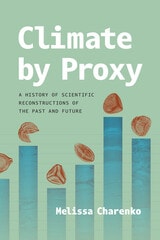
Climate by Proxy
A History of Scientific Reconstructions of the Past and FutureMelissa Charenko
University of Chicago Press, 2025
Unlike our daily reckoning with the weather, our experience of climate must be mediated through methods that measure the ebb and flow of climate, such as computer models, instruments like thermometers, and organic and inorganic remains known as “proxies.” Climate by Proxy by Melissa Charenko explores how scientists read the record of past climates and how their readings have engendered particular understandings of climate. Charenko focuses on the twentieth century, a period when scientists in Europe and North America began to believe that climate had a dynamic history worth studying. Scientists in this period developed several techniques to infer past climate from fossil pollen, tree rings, pieces of vegetation, and other organic remains imprinted upon by former climates. Climate by Proxy examines how these techniques helped shape notions of climate itself.
Charenko also shows how these varied interpretations of climate played an outsized role in explanations of human history and destiny. Geologists, botanists, ecologists, and other scientists interested in climate over long timescales routinely discussed how climate influenced plants, animals, and, notably, people. By following the scientists who reconstructed climate using natural archives, Climate by Proxy demonstrates how material objects worked with scientists’ perceptions of human groups to compel, constrain, and reinforce their understandings of climate, history, and the future.
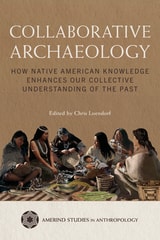
Collaborative Archaeology
How Native American Knowledge Enhances Our Collective Understanding of the PastEdited by Chris Loendorf
University of Arizona Press, 2026
Collaborative Archaeology brings together a diverse group of scholars and tribal cultural resource professionals to showcase how Indigenous knowledge is transforming archaeological practice. Edited by Chris Loendorf, this volume features twelve case studies that highlight the power of partnership between Native American communities and archaeologists. These collaborations not only enrich our understanding of the past but also affirm Indigenous cultural continuity. From the establishment of Tribal Historic Preservation Offices to tribally led research initiatives, the book illustrates how Native voices are reshaping the field.
This timely collection bridges disciplinary divides between archaeology, history, and traditional knowledge, challenging outdated narratives that separate “prehistory” from living Indigenous communities. Contributors demonstrate how ethical, community-based research can lead to more accurate and respectful interpretations of the past. Collaborative Archaeology is essential reading for scholars, students, and practitioners committed to scientific understanding and cultural preservation.
Contributors
Nicole Armstrong-Best
Skylar Begay
Jennifer Bess
Hannah F. Chavez
Robert B. Ciaccio
Shannon Cowell
William H. Doelle
Karl A. Hoerig
Anabel Galindo
Barnaby V. Lewis
Chris Loendorf
Brian Medchill
Linda Morgan
Laurene G. Montero
Stephen E. Nash
Eloise Pedro
Glen E. Rice
Teresa Rodrigues
Hoski Schaafsma
Thomas E. Sheridan
Katrina Soke
Lindsey Vogel-Teeter
Anastasia Walhovd
Reylynne Williams
M. Kyle Woodson
Aaron M. Wright
Constructivism Reconsidered
Past, Present, and FutureMariano E. Bertucci, Jarrod Hayes, and Patrick James, Editors
University of Michigan Press, 2018
Constructivism Reconsidered synthesizes the nature of and debates on constructivism in international relations, providing a systematic assessment of the constructivist research program in IR to answer specific questions: What extent of (dis)agreement exists with regard to the meaning of constructivism? To what extent is constructivism successful as an alternative approach to rationalism in explaining and understanding international affairs? Constructivism Reconsidered explores constructivism’s theoretical, empirical, and methodological strengths and weaknesses, and debates what these say about its past, present, and future to reach a better understanding of IR in general and how constructivism informs IR in particular.
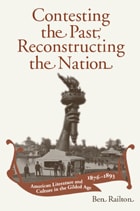
Contesting the Past, Reconstructing the Nation
American Literature and Culture in the Gilded Age, 1876-1893Benjamin A. Railton
University of Alabama Press, 2007
In this study of Gilded Age literature and culture, Ben Railton proposes that in the years after Reconstruction, America’s identity was often contested through distinct and competing conceptions of the nation’s history. He argues that the United States moved toward unifying and univocal historical narratives in the years between the Centennial and Columbian Expositions, that ongoing social conflict provided sites for complications of those narratives, and that works of historical literature offer some of the most revealing glimpses into the nature of those competing visions.
Gilded Age scholarship often connects the period to the 20th-century American future, but Railton argues that it is just as crucial to see how the era relates to the American past. He closely analyzes the 1876 and 1893 Expositions, finding that many of the period’s central trends, from technology to imperialism, were intimately connected to particular visions of the nation’s history. Railton’s concern is with four key social questions: race, Native Americans, women, and the South. He provides close readings of a number of texts for the ways they highlight these issues. He examines established classics (The Adventures of Huck Finn and The Bostonians); newer additions to the canon (The Conjure Woman, Life Among the Piutes, The Story of Avis); largely forgotten best-sellers (Uncle Remus, The Grandissimes); unrecovered gems (Ploughed Under, Where the Battle Was Fought); and autobiographical works by Douglass and Truth, poems by Harper and Piatt, and short stories by Woolson and Cook.
These readings, while illuminating the authors themselves, contribute to ongoing conversations over historical literature’s definition and value, and a greater understanding of not only American society in the Gilded Age, but also debates on our shared but contested history that remain very much alive in the present.

Continuities in Popular Culture
The Present in the Past and the Past in the Present and FutureEdited by Ray B. Brown and Ronald J. Ambrosetti
University of Wisconsin Press, 1993
Controlling the Past
Terry Cook
Society of American Archivists, 2011
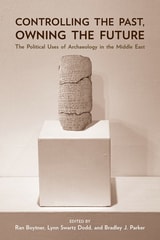
Controlling the Past, Owning the Future
The Political Uses of Archaeology in the Middle EastEdited by Ran Boytner, Lynn Swartz Dodd, and Bradley J. Parker
University of Arizona Press, 2010
The diverse contributions to this volume share a common framework in which the political use of the past is viewed as a process of social discourse. According to this model, political appropriations are seen as acts of social communication designed to accrue benefits to particular groups. Thus the contributors pay special attention to competing social visions and the filters these impose on archaeological data. But they are also attentive to the potential consequences of their own work. Indeed, as the editors remind us, “people’s lives may be affected, sometimes dramatically, because of the material remains that surround them.”
Rounding out this important volume are critiques by two top scholars who summarize and synthesize the preceding chapters.
Cult Archaeology and Creationism
Understanding Pseudoscientific Beliefs about the PastFrancis B. Harrold
University of Iowa Press, 1995
UFOs and aliens, unexplained mysteries, religious cults, diffusion, creationism. We are all familiar with beliefs about human life that lie outside traditional scientific boundaries. Notions such as these are considered reasonable by vast numbers of us in the Western world, in our modern “technological” and “educated” cultures.
Understanding why this should be so and how we as a society might deal with these widespread pseudoscientific beliefs are the subjects at the heart of this study. The authors—specialists in anthropology, archaeology, sociology, psychology, and history—explore creationism, which claims that there is evidence to support a literal interpretation of the origins of the world and of humanity as narrated in the Book of Genesis, and cult archaeology, which encompasses a wide range of fantastic beliefs about our past.
Cult Archaeology and Creationism contains several essays on the history of pseudoscientific beliefs and their current manifestations as well as the results of a unique research project in which students at five campuses across the country were asked about their beliefs and about such background factors as their school experience and religious faith. This expanded edition also includes two new essays, one on Afrocentrism and another that views cult archaeology and creationism in the 1990s and beyond.
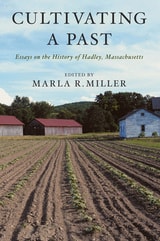
Cultivating a Past
Essays on the History of Hadley, MassachusettsMarla R. Miller
University of Massachusetts Press, 2009
Edited with an introduction by Marla R. Miller, Cultivating a Past brings together fifteen essays, some previously published and others new, that tell the story of Hadley from a variety of disciplinary vantage points. Archaeologists Elizabeth Chilton, Siobhan Hart, Christopher Donta, Edward Hood, and Rita Reinke investigate relations between Native and European communities, while historians Gregory Nobles, Alice Nash, and Pulitzer Prize winner Laurel Thatcher Ulrich explore the social, cultural, and political past of this New England town. Musicologist Andrea Olmstead surveys the career of composer Roger Sessions, costume specialist Lynne Bassett interprets the wardrobes of the town's seventeenth-century residents, Douglas Wilson investigates the connection between Hadley and the regicides William Goffe and Edward Whalley, and Martin Antonetti charts the course of a 1599 Bible alleged to have belonged Goffe.
Taken together, the essays capture how men and women in this small community responded to the same challenges that have faced other New Englanders from the seventeenth century to the present. They also reveal how the town's historical sense of itself evolved along the way, as stories of the alleged "Angel of Hadley," of favorite sons Joseph Hooker and Clarence Hawkes, and of daughters Mary Webster and Elizabeth Porter Phelps contributed to a civic identity that celebrates strength of character.

Curriculum Materials Collections and Centers
Legacies from the Past, Visions of the FutureRita Kohrman
Assoc of College & Research Libraries, 2012
Curriculum Materials Collections and Centers
Legacies from the Past, Visions of the FutureRita Kohrman
Assoc of College & Research Libraries, 2012

Cutting Up the Past, Volume 64
Brook Thomas and Marshall Brown
Duke University Press, 0