Results by title
199 books match the query 'Peace' and 23 start with c
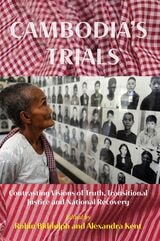
Cambodia's Trials
Contrasting Visions of Truth, Transitional Justice and National RecoveryEdited by Robin Biddulph and Alexandra Kent
National University of Singapore Press, 2023
More than four decades have passed since the end of Khmer Rouge rule in Cambodia in 1979. Even so, the country is still coming to terms with the destruction wrought by the Khmer Rouge during both the time they were in power and during the period of guerrilla resistance that lasted until 1998. The Khmer Rouge Tribunal, or the Extraordinary Chambers in the Court of Cambodia (ECCC), was established in 2006 to bring the Khmer Rouge leadership to justice. In many ways a product of the 1990s, when liberal democracy appeared to be on the rise both in Cambodia and internationally, the ECCC was imagined as a transitional justice initiative that would help ease the transition to liberal democracy.
The ECCC has long been the focus of scholarly attention in Cambodia’s recovery, but this compelling study argues that such an approach is dated, noting that the political circumstances in which the ECCC was born have since changed profoundly, both globally and locally. Cambodia’s current situation can no longer be analyzed solely in terms of transitional justice narratives or the work of the ECCC, and other ways in which Cambodians have come to terms with their past and built new lives must be considered. By decentering the ECCC in the scholarly narrative of Cambodia’s recovery, the volume’s authors offer fascinating new insights into the Khmer Rouge period and more recent years of social, cultural, and political change in Cambodia.
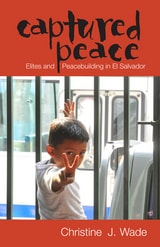
Captured Peace
Elites and Peacebuilding in El SalvadorChristine J. Wade
Ohio University Press, 2015
El Salvador is widely considered one of the most successful United Nations peacebuilding efforts, but record homicide rates, political polarization, socioeconomic exclusion, and corruption have diminished the quality of peace for many of its citizens. In Captured Peace: Elites and Peacebuilding in El Salvador, Christine J. Wade adapts the concept of elite capture to expand on the idea of “captured peace,” explaining how local elites commandeered political, social, and economic affairs before war’s end and then used the peace accords to deepen their control in these spheres.
While much scholarship has focused on the role of gangs in Salvadoran unrest, Wade draws on an exhaustive range of sources to demonstrate how day-to-day violence is inextricable from the economic and political dimensions. In this in-depth analysis of postwar politics in El Salvador, she highlights the local actors’ primary role in peacebuilding and demonstrates the political advantage an incumbent party—in this case, the Nationalist Republican Alliance (ARENA—has throughout the peace process and the consequences of this to the quality of peace that results.
Carrying the Burden of Peace
Reimagining Indigenous Masculinities Through StorySam McKegney
University of Arizona Press, 2021
Sam McKegney answers affirmatively. Countering the perception that masculinity has been so contaminated as to be irredeemable, the book explores Indigenous literary art for understandings of masculinity that exceed the impoverished inheritance of colonialism.
Carrying the Burden of Peace weaves together stories of Indigenous life, love, eroticism, pain, and joy to map the contours of diverse, empowered, and non-dominant Indigenous masculinities. It is from here that a more balanced world may be pursued.

Caught Between Borders
Response Strategies of the Internally DisplacedEdited by Marc Vincent and Birgitte Refslund Sorensen
Pluto Press, 2001
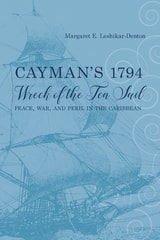
Cayman's 1794 Wreck of the Ten Sail
Peace, War, and Peril in the CaribbeanMargaret E. Leshikar-Denton
University of Alabama Press, 2020
The story has been passed through generations for more than two centuries. Details vary depending on who is doing the telling, but all refer to this momentous maritime event as the Wreck of the Ten Sail. Sometimes misunderstood as the loss of a single ship, it was in fact the wreck of ten vessels at once, comprising one of the most dramatic maritime disasters in all of Caribbean naval history. Surviving historical documents and the remains of the wrecked ships in the sea confirm that the narrative is more than folklore. It is a legend based on a historical event in which HMS Convert, formerly L’Inconstante, a recent prize from the French, and 9 of her 58-ship merchant convoy sailing from Jamaica to Britain, wrecked on the jagged eastern reefs of Grand Cayman in 1794.
The incident has historical significance far beyond the boundaries of the Cayman Islands. It is tied to British and French history during the French Revolution, when these and other European nations were competing for military and commercial dominance around the globe. The Wreck of the Ten Sail attests to the worldwide distribution of European war and trade at the close of the eighteenth century.
In Cayman’s 1794 Wreck of the Ten Sail: Peace, War, and Peril in the Caribbean, Margaret E. Leshikar-Denton focuses on the ships, the people, and the wreck itself to define their place in Caymanian, Caribbean, and European history. This well-researched volume weaves together rich oral folklore accounts, invaluable supporting documents found in archives in the United Kingdom, Jamaica, and France, and tangible evidence of the disaster from archaeological sites on the reefs of the East End.
Checkpoint, Temple, Church and Mosque
A Collaborative Ethnography of War and PeaceJonathan Spencer, Jonathan Goodhand, Shahul Hasbullah, Bart Klem, Benedikt Korf, and Kalinga Tudor Silva
Pluto Press, 2014
Is religion best seen as only a cause of war, or is it a source of comfort for those caught up in conflict?
Checkpoint, Temple, Church and Mosque is based on fieldwork in Sri Lanka’s most religiously diverse and politically troubled region in the closing years of the civil war. It provides a series of new and provocative arguments about the promise of a religiously based civil society, and the strengths and weaknesses of religious organisations and religious leaders in conflict mediation. It argues that for people trapped in long and violent conflicts, religion plays a contradictory role, often acting as a comforting and stabilising force but also, in certain situations, acting as a source of new conflict. Additionally, war itself can lead to profound changes in religious institutions: Catholic priests engage with Buddhist monks and new Muslim leaders, while Hindu temples and Pentecostal churches offer the promise of healing.
This book will provoke new debate about the role of religious organisations and leaders in situations of extreme conflict and will be of great interest to students of anthropology, development studies, religious studies and peace/conflict studies.
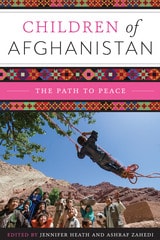
Children of Afghanistan
The Path to PeaceEdited by Jennifer Heath and Ashraf Zahedi
University of Texas Press, 2014
The first comprehensive look at youth living in a country attempting to rebuild itself after three decades of civil conflict, Children of Afghanistan relies on the research and fieldwork of twenty-one experts to cover an incredible range of topics. Focusing on the full scope of childhood, from birth through young adulthood, this edited volume examines a myriad of issues: early childhood socialization in war and peace; education, literacy, vocational training, and apprenticeship; refugee life; mental and physical health, including disabilities and nutrition; children’s songs, folktales, and art; sports and play; orphans; life on the streets; child labor and children as family breadwinners; child soldiers and militarization; sexual exploitation; growing up in prison; marriage; family violence; and other issues vital to understanding, empowerment, and transformation.
Children of Afghanistan is the first volume that not only attempts to analyze the range of challenges facing Afghan children across class, gender, and region but also offers solutions to the problems they face. With nearly half of the population under the age of fifteen, the future of the country no doubt lies with its children. Those who seek peace for the region must find solutions to the host of crises that have led the United Nations to call Afghanistan “the worst place on earth to be born.” The authors of Children of Afghanistan provide child-centered solutions to rebuilding the country’s cultural, social, and economic institutions.
Choose Peace
A Dialogue Between Johan Galtung and Daisaku IkedaJohan Galtung and Daisaku Ikeda
Pluto Press, 1995
Chronicle of a Failure Foretold
The Peace Process of Colombian President Andrés PastranaHarvey Kline
University of Alabama Press, 2007
Charts the progress and failure of Colombian President Andrés Pastrana’s efforts to bring an end to sixty years of civil war.
The civil war in Colombia has waxed and waned for almost sixty years with shifting goals, programs, and tactics among the contending parties and with bursts of appalling violence punctuated by uneasy truces, cease-fires, and attempts at reconciliation. Varieties of Marxism, the economics of narco-trafficking, peasant land hunger, poverty, and oppression mix together in a toxic stew that has claimed uncounted lives of (most often) peasants, conscript soldiers, and people who just got in the way.
Hope for resolution of this conflict is usually confined to dreamers and millenialists of various persuasions, but occasionally an attempt is made at a breakthrough in the military stalemate between the government and the Marxist groups. One of the most promising such attempts was made by new Colombian President Andrés Pastrana at a time when the main rebel groups seemed receptive to serious dialogue. This book is an account of that effort at peace, accompanied at the outset by domestic and international support and hope, and yet doomed like so many others to eventual failure.
Through interviews with many of the actors in this drama, as well as an understanding of the various interest groups and economic forces at work in Colombia, Dr. Kline charts the progress and ultimate failure of this effort, and thereby hopes to increase understanding of the causes of its lack of success. The importance of the resolution of the conflict to the region and to ordinary citizens of this troubled land cannot be
overstated.
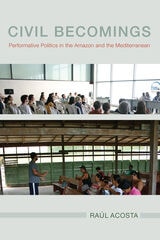
Civil Becomings
Performative Politics in the Amazon and the MediterraneanRaúl Acosta
University of Alabama Press, 2020
An anthropological approach to an emerging form of transnational political engagement by independent civil society organizations
Activism and advocacy have drawn academic interest as alternative ways of achieving collective ends outside established political institutions. However, there has been very little theoretical attention aimed at the interconnections between the two spheres. In Civil Becomings: Performative Politics in the Amazon and the Mediterranean, Raúl Acosta examines the manner in which progressive nongovernmental organizations (NGOs) and activists act in a more intermingled and processual way than scholars have previously acknowledged.
Acosta focuses on networks from the vantage point of two NGOs: one in Brazil that concentrated on environmental issues in the Amazon and another in Barcelona called the Mediterranean Social Forum. The focus of this research is not on organizational aspects of collaboration, but rather on the practices and contexts in which such cooperation occurs. Three major aspects of activist and advocacy networks are analyzed: their communicative characters, their collective performances of the political, and the negotiations they engage in between vernacular and cosmopolitan values.
This volume theorizes the cooperative actions of activist and advocacy networks as legitimating processes for the work of participating groups. In doing so, Acosta argues, they address the issues that justify a joint campaign or effort and also crucially underpin each participating collective as a worthy organization of civil society.
Civil War and State Formation
The Political Economy of War and Peace in LiberiaFelix Gerdes
Campus Verlag, 2013
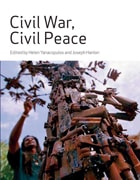
Civil War, Civil Peace
Helen Yanacopulos
Ohio University Press, 2006
When a cease-fire is arranged, aid workers, military personnel, diplomats, and others pour in from the United States, Europe, and international agencies. Outside help is essential after a war, but too often, well-intentioned interveners do more harm than good. A half of civil wars have resumed after failed peace agreements.
Each war is different, and there can be no intervention handbook or best practices guide. Aimed at practitioners and policy makers, and essential reading for students of war, humanitarian intervention, peace building, and development, Civil War, Civil Peace provides a comprehensive examination of how interventions can be improved through a better understanding of the roots of war and of the grievances and interests that fueled the war.
Civil Wars, Civil Peace
An Introduction to Conflict ResolutionKumar Rupesinghe and Sanam Naraghi Anderlini
Pluto Press, 1998
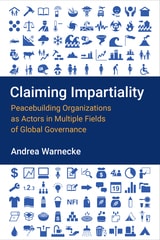
Claiming Impartiality
Peacebuilding Organizations as Actors in Multiple Fields of Global GovernanceAndrea Warnecke
University of Michigan Press, 2026
Drawing on and expanding a Bourdieusian field perspective, the book examines international organizations as actors in multiple fields of global governance. Using the case studies of Bosnia and Herzegovina and Timor-Leste, it traces the emergence and transformation of peacebuilding practices by leading international and bilateral organizations during the first two decades of the field’s existence. The organizational lens highlights the tensions that exist between the objectives of simultaneously acting as a peacebuilding organization and as a peacekeeping, humanitarian, or development organization whose practices are to varying degrees committed to observing the twin principles of impartiality and neutrality. By thinking through these sometimes contradictory roles, the book offers new insights into how these organizations sideline questions of political agency in favor of expanding their influence into related fields of global governance. Claiming Impartiality discusses the future of peacebuilding and explores avenues for addressing political challenges to peace itself.

Code of Peace
Ethics and Security in the World of the Warlord StatesDorothy V. Jones
University of Chicago Press, 1991
Jones focuses on the progressive development of international law to disclose an underlying code of ethics that enjoys broad support in the world community. Unlike studies that concentrate on what others think that states ought to do, Code of Peace analyzes what states themselves consider proper behavior. Using history as both narrative and argument, Jones shows how the existing ethical code has evolved cumulatively since World War I from a complex interplay between theory and practice. More than an abstract treatise or a merely technical analysis, Jones's study is grounded in the circumstances of war and peace in this century. Treaties and agreements, she argues, are forging a consensus on such principles as human rights, self-determination, and cooperation between states. Jones shows how leaders and representatives of nations, drawing on a rich heritage of philosophical thoughts as well as on their own experiences in a violent world of self-interested conflict, have shaped their thought to the taming of that world in the cause of peace. That is the striking thing about this code: states whose relations are marked by so frequent a recourse to war that they can fairly be called "warlords" have created and pledged themselves to a code of peace.
The implications of Code of Peace for establishing a normative foundation for peace are profound. Historically sound and timely, impeccably researched and elegantly written, the book will be of immediate and lasting value to anyone concerned with the stability of the modern world.
Coexistence in the Aftermath of Mass Violence
Imagination, Empathy, and ResilienceEdited by Eve Monique Zucker and Laura McGrew
University of Michigan Press, 2020
Coexistence in the Aftermath of Mass Violence demonstrates how imagination, empathy, and resilience contribute to the processes of social repair after ethnic and political violence. Adding to the literature on transitional justice, peacebuilding, and the anthropology of violence and social repair, the authors show how these conceptual pathways--imagination, empathy and resilience--enhance recovery, coexistence and sustainable peace. Coexistence (or reconciliation) is the underlying goal or condition desired after mass violence, enabling survivors to move forward with their lives. Imagination allows these survivors--victims, perpetrators, bystanders--to draw guidance and inspiration from their social and cultural imaginaries, to develop empathy, and to envision a future of peace and coexistence. Resilience emerges through periods of violence and its aftermaths through acts of survival, compassion, modes of rebuilding social worlds, and the establishment of a peaceful society.
Focusing on society at the grass roots level, the authors discuss the myriad and little understood processes of social repair that allow ruptured societies and communities to move toward a peaceful and stable future. The volume also illustrates some of the ways in which imagination, empathy, and resilience may contribute to the prevention of future violence and the authors conclude with a number of practical and policy recommendations. The cases include Cambodia, Rwanda, Sierra Leone, Somaliland, Columbia, the Southern Cone, Iraq, and Bosnia.
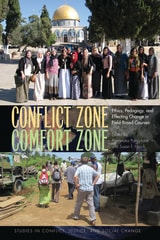
Conflict Zone, Comfort Zone
Ethics, Pedagogy, and Effecting Change in Field-Based CoursesAgnieszka Paczynska
Ohio University Press, 2019
By taking students out of their comfort zone, field-based courses—which are increasingly popular in secondary and postsecondary education—have the potential to be deep, transformative learning experiences. But what happens when the field in question is a site of active or recent conflict? In Conflict Zone, Comfort Zone, editors Agnieszka Paczyńska and Susan F. Hirsch highlight new approaches to field-based learning in conflict zones worldwide. As the contributors demonstrate, instructors must leave the comfort zone of traditional pedagogy to meet the challenges of field-based education.
Drawing on case studies in the United States and abroad, the contributors address the ethical considerations of learning in conflict zones, evaluate the effectiveness of various approaches to teaching these courses, and provide guidelines for effecting change. They also explore how the challenges of field-based classes are magnified in conflict and postconflict settings, and outline the dilemmas faced by those seeking to resolve those challenges. Finally, filling a crucial gap in existing literature, the contributors identify best practices that will assist aspiring instructors in developing successful field-based courses in conflict zones.
Contributors: Daniel R. Brunstetter, Alison Castel, Gina M. Cerasani, Alexander Cromwell, Maryam Z. Deloffre, Sandi DiMola, Leslie Dwyer, Eric Hartman, Pushpa Iyer, Allyson M. Lowe, Patricia A. Maulden, rj nickels, Anthony C. Ogden, Jennifer M. Ramos, Lisa E. Shaw, Daniel Wehrenfennig
Consequences of Peace
The Versailles Settlement - Aftermath and LegacyAlan Sharp
Haus Publishing, 2010
Constructing Peace
Conscientious Objectors and the Boundaries of State Power in East Germany in the 1960sDavid Doellinger
Central European University Press, 2026
Contested Memoryscapes in Bosnia and Herzegovina
Presence of Absence in Everyday PeaceJohanna Mannergren
Central European University Press, 2027
Cornerstones of Peace
Jewish Identity Politics and Democratic TheoryBrettschneider, Marla
Rutgers University Press, 1996
Throughout the seventies, the idea of being “pro-Israel” was traditionally equated with support for the Israeli government and was central to an understanding of American Jewish identity. It was so central, argues Marla Brettschneider, that even committed activists who took issue with such a monolithic stance were silenced by mainstream Jewish organizations. But during the 1980s, a change took place. An explosion of new Jewish groups intent on challenging the dominant definition of the pro-Israel attitude transformed an increasingly closed Jewish community into one more democratic and inclusive.
In Cornerstones of Peace, Marla Brettschneider skillfully combines a lucid review of contemporary Liberal political theory and its understanding of the role of groups in the political process, a sophisticated analysis of Hobbesian philosophy, and a rich history of “alternative” Jewish activist groups like Breira and Americans for Peace Now (APN) to ask: What can we learn about identity and democratic theory from the changes that have taken place in the Jewish community? Through an insightful exploration of how small, activist groups have reclaimed pro-Israel identity politics as a collective multilayered process, Brettschneider adds her voice to the growing number of political theorists envisioning a pro-diversity alternative to Liberal political thought. She theorizes about a new democratic theory, showing theorists and activists how to envision and enact more vibrant, inclusive democratic politics.
Corregidor in Peace and War
Charles M. Hubbard & Collis H. Davis, Jr.
University of Missouri Press, 2007
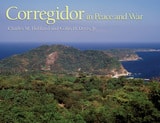
A picturesque island strategically located at the entrance of Manila Bay, Corregidor has had military significance since the days of the Spanish galleon trade. Although its dramatic role in the defense of the Philippines during World War II is well documented, relatively little is known about its history apart from military involvement. This richly illustrated book tells the story of the island and sheds new light on the geopolitical forces that shaped its destiny.
Corregidor in Peace and War is a biography of a mysterious island known simply as “the Rock.” It traces the buildup of armaments and fortifications on the island after the American occupation of the Philippines in 1898, then chronicles clandestine military preparations for an expected war with Imperial Japan. It vividly documents aspects of island life before World War II—including the enviable lifestyle of the American officer corps stationed there, the development of the island’s rail system using imported American streetcars, and the creation of the Philippine Scouts coastal artillery units—and then records its loss and recapture during the struggle with Japan. The final chapter reviews the island’s history since the war.
More than 150 illustrations include maps and photos from both the Spanish and American periods up to the present day—some photographs published more than a century ago and impeccably restored, many never before seen in print. Interweaving new and old photos with informative text, Charles Hubbard and Collis Davis, Jr., provide a guided tour that captures the natural beauty of an island once enjoyed by early residents but subsequently decimated by cannon fire and aerial bombardment. Brilliant color images evoke a place where flora and wildlife coexist alongside abandoned fortifications, documenting stark reminders from times of war. Other photographs show the majestic “suicide cliffs” where Japanese soldiers are said to have jumped to their deaths rather than become prisoners.
Now a tourist destination and historic monument, Corregidor remains a formidable island worthy of its nickname. Corregidor in Peace and War uncovers its many unknown facets and singularly reflects the experiences of both a place and a people that deserve a prominent place in history.
Crisis in Korea
America, China and the Risk of WarTim Beal
Pluto Press, 2011
The South Korean warship Cheonan was sunk in mysterious circumstances on 26 March 2010. The remarkable events that followed are analysed by Tim Beal and woven into a larger study of the increasingly volatile relations between North and South Korea and US concern about the rise of China.
South Korea's stance towards the North has hardened significantly since the new conservative government came to power. Beal argues that the South moved quickly to use the sinking of the Cheonan to put international pressure on the North, even before the cause of the sinking had been established. The US followed suit by attempting to pressurise China into condemning North Korea. The media reports at the time presented an open and shut case of unprovoked North Korean aggression, but the evidence points towards the accidental triggering of a South Korean mine as the cause and South Korean fabrication to incriminate the North.
With the South bent on forcing the fall of the North's regime with US help and China unlikely to stand idly by, this book offers an essential guide to the key factors behind the crisis and possible solutions.