Results by title
57 books match the query 'Peasants' and 6 start with c
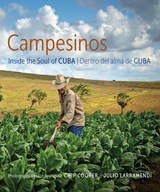
Campesinos
Inside the Soul of CubaChip Cooper and Julio Larramendi
University of Alabama Press, 2017
Into the center of this world traveled two photographers to document these extraordinary people. One, Julio Larramendi, was born in Cuba and has spent his whole life there. The other, Chip Cooper, came to visit for the first time from his native Alabama more than a decade ago. Together, Cooper and Larramendi have captured the light, sounds, and spirit of the campesino landscape and the humble and determined people who inhabit it, ways of living that have not changed, in many instances, for a century or more. From green tobacco fields and winding roads to the faces, both stern and smiling, of children and their close-knit families, Cooper and Larramendi have captured in this landmark volume the rhythms and traditions of contemporary rural Cuban life in ways never before documented.
Cochabamba, 1550-1900
Colonialism and Agrarian Transformation in BoliviaBrooke Larson
Duke University Press, 1998
This study of Bolivia uses Cochabamba as a laboratory to examine the long-term transformation of native Andean society into a vibrant Quechua-Spanish-mestizo region of haciendas and smallholdings, towns and villages, peasant markets and migratory networks caught in the web of Spanish imperial politics and economics. Combining economic, social, and ethnohistory, Brooke Larson shows how the contradictions of class and colonialism eventually gave rise to new peasant, artisan, and laboring groups that challenged the evolving structures of colonial domination. Originally published in 1988, this expanded edition includes a new final chapter that explores the book’s implications for understanding the formation of a distinctive peasant political culture in the Cochabamba valleys over the eighteenth and nineteenth centuries.
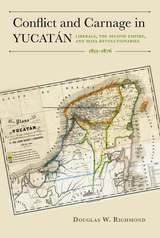
Conflict and Carnage in Yucatán
Liberals, the Second Empire, and Maya Revolutionaries, 1855–1876Douglas W. Richmond
University of Alabama Press, 2015
Synthesizing an extensive and heterogeneous range of sources, Douglas W. Richmond covers three tumultuous political upheavals of this period. First, Mexico’s fledgling republic attempted to impose a liberal ideology at odds with traditional Maya culture on Yucatán; then, the French-backed regime of Emperor Maximilian began to reform Yucatán; and, finally, the republican forces of Benito Juárez restored the liberal hegemony. Many issues spurred resistance to these liberal governments. Instillation of free trade policies, the suppression of civil rights, and persecution of the Roman Catholic Church mobilized white opposition to liberal governors. The Mayas fought the seizure of their communal properties. A long-standing desire for regional autonomy united virtually all Yucatecans. Richmond advances the thought-provoking argument that Yucatán both fared better under Maximilian’s Second Empire than under the liberal republic and would have thrived more had the Second Empire not collapsed.
The most violent and bloody manifestation of these broad conflicts was the Caste War (Guerra de Castas), the longest sustained peasant revolt in Latin American history. Where other scholars have advocated the simplistic position that the war was a Maya uprising designed to reestablish a mythical past civilization, Richmond’s sophisticated recounting of political developments from 1855 to 1876 restores nuance and complexity to this pivotal time in Yucatecan history.
Richmond’s Conflict and Carnage in Yucatán is a welcome addition to scholarship about Mexico and Yucatán as well as about state consolidation, empire, and regionalism.
Confronting Historical Paradigms
Peasants, Labor, And The Capitalist World SystemFrederick Cooper
University of Wisconsin Press, 1993
Confronting Historical Paradigms argues that confrontation with major paradigms of world history has marked the fields of African and Latin American history during the last quarter-century, and that the process has dramatically restructured historical and theoretical understanding of peasantries, labor, and the capitalist world system. Moreover, it maintains, the intellectual reverberations within and across the African and Latin American fields constitute a challenging and underappreciated counterpoint to laments that contemporary historical knowledge has suffered a splintering so extreme that it undermines larger dialogue and meaning.
The authors, in their substantive essays, synthesize, order, and evaluate the significance of the enormous resonating literatures that have come to exist for Africa and Latin America on the themes of the capitalist world system, labor, and peasantries. They historicize these literatures by analyzing an entire cycle of critical dialogue and confrontation with historical paradigms and the professional upheavals that accompanied them. They review the initial confrontations with frameworks of historical knowledge that erupted in the 1960s and the early 1970s; the emergence of new “dissident” paradigms; the outpouring of subsequent scholarship on peasants, labor, and capitalism that began to unravel the newly proposed paradigms by the 1980s and 1990s; and the outlines of the new interpretive frameworks that tended to displace both the “traditional” and “early dissident” paradigms. They also suggest possible outlines of a new cycle of “Third World” confrontations with paradigm, anchored in themes such as gender and ethnicity.
Confronting Historical Paradigms employs a historicized awareness of intellectual networks, conversations, and history–theory dialogues. The result is a critical analysis and synthetic presentation of substantive advances that have preoccupied scholarship on Africa and Latin America in recent decades and a powerful challenge to notions that “new” fields of history have ended up destroying intellectual coherence and community.
Cowards Don't Make History
Orlando Fals Borda and the Origins of Participatory Action ResearchJoanne Rappaport
Duke University Press, 2020
Cultural Politics in Revolution
Teachers, Peasants, and Schools in Mexico, 1930-1940Mary Kay Vaughan
University of Arizona Press, 1997
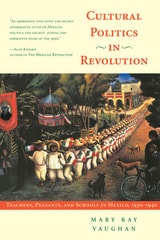
To show the significance of this facet of the Revolution, Mary Kay Vaughan analyzes the educational effort of the state during the 1930s, locating it within the broader sweep of Mexican history to illustrate how the government sought to nationalize and modernize rural society. Vaughan focuses on activities in rural schools, where central state policy makers, teachers, and people of the countryside came together to forge a national culture. She examines the cultural politics of schooling in four rural societies in the states of Sonora and Puebla that are representative of the peasant societies in revolutionary Mexico, and she shows how the state's program of socialist education became an arena for intense negotiations over power, culture, knowledge, rights, and gender practices. The real cultural revolution, Vaughan observes, lay not in the state's efforts at socialist education but in the dialogue between state and society that took place around this program. In the 1930s, rural communities carved out a space to preserve their local identities while the state succeeded in nurturing a multi-ethnic nationalism based on its promise of social justice and development.
Vaughan brings to her analysis a comparative understanding of peasant politics and educational history, extensive interviews, and a detailed examination of national, regional, and local archives to create an evocative and informative study of Mexican politics and society during modern Mexico's formative years. Cultural Politics in Revolution clearly shows that only by expanding the social arena in which culture was constructed and contested can we understand the Mexican Revolution's real achievements.