Results by title
314 books match the query 'Plants' and 18 start with c
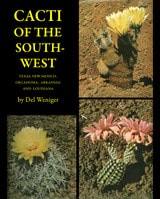
Cacti of the Southwest
Texas, New Mexico, Oklahoma, Arkansas, and LouisianaDel Weniger
University of Texas Press, 0
Del Weniger presents a beautifully illustrated account of all the cacti found in Texas, New Mexico, Oklahoma, Arkansas, and Louisiana. Cactus blossoms often rival the most exotic hothouse plants for delicate beauty. Depending upon the species, they range in color from white through almost the entire spectrum of the rainbow. Nearly every plant in the five-state area is here pictured in color, usually in full bloom.
The cactus was one of the most completely new and different plants encountered by Europeans in the Americas, and the larger species, at least, easily made their presence known to even the most unobservant passerby. To the observant the cactus in its surprising variety of forms has from the beginning exercised a strong fascination. The casual student may easily identify most specimens from these illustrations, and the more serious student will find detailed keys to all of the cacti of the area.
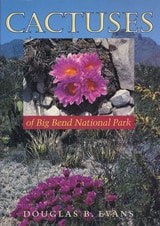
Cactuses of Big Bend National Park
By Douglas B. Evans
University of Texas Press, 1998
When the cactuses bloom in Big Bend National Park, their vivid pinks and purples, reds and yellows bring an unforgettable beauty to the rugged Chihuahuan Desert landscape. In fact, many people visit the park just see the cactus blossoms and the wildflowers. If you're one of them, this book will increase your enjoyment by helping you identify the wonders at your feet. And if you've never been to Big Bend when the cactuses are blooming, you'll discover here what you've been missing.
Douglas B. Evans describes twelve kinds of cactus—living rock, topflower, stout-spined, hedgehog, pineapple, button, barrel, fishhook, nipple, chollas and pricklypears, and Texas nipple—and their individual species known to occur in the park. Color photographs taken by Doris Evans and Ro Wauer accompany the species descriptions. As you hike or drive through the park, you can identify most of the cactuses you see simply by leafing through these splendid pictures and then checking the descriptions, which indicate the cactuses' characteristic features and habitat.
To make the book even more useful, Evans also briefly defines the parts of a cactus, explains how scientific names work, and offers a quick introduction to the geography and ecology of Big Bend National Park and the Chihuahuan Desert. With this information, you'll enjoy not only seeing the cactuses of the Big Bend but also being able to tell one from another and knowing just what makes each one special.
Canoe Country Flora
Plants and Trees of the North Woods and Boundary WatersMark Stensaas
University of Minnesota Press, 2004
The vast North Woods, a land magnificently arrayed in the deep greens of pine, spruce, and fir and the brilliant blues of crystal clear lakes, spans the area from Minnesota to Maine and from Michigan to Hudson Bay. With a little help fromCanoe Country Flora, keen explorers will discover a world full of life and wonder in the plants that thrive in this beautiful lake country.
Canoe Country Flora, a friendly field guide, introduces you to ninety-six of the most common trees, shrubs, wildflowers, fungi, ferns, lichens, and other plants you’re likely to encounter during your travels north. Detailed line drawings and brief plant profiles help you recognize what you’re seeing, while “Sparky” Stensaas’s intriguing tales draw you into a deeper study of the plants’s natural and cultural histories.
Each plant is made identifiable and memorable by fascinating facts, handy checklists, diagrams and charts, and interesting activities that help adults and children learn by discovery.
Use this book as a companion to Canoe Country Wildlife or alone as your guide to a unique North Woods adventure.
Carex of Illinois and Surrounding States
The Oval SedgesMichael Murphy, Greg Spyreas, and Paul Marcum
University of Illinois Press, 2025
Drawing on the study of thousands of specimens, Carex of Illinois and Surrounding States: The Oval Sedges is an invaluable resource for botanists, ecologists, environmental engineers, and professional and amateur environmentalists interested in a deeper understanding of these essential plants.
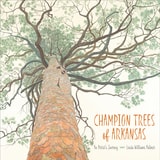
Champion Trees of Arkansas
An Artist's JourneyLinda Williams Palmer
University of Arkansas Press, 2016
In Champion Trees of Arkansas, Linda Williams Palmer explores the state’s largest trees of their species, registered with the Arkansas Forestry Commission as “champions.” Through her beautiful colored-pencil drawings, each magnificent tree is interpreted through the lens of season, location, history, and human connection.
Readers will get to know the cherrybark oak, rendered in fall colors, an avatar for the passing of seasons. The sugar maple, with its bare limbs and weather-beaten trunk, stands sentry over the headstones in a confederate cemetery. The 350-year-old white oak was once dubbed the Council Oak by Native Americans, and the post oak, cared for by generations of the same family, has its own story to tell.
Palmer travelled from Delta swamps to Ozark and Ouachita mountain ridges over a seven-year period to see and document the champions and to talk with property owners and others willing to share the stories of how these trees are beloved and protected by the community, and often entwined with its history. Champion Trees of Arkansas is sure to inspire art and nature lovers everywhere.
Changing Precipitation Regimes and Terrestrial Ecosystems
A North American PerspectiveJake F. Weltzin
University of Arizona Press, 2003
This volume provides a central source of information about this newly emerging area of global change research. It presents ongoing investigations into the responses of plant communities and ecosystems to the experimental manipulation of precipitation in a variety of field settings—particularly in the western and central United States, where precipitation is already scarce or variable. By exploring methods that can be used to predict responses of ecosystems to changes in precipitation regimes, it demonstrates new approaches to global change research and highlights the importance of precipitation regimes in structuring ecosystems.
The contributors first document the importance of precipitation, soil characteristics, and soil moisture to plant life. They then focus on the roles of precipitation amount, seasonality, and frequency in shaping varied terrestrial ecosystems: desert, sagebrush steppe, oak savanna, tall- and mixed-grass prairie, and eastern deciduous forest. These case studies illustrate many complex, tightly woven, interactive relationships among precipitation, soils, and plants—relationships that will dictate the responses of ecosystems to changes in precipitation regimes.
The approaches utilized in these chapters include spatial comparisons of vegetation structure and function across different ecosytems; analyses of changes in plant architecture and physiology in response to temporal variation in precipitation; experiments to manipulate water availability; and modeling approaches that characterize the relationships between climate variables and vegetation types. All seek to assess vegetation responses to major shifts in climate that appear to be occurring at present and may become the norm in the future.
As the first volume to discuss and document current and cutting-edge concepts and approaches to research into changing precipitation regimes and terrestrial ecosystems, this book shows the importance of developing reliable predictions of the precipitation changes that may occur with global warming. These studies clearly demonstrate that patterns of environmental variation and the nature of vegetation responses are complex phenomena that are only beginning to be understood, and that these experimental approaches are critical for our understanding of future change.
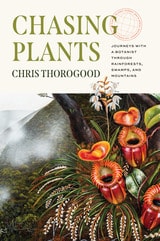
Chasing Plants
Journeys with a Botanist through Rainforests, Swamps, and MountainsChris Thorogood
University of Chicago Press, 2022
From an acclaimed botanist and artist, a thrilling and beautifully illustrated expedition around the globe in search of the world’s most extraordinary plants.
After making a strange discovery on a childhood trip to Ikea—a stand of sap-sucking, leafless broomrapes, stealing nutrients from their neighbors’ roots—Chris Thorogood dreamed of becoming a botanist and would stop at nothing to feed his growing addiction to plants. In his hair-raising adventures across Europe, Africa, the Middle East, and Asia, Thorogood treads a death-defying path over cliffs, up erupting volcanoes, through typhoons, and out into the very heart of the world’s vast, green wilderness. Along the way, he encounters pitcher plants, irises, and orchids more heart-piercingly beautiful than could ever be imagined.
But with Thorogood as our guide in Chasing Plants, we not only imagine: we see. An internationally acclaimed botanical illustrator, Thorogood conjures his adventures spent seed-collecting and conserving plants around the world back to life in his electric paintings, which feature throughout the book. They bring plants out of the shadows, challenging us to see their intrigue and their character, and helping us to understand why plant species must be protected. To join Thorogood in his wild adventures is to be cast under his green spell: readers will never think of plants the same way again.
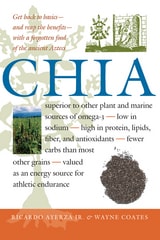
Chia
Rediscovering a Forgotten Crop of the AztecsRicardo Ayerza Jr. and Wayne Coates
University of Arizona Press, 2005
In this book, agronomist Ricardo Ayerza and agricultural engineer Wayne Coates trace the long and fascinating history of chia’s use, then reveal the scientific story of the plant and its modern potential. They compare fatty acid profiles of chia with our other major sources—fish oil, flaxseed, and marine algae—and provide evidence that chia is superior in many ways.
Here are just some of the benefits that chia provides:
- chia has the highest known percentage of alpha-linolenic acid, and the highest combined alpha-linolenic and linoleic fatty acid percentage of all crops
- chia has more protein, lipids, energy, and fiber—but fewer carbs—than rice, barley, oats, wheat, or corn—and its protein is gluten-free
- chia is an excellent source of calcium, phosphorus, magnesium, potassium, iron, zinc, and copper
- chia is low in sodium: salmon has 78 times as much, tuna 237 times as much
- chia exhibits no evidence of allergic response, even in individuals with peanut and tree-nut allergies
- chia doesn’t give off a “fishy flavor,” unlike some other sources of omega-3 fatty acid
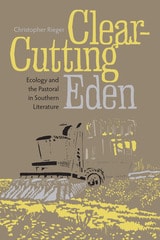
Clear-Cutting Eden
Ecology and the Pastoral in Southern LiteratureChristopher Rieger
University of Alabama Press, 2009
Examines how Southern literary depictions of the natural world were influenced by the historical, social, and ecological changes of the 1930s and 1940s
Rieger studies the ways that nature is conceived of and portrayed by four prominent Southern writers of the era: Erskine Caldwell, Marjorie Kinnan Rawlings, Zora Neale Hurston, and William Faulkner. Specifically, he argues that these writers created new versions of an old literary mode—the pastoral—in response to the destabilizing effects of the Great Depression, the rise of Southern modernism, and the mechanization of agricultural jobs.
Mass deforestation, soil erosion, urban development, and depleted soil fertility are issues that come to the fore in the works of these writers. In response, each author depicts a network model of nature, where humans are part of the natural world, rather than separate, over, or above it, as in the garden pastorals of the Old South, thus significantly revising the pastoral mode proffered by antebellum and Reconstruction-era writers.
Each writer, Rieger finds, infuses the pastoral mode with continuing relevance, creating new versions that fit his or her ideological positions on issues of race, class, and gender. Despite the ways these authors represent nature and humankind’s place in it, they all illustrate the idea that the natural environment is more than just a passive background against which the substance of life, or fiction, is played out.

Coevolution of Animals and Plants
Symposium V, First International Congress of Systematic and Evolutionary Biology, 1973Edited by Lawrence E. Gilbert and Peter H. Raven
University of Texas Press, 1975
It has long been recognized that plants and animals profoundly affect one another’s characteristics during the course of evolution. However, the importance of coevolution as a dynamic process involving such diverse factors as chemical communication, population structure and dynamics, energetics, and the evolution, structure, and functioning of ecosystems has been widely recognized for a comparatively short time. Coevolution represents a point of view about the structure of nature that only began to be fully explored in the late twentieth century. The papers presented here herald its emergence as an important and promising field of biological research.
Coevolution of Animals and Plants is the first book to focus on the dynamic aspects of animal-plant coevolution. It covers, as broadly as possible, all the ways in which plants interact with animals. Thus, it includes discussions of leaf-feeding animals and their impact on plant evolution as well as of predator-prey relationships involving the seeds of angiosperms. Several papers deal with the most familiar aspect of mutualistic plant-animal interactions—pollination relationships. The interactions of orchids and bees, ants and plants, and butterflies and plants are discussed. One article provides a fascinating example of more indirect relationships centered around the role of carotenoids, which are produced by plants but play a fundamental part in the visual systems of both plants and animals.
Coevolution of Animals and Plants provides a general conceptual framework for studies on animal-plant interaction. The papers are written from a theoretical, rather than a speculative, standpoint, stressing patterns that can be applied in a broader sense to relationships within ecosystems.
Contributors to the volume include Paul Feeny, Miriam Rothschild, Christopher Smith, Brian Hocking, Lawrence Gilbert, Calaway Dodson, Herbert Baker, Bernd Heinrich, Doyle McKey, and Gordon Frankie.
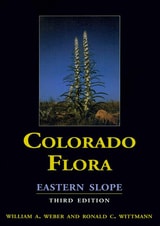
Colo Flora
East Slope 3rd EdWilliam A. Weber
University Press of Colorado, 2001
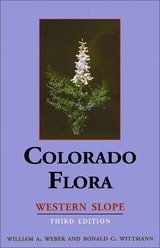
Colo Flora
West Slope 3rd EdWilliam A. Weber
University Press of Colorado, 2001
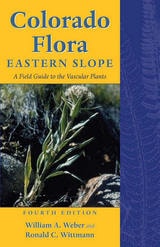
Colorado Flora
Eastern Slope, Fourth Edition <br>A Field Guide to the Vascular PlantsWilliam A. Weber
University Press of Colorado, 2011
The revised and updated editions reflect current taxonomic knowledge. The authors describe botanical features of this unparalleled biohistorical region and its mountain ranges, basins, and plains and discuss plant geography, giving detailed notes on habitat, ecology, and range. The keys recount interesting anecdotes and introductions for each plant family. The book is rounded out with historical background of botanical work in the state, suggested readings, glossary, index to scientific and common names, references, and hundreds of illustrations. The books also contain a new contribution from Donald R. Farrar and Steve J. Popovich on moonworts. The fourth editions of both Colorado Flora: Eastern Slope and Colorado Flora: Western Slope are ideal for both student and scientist and essential for readers interested in Colorado's plant life.
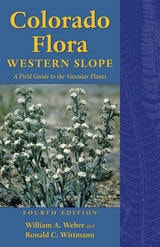
Colorado Flora
Western Slope, Fourth Edition <br>A Field Guide to the Vascular PlantsWilliam A. Weber
University Press of Colorado, 2011
These thoroughly revised and updated editions reflect current taxonomic knowledge. The authors describe botanical features of this unparalleled biohistorical region and its mountain ranges, basins, and plains and discuss plant geography, giving detailed notes on habitat, ecology, and range. The keys contain interesting anecdotes and introductions for each plant family. The book is rounded out with historical background of botanical work in the state, suggested readings, glossary, index to scientific and common names, references, and hundreds of illustrations. The books also contain a new contribution from Donald R. Farrar and Steve J. Popovich on moonworts. The fourth editions of Colorado Flora: Eastern Slope and Colorado Flora: Western Slope are ideal for both student and scientist and essential for readers interested in Colorado's plant life.
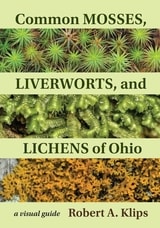
Common Mosses, Liverworts, and Lichens of Ohio
A Visual GuideRobert Klips
Ohio University Press, 2022
This engaging illustrated guidebook reveals the fascinating mosses and lichens that homeowners, outdoorspeople, and nature lovers encounter every day in Ohio and the Midwest.
In this guide to the most common and distinctive moss, liverwort, and lichen species in Ohio, readers will find concise physical descriptions, facts about natural history and ecology, and tips to distinguish look-alike species, all presented in a friendly, conversational tone.
Featuring detailed photographs of the plant and plantlike species in their natural settings, the book covers 106 mosses, thirty liverworts, and one hundred lichens and offers several avenues to match a specimen to its description page. “Where They Grow” chapters spotlight species commonly encountered on field outings, and field keys to help readers quickly identify unfamiliar samples.
While designed primarily as an identification tool, this guide also frames moss and lichen spotting in a scientific context. The two main sections—bryophytes and lichens—detail their respective taxonomic kingdoms, explain their life cycles and means of reproduction, and illustrate variation in the traits used for identification. The book is an introduction to the biology of these intriguing but too-often-overlooked organisms and a means to enjoy, identify, and catalog the biodiversity all around us.
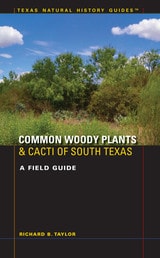
Common Woody Plants and Cacti of South Texas
A Field GuideBy Richard B. Taylor with Texas Parks & Wildlife Department
University of Texas Press, 2014
Woody plants and cacti are vital staple foods for cattle, deer, and other wildlife in drought-prone South Texas. Ranchers, hunters, and land managers who need to identify these plants relied on A Field Guide to Common South Texas Shrubs (published by Texas Parks & Wildlife Press and distributed by UT Press), which is no longer in print. Responding to ongoing demand for the book, Richard B. Taylor has completely updated and expanded it with seven new species, new photographs, and a quick plant identification key.
Common Woody Plants and Cacti of South Texas is an easy-to-use plant identification field guide to fifty species that comprise an estimated 90 percent of the region’s woody canopy cover north of the Rio Grande Valley. The species accounts include photographs, descriptions, values to livestock and wildlife, and nutritional information. The book also provides historical perspectives and information on brush management techniques and strategies, as well as habitat appraisal. All of these resources will enable readers to analyze stocking rates for deer and cattle, evaluate a prospective hunting lease, or buy property.
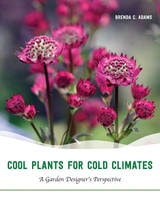
Cool Plants for Cold Climates
A Garden Designer's PerspectiveBrenda C. Adams
University of Alaska Press, 2017
When Adams moved from the warm Southwest to Alaska, she found herself in a different gardening world, with few guides on how to approach this new ecosystem. Now, more than twenty-five years later, she shares the secrets gained from her years of gardening experiments as well as bountiful advice from friends and local nurseries. She explains how to evaluate a plant, balancing its artistic attributes with its more utilitarian ones, as well as how to evaluate your space and soil. Adams then takes you into the nursery, offering guidance on how to pick the best of the best. Finally, she offers a detailed look at a wide variety of wonderful plants, highlighting those that offer overall beauty, are especially easy to care for, and solidly hardy. With more than three hundred vivid pictures of both individual plants and full gardens, Adams proves that there is a bounty of plants, in a rainbow of colors, waiting to brighten up your space.
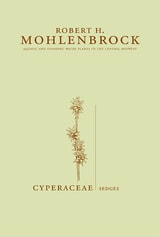
Cyperaceae
SedgesRobert H. Mohlenbrock
Southern Illinois University Press, 2005
The first in a series of four illustrated guides to identifying aquatic and standing water plants in the central Midwest, this convenient reference volume covers the 183 species of Cyperaceae. Robert H. Mohlenbrock includes three types of plants: submergents, those that spend their entire lives with their vegetative parts either completely submerged or at least floating on the water’s surface; emergents, which are typically rooted underwater with their vegetative parts standing out of water; and a third category of plants that live most of their lives out of water, but which may live in water at least three months a year.
Mohlenbrock provides descriptions, illustrations, and ways to identify any plant in the sedge family (Cyperaceae) in the states of Kentucky (except for the Cumberland region), Ohio, Indiana, Illinois, Iowa, Missouri, Kansas, and Nebraska. With taxa arranged alphabetically, the volume is well organized and easy to use. In addition, basic synonymy, description, distribution, comments, and line drawings that show the habits and distinguishing features for each plant. Habitat and nomenclatural notes are also listed, as are the official wetland designations given by the U.S. Fish and Wildlife Service.
Cyperaceae is a useful standard reference for state and federal employees who deal with aquatic and wetland plants and environmental conservation and mitigation issues and an essential guide for students and instructors in college and university courses where the identification of aquatic and wetland plants is emphasized.