Results by title
557 books match the query 'Poems' and 22 start with c

Caldecott Fun
Poems, Songs, and Games with Caldecott WinnersNancy Polette
American Library Association, 2013
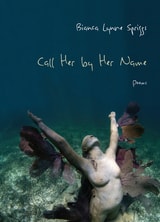
Call Her by Her Name
PoemsBianca Lynne Spriggs
Northwestern University Press, 2016
In Call Her by Her Name, the poet and performance artist Bianca Lynne Spriggs creates a twenty-first-century feminist manifesto suffused with metaphoric depth. This collection is a call-and-response of women—divine and domestic, legend and literal—who shape-shift and traverse generations. Through these narratives and cinematic poems, a chorus emerges of stories and lives rarely told.
Call Her by Her Name seeks to give voice to the voiceless, including lynched black women, the biblical "Potiphar’s wife," and women who tread the rims of phenomenal worlds—the goddess, the bird-woman, the oracle. While these poems reflect an array of women and women’s experiences, each piece could be considered a hue of the same woman, whether home-wrecker, Madonna, or midwife. The woman who sees dragons was perhaps once the roller-skating girl-child. The aging geisha may also be the roots woman next door. The woman who did not speak for ten years could have ended up sinking to the ocean floor. Spriggs gives each one life and limb, breath and voice, in a collection that adds up unequivocally to a poetic celebration of women.
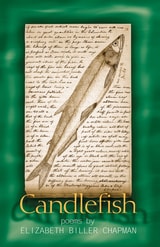
Candlefish
PoemsElizabeth Chapman
University of Arkansas Press, 2004
The candlefish, enormous schools of which enter the Pacific Northwest’s rivers in the spring, is so rich with oil that when supplied with a wick it can be used as a candle. Thus creatures of the water become transformed into instruments of fire and spirit, ultimately transcending this world.
Written as the author begins to navigate the second half of life, Candlefish unfolds along multiple lines of narrative and reflection. Each poem is rendered from experience and made incandescent by the spark of the author’s intellect and insight.
Whether tending the flower beds, skinnydipping on her birthday, conversing with a grown daughter, or bringing inside the teacup her husband can no longer carry, Elizabeth Biller Chapman distills each moment to its most vital components and makes them luminous with the necessity and surprise of relation.
Elizabeth Biller Chapman’s candlefish gracefully swim toward the pierced horizon all of us must face and are transformed by imaginative compassion as the book develops, season by season, from summer to spring.
Cenizas
PoemsCynthia Guardado
University of Arizona Press, 2022
Guardado crafted the poems in Cenizas over a ten-year period, often traveling to El Salvador for research and to conduct interviews. The Salvadoran Civil War haunts the pages of this collection as it unflinchingly explores war, its aftermath, and the bittersweet legacies that are passed down from one generation to the next. The poems mourn those who were lost and honor the strength of the speaker’s ancestors. “All my people have been born from the ashes of volcanoes,” she writes, invoking a family lineage that has endured the atrocities committed against them. Even so, El Salvador keeps pulling the speaker back—and despite warnings of danger, she still manages to find beauty among the ruins.
Cenotaph
PoemsBrock Jones
University of Arkansas Press, 2016
Finalist, 2016 Miller Williams Poetry Prize, edited by Billy Collins
Out of the contradiction, paradox, loss, and strange beauty of contemporary warfare, Brock Jones brings us Cenotaph, a collection of poems that have as their genesis Jones’s deployments to Iraq in 2002 and 2005, when he was in the US Army.
These are war poems, but also love poems and hate poems, poems about dying and living, poems about hope and hopelessness. These are poems that beautifully reflect Jones’s resignation to and rejection of the impossibility of saying anything definitive or honest about war.
These are poems that strive to do what poet Bruce Weigl described as the poet’s job: to find “some kind of miraculous way th at if you work hard enough to get the words right, that which you call horrific and wrong is defeated.”
Cenotaph is a poet doing the poet’s work: trying, hoping to get the words right.
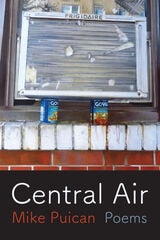
Central Air
PoemsMike Puican
Northwestern University Press, 2020
Puican’s focus on the city, its people and underbellied spaces, pays homage in the tradition of the great Chicago masters: Carl Sandburg, Gwendolyn Brooks, and Campbell McGrath. This contemporary Chicago son finds his own place with lyrical integrity.
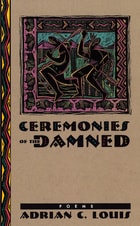
Ceremonies Of The Damned
PoemsAdrian C. Louis
University of Nevada Press, 1997
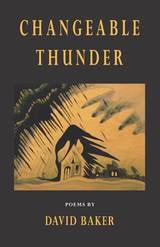
Changeable Thunder
PoemsDavid Baker
University of Arkansas Press, 2001
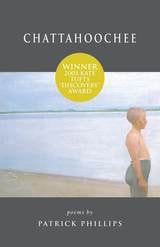
Chattahoochee
PoemsPatrick Phillips
University of Arkansas Press, 2004
Winner of the 2005 Kate Tufts Discovery Award.
From the author of Blood at the Root: A Racial Cleansing in America and the National Book Award finalist Elegy for a Broken Machine: Poems, here is the first collection from award-winning poet Patrick Phillips.
A river runs through Patrick Phillips’s collection Chattahoochee, and through a family saga as powerful and poignant as the landscape in which it unfolds. Here are tales of a vanished South, elegies for the lost, and glimpses of what Flannery O’Connor called the “action of grace in territory held largely by the devil.” In language delicate and muscular, tender and raw-boned, Phillips writes of family, place, and that mythic conjunction of the two we call home.
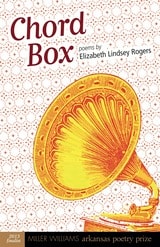
Chord Box
PoemsElizabeth Lindsey Rogers
University of Arkansas Press, 2013
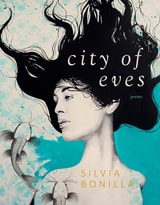
City of Eves
PoemsSilvia Bonilla
University of Arizona Press, 2026
Sonia and her two best friends grow up on the urban coast of Ecuador, sharing cigarettes, school uniforms, and a determination to overcome their circumstances even if the price to pay is exile. Full of fantasies and curiosity, the friends navigate hunger at home, absent parents, and religious pressures as they help each other through the pleasures and traumas of adolescence. As their desire for something greater changes from dreams into actions, they pursue escape routes that hover between choice and compulsion: forced marriages, early widowhood, and a death-haunted migration to the United States. Even in the throes of escape, the constraints of their reality always lie waiting.
Subtle and unsparing, Bonilla’s lyrical poems capture the wild inner horizons and vivid embodiment of youth as it shades into the reflective poignance of maturity marked by disappointment, compromise, and loss. Despite this, it is memories of deep friendship, bonded through shared understanding and aspiration, that lingers. Looking back on her life, Sonia recalls the courage and vitality of girls determined to shape their own futures: “We lifted Coca-Cola bottles to the / opened granadilla of our mouths.”
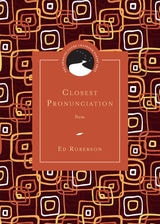
Closest Pronunciation
PoemsEd Roberson
Northwestern University Press, 2013
Northwestern University Press is honored to inaugurate the Drinking Gourd Chapbook Poetry Prize series with Ed Roberson’s Closest Pronunciation. Here is a teacher of poets studying his own assignments, questioning and seeking the generative capacity in looking at and seeing things that ends in the realization of a poem. In a line from the brief poem "Night Writing," from which the chapbook draws its title, he writes, "The word closest in pronunciation / To an ambulance’s siren is ‘wrong.’" The collection as a whole gives voice, often quiet but always profound, to many things overlooked and neglected in culture, nature, and everyday life.
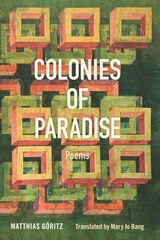
Colonies of Paradise
PoemsMatthias Göritz, translated from the German by Mary Jo Bang
Northwestern University Press, 2023
The first book of poetry by Matthias Göritz to be available in English, in a translation by a renowned writer
Very few books of poetry by contemporary German writers are available to English-speaking readers. In Colonies of Paradise, acclaimed poet and translator Mary Jo Bang introduces the poems of novelist, poet, and translator Matthias Göritz, one of the most exciting German writers publishing today. The poems in this book, which originally appeared in German under the title Loops, take the reader on a tour of Paris, Chicago, Hamburg, and Moscow as they explore childhood, travel, and the human experience. Unsettling our expectations about adulthood, the book permeates the quotidian with a disquieting strangeness that leads us deeper into our own lives and histories. Göritz’s sly humor, keen insight, and artistry are brought to the fore in Bang’s careful and innovative translation, allowing an English-language audience to enter fully the intricate interiority of Göritz’s work.
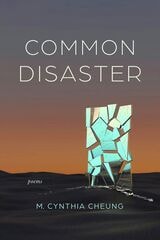
Common Disaster
PoemsM. Cynthia Cheung
Acre Books, 2025
As a front-line physician, M. Cynthia Cheung started writing poetry during the worst days of the COVID-19 pandemic. Her remarkable debut collection, Common Disaster, chronicles these experiences. Confronting not just the coronavirus but also war crimes and the death of loved ones, Cheung shows us that the pandemic is only one of many disasters we hold in common. In poems that look to both the past and future, she takes a stand against the extinction of self and memory, challenging the violence of erasure.
The period covered by the book is geologic and vast. It examines present-day evidence of ancient human activity and natural history, including the Lascaux caves, asteroid craters, tar pits, and Viking ruins. The poems include ghazals, thoughtful free verse, and work that takes up the page in reframing classical Chinese oracular texts to situate the pain of a doctor in crisis.
As a physician-poet, Cheung asks us to see beyond the every day to the devastating truths about the human condition.
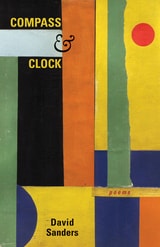
Compass and Clock
PoemsDavid Sanders
Ohio University Press, 2016
The poems of Compass and Clock take their inspiration from the intersection of the natural world and the human, exploring the landscapes in which those intersections occur. Those landscapes range from David Sanders’s native midwestern countryside to the caves of Lascaux and an enchanted lake where relics of lost lives are washed ashore. Yet, the true source of the poems’ vitality is Sanders’s attention to the missed or misread moments, those times when the act fails, and the perceived clashes with the actual.
Here, the satisfying pairing of elegance and vulnerability invites the reader to tour those uncanny landscapes from which one returns irrevocably changed—refreshed, but wistful. In a review of his earlier limited-edition work, Time in Transit, the Hudson Review called David Sanders “a poet to watch.” With the Swallow Press publication of Compass and Clock, we have the realization of that promise.
Compass of the Dying
PoemsLaurence Lieberman
University of Arkansas Press, 1998
When Laurence Lieberman writes of Guyana or islands in the Dutch West Indies, he excavates, explores, even exhumes the essence of the place. In the flora and fauna, in the rural cafes and ruins of churches and crypts, in the taste of iguana soup and the look of light through stained glass, Lieberman unfolds an exquisite atlas of the senses.
The awe of encounter, the raw impact, beauty, and sometimes the brutality of both the surroundings and the people fuel this poetry. Whether he meets an iguana hunter, a bricklayer, a witness to the United States–led Grenada invasion, or a classical composer, Lieberman gives the reader a vivid combination of his own wit and surprising observations mingled with the speech of each character.
Folk tales, legends, and island myths play a great role in his newest work. In the eddies of a river in Guyana, Lieberman dares river demons. On the island of Aruba, he hears the chants and work songs of long-dead miners in an abandoned gold mine. He briefly loses himself when he stares into the mirror of a well once frequented by slaves on Bonaire.
Coupled with natural forces—floods, volcanic eruptions, constant rains—these folk tales and the stories of the islanders’ lives create a “wedding of sun and rain,” and a map to the troves of the Caribbean hidden beneath a rich and often violent history.
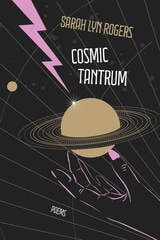
Cosmic Tantrum
PoemsSarah Lyn Rogers
Northwestern University Press, 2025
A debut full-length poetry collection from Sarah Lyn Rogers rewriting girlhood and summoning mischief
Sarah Lyn Rogers’s debut full-length collection is a tragicomic exploration of codependent and transactional relationships: economies of shame, gifts as debts, businesses run like families, and families run like businesses. What transgressions and abuses do we believe are acceptable fees for safety or love, and who upholds these myths? The poems in Cosmic Tantrum examine how our most intimate relationships shape the way we move through the wider world—and what happens when we reject the stories we’ve inherited about our worth.
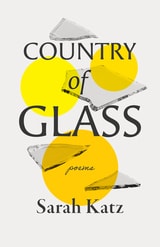
Country of Glass
PoemsSarah Katz
Gallaudet University Press, 2022
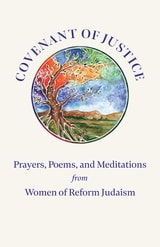
Covenant of Justice
Prayers, Poems, and Meditations from Women of Reform JudaismWomen of Reform Judaism
Central Conference of American Rabbis, 2025
Copublished with Women of Reform Judaism
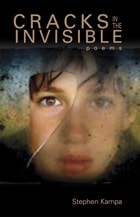
Cracks in the Invisible
PoemsStephen Kampa
Ohio University Press, 2011
Stephen Kampa’s poems are witty and restless in their pursuit of an intelligent modern faith. They range from a four-line satire of office inspirational posters to a lengthy meditation on the silence of God. The poems also revel in the prosodic possibilities of English’shigh and low registers: a twenty–one line homageto Lord Byron that turns on three rhymes (one of which is “eisegesis”); a sestina whose end words include “sentimental,” “Marseilles,” and “Martian;” sapphics on the death of Ray Charles; and intricately modulated stanzas on the 1931 Spanish–language movie version of Dracula.
Despite the metaphysical seriousness, there is alwaysan undercurrent of stylistic levity — a panoply of puns, comic rhymes, and loving misquotations of canonical literature — that suggests comedy and tragedy are inextricably bound in human experience.
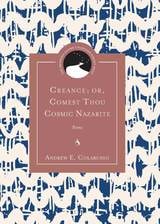
Creance; or, Comest Thou Cosmic Nazarite
PoemsAndrew E. Colarusso
Northwestern University Press, 2019
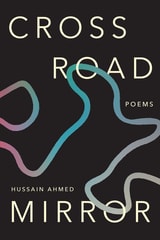
Crossroad Mirror
PoemsHussain Ahmed
Northwestern University Press, 2026
War and its reverberations propel people across the Nigerian landscape in Hussain Ahmed’s third collection
In Crossroad Mirror many poems begin after sundown—in quiet moments when the bounds between the past and the present, the living and the dead, blur. War and its aftershocks often form the backdrop for these scenes, though Ahmed’s verse rarely brings us to the battlefield itself. Instead, we hear the stories of refugees, civilian casualties, and ordinary soldiers trying to make sense of their circumstances. “There’s no vocabulary in the army—for grief, or death,” writes Ahmed. “Each door you exit, leads to another parade ground.” A group of soldiers wait out a rainstorm—and the war—together in a tent. Their families linger by the radio and listen for news. The “missing” loom as large as the dead.
Tracing the threads of migration that war so often catalyzes, Crossroad Mirror takes us from grassland to cornfield to coastline and explores the role storytelling and spirituality play in leaving and grieving.