Results by title
194 books match the query 'Practice' and 18 start with c

Cancer on Trial
Oncology as a New Style of PracticePeter Keating and Alberto Cambrosio
University of Chicago Press, 2011
In Cancer on Trial Peter Keating and Alberto Cambrosio explore how practitioners established a new style of practice, at the center of which lies the cancer clinical trial. Far from mere testing devices, these trials have become full-fledged experiments that have redefined the practices of clinicians, statisticians, and biologists. Keating and Cambrosio investigate these trials and how they have changed since the 1960s, all the while demonstrating their significant impact on the progression of oncology. A novel look at the institution of clinical cancer research and therapy, this book will be warmly welcomed by historians, sociologists, and anthropologists of science and medicine, as well as clinicians and researchers in the cancer field.

Catching Nature in the Act
Réaumur and the Practice of Natural History in the Eighteenth CenturyMary Terrall
University of Chicago Press, 2014
At the center of Terrall’s study is René-Antoine Ferchault de Réaumur (1683–1757)—the definitive authority on natural history in the middle decades of the eighteenth century—and his many correspondents, assistants, and collaborators. Through a close examination of Réaumur’s publications, papers, and letters, Terrall reconstructs the working relationships among these naturalists and shows how observing, collecting, and experimenting fit into their daily lives. Essential reading for historians of science and early modern Europe, Catching Nature in the Act defines and excavates a dynamic field of francophone natural history that has been inadequately mined and understood to date.
Changes in Exchange Rates in Rapidly Developing Countries
Theory, Practice, and Policy IssuesEdited by Takatoshi Ito and Anne O. Krueger
University of Chicago Press, 1999
Historically, most developing nations have employed strict exchange rate controls and heavy protection of domestic industry-policies now thought to be at odds with sustainable and desirable rates of economic growth. By contrast, many East Asian nations maintained exchange rate regimes designed to achieve an attractive climate for exports and an "outer-oriented" development strategy. The result has been rapid and consistent economic growth over the past few decades.
Changes in Exchange Rates in Rapidly Developing Countries explores the impact of such diverse exchange control regimes in both historical and regional contexts, focusing particular attention on East Asia. This comprehensive, carefully researched volume will surely become a standard reference for scholars and policymakers.
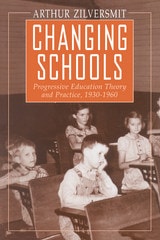
Changing Schools
Progressive Education Theory and Practice, 1930-1960Arthur Zilversmit
University of Chicago Press, 1993
Through a focus on actual classroom practices in several school systems in the Chicago area, Zilversmit examines the impact of Dewey's ideas at a national and local level. He looks at the course of progressivism from the 1930s, when its influence was at its height but reform was difficult because of the Depression, through the post-World War II period when the baby boom led to rapid school expansion. The new affluence made reform possible, but the Cold War put progressivism on the defensive.
Zilversmit's goal is to illuminate the role of the ideas of the progressives in determining school practices so we can develop a better understanding of the relationship between education ideas and educational practices. This understanding, argues Zilversmit, will better enable us to determine new directions for educational reform, and to determine how reforms can be successfully implemented.

Code of Practice
Competence for Safety Related Systems PractitionersThe Institution of Engineering and Technology
The Institution of Engineering and Technology, 2017
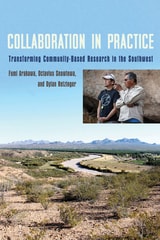
Collaboration in Practice
Transforming Community-Based Research in the SouthwestFumi Arakawa, Octavius Seowtewa, and Dylan Retzinger
University of Arizona Press, 2026
The book situates this collaboration within the broader historical and political context of archaeology and museology. It critically explores how museums and academic institutions can shift from extractive practices to ones that prioritize Indigenous sovereignty, knowledge systems, and cultural continuity. Through personal narratives, historical context, and methodological insights, the authors highlight the challenges and transformative potential of working collaboratively. They show how true collaboration requires humility, mutual respect, and a commitment to shared authority in both research and representation.
Ultimately, this work charts a path forward for community-based research that centers Indigenous voices and values. It advocates for an archaeology that is not only more inclusive but also more meaningful to the communities whose histories are being studied. A vital resource for scholars, students, and practitioners, this work seeks to engage in ethical, reciprocal, and culturally grounded research in the Southwest and beyond.
Collecting Music in the Aran Islands
A Century of History and PracticeDeirdre Ní Chonghaile
University of Wisconsin Press, 2022
For more than 150 years, individuals have traveled the countryside with pen, paper, tape recorders, and even video cameras to document versions of songs, music, and stories shared by communities. As technologies and methodologies have advanced, the task of gathering music has been taken up by a much broader group than scholars. The resulting collections created by these various people can be impacted by the individual collectors’ political and social concerns, cultural inclinations, and even simple happenstance, demonstrating a crucial yet underexplored relationship between the music and those preserving it.
Collecting Music in the Aran Islands, a critical historiographical study of the practice of documenting traditional music, is the first to focus on the archipelago off the west coast of Ireland. Deirdre Ní Chonghaile argues for a culturally equitable framework that considers negotiation, collaboration, canonization, and marginalization to fully understand the immensely important process of musical curation. In presenting four substantial, historically valuable collections from the nineteenth and twentieth centuries, she illustrates how understanding the motivations and training (or lack thereof) of individual music collectors significantly informs how we should approach their work and contextualize their place in the folk music canon.
Communities of Practice
An Alaskan Native Model for Language Teaching and LearningEdited by Patrick E. Marlow and Sabine Siekmann
University of Arizona Press, 2013
In Alaska, the Second Language Acquisition Teacher Education (SLATE) project was designed to enable Indigenous communities and schools to improve the quality of native-language and English-language instruction and assessment by focusing on the elimination of barriers that have historically hindered degree completion for Indigenous and rural teachers. The Guided Research Collaborative (GRC) model, was employed to support the development of communities of practice through near-peer mentoring and mutual scaffolding. Through this important new model, teachers of both the heritage language, in this case Central Yup’ik, and English were able to situate their professional development into a larger global context based on current notions of multilingualism.
In Communities of Practice contributors show how the SLATE program was developed and implemented, providing an important model for improving second-language instruction and assessment. Through an in-depth analysis of the program, contributors show how this project can be successfully adapted in other communities via its commitment to local control in language programming and a model based on community-driven research.
Communities of Practice demonstrates how an initial cohort of Yup’ik- and English-language teachers collaborated to negotiate and ultimately completed the SLATE program. In so doing, these educators enhanced the program and their own effectiveness as teachers through a greater understanding of language learning. It is these understandings that will ultimately allow heritage- and English-language teachers to work together to foster their students’ success in any language.
Compelled to Write
Alternative Rhetoric in Theory and PracticeDavid L. Wallace
Utah State University Press, 2011
David Wallace argues that any understanding of writing studies must include the conception of discourse as an embodied force with real consequences for real people. Informed in important ways by queer theory, Wallace calls to account users of dominant discourses and at the same time articulates a theory base from which to interpret "alternative rhetoric."
To examine the practice of writing from varied margins of society, Compelled to Write offers careful readings of four exemplar American writers, each of whom felt compelled within their own time and place to write in response to systemic injustices in American society.
Sarah Grimké, a privileged white woman advocating for abolition, is forced to defend her right to speak as a woman; Frederick Douglass begins his public career almost as a curiosity (the articulate ex-slave) and ends it as one of the most important rhetors in American history; Gloria Anzaldúa writes not only in multiple languages and dialects but from marginalized positions related to gender, race, class, sexual identity, and physical abled-ness; David Sedaris uses his privileged position as a middle-class white male humorist to speak unabashedly of his sexuality, his addictions, and obsessive-compulsive personality disorder.
Through these writers, Wallace explores a range of strategies that comprise alternative rhetorical practice, and demonstrates how such practice is inflected by social constraints on rhetorical agency and by how writers employ alternative discourses to resist those constraints. Grounding and personalizing Compelled to Write with rich material from his own teaching and his own experience, Wallace considers a number of implications for teachers of writing.
Concrete Dreams
Practice, Value, and Built Environments in Post-Crisis Buenos AiresNicholas D'Avella
Duke University Press, 2019
Conflict in Organizational Groups
New Directions in Theory and PracticeLeigh Thompson
Northwestern University Press, 2007
The chapters in this book were presented at a conference held at the Kellogg School of Management in June 2005 entitled Conflict in Organizational Groups: New Directions in Theory and Practice. The Kellogg Team and Group Research Center (KTAG) and the Kellogg School of Management cosponsored the conference. The goal of the conference was to bring together both junior and senior scholars from a variety of disciplines to discuss their newest ideas and current trends in group conflict research. The chapters in this book represent perspectives from the fields of business, political science, sociology, and psychology.
The idea to organize a conference about conflict in organizational groups arose from three interrelated and exciting opportunities for theory and practice--both the academic and business press have focused growing attention on the management challenges of organizational groups; the academic community has begun to integrate various disciplinary perspectives, as evidenced by a growing number of cross-disciplinary coauthorships and thematic conferences; and several statistical and methodological advances have allowed scholars to better model variables across levels of analysis.
Taken together, these three reasons inspired the assembling of the interdisciplinary mix of seasoned and newly minted authors who in this volume tackle important and complex questions about group conflict. Their chapters represent cutting-edge advances in theory, methodology, and challenges to dominant perspectives.
Conservation Paleobiology
Science and PracticeEdited by Gregory P. Dietl and Karl W. Flessa
University of Chicago Press, 2017
Studying endangered species is difficult. They are by definition rare, some exist only in captivity, and for those still in their native habitats any experimentation can potentially have a negative effect on survival. Moreover, a lack of long-term data makes it challenging to anticipate biotic responses to environmental conditions that are outside of our immediate experience. But in the fossil and prefossil records—from natural accumulations such as reefs, shell beds, and caves to human-made deposits like kitchen middens and archaeological sites—enlightening parallels to the Anthropocene can be found that might serve as a primer for present-day predicaments. Offering both deep-time and near-time perspectives and exploring a range of ecological and evolutionary dynamics and taxa from terrestrial as well as aquatic habitats, Conservation Paleobiology is a sterling demonstration of how the past can be used to manage for the future, giving new hope for the creation and implementation of successful conservation programs.
Creating Cultural Capital
Cultural Entrepreneurship in Theory, Pedagogy and PracticeEdited by Olaf Kuhlke, Annick Schramme, and René Kooyman
Eburon Academic Publishers, 2015
Parallel to these research and policy interests, academic institutions and professional organizations have begun to develop training programs for future professionals in the creative and cultural industries. In this book, more than fifty scholars from across the globe shed light on this phenomenon of cultural entrepreneurship. Readers will find conceptual frameworks for building new programs for the creative industries, examples of pedagogical approaches and skills-based training, and concrete examples of program and course implementation.
Crisis Leadership in Higher Education
Theory and PracticeRalph A. Gigliotti
Rutgers University Press, 2020

Cultivating Development
An Ethnography of Aid Policy and PracticeDavid Mosse
Pluto Press, 2005
Development agencies and researchers are preoccupied with policy; with exerting influence over policy, linking research to policy and with implementing policy around the world.
But what if development practice is not driven by policy? Suppose that the things that make for 'good policy' - policy that legitimises and mobilises political support - in reality make it impossible to implement?
By focusing in detail on the unfolding activities of a development project in western India over more than ten years, as it falls under different policy regimes, this book takes a close look at the relationship between policy and practice in development.
David Mosse shows how the actions of development workers are shaped by the exigencies of organisations and the need to maintain relationships rather than by policy; but also that development actors work hardest of all to maintain coherent representations of their actions as instances of authorised policy. Raising unfamiliar questions, Mosse provides a rare self-critical reflection on practice, while refusing to endorse current post-modern dismissal of development.
Cultural Aesthetics
Renaissance Literature and the Practice of Social OrnamentPatricia Fumerton
University of Chicago Press, 1991

Cultural Quarters
Principles and PracticeEdited and Written by Simon Roodhouse
Intellect Books, 2010
The much-praised Cultural Quarters returns in a revised edition, offering new case studies and new chapters on the economics of cultural quarters and the importance of historical buildings. This definitive text provides a conceptual context for cultural quarters through a detailed discussion of urban design and planning. Drawing on several case studies (from Bolton, Birmingham, Ireland and Vienna), Cultural Quarters positions the emergence of specific cultural areas within a historical and social context and explores the economics of maintaining the respective districts. The book offers a concise illustration of how cultural practice is maintained and expanded within an urban environment.
Cultural Quarters
Principles and PracticeSimon Roodhouse
Intellect Books, 2006
Extending this investigation, the author provides an explicit analysis of Bolton Borough Council’s moves towards establishing a cultural sector in the town centre, with references to previous funding models employed by Birmingham City Council and the British Museum. The book offers a concise illustration of how cultural practice is maintained and expanded within an urban environment. This single volume, packed with detail, can be used in higher education courses to support the study of cultural policy, management and regeneration.