4743 books match the query 'Religion' and 302 start with c
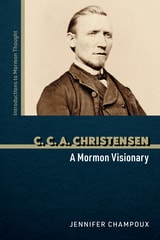
cover of C. C. A. Christensen: A Mormon Visionary

C. C. A. Christensen

A Mormon Visionary

Jennifer Champoux

University of Illinois Press, 2026

Carl Christian Anton (C. C. A.) Christensen left paintings that provide unique glimpses into the beliefs and life experiences of nineteenth-century members of The Church of Jesus Christ of Latter-day Saints. Christensen took his subject matter from the Book of Mormon and the Church’s early history, painting widely admired scenes and panoramas that portrayed, retold, and interpreted the past.

Drawing on the artist’s voluminous writings, Jennifer Champoux illuminates Christensen’s influential art, including recently rediscovered works. Christensen received Church commissions and approval and helped shape Latter-day Saints’ vision of themselves. Over time the work of other artists eclipsed his achievements, but a twenty-first century revival of interest began to restore his reputation. Champoux also profiles how Christensen’s expansive activities outside of the art world gave him a unique vantage point for chronicling how the Latter-day Saint faith and culture evolved in Utah.

A revealing intellectual biography, C. C. A. Christensen offers a rare in-depth look at a major Latter-day Saint artist.
[more]
cover of CCAR JOURNAL - SPRING 2020: HALACHAH AND REFORM JUDAISM

CCAR JOURNAL - SPRING 2020

HALACHAH AND REFORM JUDAISM

Elaine Rose Glickman

Central Conference of American Rabbis, 2020
Central Conference of American Rabbis Spring 2020 journal.
[more]
cover of CCAR Journal - Fall 2025: The Reform Jewish Quarterly: AI and the Rabbinate

CCAR Journal - Fall 2025

The Reform Jewish Quarterly: AI and the Rabbinate

Rabbanit Sara Tillinger Wolkenfeld and Rabbi Geoffrey A. Mitelman

Central Conference of American Rabbis, 2025

This issue of the CCAR Journal explores the rapidly evolving intersection of artificial intelligence and the rabbinate. Through a range of reflective articles, contributors examine how AI is shaping Jewish life, leadership, and ethical discourse. The issue also contains general articles, new book reviews, and poetry.
[more]
cover of CCAR Journal - Spring 2025: The Reform Jewish Quarterly

CCAR Journal - Spring 2025

The Reform Jewish Quarterly

Rabbi Edwin C. Goldberg

Central Conference of American Rabbis, 2025

This edition of CCAR Journal considers various topics, including loneliness and the rabbinate, Judah and Tamar's encounter, and Jewish brides' breads. The issue also contains new book reviews, poetry and a CCAR responsum on removing a pacemaker from a corpse for reuse.
 

[more]
cover of CCAR Journal - Spring 2026: The Reform Jewish Quarterly: The World Union for Progressive Judaism at  One Hundred

CCAR Journal - Spring 2026

The Reform Jewish Quarterly: The World Union for Progressive Judaism at One Hundred

Rabbi Edwin C. Goldberg, Rabbi Daniel H. Freelander, Rabbi Professor Deborah Kahn-Harris

Central Conference of American Rabbis, 2026

This issue, which celebrates the centenary of the founding of the World Union for Progressive Judaism in 1926, examines the impact of the WUPJ on the growth of Progressive Judaism around the globe. The articles explore the early history of the WUPJ and the creation of rabbinic seminaries, youth movements, and liturgies, as well as key regions of the movement: the United Kingdom, Europe, South Africa, South America, Australia and Aotearoa-New Zealand, and Israel. The issue also contains new book reviews and poetry. 
[more]
cover of CCAR Journal - Summer 2025: The Reform Jewish Quarterly

CCAR Journal - Summer 2025

The Reform Jewish Quarterly

Rabbi Edwin C. Goldberg

Central Conference of American Rabbis, 2025

This edition of CCAR Journal includes articles on women rabbis in South Africa, resurrection of the dead, chesed in Mussar, the Jewish history of bourbon, and much more. The issue also contains a book review, poetry, and a CCAR responsum on splitting cremated ashes for burial in two places.
[more]
cover of CCAR Journal - Summer 2026: The Reform Jewish Quarterly

CCAR Journal - Summer 2026

The Reform Jewish Quarterly

Rabbi Edwin C. Goldberg

Central Conference of American Rabbis, 2026

The Summer issue of CCAR Journal: The Reform Jewish Quarterly contains articles on prayer, beauty the Western Association of Reform Rabbis, a review of literature with implications for pastoral care, A.B. Yehoshua, and Rumi, along with book reviews and poetry.
[more]
cover of CCAR Journal - Winter 2025: Opening the Doors to LGBTQIA+ Clergy: Past, Present, and Future

CCAR Journal - Winter 2025

Opening the Doors to LGBTQIA+ Clergy: Past, Present, and Future

Rabbi Edwin C. Goldberg

Central Conference of American Rabbis, 2025
This issue focuses on the journey of LGBTQIA+ clergy, from early struggles to present-day progress and visions for the future. The essays and reflections examine the milestones, challenges, and triumphs of LGBTQIA+ clergy, offering insight into the evolving landscape of Jewish leadership and inclusion. The issue also contains new book reviews and poetry.
[more]
cover of CCAR Journal - Winter 2026: The Reform Jewish Quarterly

CCAR Journal - Winter 2026

The Reform Jewish Quarterly

Rabbi Edwin C. Goldberg

Central Conference of American Rabbis, 2026

The Winter 2026 issue of CCAR Journal: The Reform Jewish Quarterly contains articles on the golem, American civic health, Hebrew Union College's new rabbinical curriculum, and Jewish history in the Islamic world. A responsum on burial of a person in a pet cemetery and a translation of the preface to Jacob Sasportas’s Tol’dot Yaakov are also included, along with book reviews and poetry.
[more]
cover of CCAR Premarital Counseling Guide for Clergy - PDF Electronic Version: Strengthening Communication and Supporting Jewish Choices

CCAR Premarital Counseling Guide for Clergy - PDF Electronic Version

Strengthening Communication and Supporting Jewish Choices

Paula J. Brody

Central Conference of American Rabbis, 2012

NOTE: This PDF is available for free for CCAR members. Please contact info@ccarpress.org for your free copy.

Includes ideas for pre- and post-marriage counseling sessions, with special sections for intermarrying and conversionary couples, suggestions for intake conversations, suggestions for rabbis who do not officiate and intermarriages, and sample questionnaires and handouts.
 
[more]
cover of Cachita's Streets: The Virgin of Charity, Race, and Revolution in Cuba

Cachita's Streets

The Virgin of Charity, Race, and Revolution in Cuba

Jalane D. Schmidt

Duke University Press, 2015
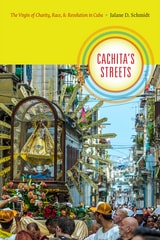
Cuba’s patron saint, the Virgin of Charity of El Cobre, also called Cachita, is a potent symbol of Cuban national identity. Jalane D. Schmidt shows how groups as diverse as Indians and African slaves, Spanish colonial officials, Cuban independence soldiers, Catholic authorities and laypeople, intellectuals, journalists and artists, practitioners of spiritism and Santería, activists, politicians, and revolutionaries each have constructed and disputed the meanings of the Virgin. Schmidt examines the occasions from 1936 to 2012 when the Virgin's beloved, original brown-skinned effigy was removed from her national shrine in the majority black- and mixed-race mountaintop village of El Cobre and brought into Cuba's cities. There, devotees venerated and followed Cachita's image through urban streets, amassing at large-scale public ceremonies in her honor that promoted competing claims about Cuban religion, race, and political ideology. Schmidt compares these religious rituals to other contemporaneous Cuban street events, including carnival, protests, and revolutionary rallies, where organizers stage performances of contested definitions of Cubanness. Schmidt provides a comprehensive treatment of Cuban religions, history, and culture, interpreted through the prism of Cachita.
[more]
cover of Caciques and Cemi Idols: The Web Spun by Taino Rulers Between Hispaniola and Puerto Rico

Caciques and Cemi Idols

The Web Spun by Taino Rulers Between Hispaniola and Puerto Rico

Jose R Oliver

University of Alabama Press, 2009

Takes a close look at the relationship between humans and other (non-human) beings that are imbued with cemí power, specifically within the Taíno inter-island cultural sphere of Puerto Rico and Hispaniola

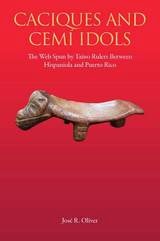
Cemís are both portable artifacts and embodiments of persons or spirit, which the Taínos and other natives of the Greater Antilles (ca. AD 1000-1550) regarded as numinous beings with supernatural or magic powers. This volume takes a close look at the relationship between humans and other (non-human) beings that are imbued with cemí power, specifically within the Taíno inter-island cultural sphere encompassing Puerto Rico and Hispaniola. The relationships address the important questions of identity and personhood of the cemí icons and their human “owners” and the implications of cemí gift-giving and gift-taking that sustains a complex web of relationships between caciques (chiefs) of Puerto Rico and Hispaniola.
 
Oliver provides a careful analysis of the four major forms of cemís—three-pointed stones, large stone heads, stone collars, and elbow stones—as well as face masks, which provide an interesting contrast to the stone heads. He finds evidence for his interpretation of human and cemí interactions from a critical review of 16th-century Spanish ethnohistoric documents, especially the Relación Acerca de las Antigüedades de los Indios written by Friar Ramón Pané in 1497–1498 under orders from Christopher Columbus. Buttressed by examples of native resistance and syncretism, the volume discusses the iconoclastic conflicts and the relationship between the icons and the human beings. Focusing on this and on the various contexts in which the relationships were enacted, Oliver reveals how the cemís were central to the exercise of native political power. Such cemís were considered a direct threat to the hegemony of the Spanish conquerors, as these potent objects were seen as allies in the native resistance to the onslaught of Christendom with its icons of saints and virgins.
 
[more]
cover of Cajetan on Sacred Doctrine

Cajetan on Sacred Doctrine

Hieromonk Gregory Hrynkiw

Catholic University of America Press, 2020
Cardinal Tommaso de Vio (1469-1534), commonly known as Cajetan, remains a misunderstood figure. Cajetan on Sacred Doctrine is the first ever monograph on Cajetan as a theologian in his own right, and it fills an immense lacuna in the debate on the nature of sacred doctrine from the Thomism of the Renaissance. Confirming Cajetan as a key protagonist within the emergent Reformation, this work delivers an indispensable immersion into his theological method in relation to his closest predecessors and contemporaries: Hervaeus Natalis, Blessed Duns Scotus, Gregory of Rimini, Johannes Capreolus, Silvestro Mazzolini da Prierio, Martin Luther, and others. The first ever commentary on St. Thomas Aquinas’s entire Summa Theologiae was published by Cajetan. This monograph focuses primarily on the Summa Theologiae Ia pars, question 1, concerning sacred doctrine, and how Cajetan unpacks the potency of Aquinas’s opening syllogism, setting forth a coherent division of the question, and ultimately touching the mind of Aquinas when revealing the articles of the Apostles’ Creed as the Summa Theologiae’s macrostructure. Finally, we are shown how Cajetan emphasizes the essential link between ecclesiology and the communication of sacred doctrine, especially the papacy’s role in guaranteeing the proposal and explication of the faith. Cajetan’s accomplishments as a biblical exegete established him as a renowned Renaissance scholar and a forerunner of future ecumenical dialogue. Furthermore, his grasp of theology’s perennial properties continue to make him an important interlocutor in the renewed quest for a unity in theology in an ever more fragmented aggregation of theologies. Cajetan’s theological labor is a perpetuation of the via antiqua, a biblical-theological worldview handed down through Tradition. St. Gregory the Theologian (329-390), the via antiqua’s preeminent Eastern representative and chief theological constructor of Christendom, offers the monograph’s author--himself a Byzantine Hieromonk--a prime opportunity for a few closing insights on the innate symphony between two very distant periods and distinct theological traditions within the one ecumenical Church.
[more]
cover of Callaloo Nation: Metaphors of Race and Religious Identity among South Asians in Trinidad

Callaloo Nation

Metaphors of Race and Religious Identity among South Asians in Trinidad

Aisha Khan

Duke University Press, 2004

Mixing—whether referred to as mestizaje, callaloo, hybridity, creolization, or multiculturalism—is a foundational cultural trope in Caribbean and Latin American societies. Historically entwined with colonial, anticolonial, and democratic ideologies, ideas about mixing are powerful forces in the ways identities are interpreted and evaluated. As Aisha Khan shows in this ethnography, they reveal the tension that exists between identity as a source of equality and identity as an instrument through which social and cultural hierarchies are reinforced. Focusing on the Indian diaspora in the Caribbean, Khan examines this paradox as it is expressed in key dimensions of Hindu and Muslim cultural history and social relationships in southern Trinidad. In vivid detail, she describes how disempowered communities create livable conditions for themselves while participating in a broader culture that both celebrates and denies difference.

Khan combines ethnographic research she conducted in Trinidad over the course of a decade with extensive archival research to explore how Hindu and Muslim Indo-Trinidadians interpret authority, generational tensions, and the transformations of Indian culture in the Caribbean through metaphors of mixing. She demonstrates how ambivalence about the desirability of a callaloo nation—a multicultural society—is manifest around practices and issues, including rituals, labor, intermarriage, and class mobility. Khan maintains that metaphors of mixing are pervasive and worth paying attention to: the assumptions and concerns they communicate are key to unraveling who Indo-Trinidadians imagine themselves to be and how identities such as race and religion shape and are shaped by the politics of multiculturalism.
[more]
cover of Called by Stories: Biblical Sagas and Their Challenge for Law

Called by Stories

Biblical Sagas and Their Challenge for Law

Milner S. Ball

Duke University Press, 2000

Distinguished legal scholar and Presbyterian minister Milner S. Ball examines great sagas and tales from the Bible for the light they shed on the practice of law and on the meaning of a life lived in the legal profession. Scholars and laypersons alike typically think of the law as a discipline dominated by reason and empirical methods. Ball shows that many of the dilemmas and decisions that legal professionals confront are more usefully approached through an experience of narrative in which we come to know ourselves and our actions through stories.
He begins with the story of Moses, who is obliged both to speak for God to the Hebrews and to advocate for the Hebrews before God. What, asks Ball, does Moses’s predicament say to lawyers professionally bound to zealous representation of only one client? In the story of Rachel, Ball finds insights that comprehend the role of tears and emotion in the judicial process. He relates these insights to specific contemporary situations, such as a plant closing and the subsequent movement of jobs to Mexico and legal disputes over the sovereignty of native Hawaiians. In a discussion of “The Gospel According to John,” Ball points out that the writer of this gospel is free simultaneously to be critical of law and to rely extensively on it. Ball uses this narrative to explore the boundaries of free will and independence in lawyering. By venturing into the world of powerful events and biblical characters, Ball enables readers to contest their own expectations and fundamental assumptions.
Employing legal theory, theology, and literary criticism, Called by Stories distills a wisdom in biblical texts that speaks specifically to the working life of legal professionals. As such, it will enrich lovers of narrative and poetry, ethicists, literary and biblical scholars, theologians, lawyers, law students, judges, and others who seek to discern deeper meanings in the texts that have shaped their lives.
[more]
cover of Called to Holiness

Called to Holiness

Pope Emeritus Benedict XVI Pope Emeritus Benedict XVI

Catholic University of America Press, 2017
This edited collection is the first to gather in one volume the most relevant addresses, speeches, and homilies of His Holiness, Pope Emeritus Benedict XVI to seminarians and consecrated men and women into a single volume for the English-speaking world.
[more]
cover of Can AI Ever Be Human? Consciousness Explained

Can AI Ever Be Human? Consciousness Explained

Steven Umbrello

Catholic University of America Press, 2026
Can a machine ever truly be human? In an age where artificial intelligence writes poems, diagnoses illnesses, and converses with uncanny fluency, the line between human and machine seems to blur. Yet beneath the surface lies a fundamental distinction. Drawing on Bernard Lonergan’s insights as well as the rich Catholic intellectual tradition, Can AI Ever Be Human? argues that while machines can simulate aspects of human behavior, they cannot cross the threshold into genuine consciousness. O’Hara and Umbrello guide readers through the essential structures of human knowing: experience, understanding, judgment, and decision. In doing so, they show how each involves intentionality, self-awareness, and freedom. These uniquely human capacities cannot be reduced to algorithms or replicated by even the most advanced neural networks. The book also addresses pressing ethical and theological questions: What does it mean to be made in the image of God? How do we preserve human dignity in a world increasingly shaped by artificial intelligence? Far from being anti-technology, O’Hara and Umbrello affirm the value of AI as a tool that emulates a Turing machine, although constrained by Gödel’s theorem, while rejecting the illusion that it can replace human beings. Accessible yet rigorous, Can AI Ever Be Human? speaks to scholars, students, clergy, and general readers alike. It is essential reading for anyone interested in the intersection of technology, scientific methodology, philosophy, and theology, and for all who seek to understand what makes us irreducibly human in an era of rapid technological change.
[more]
cover of Can Ethics Be Christian?

Can Ethics Be Christian?

James M. Gustafson

University of Chicago Press, 1977

Is there a special relation between religious beliefs and moral behavior? In particular, is there a distinctive Christian moral character and how is this manifested in moral actions? The influential theologian James M. Gustafson probes these questions and offers an analysis of the distinctively religious reasons of the "heart and mind" which constitute the basis for a Christian ethics.

Professor Gustafson grounds his discussion in a concrete example of moral conduct which deeply impressed him. The incident—narrated in detail at the start and referred to throughout—concerns a nonreligious colleague who came to the aid of an intoxicated soldier. Although seemingly trivial, this incident, in the author's view, approximates the normal sorts of experiences in which individuals have to make moral decisions every day; it becomes a touchstone to investigate the logical, social, and religious elements in moral decision making.
[more]
cover of Can We Survive Our Origins?: Readings in René Girard's Theory of Violence and the Sacred

Can We Survive Our Origins?

Readings in René Girard's Theory of Violence and the Sacred

Pierpaolo Antonello

Michigan State University Press, 2015
Are religions intrinsically violent (as is strenuously argued by the ‘new atheists’)? Or, as Girard argues, have they been functionally rational instruments developed to manage and cope with the intrinsically violent runaway dynamic that characterizes human social organization in all periods of human history? Is violence decreasing in this time of secular modernity post-Christendom (as argued by Steven Pinker and others)? Or are we, rather, at increased and even apocalyptic risk from our enhanced powers of action and our decreased socio-symbolic protections? Rene Girard’s mimetic theory has been slowly but progressively recognized as one of the most striking breakthrough contributions to twentieth-century critical thinking in fundamental anthropology: in particular for its power to model and explain violent sacralities, ancient and modern. The present volume sets this power of explanation in an evolutionary and Darwinian frame. It asks: How far do cultural mechanisms of controlling violence, which allowed humankind to cross the threshold of hominization—i.e., to survive and develop in its evolutionary emergence—still represent today a default setting that threatens to destroy us? Can we transcend them and escape their field of gravity? Should we look to—or should we look beyond—Darwinian survival? What—and where (if anywhere)—is salvation?
[more]
cover of Canon Law in the Age of Reforms (c. 1000 to c. 1150)

Canon Law in the Age of Reforms (c. 1000 to c. 1150)

Christof Rolker

Catholic University of America Press, 2023
This monograph addresses the history of canon law in Western Europe between ca. 1000 and ca. 1150, specifically the collections compiled and the councils held in that time. The main part consists of an analysis of all major collections, taking into account their formal and material sources, the social and political context of their origin, the manuscript transmission, and their reception more generally. As most collections are not available in reliable editions, a considerable part of the discussion involves the analysis of medieval manuscripts. Specialized research is available for many but not all these works, but tends to be scattered across miscellaneous publications in English, German, French, Italian, and Spanish; one purpose of the book is thus to provide relatively uniform, up-to-date accounts of all major collections of the period. At the same time, the book argues that the collections are much more directly influenced by the social milieux from which they emerged, and that more groups were involved in the development of high medieval canon law than it has previously been thought. In particular, the book seeks to replace the still widely held belief that the development of canon law in the century before Gratian’s Decretum (ca. 1140) was largely driven by the Reform papacy. Instead, it is crucial to take into account the contribution of bishops, monks, and other groups with often conflicting interests. Put briefly, local needs and conflicts played a considerably more important role than central (papal) ‘reform’, on which older scholarship has largely focused.
[more]
cover of Canon Law, Religion, and Politics: "Liber Amicorum" Robert Somerville

Canon Law, Religion, and Politics

"Liber Amicorum" Robert Somerville

Uta-Renate Blumenthal

Catholic University of America Press, 2012

Canon Law, Religion, and Politics extends and honors the work of the distinguished historian Robert Somerville, a preeminent expert on medieval church councils, law, and papal history.
[more]
cover of Canonical Collections of the Early Middle Ages (ca. 400-1400)

Canonical Collections of the Early Middle Ages (ca. 400-1400)

Lotte Kery

Catholic University of America Press, 1999

[more]
cover of Canonizing Francisco Solano: Devotion, Politics, and a New Model of Sanctity in the Early Americas

Canonizing Francisco Solano

Devotion, Politics, and a New Model of Sanctity in the Early Americas

Carlos Piccone Camere

Catholic University of America Press, 2026
Francisco Solano (1549–1610), a Spanish-born Franciscan friar, spent roughly half of his religious life in the Viceroyalty of Peru, where he became known as a zealous preacher, tireless missionary, a friar devoted to prayer and penance, and a reputed wonderworker. Among the many exemplary missionaries of the early modern Catholic world, he acquired an extraordinary reputation for sanctity in the decades following his death. Yet despite being one of the earliest officially promoted canonization causes from the Americas, and despite an initially auspicious process, his canonization advanced only slowly through a long and complex path. Canonizing Francisco Solano offers the first full-length study in English of Solano’s canonization process and uses his case to illuminate the making of sainthood in the Spanish Empire. Moving beyond official papal documents and conventional hagiographic narratives, the book draws on archival research in Rome, Madrid, Seville, and Lima to examine how sanctity was not only recognized but also debated, promoted, delayed, and reshaped by competing interests and institutional priorities. The book demonstrates how the slow progress of Solano’s cause was shaped by changing Roman procedures after the Council of Trent, tensions within the Franciscan world, competition with other causes such as that of Rosa de Lima, and the political priorities of the papacy, the Spanish monarchy, and colonial elites. In this account, canonization appears not merely as a devotional or theological process, but also as a field of negotiation in which papal authority, imperial ambition, religious orders, and local aspirations all played a role. Solano’s case opens a new perspective on colonial Peru, early modern Rome, and the wider Catholic world, while offering a broader contribution to the history of sanctity, canonization, and the relationship between religion and power in the early Americas.
[more]
cover of Capital Cities of Arab Islam

Capital Cities of Arab Islam

Philip Hitti

University of Minnesota Press, 1973
Professor Hitti, the distinguished authority on the Islamic world, views the highlights of Arab history through the windows of the capital cities where those events occurred. The account focuses on six cities -- Mecca, the religious capital; Medina, the caliphal capital; Damascus, the imperial capital; Baghdad, the intellectual capital; Cairo, the dissident capital; and Cordova, the European capital. The approach is historical rather than geographical, and the book is addressed to the student and the cultured layman rather than the specialist. Tourists to the Middle East and Spain also will find the book especially interesting.The author describes the physical settings of the cities, the primary occupations of the people, and the significant monumental structures. He discusses such modern history of a city as is relevant to the story, but the emphasis is on the period of Arab ascendancy -- roughly, the seventh to the thirteenth century. In addition to Arabic sources, he quotes Europeans’ descriptions where appropriate (such descriptions are rare because Europeans were not allowed in such cities as Mecca and Medina). As he makes clear, the six cities were more than capitals; they left their indelible imprint not only on the subsequent history of the Arabs and other Moslems but on the development of civilization at large.
[more]
cover of Capitalism and Christianity, American Style

Capitalism and Christianity, American Style

William E. Connolly

Duke University Press, 2008

Capitalism and Christianity, American Style is William E. Connolly’s stirring call for the democratic left to counter the conservative stranglehold over American religious and economic culture in order to put egalitarianism and ecological integrity on the political agenda. An eminent political theorist known for his work on identity, secularism, and pluralism, Connolly charts the path of the “evangelical-capitalist resonance machine,” source of a bellicose ethos reverberating through contemporary institutional life. He argues that the vengeful vision of the Second Coming motivating a segment of the evangelical right resonates with the ethos of greed animating the cowboy sector of American capitalism. The resulting evangelical-capitalist ethos finds expression in church pulpits, Fox News reports, the best-selling Left Behind novels, consumption practices, investment priorities, and state policies. These practices resonate together to diminish diversity, forestall responsibility to future generations, ignore urban poverty, and support a system of extensive economic inequality.

Connolly describes how the evangelical-capitalist machine works, how its themes resound across class lines, and how it infiltrates numerous aspects of American life. Proposing changes in sensibility and strategy to challenge this machine, Connolly contends that the liberal distinction between secular public and religious private life must be reworked. Traditional notions of unity or solidarity must be translated into drives to forge provisional assemblages comprised of multiple constituencies and creeds. The left must also learn from the political right how power is infused into everyday institutions such as the media, schools, churches, consumption practices, corporations, and neighborhoods. Connolly explores the potential of a “tragic vision” to contest the current politics of existential resentment and political hubris, explores potential lines of connection between it and theistic faiths that break with the evangelical right, and charts the possibility of forging an “eco-egalitarian” economy. Capitalism and Christianity, American Style is William E. Connolly’s most urgent work to date.
[more]
cover of Capitalist Humanitarianism

Capitalist Humanitarianism

Lucia Hulsether

Duke University Press, 2023
The struggle against neoliberal order has gained momentum over the last five decades---to the point that economic elites have not only adapted to the Left's critiques but incorporated them for capitalist expansion. Venture funds expose their ties to slavery and pledge to invest in racial equity. Banks pitch microloans as a path to indigenous self-determination. Fair-trade brands narrate consumption as an act of feminist solidarity with women artisans in the global South. In Capitalist Humanitarianism Lucia Hulsether examines these projects and the contexts of their emergence. Blending historical and ethnographic styles, and traversing intimate and global scales, Hulsether tracks how neoliberal self-critique creates new institutional hegemonies that, in turn, reproduce racial and neocolonial dispossession. From the archives of Christian fair traders to luxury social entrepreneurship conferences, from US finance offices to Guatemalan towns flooded with their loan products, from service economy desperation to the internal contradictions of social movements, Hulsether argues that capitalist humanitarian projects are fueled as much by a profit motive as by a hope that racial capitalism can redeem the losses that accumulate in its wake.
[more]
cover of Capture These Indians for the Lord: Indians, Methodists, and Oklahomans, 1844-1939

Capture These Indians for the Lord

Indians, Methodists, and Oklahomans, 1844-1939

Tash Smith

University of Arizona Press, 2014

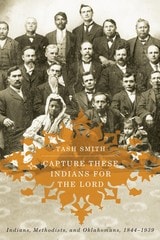
In 1844, on the heels of the final wave of the forced removal of thousands of Indians from the southern United States to what is now Oklahoma, the Southern Methodist Church created a separate organization known as the Indian Mission Conference to oversee its missionary efforts among the Native communities of Indian Territory. Initially, the Church conducted missions as part of the era’s push toward assimilation. But what the primarily white missionaries quickly encountered was a population who exerted more autonomy than they expected and who used Christianity to protect their culture, both of which frustrated those eager to bring Indian Territory into what they felt was mainstream American society.

In Capture These Indians for the Lord, Tash Smith traces the trajectory of the Southern Methodist Church in Oklahoma when it was at the frontlines of the relentless push toward western expansion. Although many Native people accepted the missionaries’ religious practices, Smith shows how individuals found ways to reconcile the Methodist force with their traditional cultural practices. When the white population of Indian Territory increased and Native sovereignty came under siege during the allotment era of the 1890s, white communities marginalized Indians within the Church and exploited elements of mission work for their own benefit.

Later, with white indifference toward Indian missions peaking in the early twentieth century, Smith explains that as the remnants of the Methodist power weakened, Indian membership regained control and used the Church to regenerate their culture. Throughout, Smith explores the complex relationships between white and Indian community members and how these phenomena shaped Methodist churches in the twentieth century.
[more]
cover of Cardinal Rafael Merry del Val

Cardinal Rafael Merry del Val

Philippe Roy-Lysencourt

Catholic University of America Press, 2021
Rafael Merry del Val (1865-1930) was a cardinal of the Roman Catholic Church who had one of the most dazzling careers in ecclesiastical history: he was a secret supernumerary chamberlain at the age of 21, a secret participating chamberlain at the age of 26, an apostolic delegate to Canada at age 31, president of the Academy of Ecclesiastical Nobles and archbishop at age 34, secretary of state for Pius X (1903-1914) and cardinal at age 38, archpriest of St. Peter’s Basilica and prefect of the Fabric of St. Peter at age 48, secretary of the Congregation of the Holy Office at age 49. In 1953, his beatification process was introduced to the Congregation for Rites. In this study, Philippe Roy-Lysencourt presents the life of this personage, his curial charges, his relations with the popes he served (Leo XIII, Pius X, Benedict XV, and Pius XI), his apostolate, his unexpected death and the furor it caused. The book includes an inventory of sources for understanding Cardinal Merry del Val’s life, a list of his published writings, as well as a bibliography of the works written about him.
[more]
cover of Caring for the Dead in Ancient Israel

Caring for the Dead in Ancient Israel

Kerry M. Sonia

SBL Press, 2020

A new reconstruction of cultic practices surrounding death in ancient Israel

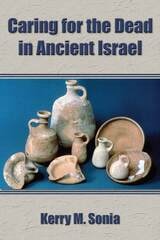
In Caring for the Dead in Ancient Israel, Kerry M. Sonia examines the commemoration and care for the dead in ancient Israel against the broader cultural backdrop of West Asia. This cult of dead kin, often referred to as ancestor cult, comprised a range of ritual practices in which the living provided food and drink offerings, constructed commemorative monuments, invoked the names of the dead, and protected their remains. This ritual care negotiated the ongoing relationships between the living and the dead and, in so doing, helped construct social, political, and religious landscapes in relationship to the past. Sonia explores the nature of this cult of dead kin in ancient Israel, focusing on its role within the family and household as well as its relationship to Israel’s national deity and the Jerusalem temple.

Features:

  • A reevaluation of whether burial and necromantic rituals were part of the cult of dead kin
  • A portrait of the various roles Israelite women played in the cult of dead kin
  • A reassessment of biblical writers’ attitudes toward the cult of dead kin
[more]
cover of Carthage Conspiracy: The Trial of the Accused Assassins of Joseph Smith

Carthage Conspiracy

The Trial of the Accused Assassins of Joseph Smith

Dallin H. Oaks and Marvin S. Hill

University of Illinois Press, 1975
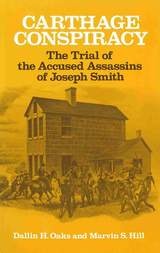
Carthage Conspiracy deals with the general problem of Mormon/non-Mormon conflict, as well as with the dramatic story of Mormon prophet Joseph Smith, his brother Hyrum, and their alleged assassins. It places the infamous event at the Carthage jail (1846) and the subsequent murder-conspiracy trial in the context of Mormon and American legal history, and deals with the question of achieving justice when crimes are politically motivated and popularly supported.
[more]
cover of Cassian's Prayer for the 21st Century

Cassian's Prayer for the 21st Century

John Levko

University of Scranton Press, 2000
Though Saint John Cassian lived and wrote centuries ago (c. 360-435), his spiritual writings continue to be important to contemporary church life and personal spirituality.  The rich religious traditions of Eastern Christianity influenced the course and development of monasticism in the West. Today, all Christians can, through Saint Cassian's focus on prayer, reach a higher state.
[more]
cover of Cast a Blue Shadow: An Amish Country Mystery

Cast a Blue Shadow

An Amish Country Mystery

P. L. Gaus

Ohio University Press, 2003

In Cast a Blue Shadow, his fourth Amish mystery, P. L. Gaus spins a suspenseful tale of power, pride, and tested faith. As always, Gaus explores the threshold of culture and faith among the Amish sects and their English neighbors, combining it here with the political divisions unique to the academic world.

After an early winter blizzard in Holmes County, Ohio, a wealthy socialite is found murdered in her mansion. That same morning, a troubled student, Martha Lehman, turns up at her psychiatrist’s office, bloody and unable to speak.

Professor Michael Branden and Sheriff Bruce Robertson begin an investigation that threatens to tear Millersburg College apart. Mute for many years as a child, Martha is once again unable (or unwilling) to speak. As Branden wrestles with the murder of the college’s leading benefactor, the real story of Martha Lehman begins to emerge—born Amish, converted to Mennonite, and drawn to the “English” world for the worst of reasons.

This new edition of Cast a Blue Shadow features an exclusive interview with the author, reading group materials, and a detailed map and driving guide to Holmes County, Ohio, with everything one needs to visit the iconic scenes depicted in the story.
[more]
cover of Caste, Country, and Creed: Struggles for Social Justice in the Contemporary Indian Diaspora

Caste, Country, and Creed

Struggles for Social Justice in the Contemporary Indian Diaspora

Nisha Thapliyal

Rutgers University Press, 2026

What happens when ancient systems of oppression travel across oceans? How do Indian diaspora communities across five nations challenge centuries-old systems of oppression while building new forms of solidarity? Caste, Country, and Creed: Struggles for Social Justice in the Contemporary Indian Diaspora takes readers inside the dynamic world of contemporary social justice activism spanning Aotearoa New Zealand, Australia, Canada, the United States, and the United Kingdom.

This groundbreaking collection brings together the voices of artists, activists, and scholar-activists who are reshaping conversations about caste discrimination, Islamophobia, and Hindu nationalism beyond India's borders. Through intimate first-person accounts and critical reflections, contributors reveal how diaspora activists are creating powerful counter-narratives and mobilizing collective resistance across local and transnational networks.

The book documents the lived realities of organizing—the values, knowledge traditions, and pivotal moments that spark political protest. Caste, Country, and Creed shows how activists construct alternative knowledge to dissent, build solidarity, and inspire political participation. Contributors offer nuanced insights into the complex relationships and power dynamics that sustain collective action for social justice in the Indian diaspora.

For copyright reasons, this edition is not for sale in India.
 

[more]
cover of Castle and Cathedral: Longing for the Sacred in a Skeptical Age

Castle and Cathedral

Longing for the Sacred in a Skeptical Age

Bruce R. Berglund

Central European University Press, 2017
This book takes a new approach to interwar Prague by addressing religion as an integral part of the city's cultural history. Berglund views Prague's cultural history in the broader context of religious change and secularization in 20th-century Europe. Based on detailed knowledge of sources, the monograph explores the interdisciplinary linkages between politics, architecture and theology in the building of symbolism and a "new mythology" of the first Czechoslovak republic (1918-1938). Berglunds text provides an important service for understanding both Czech history as well as current Czech political debate. The author's method can be characterized as culture history, able to connect several disciplines, emphasizing common topic (religion, politics, symbolics). Modern Czech elites, superficially characterized as "ateistic", appears in a new light to be deeply religious, a transition from more traditional, (mostly) Catholic religiosity, to a concept of a new, modern, ethical religion. The study incorporates biographical research, focusing on three principal characters: Tomás Garrigue Masaryk, Czechoslovakia's first president; his daughter Alice Garrigue Masaryková, founding director of the Czechoslovak Red Cross; and Joze Plecnik, the Slovenian architect who directed the renovations of Prague Castle.
[more]
cover of Catechesis for the New Evangelization: Vatican II, John Paul II, and the Unity of Revelation and Experience

Catechesis for the New Evangelization

Vatican II, John Paul II, and the Unity of Revelation and Experience

Brian Pedraza

Catholic University of America Press, 2020

Popes Francis, Benedict XVI, and John Paul II have called the present a time of New Evangelization for the Church and have stressed the importance of catechesis for this mission. John Paul II claimed that this renewal of the Church’s mission is grounded in the teachings of the Second Vatican Council. Nevertheless, approaches to catechesis in the conciliar and postconciliar era have varied greatly, as evidenced by the shifts in catechetical practice effected by the modern catechetical movement. Just as the dominant forms of theology changed from neo-scholastic to anthropological approaches so, too, did catechesis move from catechism-based approaches to more anthropological models based upon human experience. In light of this context, Catechesis for the New Evangelization examines the theological foundations of catechesis in the Church’s understanding of divine revelation and its reception by the human person, especially as found in the conciliar constitutions, Dei Verbum and Gaudium et Spes. After drawing norms on divine revelation from these documents, it traces the history of the modern catechetical movement in order to compare this history with the conciliar norms, highlighting the renewal’s strengths and weaknesses. These steps prepare the way for the main part of the book: an examination of the anthropology of Karol Wojtyła/Pope John Paul II. Ultimately, his anthropology provides an understanding of the person that can unite divine revelation and human experience in a way that takes what is best from the modern catechetical movement, while developing the ministry in a way that can be fruitful for the New Evangelization. Pedraza’s book is not only an incisive look at modern catechetical history and theory. It also touches upon some of the most important theological topics of the past century, including the neo-scholastic crisis, the proper interpretation of the Council, the relationship of nature and grace, and the modern understanding of the imago dei, with the research and competency appropriate for scholarly interest and the accessibility needed for educated practitioners in catechesis.
[more]
cover of Catholic Cosmotechnics for the AI Age

Catholic Cosmotechnics for the AI Age

Luigi Russi

St. Augustine's Press, 2026
[more]
cover of Catholic Dogmatic Theology: A Synthesis, Book 3: On the Church and the Sacraments

Catholic Dogmatic Theology

A Synthesis, Book 3: On the Church and the Sacraments

Jean-Herve Nicolas

Catholic University of America Press, 2024
Every discipline, including theology, requires a synthetic overview of its acquisitions and open questions, a kind of "topography" to guide the new student and refresh the gaze of specialists. In his Synthèse dogmatique, Fr. Jean-Hervé Nicolas, OP (1910-2001) presents just such a map of Thomistic theology, focusing on the central topics of Dogmatic Theology: The One and Triune God, Christology, Mariology, Ecclesiology, the Sacraments, and the Last Things. Drawing on decades of research and teaching, Fr. Nicolas synthetically presents these topics from a faithfully Thomistic perspective. While broadly and genially engaging the theological literature of the 20th century, he nonetheless remains deeply indebted to the Thomistic school that would have formed him in his youth as a theologian. This provides the reader with an unparalleled theological vision, masterfully bringing forth, at once, what is new and what is classical. Catholic Theology: A Dogmatic Synthesis is being published in English as a multi-volume work. In this volume, Fr. Nicolas takes up the raison d’être for the mission of the Holy Spirit: the work of sanctification in and through the Church, the mystical body of Christ and sacrament of salvation. In the ecclesiology articulated in this volume, he presents a theology of the Church that is at once wholly Thomistic and also faithful to the great themes of the Second Vatican Council, drawing especially from the works of Journet, Congar, and Bouyer, in critical dialogue with other theologians of his day. He then presents a complete and detailed sacramental theology, both concerning the nature of the sacraments in general, as well as concerning each sacrament in particular, carefully striving to balance positive and scholastic theology. Serving as a professor for decades, including at the University of Fribourg, Fr. Nicolas was at once a profound scholar and a masterful pedagogue. Gathering the work of a lifetime into a single pedagogical narrative, Fr. Nicolas's Catholic Theology: A Dogmatic Synthesis provides a resource for students and scholars alike. In view of the hyper-specialization of theology today, this series of volumes provides readers with a synthetic and sapiential overview of the fundamentals of dogmatic theology from a robust and profound Thomistic perspective.
[more]
cover of Catholic Dogmatic Theology: A Synthesis: Book 1, On the Trinitarian Mystery of God

Catholic Dogmatic Theology

A Synthesis: Book 1, On the Trinitarian Mystery of God

Jean Herve Nicolas, OP

Catholic University of America Press, 2021
Every discipline, including theology, requires a synthetic overview of its acquisitions and open questions, a kind of “topography” to guide the new student and refresh the gaze of specialists. In his Synthèse dogmatique, Fr. Jean-Hervé Nicolas, OP (1910-2001) presents just such a map of Thomistic theology, focusing on the central topics of Dogmatic Theology: The One and Triune God, Christology, Mariology, Ecclesiology, the Sacraments, and the Last Things. Drawing on decades of research and teaching, Fr. Nicolas synthetically presents these topics from a faithfully Thomistic perspective. While broadly and genially engaging the theological literature of the 20th century, he nonetheless remains deeply indebted to the Thomistic school that would have formed him in his youth as a theologian. This provides the reader with an unparalleled theological vision, masterfully bringing forth, at once, what is new and what is classical. Catholic Theology: A Dogmatic Synthesis will be published in English as a multi-volume work. In this volume, Fr. Nicolas discusses the nature of theological science and the mystery of the Triune God. At once historically-informed and speculatively-detailed, this volume carefully introduces the reader to classical Thomistic positions concerning the theological articulation of the Trinitarian mystery, including the topic of the divine missions, that is, the sending of the Son and the Spirit in the economy of salvation, thereby providing an important connection between the dogmatic portion of theology and its spiritual / moral concerns. Given the central luminosity of the Trinitarian mystery in the life of faith and in theology, this volume is a pivotal chapter in theological reflection. Indeed, objectively speaking, it is the most important discussion in all of theology. Serving as a professor for decades, including at the University of Fribourg, Fr. Nicolas was at once a profound scholar and a masterful pedagogue. Gathering the work of a lifetime into a single pedagogical narrative, Fr. Nicolas’s Catholic Theology: A Dogmatic Synthesis provides a resource for students and scholars alike. In view of the hyper-specialization of theology today, this series of volumes provides readers with a synthetic and sapiential overview of the fundamentals of dogmatic theology from a robust and profound Thomistic perspective.
[more]
cover of Catholic Dogmatic Theology: A Synthesis: Book 2: On the Incarnation and Redemption

Catholic Dogmatic Theology

A Synthesis: Book 2: On the Incarnation and Redemption

Jean-Herve Nicolas

Catholic University of America Press, 2022
Every discipline, including theology, requires a synthetic overview of its acquisitions and open questions, a kind of "topography" to guide the new student and refresh the gaze of specialists. In his Synthèse dogmatique, Fr. Jean-Hervé Nicolas, OP (1910-2001) presents just such a map of Thomistic theology, focusing on the central topics of Dogmatic Theology: The One and Triune God, Christology, Mariology, Ecclesiology, the Sacraments, and the Last Things. Drawing on decades of research and teaching, Fr. Nicolas synthetically presents these topics from a faithfully Thomistic perspective. While broadly and genially engaging the theological literature of the 20th century, he nonetheless remains deeply indebted to the Thomistic school that would have formed him in his youth as a theologian. This provides the reader with an unparalleled theological vision, masterfully bringing forth, at once, what is new and what is classical. Catholic Theology: A Dogmatic Synthesis will be published in English as a multi-volume work. In this volume, Fr. Nicolas discusses the mysteries of faith directly connected with the Redemptive Incarnation: the formation of orthodox Christological dogma in the course of the first centuries of the Church; the nature of the Hypostatic Union; the latter's effects in Christ's holiness, knowledge, and incarnate activity; the mariological mysteries connected to the divine maternity; the soteriological meaning of Christ's vicarious satisfaction; and the eschatological return of Christ in Glory. Serving as a professor for decades, including at the University of Fribourg, Fr. Nicolas was at once a profound scholar and a masterful pedagogue. Gathering the work of a lifetime into a single pedagogical narrative, Fr. Nicolas's Catholic Theology: A Dogmatic Synthesis provides a resource for students and scholars alike. In view of the hyper-specialization of theology today, this series of volumes provides readers with a synthetic and sapiential overview of the fundamentals of dogmatic theology from a robust and profound Thomistic perspective.
[more]
cover of Catholic Dogmatic Theology: A Synthesis: Book 4: On Creation and the Creator

Catholic Dogmatic Theology

A Synthesis: Book 4: On Creation and the Creator

Jean-Herve Nicolas, OP, Jean-Herve

Catholic University of America Press, 2024
Every discipline, including theology, requires a synthetic overview of its acquisitions and open questions, a kind of "topography" to guide the new student and refresh the gaze of specialists. In his Synthèse dogmatique, Fr. Jean-Hervé Nicolas, OP (1910-2001) presents just such a map of Thomistic theology, focusing on the central topics of Dogmatic Theology: The One and Triune God, Christology, Mariology, Ecclesiology, the Sacraments, and the Last Things. Drawing on decades of research and teaching, Fr. Nicolas synthetically presents these topics from a faithfully Thomistic perspective. While broadly and genially engaging the theological literature of the 20th century, he nonetheless remains deeply indebted to the Thomistic school that would have formed him in his youth as a theologian. This provides the reader with an unparalleled theological vision, masterfully bringing forth, at once, what is new and what is classical. Catholic Dogmatic Theology: A Synthesis is being published in English as a multi-volume work. In this volume, originally written as a supplement to his large Synthèse dogmatique, Fr. Nicolas returns to the theological topics of the One God and Creation. In a tightly unified presentation, he discusses: what we can naturally and supernaturally know about the One God; the nature of creation and providence; the nature of bodily creatures and their evolution; the nature and activity of spiritual creatures, men and angels alike; the problem of evil; and the relationship between the natural and the supernatural. By returning to these themes classically treated in the context of the Prima pars of the Summa theologiae, Fr. Nicolas presents his readers with the completion of his dogmatic synthesis. Serving as a professor for decades, including at the University of Fribourg, Fr. Nicolas was at once a profound scholar and a masterful pedagogue. Gathering the work of a lifetime into a single pedagogical narrative, Fr. Nicolas's Catholic Dogmatic Theology: A Synthesis provides a resource for students and scholars alike. In view of the hyper-specialization of theology today, this series of volumes provides readers with a synthetic and sapiential overview of the fundamentals of dogmatic theology from a robust and profound Thomistic perspective.
[more]
cover of Catholic Influence on American Colonial Policies, 1898-1904

Catholic Influence on American Colonial Policies, 1898-1904

By Frank T. Reuter

University of Texas Press, 1967

At the close of the Spanish-American War the United States found itself in possession of a colonial empire. The role played by the American Catholic Church in influencing administrative policy for the new, and predominately Catholic, dependencies is the subject of this incisive study by Frank T. Reuter.

Reuter discusses the centuries-old intricate involvement of the Spanish crown and the native Roman Catholic Church in the civil, social, and charitable institutions of Cuba, Puerto Rico, Guam, and the Philippines. He explores the attempts of United States officials to apply the traditional doctrine of separation of church and state in resolving the problems of a Church-run school system, the alleged desecration of native Catholic churches by American forces in the Philippines, the native antagonism toward the Spanish friars, and the disposition of Church property in dependencies with a deeply rooted correlation between the Catholic Church and the state.

Recounting the development of the Catholic Church in America, which felt responsible for maintaining the islands’ religious structure after Spanish control was removed, Reuter sees the reaction of the Church to the war with Spain and to colonial policy in the early postwar period as voiced not by a monolithic political force, but by diverse spokesmen—in particular the unofficial voice of the Catholic press. He traces the growth of the Church in the United States from a disparate group of dioceses clinging to European backgrounds, disunited by a divided hierarchy, and attacked by the wave of the anti-Catholic, nativistic sentiments of the last two decades of the nineteenth century, to a church body unified by the problems in the colonies. Catholic opinion, although not utilized to its full political potential, achieved a common focus through the formation of the Federation of American Catholic Societies and the debate in Congress over the Philippine Government Bill.

This study of American and native Catholic attitudes toward the formulation of United States policy in the insular dependencies and the attitude of the United States government toward the Catholic interests in the dependencies details the interplay of personalities and organizations: Presidents William McKinley and Theodore Roosevelt; William Howard Taft, civil governor of the Philippines; James Cardinal Gibbons, moderator between Catholic factions and official spokesman of the hierarchy to the Papacy and the United States government; Archbishop Placide L. Chapelle, apostolic delegate of the Vatican to the Philippines; Archbishop John Ireland, friend of President McKinley; the Philippine Commissions; and the Taft Mission to the Vatican in 1902.
[more]
cover of Catholic Lives, Contemporary America

Catholic Lives, Contemporary America

Thomas J. Ferraro, ed.

Duke University Press, 1997

What does it mean to be—or to have been raised—Catholic in America today, now that formally nonpracticing Catholics outnumber the memberships of any other single denomination? Catholic Lives, Contemporary America is a collection of informed and spirited essays focusing on Catholic lay practices not commonly recognized or, at times, officially sanctioned. For the formidable array of scholars and writers gathered here, being Catholic is not simply a matter of going to confession or attending Mass, and Catholicism’s contributions to American cultural identity remain open to question.
Edited and with an introduction by Thomas J. Ferraro, Catholic Lives, Contemporary America offers a banquet of essays and interviews, at once subtle and accessible, treating American Catholic lives and legacies with compassion and flair.

Contributors. Patrick Allitt, Paul Crowley, Thomas J. Ferraro, James T. Fisher, Paul Giles, Mary Gordon, Stanley Hauerwas, Frank Lentricchia, Robert A. Orsi, Camille Paglia, David Plante, Richard Rodriguez, Kathy Rudy, Andrew Sullivan, Mary Jo Weaver

[more]
cover of Catholic Lives/Contemporary America, Volume 93

Catholic Lives/Contemporary America, Volume 93

Thomas J. Ferraro

Duke University Press, 0
[more]
cover of Catholic Modernism and the Irish "Avant-Garde:" The Achievement of Brian Coffey, Denis Devlin, and Thomas MacGreevey

Catholic Modernism and the Irish "Avant-Garde

" The Achievement of Brian Coffey, Denis Devlin, and Thomas MacGreevey

James Matthew Wilson

Catholic University of America Press, 2023
This study constitutes the first-ever definitive account of the life and work of Irish modernist poets Thomas MacGreevy, Brian Coffey, and Denis Devlin. Apprenticed to the likes of W.B. Yeats, T.S. Eliot, James Joyce, and Samuel Beckett, all three writers worked at the center of modernist letters in England, France, and the United States, but did so from a distinctive perspective. All three writers wrote with a deep commitment to the intellectual life of Catholicism and saw the new movement in the arts as making possible for the first time a rich sacramental expression of the divine beauty in aesthetic form. MacGreevy spent his life trying to voice the Augustinian vision he found in The City of God. Coffey, a student of neo-Thomist philosopher Jacques Maritain, married scholastic thought and a densely wrought poetics to give form and solution to the alienation of modern life. Devlin contemplated the world with the eyes of Montaigne and the heart of Pascal as he searched for a poetry that could realize the divine presence in the experience of the modern person. Taken together, MacGreevy, Coffey, and Devlin exemplify the modern Catholic intellectual seeking to engage the modern world on its own terms while drawing the age toward fulfillment within the mystery and splendor of the Church. They stand apart from their Irish contemporaries for their religious seriousness and cosmopolitan openness of European modernism. They lay bare the theological potencies of modern art and do so with a sophistication and insight distinctive to themselves. Although MacGreevy, Coffey, and Devlin have received considerable critical attention in the past, this is the first book to study their work comprehensively, from MacGreevy’s early poems and essays on Joyce and Eliot to Coffey’s essays in the neo-scholastic philosophy of science, and on to Devlin’s late poetic attempts to realize Dante’s divine vision in a Europe shattered by war and modern doubt.
[more]
cover of Catholic Pacifist: The Long and Lonely Quest of Gordon Zahn

Catholic Pacifist

The Long and Lonely Quest of Gordon Zahn

Benjamin Peters

Catholic University of America Press, 2026
A study of the life and work of Gordon Zahn (1918-2007), one of the most significant and formative figures in the history of the US Catholic peace movement. During World War II, Zahn was one of only a handful of US Catholic conscientious objectors, an experience that first put him in contact with Dorothy Day and the Catholic Worker. Following the war, Zahn completed a PhD in sociology at The Catholic University of America where Paul Hanly Furfey’s “supernatural sociology” had a profound effect on him. After joining the faculty at Loyola University, Chicago, Zahn won a Fulbright year in Germany (1956-57) where he discovered the story of Franz Jägerstätter, the Austrian Catholic farmer, husband, and father who was beheaded by the Nazis in 1943 for refusing to participate in Hitler’s military. It was Zahn’s 1964 book In Solitary Witness that introduced Jägerstätter to an international audience and led to his beatification by Pope Benedict XVI in 2007. This work, along with Zahn’s several other books, secured his place as a leading intellectual in the Catholic peace movement. His work influenced the discussions of war and peace at the Second Vatican Council and he was enlisted as an expert witness during the drafting of the US Catholic Bishops’ pastoral letter on nuclear weapons, The Challenge of Peace (1983). Zahn made one of the most intellectually developed cases in the US for "Catholic pacifism"—two terms that both Catholics and pacifists had long regarded as deeply incompatible. Forging a Catholic pacifist position led him to be far more perceptive and critical of US political and military institutions than most of fellow US Catholics. Ultimately, Zahn saw the Catholic Church as the only institution capable of resisting, and support those who resist, modern warfare and the modern war-making state. His traditional view of the Church grounded his claim that Catholics can be pacifist and his further assertion that the Church should serve as a “source of dissent” for Catholics and others, especially during times of war. While marginalized within the broader US Catholic intellectual community, Zahn found common cause with other Catholic luminaries who are now seen to be ahead of their time, including Dorothy Day, Thomas Merton, and Daniel Berrigan. Gordon Zahn’s story serves as a template for telling the broader story of the US Catholic peace movement and the development of Catholic attitudes on war and conscientious objection that took place within the twentieth century.
[more]
cover of Catholicism and Liberal Democracy: Forgotten Roots and Future Prospects

Catholicism and Liberal Democracy

Forgotten Roots and Future Prospects

James Martin Carr

Catholic University of America Press, 2022
Catholicism and Liberal Democracy seeks to clarify if there is a place for Catholicism in the public discourse of modern liberal democracy, bringing secular liberalism, as articulated by Jürgen Habermas, into conversation with the Catholic tradition. James Martin Carr explores three aspects of the Catholic tradition relevant to this debate: the Church’s response to democracy from the nineteenth century up until the eve of the Second Vatican Council; the Council’s engagement with modernity, in particular through Gaudium et spes and Dignitatis humanae; and Joseph Ratzinger’s theology of politics as a particularly incisive (and influential) articulation of the Catholic tradition in this area. Jürgen Habermas’s theorization of the place of religion in modern democracy, both in his earlier secularist phase and after his ‘post-secular’ turn, is evaluated. The adequacy of Habermas’s recent attempts to accommodate religious citizens are critically examined and it is argued that developments in his later thought logically require a more thoroughgoing revision of his earlier theory. These developments, it is argued, create tantalizing openings for fruitful dialogue between Habermas and the Catholic tradition. Using analytical tools drawn from communications theory, the debates on same-sex marriage at Westminster and in the Irish referendum campaign are analyzed, assessing whether Catholic contributions to these debates comply with Habermasian rules of civic discourse. In light of this analysis, the prospects of, and impediments to, Catholic participation in public discourse are appraised. Carr concludes by proposing a Ratzingerian critique of contemporary attempts to redefine marriage within a broader, more fundamental critique of the modern democratic state as currently configured. A political system founded upon secularist monism cannot but regard Christian Gelasianism, and its Catholic variant in particular, as an existential threat. Thus, Catholics, however Habermasian their political behavior, can never be more than uneasy bedfellows with modern liberal democracy.
[more]
cover of Catholicism and Politics in Communist Societies

Catholicism and Politics in Communist Societies

Pedro Ramet, ed.

Duke University Press, 1990

This book is volume two of a three-volume work, Christianity Under Stress, which focuses on the experiences of Christian churches in contemporary communist and socialist societies. In this volume a distinguished group of experts examines the changing relationship of the Catholic church to contemporary communist and socialist societies in Eastern Europe, Latin America, and Asia.
Catholicism has, on the one hand, traditionally regarded earthly life as of secondary importance—as an instrument of spiritual transformation—and, on the other, has ascribed great value to the early institutions of the church, taking great interest in temporal matters that affects its institutional concerns. Against the backdrop of this duality, the church has changed over the centuries, adapting to local and national conditions. Catholicism and Politics in Communist Societies surveys these local and national adaptations in their historical contexts, linking the past experience of the church to its present circumstances. Organized around themes of tradition vs. modernity, hierarchy vs. lower clergy, and institutional structure vs. grass-roots organization, this comprehensive volume presents a detailed, country-by-country portrait of the political and social status of the church today in communist and socialist settings.

Contributors. Pedro Ramet, Arthur F. McGovern, Roman Solchanyk, Ivan Hvat, Robert F. Goeckel, C. Chrypinski, Milan J. Reban, Leslie Laszlo, Janice Broun, Eric O. Hanson, Stephen Denney, Thomas E. Quigley, Humberto Belli, Hansjakob Stehle, George H. Williams
[more]
cover of Catholics and Jews in Twentieth-Century America

Catholics and Jews in Twentieth-Century America

Egal Feldman

University of Illinois Press, 2006

Rich with the insights of prominent Catholic and Jewish commentators and religious leaders, Catholics and Jews in Twentieth-Century America recounts the amazing transformation of a relationship of irreconcilable enmity to one of respectful coexistence and constructive dialogue.

Focusing primarily on the Catholic doctrinal view of the Jews and its ramifications, Egal Feldman traces the historicalroots of anti-Semitism, examining tenacious Catholic beliefsincluding the idea that the Jews lost their place as the chosen people with the coming of Christianity, deicide, and the conviction that their purported responsibility for the Crucifixion justified subsequent Jewish misery.

A new era of Catholic-Jewish relations opened in 1962 with Vatican II’s Declaration on the Jews, reversing the theology of contempt. Feldman explores the strides made in improving relations, such as the Vatican’s diplomatic recognition of the Jewish state, as well as a number of recent issues.

[more]
cover of Catholics, Anglicans, and Puritans: Seventeenth-Century Essays

Catholics, Anglicans, and Puritans

Seventeenth-Century Essays

Hugh Trevor-Roper

University of Chicago Press, 1988

Renaissance Essays, published in 1985, confirmed Hugh Trevor-Roper's reputation as one of the most distinguished writers of history and as an unequaled master of the historical essay. Received with critical acclaim in both England and the United States, the volume gathered wide-ranging essays on both British and European history from the fifteenth century to the early seventeenth centuries. This sequel, Catholics, Anglicans, and Puritans, is composed of five previously unpublished essays on the intellectual and religious movements which lay behind the Puritan revolution in England and Ireland.

The opening essay, a skillful work of historical detection, investigates the strange career of Nicholas Hill. In "Laudianism and Political Power," Trevor-Roper returns to the subject of his first, now classic, book. He analyzes the real significance of the ecclesiastical movement associated with Archbishop Laud and speculates on what might have happened if the Stuarts had not abandoned it. "James Ussher, Archbishop of Armagh" deals with a key figure in the intellectual and religious life of his time. A long essay on "The Great Tew Circle" reinstates Lord Falkland as an important influence on the continuity of ideas through the English revolution. The final essay reassesses the political ideology of Milton.

English intellectual history, as Trevor-Roper constructs it here for the seventeenth century, is conditioned by its social and political context. Always engaging and fresh, these essays deal with currently interesting historical topics and up-to-date controversies.
[more]
cover of Católicos: Resistance and Affirmation in Chicano Catholic History

Católicos

Resistance and Affirmation in Chicano Catholic History

By Mario T. García

University of Texas Press, 2008

Chicano Catholicism—both as a popular religion and a foundation for community organizing—has, over the past century, inspired Chicano resistance to external forces of oppression and discrimination including from other non-Mexican Catholics and even the institutionalized church. Chicano Catholics have also used their faith to assert their particular identity and establish a kind of cultural citizenship.

Based exclusively on original research and sources, Mario T. García here offers the first major historical study to explore the various dimensions of the role of Catholicism in Chicano history in the twentieth century. This is also one of the first significant studies in the still limited field of Chicano religious history.

Topics range from how early Chicano Catholic intellectuals and civil rights leaders were influenced by Catholic Social Doctrine, to the role that popular religion has played in the lives of ordinary men and women in both rural and urban areas. García also examines faith-based Chicano community movements like Católicos Por La Raza in the 1960s and the Sanctuary movement in Los Angeles in the 1980s.

While Latino/a history and culture has been, for the most part, inextricably linked with the tenets and practices of Catholicism, there has been very little written, until recently, about Chicano Catholic history. García helps to fill that void and explore the impact—both positive and negative—that the Catholic experience has had on the Chicano community.

[more]