Results by title
56 books match the query 'Religions' and 2 start with c
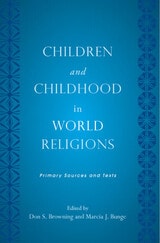
Children and Childhood in World Religions
Primary Sources and TextsBrowning, Don S
Rutgers University Press, 2009
Each of six chapters, edited by world-class scholars, focuses on one religious tradition and includes an introduction and a selection of primary texts ranging from legal to liturgical and from the ancient to the contemporary. Through both the scholarly introductions and the primary sources, this comprehensive volume addresses a range of topics, from the sanctity of birth to a child's relationship to evil, showing that issues regarding children are central to understanding world religions and raising significant questions about our own conceptions of children today.
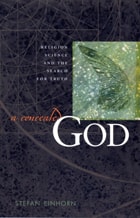
Concealed God
Stefan Einhorn
Templeton Press, 2002
Highly acclaimed in Sweden where it was first published in both hardcover and paperback editions, A Concealed God poses two intriguing questions:
•Does God truly exist?•If so, is the concept of God logical and in agreement with the knowledge of the world that science has provided to date?
The God presented by most religions doesn't make sense in today's world; we have little room for miracles. Furthermore, there are irreconcilable aspects in the world's religions. Must we abandon our faith or belief in God? Perhaps not, says popular Swedish thinker Stefan Einhorn. We can behave as scientists do when they run experiments only to obtain contradictory results. They ask themselves whether there might not be a logical conclusion that binds all the results together and leads to the most probable explanation.
Einhorn hypothesizes that if God truly exists, then many different religions would have discovered this. He finds a common denominator in the concept of a hidden God in seven major religions: Judaism, Christianity, Islam, Hinduism, Buddhism, Taoism, and Confucianism. But even with this shared belief, can we know if God exists? Did humankind create the idea of God to answer the unexplainable? What about evil and suffering, the absence of meaning in life, loneliness and insecurity? And most importantly, how do we search for a concealed God?
Most religions share common principles for the search for "that which is concealed," including meditation, contemplation, and prayer. Whatever route is chosen, the search for God may bring us some answers. Einhorn concludes that two themes are central to the search: one is that God is both concealed and simultaneously omnipresent; the other is that only with utter humility and an awareness of our inability to fully understand may we approach the divine.
In the end, there are no definite answers. But the search sheds light on the many paths to enlightenment offered by the world's religions.