Results by title
598 books match the query 'Religious' and 19 start with c
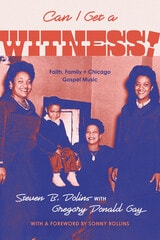
Can I Get a Witness!
Faith, Family, and Chicago Gospel MusicSteven B. Dolins with Gregory Donald Gay
University of Chicago Press, 2026
The remarkable story of pastor Donald Gay and his family’s lasting contributions to gospel music and Chicago culture.
When the preacher Gregory Donald Gay joined his sisters onstage at Carnegie Hall in 1950, on a sold-out bill they shared with Mahalia Jackson and the Clara Ward Singers, he became a participant in a landmark moment: the first concert in the venue to feature entirely gospel music. He was just five years old.
The Gay Sisters—Evelyn, Geraldine, and Mildred—were key figures in gospel’s Golden Age, and their youngest brother had a front-row seat. Evelyn and Geraldine each innovated singular approaches to gospel piano, while Mildred sang. Together, they toured and performed on a series of influential gospel recordings from 1948 to 1973, playing the Apollo Theatre and crossing paths with musical luminaries like Sister Rosetta Tharpe, Sam Cooke, Pops Staples, and Dizzy Gillespie. But despite a hit record and prodigious talent, the Gay Sisters faded from the limelight. In the ensuing years, they weathered personal trials while their mother, Fannie, devoted her attention to another family undertaking: starting a church.
Can I Get a Witness! is a call-and-response between Steven B. Dolins, founder of The Sirens Records, and Donald Gay, who vividly describes his boyhood in Chicago’s Woodlawn neighborhood, his family’s remarkable place in gospel history, his mother’s work as a faith leader, and his own calling as a pastor. The book spotlights the rich contributions of a family remembered not only for the songs they recorded but also for their unwavering kindness to others, a legacy that the legendary Sonny Rollins recounts in a moving foreword.
Candle Feather Wooden Spoon
New Jewish StoriesRabbi Zoe Klein
Central Conference of American Rabbis, 2023
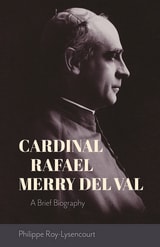
Cardinal Rafael Merry del Val
Philippe Roy-Lysencourt
Catholic University of America Press, 2021
Chance or Dance
An Evaluation of DesignJimmy H. Davis
Templeton Press, 2008
Chance or Dance provides an overview of design and clarification of the controversial Intelligent Design (ID) movement and ultimately concludes there is no scientific proof behind Intelligent Design. As the controversy over Intelligent Design has grown over the past few years, there is a tendency to confuse all statements about design with the Intelligent Design movement and to confuse any affirmation of creation with Scientific Creationism. Davis and Poe begin with a brief historical perspective of the design argument and then examine the significant breakthroughs in cosmology, math, physics, chemistry, and biology that have provided renewed speculation in design.
The authors discuss that the idea of design is far more expansive than the ID movement’s version of it, evaluate Dawkins’ interpretation of genetic determinism, include a chapter that explores the tendency since Darwin to assume that the presence of an observable cause excludes the possibility of divine involvement; and introduce further reflections on wonder and awe that take into account the recent surge of interest in this area. The book concludes with an argument for the correlation between faith and sensory experience and suggests that science has successfully described processes but failed to explain origins.
Chance or Dance is ideal for students and general readers interested in understanding how modern science gives evidence for nature’s creation by the Bible’s God.
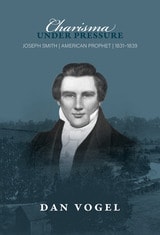
Charisma under Pressure
Joseph Smith, American Prophet, 1831–1839Dan Vogel
Signature Books, 2023
But just who was Joseph Smith? What motivated him? In examining Smith’s life during his Ohio and Missouri sojourns, Vogel seeks to answer those questions. But, Vogel is quick to note, “There are, in fact, many possible constructions of Joseph Smith, and depending on how one assesses the evidence for his truth-claims, a completely different Joseph Smith emerges. But this is probably as Smith wanted it.”
During this period, Smith established a temple, printing presses, additional scripture, expanded church offices, and built a bank—all indicating a sense of permanence and strength for his young church at one level while causing its near collapse at another.
Christian Philosophy and Free Will
Josef Seifert
St. Augustine's Press, 2014
Following an ardent debate in the 1930s on the question over whether something like a “Christian philosophy” exists, as Etienne Gilson, Jacques Maritain, and others held, the term was used by many thinkers and rejected by many others, not only by Heidegger who called it a contradiction in terms, an “iron wood,” but also by Thomists who wanted to see philosophy and Christian faith strictly separated. Seifert analyses five understandings of the term “Christian philosophy” which have never been expounded with such clarity and which he rejects for different, partly for opposite, reasons. He presents these senses of Christian philosophy, and his reasons for rejecting them, in clear, straight-forward language. He presents for the first time a series of eleven wholly different and thoroughly positive and fruitful ways of understanding the (rather misleading) term “Christian philosophy.” Identifying and distinguishing these legitimate ways to speak of “Christian philosophy” shed light on the manifold fruitful relations between reason and faith. In a second part of the book, Seifert gives an example of Christian philosophy in the sense of a philosophy of religion that shows the absolute presupposedness and necessity of the existence of human, divine, and angelic free will to make any sense of divine revelation and of Christian (but also of Muslim and Jewish) religion. In a third part, he presents a penetrating analysis of seven indubitable evidences that demonstrate the nature and real existence of human free will (in a so-called “libertarian” sense that rejects the thesis of the compatibility between free will and determinism). The book is introduced by the eminent Thomist philosopher, John Finnis.

Christina Rossetti
The Poetry of EnduranceDolores Rosenblum
Southern Illinois University Press, 1987
Christina Rossetti was considered the ideal female poet of her time. Her poetry was devotional, moral, and spoke of frustrated affection.
Dolores Rosenblum presents a fresh reading of Rossetti’s works and places them in the context of her life. Rosenblum shows that what was ostensibly devotional, moral, and loveless, was actually what Luce Irigaray calls “mimetism,” a subtle parody and subversion of the male tradition of literature.
Only with the coming of feminist criticism can Rossetti be meaningfully re-evaluated. Rosenblum calls Rossetti’s works the “poetry of endurance,” stating that it is similar, and at times identical, to the female “sentimental” tradition in literature. Rossetti endured the constraints of the Victorian female artistic spirit by becoming a “watcher.” Within this self-accepted role, Rossetti was able to carefully and deliberately choose artistic self-protection. In her religious poetry, Rossetti transcended, by aesthetic renunciation, the alienation and immobilization forced upon her.
Rossetti’s poetry is full of paradox; it sings about silence, exposes the poet’s oblivion. From the repining Victorian poet, there emerged a “stone woman.” Rosenblum discusses this passively enduring female figure’s alienation from knowledge and power, and how the myth of self strengthened the lyric voice within her. Because she was a woman, she was denied the male use of the lyric “I.”
Rossetti’s work is unified, Rosenblum argues, because she was a deliberate poet, and by accepting the “burden of womanhood,” she played out what men only symbolized as female in their art. By her mimicry and revision of the male tradition of literature, Christina Rossetti engaged the patriarchal tradition in ways that make it usable for the female experience, and that provide a critique of male objectification of women in art.
Circling Faith
Southern Women on SpiritualityWendy Reed
University of Alabama Press, 2012
Close Encounters between Bible and Film
An Interdisciplinary EngagementLaura Copier
SBL Press, 2016
Explore new routes into the burgeoning field of biblical literature and film theory
The present collection of essays is a sequel to the groundbreaking Semeia 74 issue, published in 1996, entitled Biblical Glamour and Hollywood Glitz. These new essays showcase the divergent approaches from film studies and cultural studies that can be used in the visual analysis of biblical and religious themes, narratives, and characters in cinema. It is the first volume that specifically addresses issues of methodology, theory, and analysis in the study between bible and film. As such, this collection is of interest to scholars in film studies and theology/religion/biblical studies, who are invested in doing interdisciplinary research in the expanding field of religion and film.
Features
- Specific focus on methods of film analysis, rather than the more common focus on thematic analysis in the study of religion, Bible, and film.
- Visual analysis in the encounter between Bible and film
- Fourteen essays and an introduction by top scholars in the field
Colonial Rosary
The Spanish and Indian Missions of CaliforniaAlison Lake
Ohio University Press, 2006
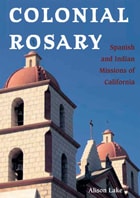
California would be a different place today without the imprint of Spanish culture and the legacy of Indian civilization. The colonial Spanish missions that dot the coast and foothills between Sonoma and San Diego are relics of a past that transformed California’s landscape and its people.
In a spare and accessible style, Colonial Rosary looks at the complexity of California’s Indian civilization and the social effects of missionary control. While oppressive institutions lasted in California for almost eighty years under the tight reins of royal Spain, the Catholic Church, and the government of Mexico, letters and government documents reveal the missionaries’ genuine concern for the Indian communities they oversaw for their health, spiritual upbringing, and material needs.
With its balanced attention to the variety of sources on the mission period, Colonial Rosary illuminates ongoing debates over the role of the Franciscan missions in the settlement of California.
By sharing the missions’ stories of tragedy and triumph, author Alison Lake underlines the importance of preserving these vestiges of California’s prestatehood period. An illustrated tour of the missions as well as a sensitive record of their impact on California history and culture, Colonial Rosary brings the story of the Spanish missions of California alive.
Commentaries on the Cantatas of Johann Sebastian Bach
A Selective GuideHans-Joachim Schulze. Translated by James A. Brokaw II
University of Illinois Press, 2024
The University of Illinois Press has paired the volume with a special web-based companion overseen by the translator and hosted by the Illinois Open Publishing Network. This online resource includes Brokaw’s translations of all 225 of Schulze’s essays alongside digital tools for searching, sorting, and bundling the commentaries according to date of composition, position within the liturgical church year sequence, and librettist.
Confessions of a Gay Priest
A Memoir of Sex, Love, Abuse, and Scandal in the Catholic SeminaryTom Rastrelli
University of Iowa Press, 2020
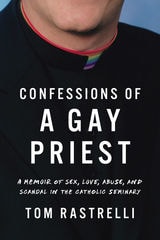
Tom Rastrelli is a survivor of clergy-perpetrated sexual abuse who then became a priest in the early days of the Catholic Church’s ongoing scandals. Confessions of a Gay Priest divulges the clandestine inner workings of the seminary, providing an intimate and unapologetic look into the psychosexual and spiritual dynamics of celibacy and lays bare the “formation” system that perpetuates the cycle of abuse and cover-up that continues today.
Under the guidance of a charismatic college campus minister, Rastrelli sought to reconcile his homosexuality and childhood sexual abuse. When he felt called to the priesthood, Rastrelli began the process of “priestly discernment.” Priests welcomed him into a confusing clerical culture where public displays of piety, celibacy, and homophobia masked a closeted underworld in which elder priests preyed upon young recruits.
From there he ventured deeper into the seminary system seeking healing, hoping to help others, and striving not to live a double life. Trained to treat sexuality like an addiction, he and his brother seminarians lived in a world of cliques, competition, self-loathing, alcohol, hidden crushes, and closeted sex. Ultimately, the “formation” intended to make Rastrelli a compliant priest helped to liberate him.
Confronting Vulnerability
The Body and the Divine in Rabbinic EthicsJonathan Wyn Schofer
University of Chicago Press, 2010
While imparting their ethical lessons, rabbinic texts often employ vivid images of death, aging, hunger, defecation, persecution, and drought. In Confronting Vulnerability, Jonathan Wyn Schofer carefully examines these texts to find out why their creators thought that human vulnerability was such a crucial tool for instructing students in the development of exemplary behavior.
These rabbinic texts uphold virtues such as wisdom and compassion, propound ideal ways of responding to others in need, and describe the details of etiquette. Schofer demonstrates that these pedagogical goals were achieved through reminders that one’s time on earth is limited and that God is the ultimate master of the world. Consciousness of death and of divine accounting guide students to live better lives in the present. Schofer’s analysis teaches us much about rabbinic pedagogy in late antiquity and also provides inspiration for students of contemporary ethics. Despite their cultural distance, these rabbinic texts challenge us to develop theories and practices that properly address our frailties rather than denying them.
Cowboy Apostle
The Diaries of Anthony W. Ivins, 1875-1932Anthony W. Ivins
Signature Books, 2013
Anthony W. Ivins (1852-1934) migrated to St. George, Utah, at age nine where he later became an influential civic and ecclesiastical leader. He married Elizabeth A. Snow, daughter of apostle Erastus F. Snow. Ivins was a first cousin of Heber J. Grant, and served as his counselor while Grant was LDS president. Ivins filled several Mormon missions to Mexico and presided as the Juarez, Mexico stake president where he performed post-manifesto marriages. He was appointed by the U.S. government as an Indian agent, and was warmly acquainted with Porfirio Diaz, president of Mexico. Involved in politics in St. George, Ivins held aspirations of running as a Democrat for governor of Utah. In 1907, he was ordained an apostle and later advanced to the First Presidency. Tone, as he called himself, was an accomplished horseman who worked with, and invested in, livestock. He was a game-hunting cowboy who became a statesman for both his country and his expanding religious community.
Though in his correspondence Ivins expressed paramount concern for members of his family, he rarely mentions them in his journals. Rather, his diaries chronicle his business and religious observations including meetings with the Quorum of the Twelve and others. He records meetings of the apostles where decisions were made to remove Church leaders from office who had entered into polygamy after 1904, and details the Church’s dealings with the Mexican government to safeguard the Mormon colonists. There are also discussions where doctrinal principles were clarified. For example, in 1912, Ivins reported that President Joseph F. Smith addressed Brigham Young’s Adam God teachings and affirmed that it was “not a doctrine of the Church.” Ivins clearly loved the ruggedness of outdoor life, as evidenced in his passion for hunting, but was also intrigued with the curiosities at the Utah State Fair, the entertaining showmanship of Buffalo Bill, and the refinement of the theater. Tragedy became commonplace as he recorded vigilante-like justice against Indians and Mexicans who were killed for stealing food, and witnessing the execution of John D. Lee, a once favored son of Mormonism. Appendices of Cowboy Apostle include Ivins Record Book of Marriage and an essay by Ivins son, H. Grant Ivins titled “Polygamy in Mexico as Practiced by the Mormon Church, 1895-1905.”
Creating a Human World
A New Psychological and Religious Anthropology In Dialogue with Freud, Heidegger, and KierkegaardErnest Daniel Carrere
University of Scranton Press, 2006
Carrere elucidates the paradoxical spiritual truth that salvation lies not in an escape from humanity, but in embracing it. An interdisciplinary tour de force, this book will appeal to anyone interested in philosophy, psychology, religion, or cultural anthropology.
Creating a Perfect World
Religious and Secular Utopias in Nineteenth-Century OhioCatherine M. Rokicky
Ohio University Press, 2002
Powerful currents of religious revival and political and social reform swept nineteenth-century America. Many people expressed their radical religious and social ideals by creating or joining self-contained utopian communities. These utopianists challenged the existing social and economic order with alternative notions about religion, marriage, family, sexuality, property ownership, and wage labor.
Between 1787 and 1919, approximately 270 utopian communities existed in the United States. Due to its unique location on the young nation’s frontier, the state of Ohio was the site of much of this activity.
Creating a Perfect World examines Ohio’s utopian movements, both religious and secular. These include the United Society of Believers in Christ’s Second Coming, or Shakers; the Society of Separatists at Zoar; the Mormons, who stopped in the state for several years on their way west; and several societies based on the philosophies of European social reformers Robert Owen and Charles Fourier.
In this detailed account of a unique and fascinating chapter in Ohio’s history, Catherine M. Rokicky profiles these communities and explores their ideals, how and why they were established, their leaders, and their members’ reasons for joining and sometimes leaving. She also examines the roles men and women played, their approaches to communal living and community property, their economic activities, their relations with surrounding communities and the state, and the various reasons for their success or failure.
Creation through Evolution
New Perspectives from Thomistic Theology and PhilosophyNicanor Pier Giorgio Austriaco
Catholic University of America Press, 2025
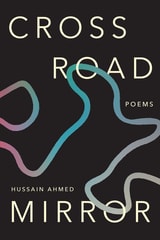
Crossroad Mirror
PoemsHussain Ahmed
Northwestern University Press, 2026
War and its reverberations propel people across the Nigerian landscape in Hussain Ahmed’s third collection
In Crossroad Mirror many poems begin after sundown—in quiet moments when the bounds between the past and the present, the living and the dead, blur. War and its aftershocks often form the backdrop for these scenes, though Ahmed’s verse rarely brings us to the battlefield itself. Instead, we hear the stories of refugees, civilian casualties, and ordinary soldiers trying to make sense of their circumstances. “There’s no vocabulary in the army—for grief, or death,” writes Ahmed. “Each door you exit, leads to another parade ground.” A group of soldiers wait out a rainstorm—and the war—together in a tent. Their families linger by the radio and listen for news. The “missing” loom as large as the dead.
Tracing the threads of migration that war so often catalyzes, Crossroad Mirror takes us from grassland to cornfield to coastline and explores the role storytelling and spirituality play in leaving and grieving.
Cusanus Today
Thinking with Nicholas of Cusa Between Philosophy and TheologyDavid C. Albertson
Catholic University of America Press, 2024