Results by title
165 books match the query 'Resistance' and 14 start with c
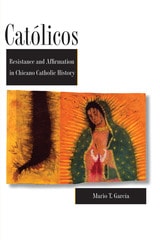
Católicos
Resistance and Affirmation in Chicano Catholic HistoryBy Mario T. García
University of Texas Press, 2008
Chicano Catholicism—both as a popular religion and a foundation for community organizing—has, over the past century, inspired Chicano resistance to external forces of oppression and discrimination including from other non-Mexican Catholics and even the institutionalized church. Chicano Catholics have also used their faith to assert their particular identity and establish a kind of cultural citizenship.
Based exclusively on original research and sources, Mario T. García here offers the first major historical study to explore the various dimensions of the role of Catholicism in Chicano history in the twentieth century. This is also one of the first significant studies in the still limited field of Chicano religious history.
Topics range from how early Chicano Catholic intellectuals and civil rights leaders were influenced by Catholic Social Doctrine, to the role that popular religion has played in the lives of ordinary men and women in both rural and urban areas. García also examines faith-based Chicano community movements like Católicos Por La Raza in the 1960s and the Sanctuary movement in Los Angeles in the 1980s.
While Latino/a history and culture has been, for the most part, inextricably linked with the tenets and practices of Catholicism, there has been very little written, until recently, about Chicano Catholic history. García helps to fill that void and explore the impact—both positive and negative—that the Catholic experience has had on the Chicano community.
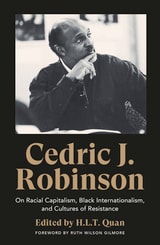
Cedric J. Robinson
On Racial Capitalism, Black Internationalism, and Cultures of ResistanceCedric J. Robinson
Pluto Press, 2019
"Like W. E. B. Du Bois, Michel Foucault, Sylvia Wynter, and Edward Said, Robinson was that rare polymath capable of seeing the whole....He left behind a body of work to which we must return constantly and urgently"—Robin D. G. Kelley, author of Freedom Dreams
Cedric J. Robinson is one of the doyens of Black Studies and a pioneer in study of the Black Radical Tradition. His works have been essential texts, deconstructing racial capitalism and inspiring insurgent movements from Ferguson, Missouri to the West Bank. For the first time, Robinson's essays come together, spanning over four decades and reflective of his diverse interests in the interconnections between culture and politics, radical social theory, and classic and modern political philosophy.
Themes explored include Africa and Black internationalism, World politics, race and US Foreign Policy, representations of blackness in popular culture, and reflections on popular resistance to racial capitalism, white supremacy and more. Essays here include:
*The Black Detective and American Memory
*Slavery and the Platonic Origins of Anti-Democracy
*Africa: In Hock to History and the Banks
*Blaxploitation and the Misrepresentation of Liberalism
*The Mulatta on Film
*Race, Capitalism, and Anti-democracy
*The Killing in Ferguson
*And much more!
Accompanied by an introduction by H. L. T. Quan and a foreword by Ruth Wilson Gilmore, this collection, which includes previously unpublished materials, extends the many contributions by a giant in Black radical thought.
Challenging Operations
Medical Reform and Resistance in SurgeryKatherine C. Kellogg
University of Chicago Press, 2011
In 2003, in the face of errors and accidents caused by medical and surgical trainees, the American Council of Graduate Medical Education mandated a reduction in resident work hours to eighty per week. Over the course of two and a half years spent observing residents and staff surgeons trying to implement this new regulation, Katherine C. Kellogg discovered that resistance to it was both strong and successful—in fact, two of the three hospitals she studied failed to make the change. Challenging Operations takes up the apparent paradox of medical professionals resisting reforms designed to help them and their patients. Through vivid anecdotes, interviews, and incisive observation and analysis, Kellogg shows the complex ways that institutional reforms spark resistance when they challenge long-standing beliefs, roles, and systems of authority.
At a time when numerous policies have been enacted to address the nation’s soaring medical costs, uneven access to care, and shortage of primary-care physicians, Challenging Operations sheds new light on the difficulty of implementing reforms and offers concrete recommendations for effectively meeting that challenge.
Changing the Way We Teach
Writing and Resistance in the Training of Teaching AssistantsSally Barr Ebest
Southern Illinois University Press, 2005
Changing the Way We Teach: Writing and Resistance in the Training of Teaching Assistants draws on eighteen case studies to illustrate the critical role writing plays in overcoming graduate student resistance to instruction, facilitating change, and developing professional identity. Sally Barr Ebest argues that teaching assistants in English must be actively engaged in the theory and practice underlying composition pedagogy in order to better understand how to alter the way they teach and why such change is necessary.
In illustrating the potential for change when the paradigm shift in composition is applied to graduate education, Ebest considers recent discussions of composition pedagogy; post-secondary teaching theories; cognitive, social cognitive, and educational psychology; and issues of gender, voice, and writing.
Stemming from research conducted over a five-year period, this volume explores how a cross-section of teaching assistants responded to pedagogy as students and how their acceptance of pedagogy affected their performance as instructors. Investigating reasons behind manifestations of resistance and necessary elements for overcoming it, Ebest finds that engagement in composition strategies—reflective writing, journaling, drafting, and active learning—and restoration of feelings of self-efficacy are the primary factors that facilitate change.
Concerned with gender as it relates to personal construct, Changing the Way We Teach traces the influence of familial expectations and the effects of literacy experiences on students and draws correlations between feminist and composition pedagogy. Ebest asserts that the phenomena contributing to the development of a strong, unified voice in women—self-knowledge, empathy, positive role models, and mentors—should be essential elements of a constructivist graduate curriculum.
To understand composition pedagogy and to convince students of its values, Ebest holds that educators must embrace it themselves and trace the effects through active research. By providing graduate students with pedagogical sites for research and reflection, faculty enable them to express their anger or fear, study its sources, and quite often write their way to a new understanding.
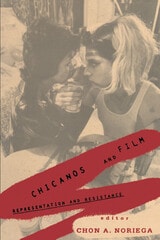
Chicanos And Film
Representation and ResistanceChon A. Noriega
University of Minnesota Press, 1992
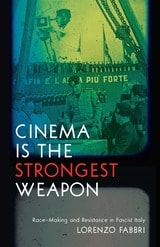
Cinema is the Strongest Weapon
Race-Making and Resistance in Fascist ItalyLorenzo Fabbri
University of Minnesota Press, 2023
A deep dive into Italian cinema under Mussolini’s regime and the filmmakers who used it as a means of antifascist resistance
Looking at Italy’s national film industry under the rule of Benito Mussolini and in the era that followed, Cinema Is the Strongest Weapon examines how cinema was harnessed as a political tool by both the reigning fascist regime and those who sought to resist it. Covering a range of canonical works alongside many of their neglected contemporaries, this book explores film’s mutable relationship to the apparatuses of state power and racial capitalism.
Exploiting realism’s aesthetic, experiential, and affective affordances, Mussolini’s biopolitical project employed cinema to advance an idealized vision of life under fascism and cultivate the basis for a homogenous racial identity. In this book, Lorenzo Fabbri crucially underscores realism’s susceptibility to manipulation from diametrically opposed political perspectives, highlighting the queer, Communist, Jewish, and feminist filmmakers who subverted Mussolini’s notion that “cinema is the regime’s strongest weapon” by developing film narratives and film forms that challenged the prevailing ethno-nationalist ideology.
Focusing on an understudied era of film history and Italian cultural production, Fabbri issues an important recontextualization of Italy’s celebrated neorealist movement and the structural ties it shares with its predecessor. Drawing incisive parallels to contemporary debates around race, whiteness, authoritarianism, and politics, he presents an urgent examination into the broader impact of visual media on culture and society.
Retail e-book files for this title are screen-reader friendly with images accompanied by short alt text and/or extended descriptions.
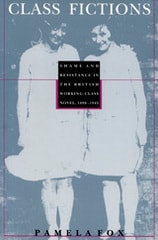
Class Fictions
Shame and Resistance in the British Working Class Novel, 1890–1945Pamela Fox
Duke University Press, 1994
With a focus on certain classics in the working-class literary "canon," such as The Ragged Trousered Philanthropists and Love on the Dole, as well as lesser-known texts by working-class women, Fox uncovers the anxieties that underlie representations of class and consciousness. Shame repeatedly emerges as a powerful counterforce in these works, continually unsettling the surface narrative of protest to reveal an ambivalent relation toward the working-class identities the novels apparently champion.
Class Fictions offers an equally rigorous analysis of cultural studies itself, which has historically sought to defend and value the radical difference of working-class culture. Fox also brings to her analysis a strong feminist perspective that devotes considerable attention to the often overlooked role of gender in working-class fiction. She demonstrates that working-class novels not only expose master narratives of middle-class culture that must be resisted, but that they also reveal to us a need to create counter narratives or formulas of working-class life. In doing so, this book provides a more subtle sense of the role of resistance in working class culture. While of interest to scholars of Victorian and working-class fiction, Pamela Fox’s argument has far-reaching implications for the way literary and cultural studies will be defined and practiced.
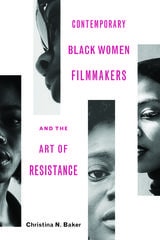
Contemporary Black Women Filmmakers and the Art of Resistance
Christina N. Baker
The Ohio State University Press, 2018
Analyzing the cultural texts of filmmakers such as Ava DuVernay, Tanya Hamilton, Kasi Lemmons, Gina Prince-Bythewood, and Dee Rees—and including interviews she conducted with three of the filmmakers—Baker emphasizes the importance of applying an intersectional perspective that centers on the shared experiences of Black women and the role of film as a form of artistic expression and a tool of social resistance.
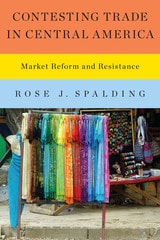
Contesting Trade in Central America
Market Reform and ResistanceBy Rose J. Spalding
University of Texas Press, 2014
In 2004, the United States, five Central American countries, and the Dominican Republic signed the Central American Free Trade Agreement (CAFTA), signaling the region’s commitment to a neoliberal economic model. For many, however, neoliberalism had lost its luster as the new century dawned, and resistance movements began to gather force. Contesting Trade in Central America is the first book-length study of the debate over CAFTA, tracing the agreement’s drafting, its passage, and its aftermath across Central America.
Rose J. Spalding draws on nearly two hundred interviews with representatives from government, business, civil society, and social movements to analyze the relationship between the advance of free market reform in Central America and the parallel rise of resistance movements. She views this dynamic through the lens of Karl Polanyi’s “double movement” theory, which posits that significant shifts toward market economics will trigger oppositional, self-protective social countermovements. Examining the negotiations, political dynamics, and agents involved in the passage of CAFTA in Costa Rica, El Salvador, and Nicaragua, Spalding argues that CAFTA served as a high-profile symbol against which Central American oppositions could rally. Ultimately, she writes, post-neoliberal reform “involves not just the design of appropriate policy mixes and sequences, but also the hard work of building sustainable and inclusive political coalitions, ones that prioritize the quality of social bonds over raw economic freedom.”
Countermemory
A Rhetoric of ResistanceApril L. O'Brien and James Chase Sanchez
University of Alabama Press, 2025
Investigates the interdisciplinary dimensions of countermemory through a rhetorical lens
Countermemory: A Rhetoric of Resistance by April L. O’Brien and James Chase Sanchez is a groundbreaking monograph that explores the concept of countermemory from an interdisciplinary and rhetorical perspective. The authors define “countermemory” as remembrance that resituates often overlooked or erased narratives of marginalized groups by positioning these memories as equally significant to dominant historical narratives. This work investigates how countermemories emerge in response to public memories, highlighting the tensions and resistance that arise when marginalized voices challenge mainstream historical accounts.
Through a mixed-methodological approach—incorporating site-based analysis, participant observation, textual analysis, and historiography—O’Brien and Sanchez examine countermemory in both physical and digital spaces. From memorial sites and museums to music videos, TV shows, and digital maps, they reveal the various ways countermemory operates and persists. The authors focus particularly on countermemory in the American South, centering on the experiences and histories of Black, Latinx, and Indigenous communities.
Countermemory is essential reading for scholars and students of rhetoric and public memory. The book also offers rich insights to readers who are passionate about addressing issues of racial inequality, people interested in examining their own experiences and the role they can play in promoting social change, and those interested in exploring the ways in which history is constructed and presented, and how marginalized perspectives are often excluded or distorted.
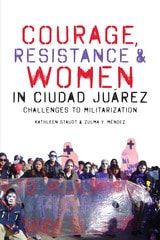
Courage, Resistance, and Women in Ciudad Juárez
Challenges to MilitarizationBy Kathleen Staudt and Zulma Y. Méndez
University of Texas Press, 2015
Ciudad Juárez has recently become infamous for its murder rate, which topped 3,000 in 2010 as competing drug cartels grew increasingly violent and the military responded with violence as well. Despite the atmosphere of intimidation by troops, police, and organized criminals, women have led the way in civil society activism, spurring the Juárez Resistance and forging powerful alliances with anti-militarization activists.
An in-depth examination of la Resistencia Juarense, Courage, Resistance, and Women in Ciudad Juárez draws on ethnographic research to analyze the resistance’s focus on violence against women, as well as its clash with the war against drugs championed by Mexican President Felipe Calderón with the support of the United States. Through grounded insights, the authors trace the transformation of hidden discourses into public discourses that openly challenge the militarized border regimes. The authors also explore the advocacy carried on by social media, faith-based organizations, and peace-and-justice activist Javier Sicilia while Calderón faced U.S. political schisms over the role of border trade in this global manufacturing site.
Bringing to light on-the-ground strategies as well as current theories from the fields of sociology, political anthropology, and human rights, this illuminating study is particularly significant because of its emphasis on the role of women in local and transnational attempts to extinguish a hot zone. As they overcome intimidation to become game-changing activists, the figures featured in Courage, Resistance, and Women in Ciudad Juárez offer the possibility of peace and justice in the wake of seemingly irreconcilable conflict.
Criminalization of Women
Abortion, Inequity, and Resistance in ChileMichele Eggers-Barison
University of Illinois Press, 2025
Eggers-Barison uncovers the narratives of economically disadvantaged, Indigenous, and immigrant women who broke the Chilean law by terminating a pregnancy. Their stories reveal how laws and policies that regulate and control women’s reproductive lives also construct women as criminals. As Eggers-Barison shows, systems of inequality legitimize and sustain harmful attitudes and practices while creating concrete expressions of discrimination and other forms of violence against women. Their experience with abortion remains hidden within spaces of illegality and only becomes visible due to health or legal consequences. Yet despite the obstacles, women used individual and collective forms of group action to resist anti-abortion laws.
Timely and vivid, Criminalization of Women shows how abortion’s illegality inscribes itself on a woman’s body and reality.
Cultural Memory
Resistance, Faith, and IdentityBy Jeanette Rodriguez and Ted Fortier
University of Texas Press, 2007
Cultures of Resistance
Collective Action and Rationality in the Anti-Terror AgeHeidi Reynolds-Stenson
Rutgers University Press, 2022
Cultures of Resistance provides new insight on a long-standing question: whether government efforts to repress social movements produce a chilling effect on dissent, or backfire and spur greater mobilization. In recent decades, the U.S. government’s repressive capacity has expanded dramatically, as the legal, technological, and bureaucratic tools wielded by agents of the state have become increasingly powerful. Today, more than ever, it is critical to understand how repression impacts the freedom to dissent and collectively express political grievances. Through analysis of activists’ rich and often deeply moving experiences of repression and resistance, the book uncovers key group processes that shape how individuals understand, experience, and weigh these risks of participating in collective action. Qualitative and quantitative analyses demonstrate that, following experiences of state repression, the achievement or breakdown of these group processes, not the type or severity of repression experienced, best explain why some individuals persist while others disengage. In doing so, the book bridges prevailing theoretical divides in social movement research by illuminating how individual rationality is collectively constructed, mediated, and obscured by protest group culture.