Results by title
12 books match the query 'Posthumanism'
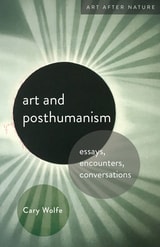
Art and Posthumanism
Essays, Encounters, ConversationsCary Wolfe
University of Minnesota Press, 2021
A sustained engagement between contemporary art and philosophy relating to our place in, and responsibility to, the nonhuman world
How do contemporary art and theory contemplate the problem of the “bio” of biopolitics and bioart? How do they understand the question of “life” that binds human and nonhuman worlds in their shared travail? In Art and Posthumanism, Cary Wolfe argues for the reconceptualization of nature in art and theory to turn the idea of the relationship between the human and the planet upside down.
Wolfe explores a wide range of contemporary artworks—from Sue Coe’s illustrations of animals in factory farms and Eduardo Kac’s bioart to the famous performance pieces of Joseph Bueys and the video installations of Eija-Liisa Ahtila, among others—examining how posthumanist theory can illuminate, and be illuminated by, artists’ engagement with the more-than-human world. Looking at biological and social systems, the question of the animal, and biopolitics, Art and Posthumanism explores how contemporary art rivets our attention on the empirically thick, emotionally charged questions of “life” and the “living” amid ecological catastrophe.
One of the foremost theorists of posthumanism, Wolfe pushes that philosophy out of the realm of the purely theoretical to show how a posthumanist engagement with particular works and their conceptual underpinnings help to develop more potent ethical and political commitments.
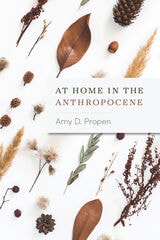
At Home in the Anthropocene
Amy D. Propen
The Ohio State University Press, 2022
By employing the tenets of posthumanism, compassionate conservation, and entangled empathy—and making them accessible through storytelling and narrative—Propen offers new perspectives about how to more compassionately and productively understand ideas about home, connectivity, and coexistence across a range of places and ecosystems. Uniquely conceptualized to include narrative related to the Anthropause, as well as travel and nature writing amidst COVID-19, At Home in the Anthropocene engages with questions about home and belonging in generative ways that attempt to open up possibilities for sustainable futures in which we may productively coexist with our more-than-human kin.
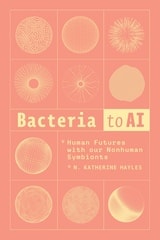
Bacteria to AI
Human Futures with Our Nonhuman SymbiontsN. Katherine Hayles
University of Chicago Press, 2025
A new theory of mind that includes nonhuman and artificial intelligences.
The much-lauded superiority of human intelligence has not prevented us from driving the planet into ecological disaster. For N. Katherine Hayles, the climate crisis demands that we rethink basic assumptions about human and nonhuman intelligences. In Bacteria to AI, Hayles develops a new theory of mind—what she calls an integrated cognitive framework (ICF)—that includes the meaning-making practices of lifeforms from bacteria to plants, animals, humans, and some forms of artificial intelligence. Through a sweeping survey of evolutionary biology, computer science, and contemporary literature, Hayles insists that another way of life, with ICF at its core, is not only possible but necessary to safeguard our planet’s future.
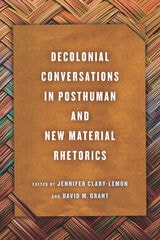
Decolonial Conversations in Posthuman and New Material Rhetorics
Edited by Jennifer Clary-Lemon and David M. Grant
The Ohio State University Press, 2022
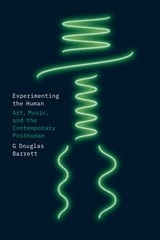
Experimenting the Human
Art, Music, and the Contemporary PosthumanG Douglas Barrett
University of Chicago Press, 2023
In Experimenting the Human, G Douglas Barrett argues that experimental music speaks to the contemporary posthuman, a condition in which science and technology decenter human agency amid the uneven temporality of postwar global capitalism. Time moves forward for some during this period, while it seems to stand still or even move backward for others. Some say we’re already posthuman, while others endure the extended consequences of never having been considered fully human in the first place. Experimental music reflects on this state, Barrett contends, through its interdisciplinary involvements in postwar science, technology, and art movements.
Rather than pursuing the human's beyond, experimental music addresses the social and technological conditions that support such a pursuit. Barrett locates this tendency of experimentalism throughout its historical entanglements with cybernetics, and in his intimate analysis of Alvin Lucier’s neurofeedback music, Pamela Z’s BodySynth performances, Nam June Paik’s musical robotics, Pauline Oliveros’s experiments with radio astronomy, and work by Laetitia Sonami, Yasunao Tone, and Jerry Hunt. Through a unique meeting of music studies, media theory, and art history, Experimenting the Human provides fresh insights into what it means to be human.
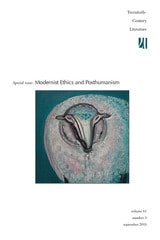
Modernist Ethics and Posthumanism
Derek Ryan and Mark West, special issue editors
Duke University Press, 0
From snakes to sheep, from hyenas to moths, from rural landscapes to childhood objects, this special issue examines the role of nonhuman alterity in the ethics of modernism. Drawing on the posthumanist theory of Jacques Derrida, Bruno Latour, Jane Bennett, and others, “Modernist Ethics and Posthumanism” offers original close readings of both canonical and more marginalized modernist figures. The contributors analyze unrecognizable creatures in D. H. Lawrence and Virginia Woolf; indeterminate animals in E. M. Forster; networks of human and nonhuman agents in Rainer Maria Rilke and Woolf; pacifism among people, animals, and things in Samuel Beckett; responsibility and rural environments in Mary Butts; and objects, both lost and found, and the threat of extinction in Elizabeth Bowen. What emerges from these essays is an account of modernist ethics that is embedded in relations between human and nonhuman and that gains its force through experiments in both content and form.
Derek Ryan is lecturer in modernist literature at the University of Kent and the author of Animal Theory: A Critical Introduction. Mark West is a recent PhD graduate of the University of Glasgow.
Contributors: Gabriel Hankins, Laci Mattison, Stephen Ross, Derek Ryan, Jeff Wallace, Sam Wiseman
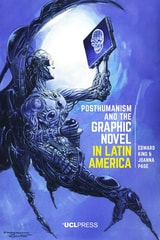
Posthumanism and the Graphic Novel in Latin America
Edward King and Joanna Page
University College London, 2017
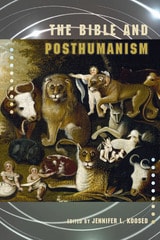
The Bible and Posthumanism
Jennifer L. Koosed
SBL Press, 2014
What does it mean, and what should it mean to be human?
In this collection of essays, scholars place the philosophies and theories of animal studies and posthumanism into conversation with biblical studies. Authors cross and disrupt boundaries and categories through close readings of stories where the human body is invaded, possessed, or driven mad. Articles explore the ethics of the human use of animals and the biblical contributions to the question. Other essays use the image of lions—animals that appear not only in the wild, but also in the Bible, ancient Near Eastern texts, and philosophy—to illustrate the potential these theories present for students of the Bible. Contributors George Aichele, Denise Kimber Buell, Benjamin H. Dunning, Heidi Epstein, Rhiannon Graybill, Jennifer L. Koosed, Eric Daryl Meyer, Stephen D. Moore, Hugh Pyper, Robert Paul Seesengood, Yvonne Sherwood, Ken Stone, and Hannah M. Strømmen present an open invitation for further work in the field of posthumanism.
Features:
- Coverage of texts that explore the boundaries between animal, human, and divinity
- Discussion of the term posthumanism and how it applies to biblical studies
- Essays engage Derrida, Foucault, Wolfe, Lacan, Žižek, Singer, Haraway, and others
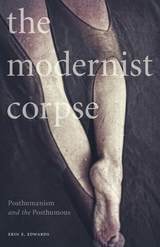
The Modernist Corpse
Posthumanism and the PosthumousErin E. Edwards
University of Minnesota Press, 2018
An unconventional take on the corpse challenges traditional conceptions of who—and what—counts as human, while offering bold insights into the modernist project
Too often regarded as the macabre endpoint of life, the corpse is rarely discussed and largely kept out of the public eye. In The Modernist Corpse, Erin E. Edwards unearths the critically important but previously buried life of the corpse, which occupies a unique place between biology and technology, the living and the dead. Exploring the posthumous as the posthuman, Edwards argues that the corpse is central to understanding relations between the human and its “others,” including the animal, the machine, and the thing.
From photographs of lynchings to documentation of World War I casualties, the corpse is also central to the modernist project. Edwards turns critical attention to the corpse through innovative, posthumanist readings of canonical thinkers such as William Faulkner, Jean Toomer, W. E. B. Du Bois, Mina Loy, Djuna Barnes, and Gertrude Stein, offering new insights into the intersections among race, gender, technical media, and matter presumed to be dead. Edwards’s expansive approach to modernism includes diverse materials such as Hollywood film, experimental photography, autopsy discourses, and the comic strip Krazy Kat, producing a provocatively broad understanding of the modernist corpse and its various “lives.”
The Modernist Corpse both establishes important new directions for modernist inquiry and overturns common thought about the relationship between living and dead matter.
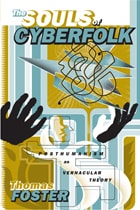
The Souls of Cyberfolk
Posthumanism as Vernacular TheoryThomas Foster
University of Minnesota Press, 2005
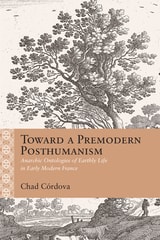
Toward a Premodern Posthumanism
Anarchic Ontologies of Earthly Life in Early Modern FranceChad Córdova
Northwestern University Press, 2025
Drawing on early modern French thought to free nature and aesthetics from metaphysical humanism
What good is aesthetics in a time of ecological crisis? Toward a Premodern Posthumanism: Anarchic Ontologies of Earthly Life in Early Modern France shows that philosophical aesthetics contains unheeded potentialities for challenging the ontological subjection of nature to the human subject. Drawing on deconstructive, ecological, and biopolitical thought, Chad Córdova uncovers in aesthetics something irreducible to humanist metaphysics: an account of how beings emerge and are interrelated, responsive, and even response-able without reason or why.
This anarchic and atelic ontology, recovered from Kant, becomes the guiding thread for a new, premodern trajectory of posthumanism. Charting a path from Aristotle to Heidegger to today’s plant-thinking, with new readings of Montaigne, Pascal, Diderot, Rousseau, and others along the way, this capacious study reveals the untimely relevance of pre-1800 practices of writing, science, and art. Enacting a multitemporal mode of reading, Córdova offers a defense and illustration of the importance of returning to early modern texts as a way to rethink nature, art, ethics, and politics in a time when these concepts are in flux and more contentious than ever.
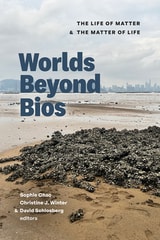
Worlds Beyond Bios
The Life of Matter and the Matter of LifeSophie Chao, Christine J. Winter, and David Schlosberg, editors
Duke University Press, 2026