Results by title
65 books match the query 'Security' and 4 start with c

Code of Peace
Ethics and Security in the World of the Warlord StatesDorothy V. Jones
University of Chicago Press, 1991
Jones focuses on the progressive development of international law to disclose an underlying code of ethics that enjoys broad support in the world community. Unlike studies that concentrate on what others think that states ought to do, Code of Peace analyzes what states themselves consider proper behavior. Using history as both narrative and argument, Jones shows how the existing ethical code has evolved cumulatively since World War I from a complex interplay between theory and practice. More than an abstract treatise or a merely technical analysis, Jones's study is grounded in the circumstances of war and peace in this century. Treaties and agreements, she argues, are forging a consensus on such principles as human rights, self-determination, and cooperation between states. Jones shows how leaders and representatives of nations, drawing on a rich heritage of philosophical thoughts as well as on their own experiences in a violent world of self-interested conflict, have shaped their thought to the taming of that world in the cause of peace. That is the striking thing about this code: states whose relations are marked by so frequent a recourse to war that they can fairly be called "warlords" have created and pledged themselves to a code of peace.
The implications of Code of Peace for establishing a normative foundation for peace are profound. Historically sound and timely, impeccably researched and elegantly written, the book will be of immediate and lasting value to anyone concerned with the stability of the modern world.
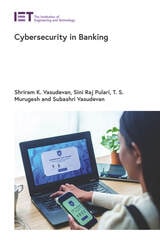
Cybersecurity in Banking
Shriram K. Vasudevan
The Institution of Engineering and Technology, 2026

Cybersecurity in Emerging Healthcare Systems
Agbotiname Lucky Imoize
The Institution of Engineering and Technology, 2024
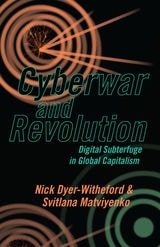
Cyberwar and Revolution
Digital Subterfuge in Global CapitalismNick Dyer-Witheford
University of Minnesota Press, 2019
Uncovering the class conflicts, geopolitical dynamics, and aggressive capitalism propelling the militarization of the internet
Global surveillance, computational propaganda, online espionage, virtual recruiting, massive data breaches, hacked nuclear centrifuges and power grids—concerns about cyberwar have been mounting, rising to a fever pitch after the alleged Russian hacking of the U.S. presidential election and the Cambridge Analytica scandal. Although cyberwar is widely discussed, few accounts undertake a deep, critical view of its roots and consequences.
Analyzing the new militarization of the internet, Cyberwar and Revolution argues that digital warfare is not a bug in the logic of global capitalism but rather a feature of its chaotic, disorderly unconscious. Urgently confronting the concept of cyberwar through the lens of both Marxist critical theory and psychoanalysis, Nick Dyer-Witheford and Svitlana Matviyenko provide a wide-ranging examination of the class conflicts and geopolitical dynamics propelling war across digital networks.
Investigating the subjectivities that cyberwar mobilizes, exploits, and bewilders, and revealing how it permeates the fabric of everyday life and implicates us all in its design, this book also highlights the critical importance of the emergent resistance to this digital militarism—hacktivism, digital worker dissent, and off-the-grid activism—for effecting different, better futures.